


BIOGRAPHY
| Cornwell, Patricia Daniels | True crime |
| Darnell, John Coleman | Egypt’s golden couple |
| Edwards, Amelia Ann Blanford | A Thousand Miles up the Nile |
| Minnelli, Liza | Kids, wait till you hear this! |
| Sherman, Gabriel | Bonfire of the Murdochs |
| Wilkinson, Lisa | The Titanic story of Evelyn |
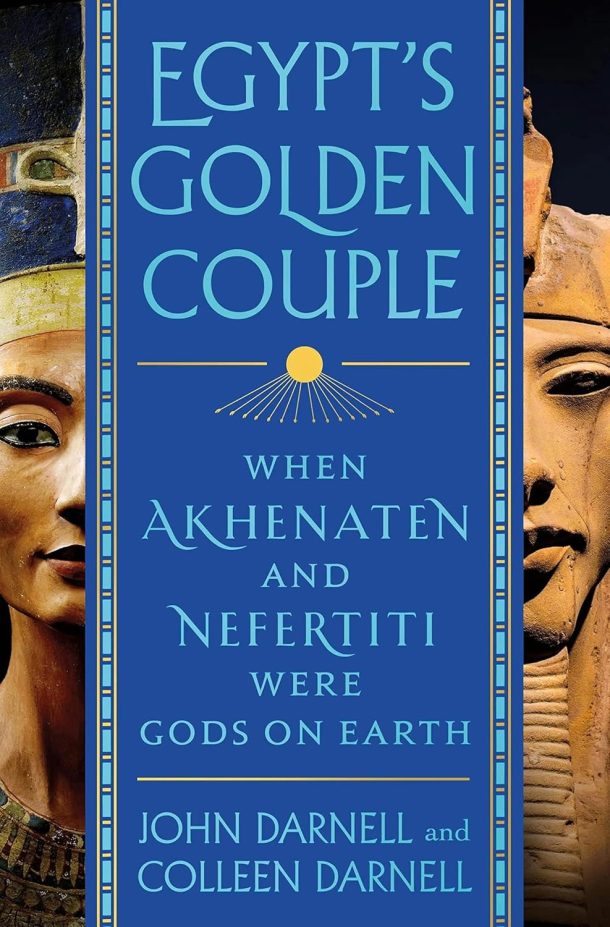 Egypt’s Golden Couple by John Darnell & Colleen Darnell
A husband-and-wife Egyptologist team delineate the life and legacy of Akhenaten and his queen, Nefertiti. Akhenaten (previously known as Amenhotep IV) and Nefertiti ruled from roughly 1352 to 1336 B.C.E. During their reign, they swept out the old gods in favor of a single sun god, Aten. Their legacy was powerful yet brief, all but erased by their son, Tutankhamun, who repudiated their iconoclasm and reinstated the former gods. In a multilayered narrative employing a variety of fictional re-creations, archaeological records, and descriptions of their own scholarly pursuits, the Darnells, co-authors of Tutankhamun’s Armies, ably narrate the life and legacy of the titular “golden couple.” The authors readily acknowledge the academic controversy and endless speculation about their subjects, and they demonstrate the widespread influence of Akhenaten’s father on his outlook and methods. “As with so many of the seemingly innovative, unusual, or revolutionary actions of Amunhotep IV, his father’s reign provided a precedent,” write the Darnells. By the fifth year of his reign, “when the king changed his name to Akhenaten, he made an even more momentous decision, founding a new capital in Middle Egypt: Akhet-Aten. With that new name and in that new city, his new religion found its full expression.” In addition to chronicling the complex political, social, economic, and architectural elements of the history, the Darnells offer a touching portrait of family life, and they briefly trace some of the biographical details of the couple’s descendants. Acknowledging the cooperation of the Ministry of Antiquities in Egypt, the authors make good use of information gleaned from a variety of sites that have only recently undergone excavation, examining the evidence in a manner accessible to nonarchaeologists. The book also includes a brief chronology and a translation of the ancient poem “Hymn to Aten.” For lay readers, a riveting, occasionally speculative portrait of ancient Egypt. Kirkus Reviews, November 2022.
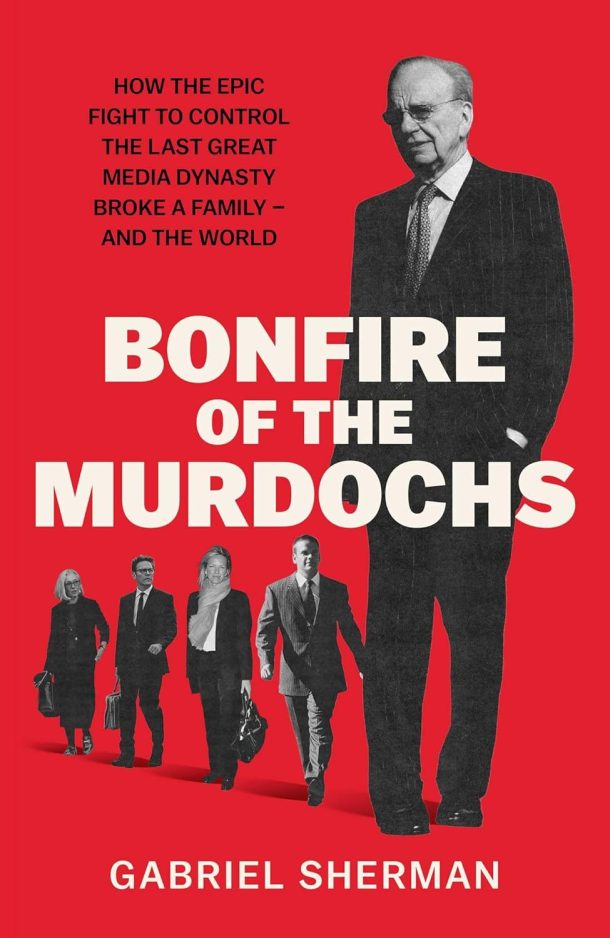 Bonfire of the Murdochs by Gabriel Sherman
Journalist Sherman (The Loudest Voice in the Room) delves in this juicy melodrama into the caustic, decades-long family feud over the inheritance of Rupert Murdoch’s media empire. The account opens with Rupert’s son Lachlan’s 2023 move to oust his siblings—James, Liz, and their older half sister Prudence—from the family trust. Backtracking from there, Sherman traces Murdoch’s rise, from the inheritance of his own father’s Australian newspaper business through his slew of tabloid purchases in Britain and America. Murdoch’s success, the author shows, is owed to both a taste for sensationalism and a cold-blooded ruthlessness, the latter of which bleeds into his personal life, particularly via his transactional bond with his children, whom he “pit[s]… against one another” and for whom deal-making is the only way to gain their father’s attention. Indeed, the dizzying amount of sales and acquisitions can bog down the narrative’s pace, though it serves well to express the extent to which Murdoch manipulates his children for his own gain, including telling Liz that she was “his preferred successor” during his purchase of her successful TV production company only to stop talking to her once the paperwork was signed. The saga reads like a real-life Succession, a comparison even the family can see, as evidenced by their paranoia about possible leaks to the show’s writers. Readers will be riveted by this merciless battle for dynastic dominance. Publisher’s Weekly, May 2026.
Return to top
GENERAL FICTION
| Alexandra, Belinda | The Italian correspondent |
| Buist, Anne | The general hospital |
| Clarke, Evelyn | The ending writes itself |
| Duffy, Louise Jensen | Winifred Peters is not sorry for her loss |
| Johansson, Hanna | Body double |
| King, Lily | Heart the lover |
| Lapierre, Alexandra | The very secretive and passionate Stella Miles Franklin |
| Lester, Natasha | The Chateau on Sunset |
| Lighezzolo, Emily | Life drawing |
| Maia, Ana Paula | On earth as it is beneath |
| McAllister, Gillian | Caller unknown |
| Page, Libby | This book made me think of you |
| Purman, Victoria | Marriage trap |
| Roberts, Nora | The final target |
| Stephens, Mary-Lou | The Hobart Hotel |
| Swan, Karen | Three summers |
| Yarwood, Dianne | Margaret, are you leaving? |
 The ending writes itself by Evelyn Clarke
Fiction writers compete to finish a famous author’s abandoned novel. Seven writers, all but one published, have received invitations to spend the weekend with crime novelist Arthur Fletch, the world’s most successful author, on his private island off the coast of Scotland. When they arrive at his cliffside castle, they expect to take part in one of the literary salons for which Fletch is famous; instead, they’re greeted by his agent, who informs them that Fletch is dead. Why has there been nothing about this in the press? Because “there are some…loose ends that must be tied up first.” Fletch has left his eagerly anticipated final novel unfinished, so the agent has summoned the writers to the island for a competition: One of them will get to complete Fletch’s book. As premises go, this one’s a humdinger, courtesy of fantasy writer V.E. Schwab and YA author Cat Clarke, here joining forces as Clarke. The story contains an amusing throughline about the indignity of being an uncelebrated novelist; as the agent tells the assembled writers, the contest winner will receive both cash and something equally valuable: “a way out of the midlist.” The novel’s wandering perspective allows each writer to vent their private frustrations, especially with the publishing industry and with the book world’s genre hierarchy (the YA writer among the competitors understands that she and the romance writer are “supposed to support each other against the general snobbishness of the other genres”). Readers who have come for the crimes and the twists, both of which are plentiful, might grow impatient with all the characters’ backstories, but these readers will likely warm to the shop talk, which at its funniest plays like a kvetchy midlist-writers’ support group.High-concept and highly entertaining. Kirkus Reviews, April 2026.
 Body Double by Hanna Johansson
Johansson (Antiquity) explores themes of doppelgängers, loneliness, and selfhood in her sly latest. The dizzying hall-of-mirrors narrative unfolds on two tracks, beginning with an isolated and yearning woman named Naomi who meets an enchanting stranger named Laura after they mistakenly wind up with each other’s coats at a café. When they meet again at the same café, Laura confesses that their first meeting frightened her and that she’s seen Naomi around since then, suggesting Naomi might be her doppelgänger (“I have seen you…. Have you seen me?”). A parallel narrative follows an unnamed woman who lives alone and works as a transcriptionist for a ghostwriter. One day, she plays a client’s tape that is silent save for a woman’s whisper, “I have seen you. Have you seen me?” The transcriptionist takes the question to be directed at her, despite the fact that she’s “more invisible than the ghostwriter himself.” Shaken, she begins to feel like she’s “disappearing,” or is “split in two.” Johansson artfully teases out the echoes between the narrative threads, as Naomi and Laura see each other again and move in together and Laura unsettles Naomi by copying her clothing and hairstyle, even impersonating her on the phone. By the end, the two story lines seamlessly converge. Readers will be entranced. Publisher’s Weekly, January 2026.
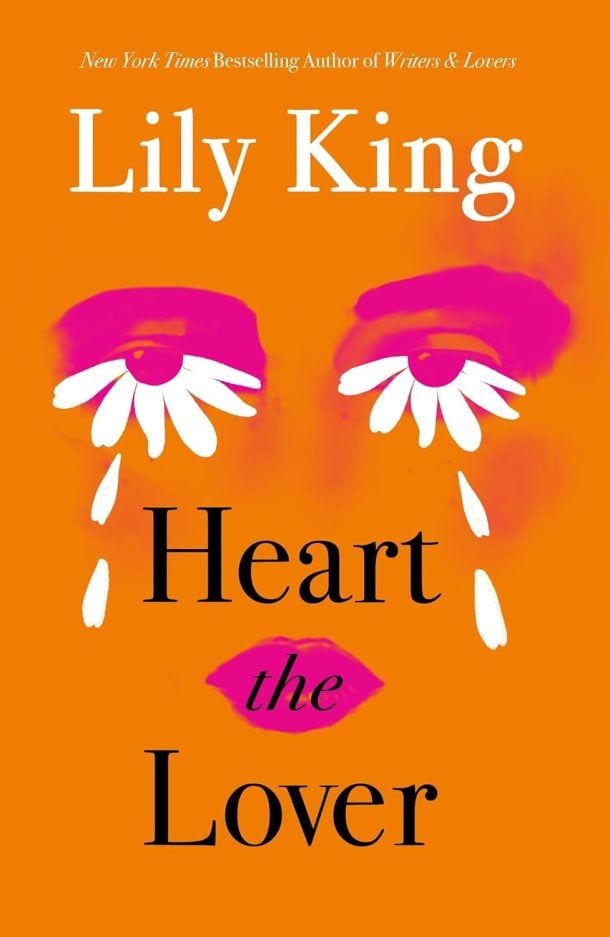 Heart the lover by Lily King
A love triangle among young literati has a long and complicated aftermath. King’s narrator doesn’t reveal her name until the very last page, but Sam and Yash, the brainy stars of her 17th-century literature class, call her Jordan. Actually, at first they refer to her as Daisy, for Daisy Buchanan of The Great Gatsby, but when they learn she came to their unnamed college on a golf scholarship, they change it to Jordan for Gatsby’s golfer friend. The boys are housesitting for a professor who’s spending a year at Oxford, living in a cozy, book-filled Victorian Jordan visits for the first time after watching The Deer Hunter at the student union on her first date with Sam. As their relationship proceeds, Jordan is practically living at the house herself, trying hard not to notice that she’s actually in love with Yash. A Baptist, Sam has an everything-but policy about sex that only increases the tension. The title of the book refers to a nickname for the king of hearts from an obscure card game the three of them play called Sir Hincomb Funnibuster, and both the game and variations on the moniker recur as the novel spins through and past Jordan’s senior year, then decades into the future. King is a genius at writing love stories—including Euphoria (2014), which won the Kirkus Prize—and her mostly sunny version of the campus novel is an enjoyable alternative to the current vogue for dark academia. Tragedies are on the way, though, as we know they must be, since nothing gold can stay and these darn fictional characters seem to make the same kinds of stupid mistakes that real people do. Tenderhearted readers will soak the pages of the last chapter with tears. That college love affair you never got over? Come wallow in this gorgeous version of it. Kirkus Reviews, October 2025.
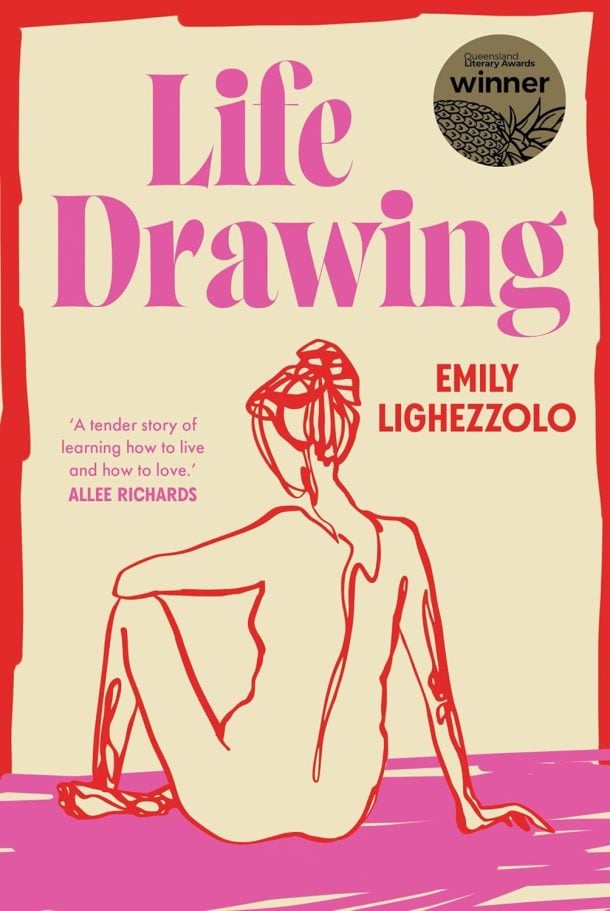 Life Drawing by Emily Lighezzolo
Life Drawing is an impressive, award-winning, debut novel, and follows the lives of university students Maisie and Charlie over two decades. For Maisie, modelling for life drawing classes is relaxing, providing an opportunity for her body to be seen without judgement. She is in control – merely an object to be realised in lines and shading. But when she recognises one of the artists as the boy she had met at an event during Orientation Week she struggles to maintain her usual equanimity. Charlie, too, is thrown by this unexpected encounter and the sudden proprietary urge to place his hand in the small of Maisie’s back is something he has never experienced with a model before. This connection of artist and muse becomes more complicated when Charlie takes a room in a share house not knowing Maisie lives there. Their friendship is strongly influenced by Maisie’s complex love/hate attitude to her body. The ‘likes’ she gets when a sexy photo is posted give her a sense of power, but there is an underlying trauma associated with other images that have been shared without her consent. Body image issues resurface later and take a more serious turn when the physical impact of giving birth compounds the post-partum depression she experiences. Lighezzolo remains firmly in control of this wide-ranging and thought-provoking tale – a contemporary love story that draws out the long-term psychological impact of decisions taken by a young woman, or made for her by others, in this digital age. Good Reading, May 2026.
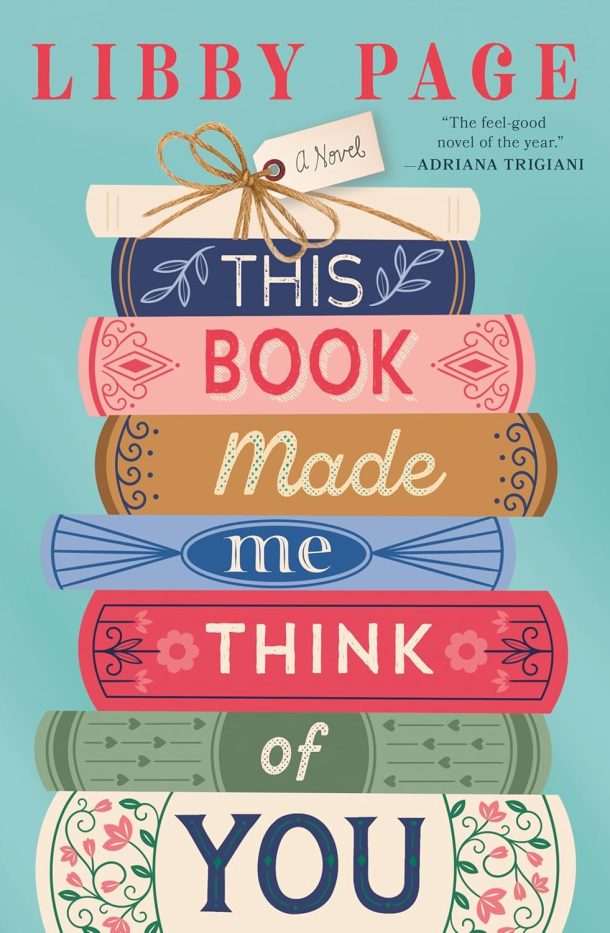 This book made me think of you by Libby Page
A widow receives a year’s worth of books from her late husband and learns to live again in the process. Matilda “Tilly” Nightingale always loved reading. It was her constant as a child, it led to her job as an editor in London, and she even met her beloved husband, Joe Carter, in a bookstore. But when Joe is diagnosed with cancer, Tilly stops reading altogether. After Joe dies, Tilly finds herself going through the motions at work and at home—until she gets a call from a local bookstore owner, Alfie Lane, saying he has a special gift for her from Joe. It’s a copy of Matilda by Roald Dahl, the classic children’s book about a girl who loves to read, and a letter from Joe. Before he died, he’d visited Alfie at Book Lane and set up a year of books for Tilly—one for each month, each with some sort of instruction or encouragement. Even though Tilly has no intention of getting back into reading, she finds herself drawn to the pages and the bookstore. Soon, the monthly books are encouraging her to cook, travel, and see a horizon beyond the pure grief she’s been living with. As the bookstore becomes a second home, Alfie becomes a treasured friend. Page creates a cozy world that shimmers with whimsy even as she delicately explores grief. It’s easy to understand why Tilly is reticent to open up her life, but that makes it all the more satisfying when she learns to let people in—whether those people are her family members or new friends. Alfie faces his own challenges in owning a bookstore, and the scenes in Book Lane are delightfully reminiscent of You’ve Got Mail. The novel serves as a reminder that books have the power to shape lives, and, as Tilly puts it, “Adventures are waiting for you. It’s time to open the page.” The perfect cozy read for book lovers, sure to break and heal hearts. Kirkus Reviews, February 2026.
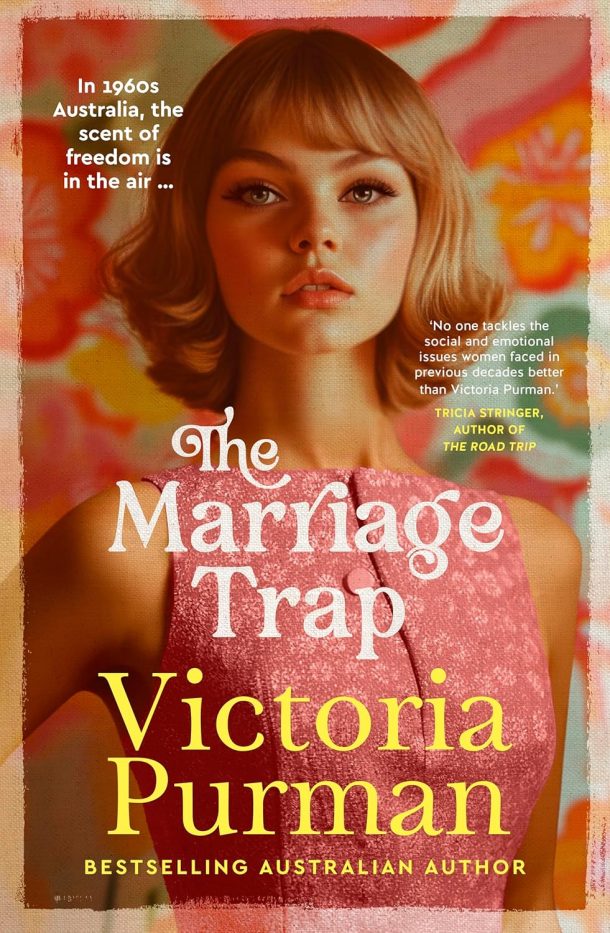 The Marriage Trap by Victoria Purman
The Langley family – Olive (mother), Len (father), and their daughters Cathy (20) and Evelyn (10) – live in 1960s suburban Adelaide. Every Sunday they host Grandma Langley for lunch, and let’s just say she brings very particular, deeply religious views that she does not keep to herself. At the same time, society is shifting with the introduction of the contraceptive pill, women are beginning to taste a new kind of freedom – over their bodies, their choices and their futures. Cathy stands right in the middle of this change. Training to be a teacher, she has seen how tough life has been for her mother and is determined not to follow the same path. But this new world comes with its own challenges, particularly when she must fight for access to the pill against both medical gatekeeping and the weight of church expectations. Meanwhile, young Evelyn watches it all unfold – her mother, her sister, and the quiet shaping of her own future. Initially, I was on the fence about this novel, but within a few pages I was completely drawn in and couldn’t put it down. I became deeply invested in the Langleys – they feel like a recognisable Australian family. The admiration I felt for these women, and what they endured to secure the freedoms many now take for granted, stayed with me. It’s not a topic often explored so openly, and Victoria does a wonderful job of bringing this history into the light in The Marriage Trap. Good Reading, May 2026.
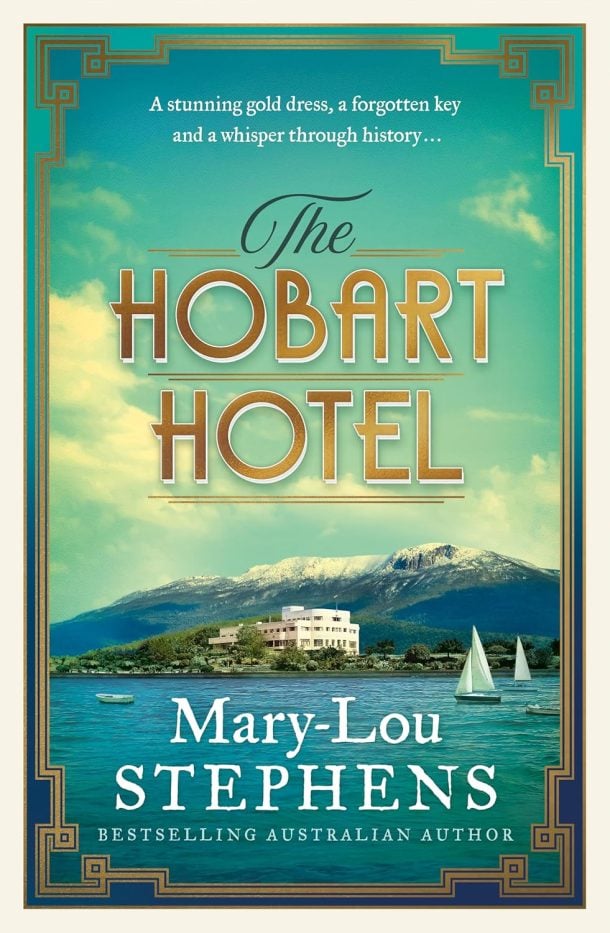 The Hobart Hotel by Mary-Lou Stephens
The Hobart Hotel follows two timelines. The first is 1939, tracing Sabine Winter’s life alongside the grand opening of the glamorous and much-talked-about Wrest Point Riviera. Sabine is independent, glamorous, and longs for more than her country upbringing in Tasmania. She has searched for this life elsewhere yet somehow finds herself drawn back to her roots. Her return, however, is not solely for the hotel’s opening, but also due to the growing unrest in Europe as war looms. Upon her return, Sabine quickly becomes aware she is being watched. Her ability to adopt multiple identities is soon called upon, and she is drawn – reluctantly – into the war effort as a spy in South America. Once there, she realises what once felt thrilling becomes dangerous. The second timeline introduces Jenny Davies in 1973, at the opening of the controversial Wrest Point Hotel Casino. Jenny and her mother have been left in a difficult situation due to her father’s behaviour, and she is eager for change. She admires the Ladybirds working as casino croupiers, and the opportunity to become one – earning her own money and stepping into a more glamorous life – creates tension in her relationship with her mother. During this time, Jenny uncovers long-buried family secrets, including items left to her by an unknown relative named Sabine, and sets out to uncover the truth. This is an inspiring story that will leave historical fiction fans hooked. Both women are compelling and resilient, and with nods to Mary-Lou’s previous novels, she continues to be a wonderful ambassador for Tasmanian history, always leaving readers wanting more. Good Reading, May 2026.
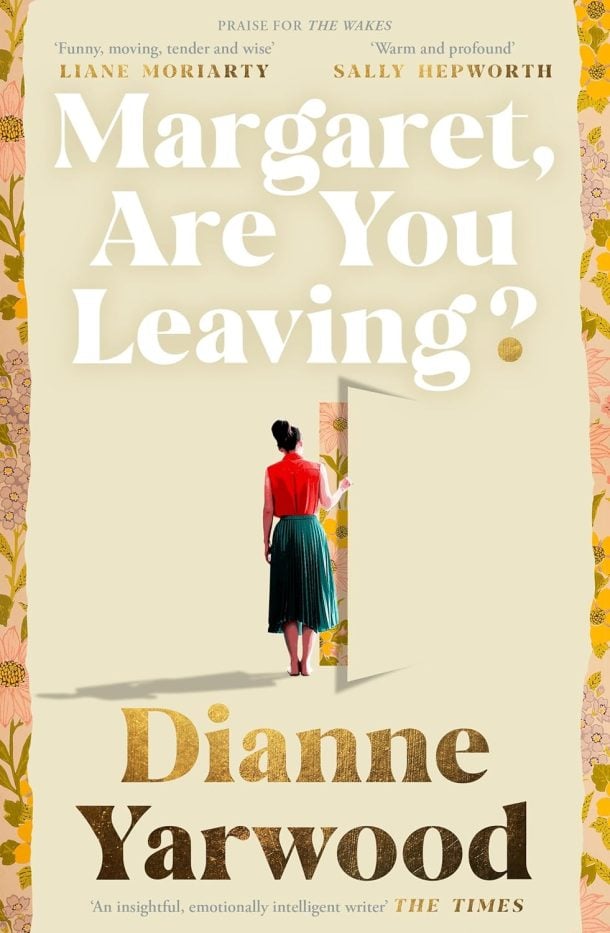 Margaret, Are You Leaving? by Dianne Yarwood
It’s 2001 in Sydney. Maggie Reid, a 40-something, part-time switchboard operator who, after the death of her adoptive mother, sets out on a journey to find her birth mother and the truth about her childhood. Maggie is not alone in her grief, as her colleague-turned-best-friend, Anna, is dealing with the loss of her own beloved mother from the other side of the globe. The pair deal with their grief differently. Anna attempts to shun all thought of her mother out of fear of confronting her death. And Maggie, who, on her search for her true identity, struggles to think about anything but.Loss is a main theme throughout the novel, but within this, we are offered glimpses of friendship, love and heartbreak. How do you work through the loss of something you never had? I loved the literary references that are sprinkled throughout the novel. Whether those are the mentions of Pride and Prejudice, or the poems of Gerard Manley Hopkins (hence the title), or a nod to Sylvia Plath. Those moments, along with the countless games of Scrabble, offer new ways to communicate when you might not have the words to do so. This heartfelt and hopeful story reminds us that within grief we can find love, joy and friendship. It teaches us to not get too caught up in the end result and, instead, pay attention to those sliding-door moments that may have been hidden in plain sight after all. Good Reading, May 2026.
Return to top
MYSTERY
| Abell, Stig, | The burial place |
| Bailey, Sarah | Click |
| Fox, Candice | Redbelly Crossing |
| French, Tana, | The keeper |
| Hampson, Amanda | The model murder |
| Hardy, Fiona | Old games |
| Hilary, Sarah | The drowning place |
| Kang, Jiyoung | Mrs Shim is a killer |
| Manning, Kirsty | Murder in Paris |
| McDonald, Fleur | The witness |
| McTiernan, Dervla | Three Reasons for Revenge |
| Patterson, James | 26 beauties |
| Perry, Philippa | Shrink solves murder |
| Rose, Karen | Family lies |
| Ross, L. J. | Sycamore Gap |
| Warner, Dave | Sound mind dead body |
| Watson, Katy | Seven lively suspects |
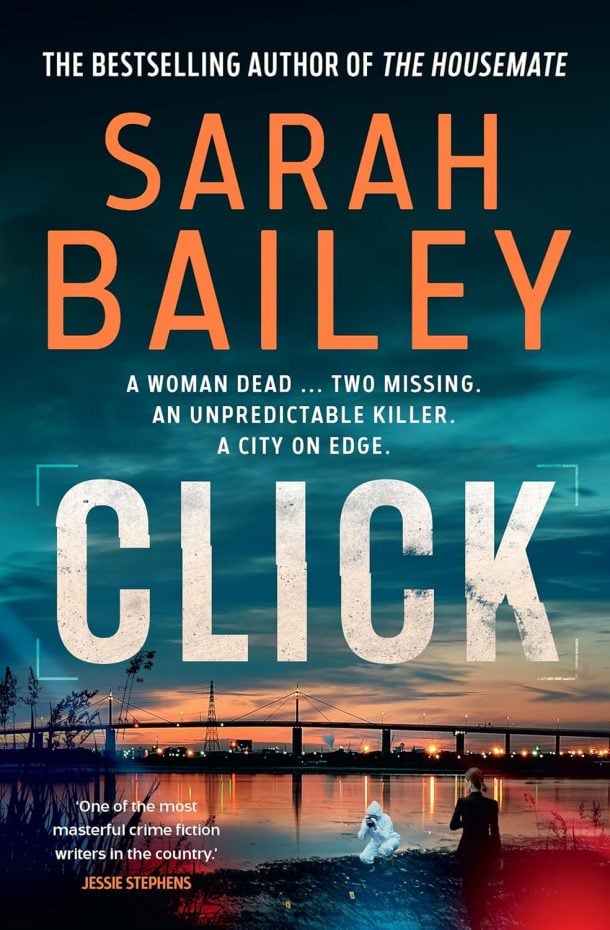 Click by Sarah Bailey
Set in Melbourne at the start of 2020, this new offering from accomplished crime novelist Sarah Bailey deals with a killer on the loose, but also elucidates in a gripping story how modern technology has become both a help and a hindrance to law enforcers. Three women bring this story of a possible serial killer to life: Pen, the copper; Oli, the journo; and Clarissa Dunkley, the Premier. Through them, the uneasy, interdependent and complicated relationships between police, media outlets and politicians are deftly laid out. All are under pressure: Pen, to solve crimes in a timely fashion; Oli, to be first to break the news and get those much-needed paid subscriptions to keep the whole show rolling; and Clarissa to respond to the unfolding crime wave to keep the public on side and to ensure re-election prospects. In this hotbed environment, there is social media, where everyone is a commentator or influencer, there are the relentless demands of the news cycle, and the impatience of the public for perpetrators to be caught. The lines between news, entertainment, and PR are often blurred. With advancements such as image altering and the ability to disguise digital footprints, the grip on what is true and what has been doctored can be slippery; nothing can be taken at face value. As police scramble to catch the killer, the city is on edge, the media is on alert, and the premier is on notice. Click is a narrative of men’s violence towards women, and is full of scenarios with which we are all too familiar. But it is also the story of strong women and of those who, when faced with ethical dilemmas, are determined to do their jobs the right way, rather than the easy way. Readings, March 2026.
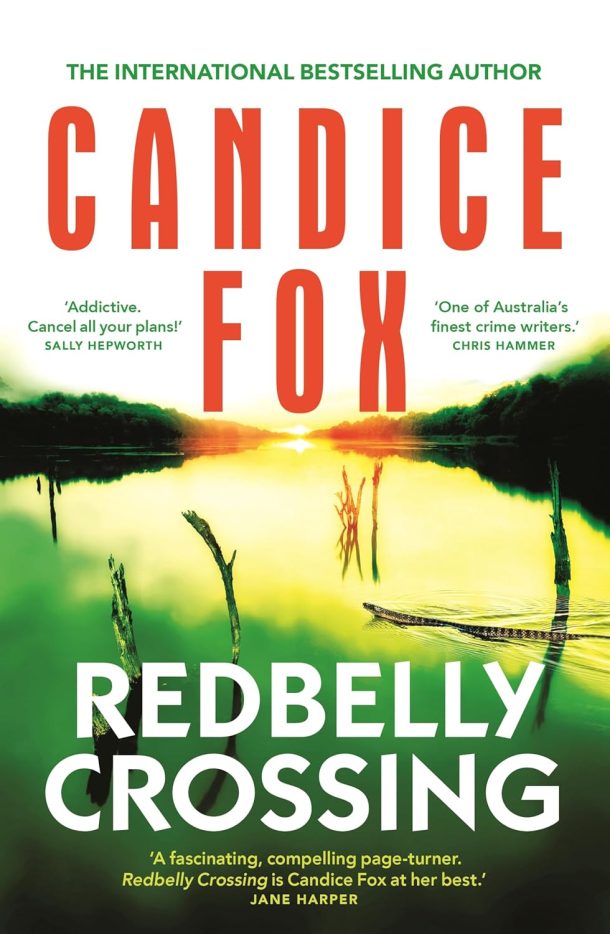 Redbelly crossing by Candice Fox
The hunt for a journalism student’s murderer is repeatedly upstaged by the toxic relationship between the two detectives on the case. How bad a father has Arthur Powder been? After his wife killed herself, he focused his abuse on his two sons, scoffing at their failures, challenging their masculinity, pitting them against each other, and demanding they follow his footsteps into the New South Wales Police Force. Now he insists that Sr. Sgt. Evan Powder, his younger son, muscle himself into the investigation of Chloe Lutz’s murder, which is well outside his jurisdiction, to mitigate the damage from Evan’s mishandling of an earlier incident that left one man dead and the whole Powder family tarnished by scandal. At the same time, Evan’s more successful brother, DI Russell Powder, has been assigned senior investigating officer even though he’s promised to spend the week with Bridie, the daughter he’s neglected for most of her 18 years. Evan has to grit his teeth to be in the same room as Russell, who wishes he would ride off into the sunset forever. The most obvious suspects in Chloe’s fatal stabbing seem to be her fellow lodgers in the guesthouse of the Redbelly pub—until Bridie, whom Russell’s brought along for the ride, realizes that her journalism studies may have led her to reopen a cold case like the murders of new mother Linda Special and student/bartender Marian Richley 50 years ago. At length, Evan finds evidence that leads in a shocking direction and sets the two brothers, whose alternating chapters show them increasingly at odds, on a literal collision course. A sturdy police procedural that shines more brightly, and darkly, as the study of a disastrously dysfunctional family. Kirkus Reviews, April 2026.
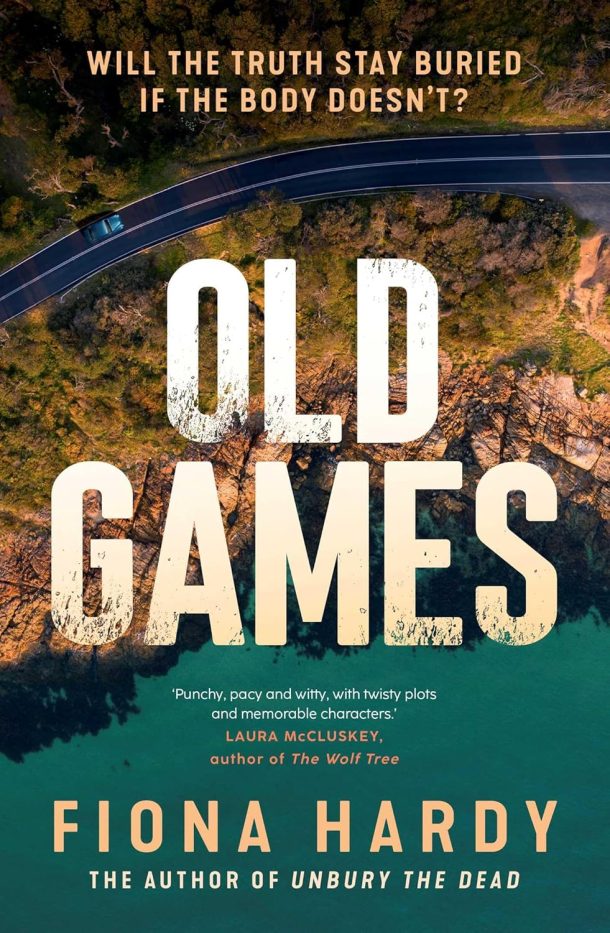 Old games by Fiona Hardy
If you’re in any doubt as to where Alice and Teddy sit on the moral spectrum, it’s dispelled by page two of Old Games when they threaten a man they’ve had tied up in the boot of their car with the diabolical torture of having to endure a visit to a pierogi food truck without being able to partake. This combination of light and dark is a signature of Hardy’s work, along with her cast of nuanced characters, wit, pacy storytelling, and heart. Alice and Teddy play off one another with the kind of fond familiarity seen in the very best fictional partnerships, riffing off one another’s dialogue with charm and humour. They’re unambiguously loyal to one another, so when Alice’s estranged sister finds herself in hot water after the ashes of a long-dead celebrity tennis star are stolen from the mansion she’s house-sitting, they have no hesitation in leaping into the investigation. Twisty and intricately plotted, Old Games is a story about legacies and loss, about public figures and who ‘owns’ them after they’re gone, and about families: those we are bound to by blood and those we build ourselves. It’s full of good food, great cars, plenty of laughs, a mystery that will keep you turning pages, and a few unanswered questions that will have you champing at the bit for the next book. Readings, February 2026.
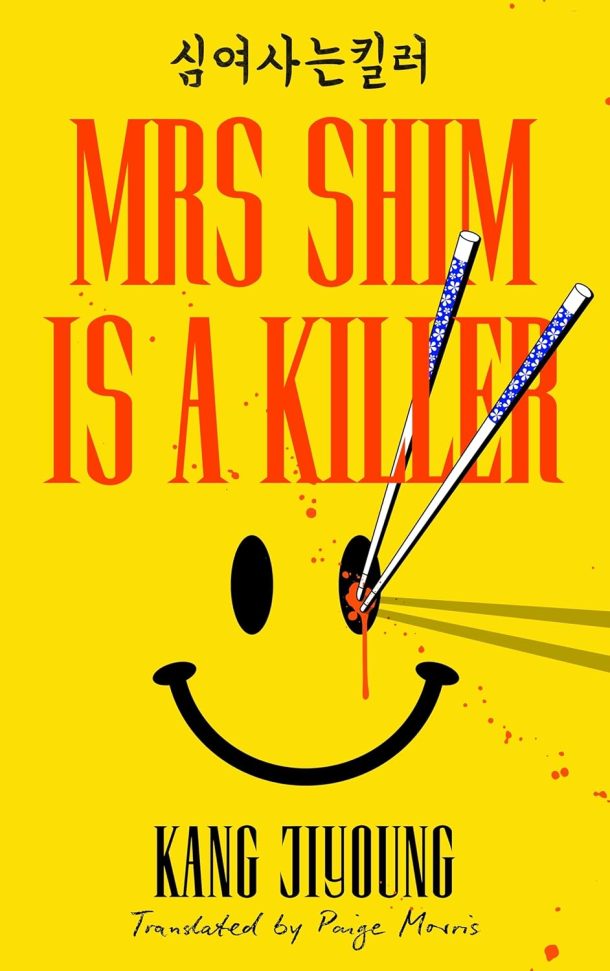 Mrs Shim is a killer by Jiyoung Kang
A struggling mother turns to contract killing to support her family in this darkly funny thriller from Jiyoung (Shopping Mall for Killers). Recent years have been tough on South Korean matriarch Mrs. Shim: first her husband lost his butcher shop, then he died. Mrs. Shim started working at another butcher shop, but after her boss there is arrested, she finds herself out of a job and scrambling to take care of her two children. Distraught, she responds to a job posting for the Smile Detective Agency and is hired after demonstrating her superior knife-handling skills. The pay is exceptional, but the agency’s work turns out to be less about solving mysteries and more about killing clients. Mrs. Shim proves a talented assassin, but when she stumbles into the middle of a turf war, she inadvertently endangers her family—and realizes the only answer is to carve her way out. Jiyoung tells the story through a series of initially disconnected vignettes that gradually cohere into a rich narrative stuffed with surprises and grim humor. It’s a sharp and satisfying crime novel. Publisher’s Weekly, January 2026.
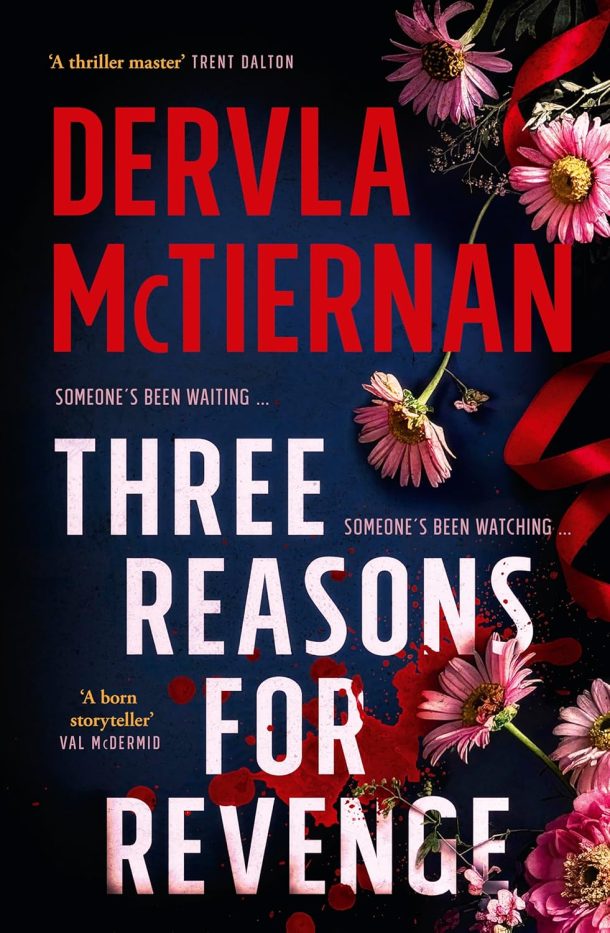 Three reasons for revenge by Dervla McTiernan
McTiernan (What Happened to Nina?) keeps readers deliciously off-balance in this moody, character-driven thriller set in Melbourne. University student Alexis Turner walks into a police station and reports to Det. Sgt. Judith Lee that psychologist Robert Walker has just sexually assaulted her, massaging her shoulders and then her breasts during a routine appointment to address anxiety and headaches. Lee is inclined to believe Alexis’s account because, 10 years earlier, another woman made similar allegations against Walker. At the time, Lee dismissed the accuser and sent her away without assistance, a choice she’s regretted ever since. The detective seizes on Alexis’s case to atone for that misstep, but her investigation gets complicated when she learns that Alexis was lying about being a student and provided fraudulent contact information. Meanwhile, Walker’s wife, Vanessa, receives an anonymous video showing her husband receiving oral sex in his office. When someone connected to the case is murdered, the stakes ramp up, and McTiernan has a blast pulling rug after rug en route to revealing the big picture. The author’s plausible, sometimes jaw-dropping plot twists never strain credulity or come at the expense of her carefully calibrated character relationships. This will keep readers up all night. Publisher’s Weekly, April 2026.
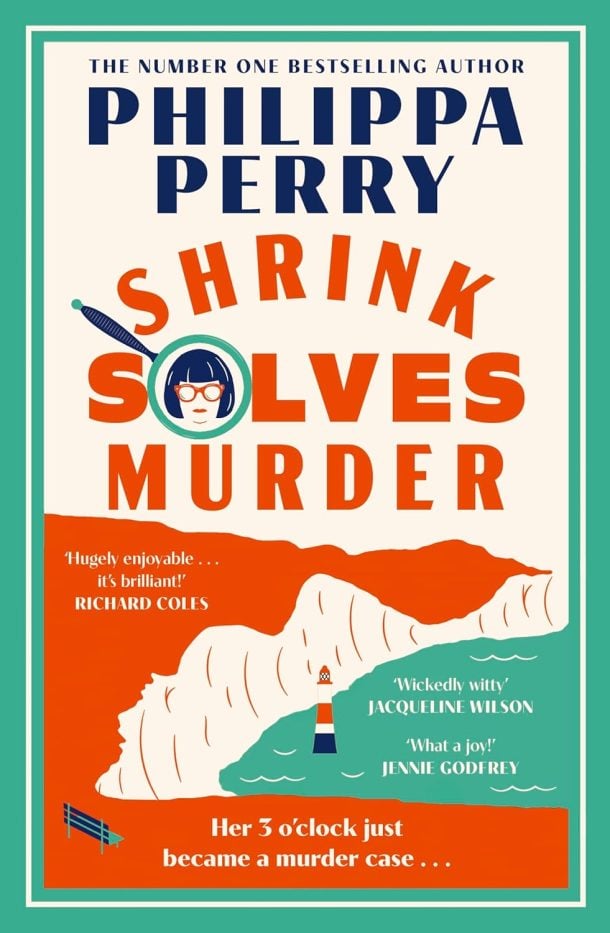 Shrink Solves Murder by Philippa Perry
Artist and psychotherapist Perry (The Book You Want Everyone You Love to Read) makes her fiction debut with a wonderfully witty cozy starring 62-year-old shrink Patricia “Pat” Phillips. Pat moved from London to the sleepy English village of Westlinke 10 years ago, and conducts her practice mostly via Zoom from a garden shed behind her cottage. When a body washes up near noted suicide spot Beachy Head and is identified as Henry Clayton, one of Pat’s clients, local police are quick to assume he took his own life. Pat, however, knows that Henry was not suicidal, and believes he may have been murdered. She decides to investigate, roping her exuberant friend and amateur distiller Prichard Knowles into her inquiry. The duo’s inquiry ruffles the feathers of plenty of people in the South Downs, including Pat’s wealthy neighbors, who indulge in noisy hot-tub parties and have grandiose plans to build a spa and golf club on the nearby Nature Reserve. Pat and Prichard are charming, often hilarious company, and Perry takes time to develop their relationship rather than rushing from clue to clue. Readers will be eager for a sequel. Publisher’s Weekly, April 2026.
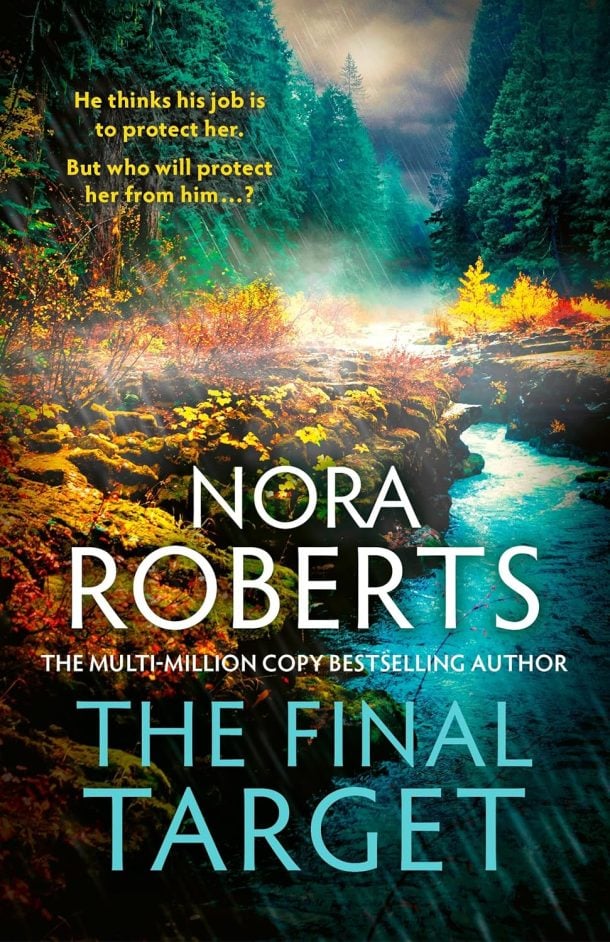 The Final Target by Nora Roberts
An author is targeted by a fan who just can’t let her go. Arden Bowie has had plenty of tragedy in her life, but now she’s finally on top. After her parents died when she was a teenager, she moved from Brooklyn to Ohio to live with her aunt, uncle, and cousins. She soon became part of their loving family and grew up to become a writer and bookseller. When her debut novel is published, she meets Dustin Dubecki at her first event. He showers her with praise, asks for writing advice, and wants to take her out for coffee. Arden tells herself he’s just a little awkward, but then he keeps showing up at her local events—and, even stranger, she’s sure she sees him lurking at her event in New York City. When he bursts into her apartment one night and assaults her, Arden’s calm life is shattered. Dustin gets a five-year sentence at a psychiatric facility; Arden spends most of that time rebuilding her sense of stability. Eventually, she moves to Oregon to start a new life where Dustin can never find her. But even though she has a beautiful home, a thriving career, a doting family, new friends, and even a potential love interest in a former cop named Gideon Riley, Arden can’t escape Dustin’s rage when his sentence is finally up. Roberts toggles between Arden’s point of view and Dustin’s, giving the reader occasional glimpses into his extremely twisted mindset. Although Arden’s attempts to escape Dustin are engrossing, the story stalls in the middle when far too many pages are dedicated to Arden purchasing and decorating a house. But the excitement picks back up when Dustin, a truly odious villain, re-enters the story. It’s also satisfying to see Arden grow into someone who refuses to be a victim, even as she deals with horrifying circumstances. A particularly nasty villain heightens the stakes in this thriller about a woman learning how to be her own hero. Kirkus Reviews, May 2026.
Return to top
NON FICTION
| Ham, Rosalie | Look after your feet | 305.262 HAMI |
| Savva, Niki | Earthquake | 324.994 SAVV |
| Keefe, Patrick Radden | London falling | 364.15 KEEF |
| Winchester, Simon | The breath of the gods | 551.518 WINC |
| Johnson, Alex | When books go bad | 809 JOHN |
| Holden, Kate | The ruin of magic | 824.4 HOLD |
| Bower, Tom | Betrayal | 941.085 BOWE |
| Pappe, Ilan | A very short history of the Israel-Palestine conflict | 956.94 PAPP |
| McLean, Robert | The town like no other | 994.49 MCLE |
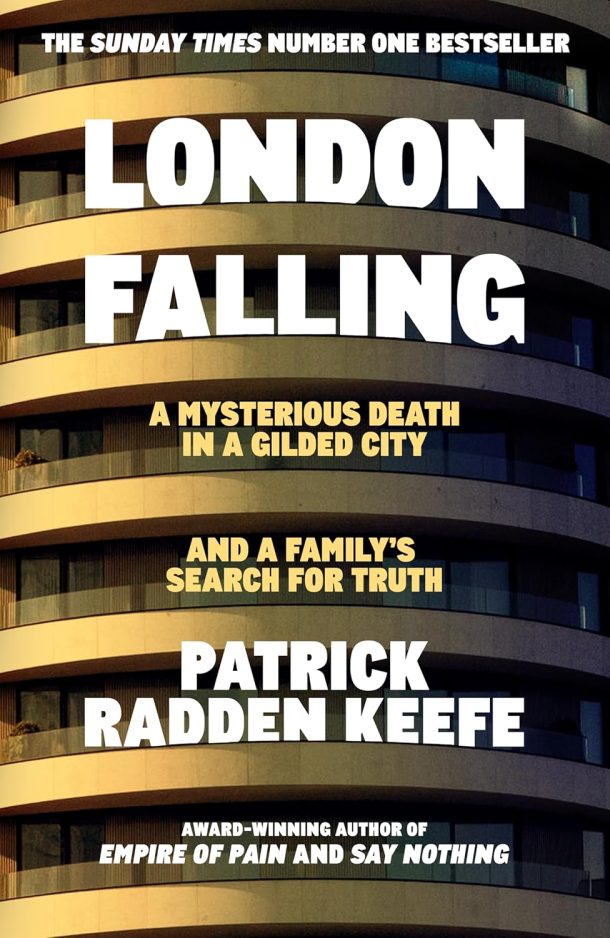 London Falling by Patrick Radden Keefe
A tragic death in a transformed city. Keefe, the author of some of this century’s finest nonfiction, has crafted another masterwork. This is a penetrating portrait of a young man destroyed by malignant influences given free rein in a global hub of capitalist excess. In November 2019, 19-year-old Zac Brettler leapt from the fifth-floor balcony of a luxury apartment in London, falling to his death in the Thames. But this was no straightforward suicide. Brettler, well-off but not rich, had become fixated on opulence, spending nights on social media admiring the “glitzy, mercenary, aspirational culture” embodied by foreign billionaires who’d bought mansions and soccer clubs in his city. Hoping to join their number, he contrived a false identity that led to his undoing. Posing as “Zac Ismailov,” a Russian oligarch’s son, Brettler befriended shady entrepreneurs. At 18, he showed his real father—who works in finance but isn’t “flashy,” Keefe writes—an authentic-looking bank statement for a personal account holding about $1 million. Keefe uncovers details that suggest Brettler jumped to escape from one of his new purported friends, a “violent” extortionist. Keefe might be our sharpest chronicler of the intersection of criminal opportunism and institutional fecklessness. The author finds witnesses and writes of the “bizarre passivity of Scotland Yard,” decimated by budget cuts. He tallies the harm done by decades of deregulation in London, where the financial sector is stacked with “professional facilitators eager to help protect or conceal a dubious fortune.” And he closely observes his real-life characters, sensitively showing the very different ways in which Brettler’s parents processed their pain. This is powerful reporting, a potential classic about the dangerous allure of a city remade as “a twenty-four-hour laundromat for dirty money.” An exemplary account of naïveté, wealth, and menace, impeccably told by a top-notch journalist. Kirkus Reviews, September 2025.
 Look after your feet by Rosalie Ham
Neither brisk advice from a podiatrist, nor wistful regret, as in Oh, I Wish I’d Looked After Me Teeth, by UK poet Pam Ayres, this first non-fiction work by Ham, an acclaimed Australian novelist, is pure delight. She makes keen, and sometimes cutting, observations on getting old, its unexpected advantages, and sometimes its indignities. Readers of her novels, such as The Dressmaker, will be familiar with some of the older women she has portrayed in those works, each a formidable character. Partly a memoir of growing up in the country town of Jerilderie, NSW, a varied career including several stints working in aged care, adventurous travel, marriage and children, Ham’s latest work demonstrates a well-developed sense of humour and irony. She makes a good point that in a country town, everyone keeps an eye on everyone else, and that means forming an opinion but saying nothing. Or something. Now that Ham is herself older and had cared for her ageing parents and a terminally ill husband, she has a clear-eyed vision of what ‘care’ should be, and she generally does not worry about what people think of her. But she has a low tolerance for ute drivers (and devotes a whole chapter to that), as well as entitled people and those lacking generosity, but she knows how to turn away and use them in a story. Ham does not flinch from detailing the ailments with which she and her friends now grapple, but is realistic enough to be grateful for accurate diagnoses and advanced treatments, surgeries and spare parts.With chapters interspersed with quotes from some of her novels, Ham meditates on the lost art of conversation, particularly in noisy restaurants, and her joy that a similarly aged group of women all admit that wine and cheese is a perfectly acceptable evening meal. Good Reading, May 2026.
Return to top
ROMANCE
| Gilmore, Laurie | The Strawberry Patch Pancake House |
Return to top
SCIENCE FICTION & FANTASY
| Wells, Martha | Platform decay |
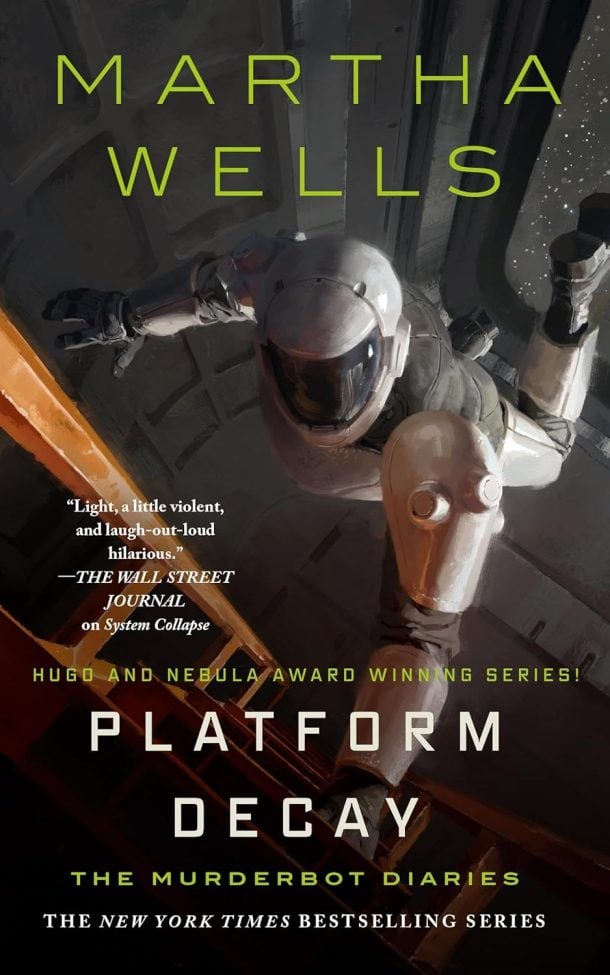 Platform Decay by Martha Wells
The lethal but good-hearted security robot that narrates Wells’s Hugo and Nebula award–winning Murderbot Diaries series returns, alongside friends old and new, for its wildly entertaining eighth adventure (after System Collapse). On a high-stakes extraction mission, Murderbot guides fellow SecUnit, Three, to sneak onto a Corporation Rim station and trigger a distraction. Meanwhile, Murderbot, hidden inside a cargo module, slips through the station’s heightened security. To Murderbot’s dismay, successfully played for laughs, the station is built to look like an elaborate planetary landscape, with shops and offices built into man-made cliffs and caves. Despite this rocky terrain, Murderbot reaches the safe house holding Farai, one of Murderbot’s dear friend Dr. Mensah’s two marital partners; their daughter, Sofi; and Farai’s mother, Naja. There, Murderbot encounters another unexpected obstacle: Supervisor Leonide, a higher-up in the Corporation Rim, who convinces the reluctant robot to help her family, sending it on a long and dangerous quest to rescue five more humans. This spectacular journey, punctuated with satisfying combat scenes, takes on an epic flavor grounded by Murderbot’s sardonic voice and Well’s exploration of mental health and physical well-being. Equal parts action packed, humorous, and heartfelt, this proves the series shows no signs of slowing down. Publisher’s Weekly, March 2026.
Return to top
TRAVEL ANECDOTES
| Waugh, Evelyn | Waugh in Abyssinia | 963.056 WAUG |
Return to top
New additions to eBooks at SMSA
EBOOKS
| General novels | Haig, Matt | The midnight train |
| General novels | Newton, Wendy Lynn | The secret garden club |
| General novels | Nott, Casey | Five stages of Grace |
| General novels | Richardson, Lim Michele | The mountains we call home |
| Mystery | Burrowes, Grace | A gentleman in possession of secrets |
| Mystery | Connolly, Michael | Ironwood |
| Mystery | Johnston, Antony | The dog sitter detective plays dead |
| Mystery | Juliusdottir, Katrin | Dead sweet |
| Mystery | Lackberg, Camilla | Dreams of bronze |
| Sci-Fi/Fantasy | Binge, Nicholas | Dissolution |
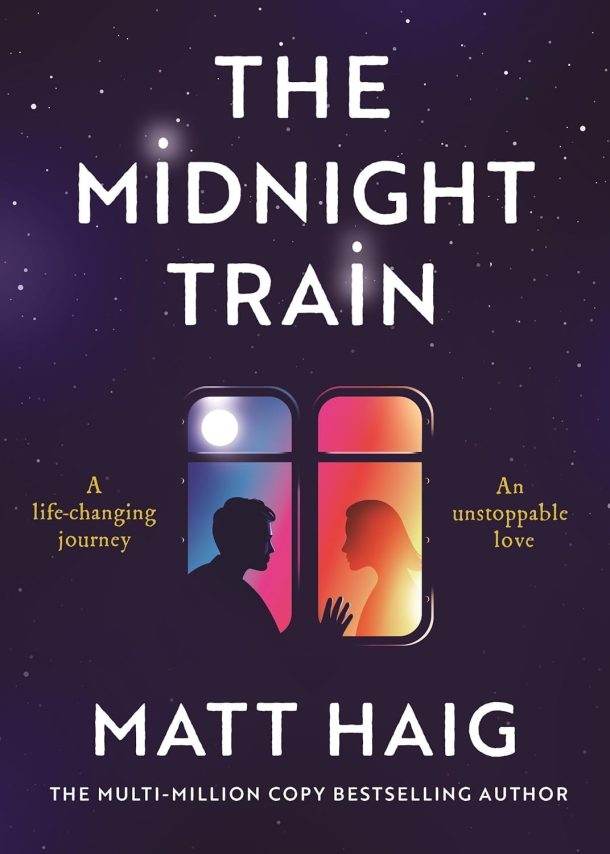 The midnight train by Matt Haig
Haig offers a touching companion piece to his 2020 novel The Midnight Library, this time following an 81-year-old bookstore chain owner who finds a second chance in the afterlife. Wilbur Budd has devoted himself to his business for decades, which caused him to neglect his wife, Maggie, and lose her many years earlier. She surprises him with a phone call, in which she expresses a desire to become friends again. Shortly after, he collapses and dies. In the afterlife, he finds himself at a train station and realizes he’s the same age as when he and Maggie honeymooned in Venice. The train that arrives is the full-size version of a toy train he had as a child. Aboard it is Agnes Bagdale, who owned the bookstore Wilbur frequented as a young boy. Agnes then leads him on a tour of his past, stressing that he must not try to speak to his younger self. However, he breaks the rule when the train brings him to his honeymoon. Haig occasionally slips into platitudes (“It only takes a moment to die, but a whole lifetime to learn how to live”), but he authentically evokes Wilbur’s fears and regrets over the course of a life marked by sacrifice. This will please the author’s fans. Publisher’s Weekly, February 2026.
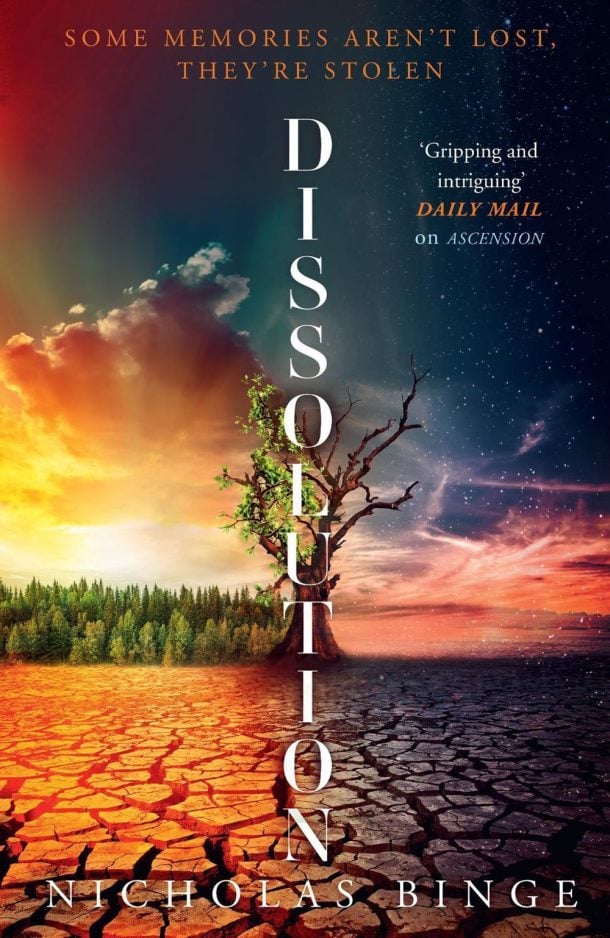 Dissolution by Nicholas Binge
Binge (Ascension) combines a suspenseful plot with an inventive structure in this unnerving sci-fi thriller told mainly through transcripts of a strange interrogation. In 2021, octogenarian Margaret Webb is questioned by Hassan, a stranger, who insists that she try to remember the events that brought her to his interrogation room before “dissolution” happens in 11 hours. This setup—which is as disorienting for the reader as it is for Margaret—makes turning pages to find out what is going on compulsive. Hassan tells Margaret that her husband, Stanley, a resident at an assisted-living facility, is in danger due to his involvement in a research study, and that her memories are vital to his safety. Flashbacks to the 1950s fill in some of the blanks, starting with Stanley’s time as a protégé of Professor Waldman, who believes that “human memory possesses unlimited depths.” Binge nimbly toggles between present and past, keeping his foot on the gas as he gradually reveals what’s preceded Margaret’s interrogation. With plausible science and multifaceted characters, this high-octane outing excites. Publisher’s Weekly, January 2025.
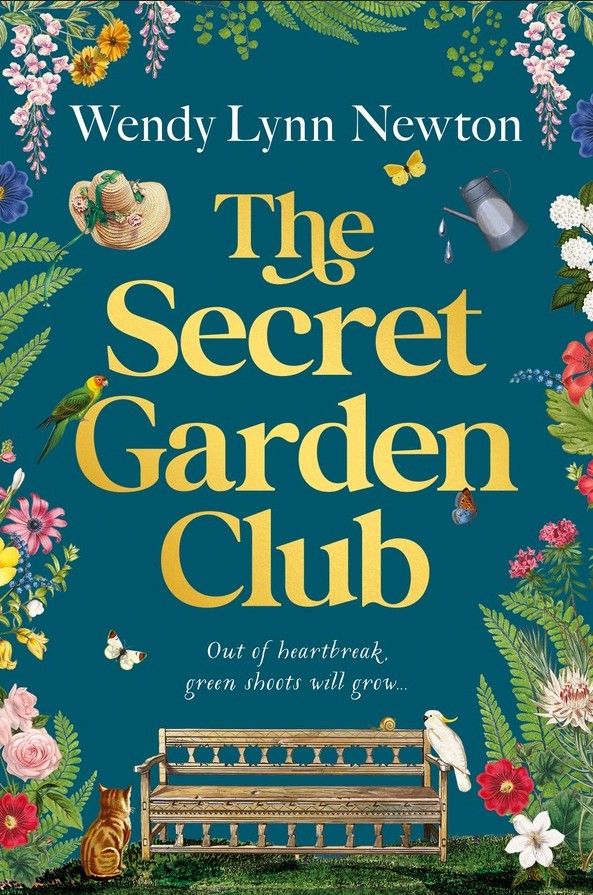 The Secret Garden Club by Wendy Lynn Newton
Whimsical, witty and genuinely heartwarming, Wendy Lynn Newton’s The Secret Garden Club is a striking debut. When 52-year-old lapsed artist Hilary finds her husband of 30 years, newly retired engineer George, dead in his beloved garden, her life is turned upside down. In shock, she hacks his immaculate garden to pieces, left with “only her own heart and too much space”. Within days, she uncovers unexpected secrets about George, including his connection to The Secret Garden Club – a group of keen gardeners (and even kinder humans) who arrive on her doorstep determined to bring gardens back to life and lift people’s spirits. And what was going on with club member Rose? Did Hilary really know her husband after all? Newton’s dry, direct and assured tone quickly draws the reader in, making Hilary’s prickly fragility compelling as she adjusts to life as a widow. Philosophical excerpts from George’s gardening journal, his early-morning celestial visitations, and Hilary’s flashbacks to their life together add genuine emotional depth. The novel’s bold exploration of grief and midlife awakening is moving without ever becoming sentimental, thanks to pitch-perfect plotting and dialogue. The very random dynamics between Hilary and the ever-patient Helpline consultant are a standout. You may need a tissue while reading The Secret Garden Club, and you’ll likely miss these characters long after the book ends. For fans of Kate Solly, Joanna Nell and Richard Osman (whose Thursday Murder Club members would get on famously with the Secret Garden Clubbers). Books Publishing, April 2026.
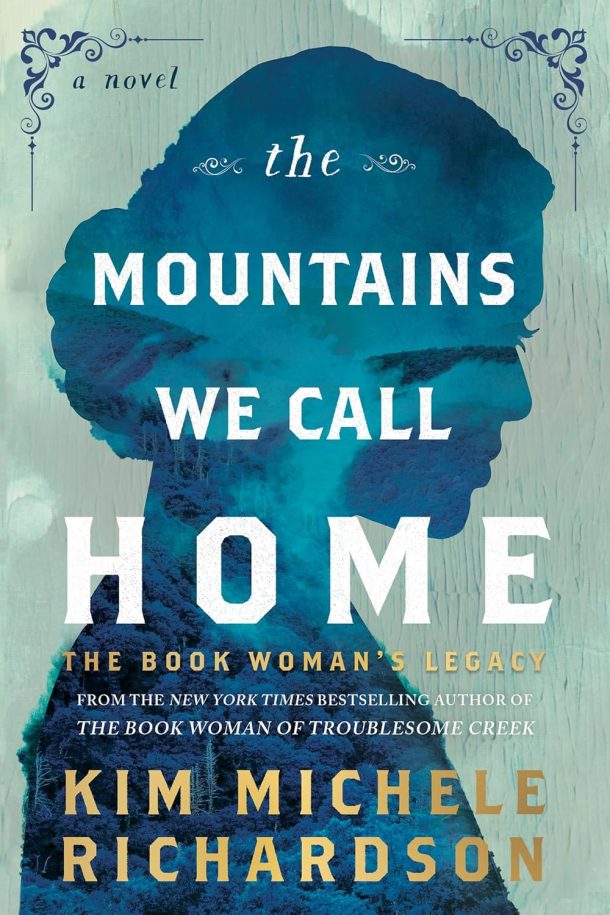 The Mountains We Call Home by Kim Michele Richardson
It’s 1953 in the mountains of Thousandsticks, KY, as lawmen arrest Cussy and her husband, Jackson. Cussy is sentenced to 18 months in prison for miscegenation: she is a Blue, born with methemoglobinemia that gives her blue skin, and Jackson is white. In prison, guards and inmates recoil from her appearance, despite her explanations of the medical condition. Cussy’s storytelling and experience as a pack-horse librarian eventually win over the warden, who appoints her prison librarian to help raise literacy rates. Though inmates initially avoid the library and Cussy, she adapts, bringing books to the elderly and those on death row, reading aloud, teaching letter writing, and quietly building trust. Her success leads to work assisting the men’s prison library as well. Granted a temporary release to teach literacy in a Black community, Cussy also discovers she is pregnant, placing her at odds with the prison’s mandatory abortion policy. When an accident creates a chance to escape, Cussy must choose between survival and sacrifice. Richardson delivers a deeply satisfying companion novel to her “The Book Woman of Troublesome Creek” series, exploring injustice, belonging, and the transformative power of literacy with compassion and grace. Readers who have awaited the series’ final chapter will not be disappointed. Library Journal, January 2026.
Return to top
AUDIOBOOKS
| General novels | Chu, L. C. | The library of flowers |
| General novels | Kubica, Mary | She’s not sorry |
| General novels | McFadden, Freida | The divorce |
| Historical | Meyer, Gabrielle | When the day comes |
| Mystery | Amphlett, Rachell | The hollow man |
| Mystery | Cahoon, Lynn | An amateur sleuth’s guide to murder |
| Mystery | Crichton, Michael | A murder in Hollywood |
| Mystery | Gatland, Jack | Hunter hunted |
| Sci-Fi/Fantasy | St. Aubin, Cynthia | Love bites |
| Sci-Fi/Fantasy | Kelly, Seana | Wicching hour |
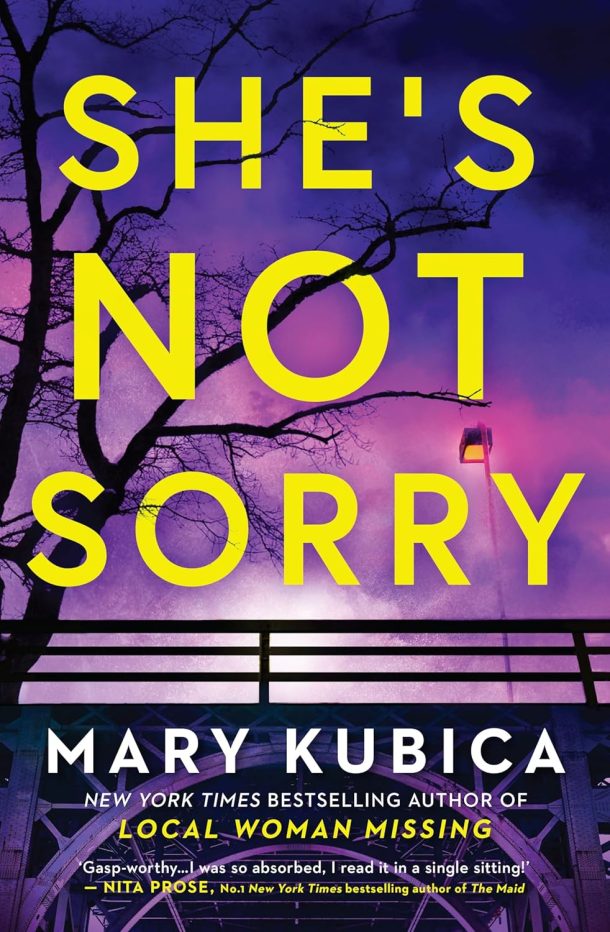 She’s not sorry by Mary Kubica
In trying to do the right thing, a woman puts herself and her family in danger—and is forced to take extreme action to protect herself. After a long shift at the hospital where she works as an ICU nurse, Meghan Michaels trudges through the cold Chicago evening to attend her divorce support group, where she’s surprised to run into Natalie Cohen, a woman she hasn’t seen since high school. While they were never close friends, Meghan encourages Nat to give the group a chance when she expresses doubts. She can’t help but notice the ugly bruise on Nat’s temple; having experience with victims of domestic abuse in her line of work, Meghan is concerned. She remembers a previous case when a battered woman came in to the hospital but refused to press charges; she was later murdered by her husband. Speaking of dangerous men, there has been a recent rash of attacks on women by a man who hasn’t been caught, so Meghan is particularly on her guard. She lives with her teenage daughter, Sienna, who’s often home by herself when Meghan is working. One of Meghan’s patients, a woman who purportedly jumped off a bridge and is now in a coma, may have been fleeing the assailant—and either fell or was pushed. These violent storylines converge over the length of a novel in which, of course, not everyone is who they seem. A twist is expected in any Kubica novel, and this one is pretty successful. Meghan is particularly strong and thoughtful, so she makes both an attractive protagonist and a formidable antagonist for those who will threaten her and her family. She has her secrets and will do anything to protect them, but she also has a sense of justice. Ultimately, she wants to make the world a safer place, and the novel encourages us to view that as a worthy goal, whatever the path. Interrogates and exposes the everyday fears that women face—while still checking all the thriller boxes. Kirkus Reviews, February 2024.
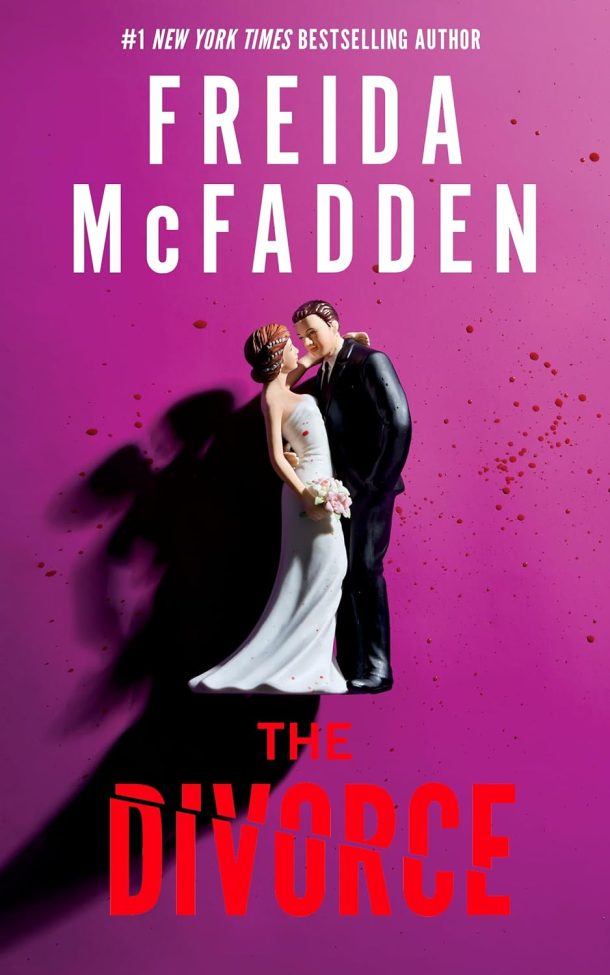 The divorce by Freida McFadden
Dead bodies turn up in the first sentence of the prologue in McFadden’s latest domestic thriller. The mystery of who died is at the pulsating heart of this propulsive tale. As Chapter 1 begins, Naomi arrives home to find the locks changed on the front door of the gorgeous home she shares with her husband, Jeremy, and their 5-year-old son, Teddy. Jeremy steps out the front door and convinces Naomi to move out while he has their home renovated, a plan Naomi knows nothing about. It’s all a ruse, though, as the next day Jeremy tells her he wants a divorce. Naomi is shellshocked and soon discovers that Jeremy is having an affair with Veronica, a beautiful younger woman. What seems at first like a stereotypical story about a man who leaves his wife turns into something else when Naomi decides she’ll do anything to get Veronica away from Jeremy and Teddy, and Veronica decides to fight for what she thinks she deserves. Fans of stalker novels will cringe with delight as creepy things start to happen. Teddy’s stuffed elephant, a gift from Veronica, is found impaled on a kitchen knife; Naomi suspects Jeremy is gaslighting her and that Veronica tried to poison her. A weird confrontation among Jeremy, Veronica, and Naomi at Teddy’s birthday party, to which Naomi shows up uninvited, is priceless. There are three main characters, and any or all of them may be unreliable narrators. Packing the plot with dark, gasp-inducing twists, McFadden outdoes herself in a story about how highly emotional people engage in risky behavior to get what they want—but in this novel, for better or worse, not everyone will survive. Trust no one in this over-the-top tale of deception and revenge. Kirkus Reviews, April 2026
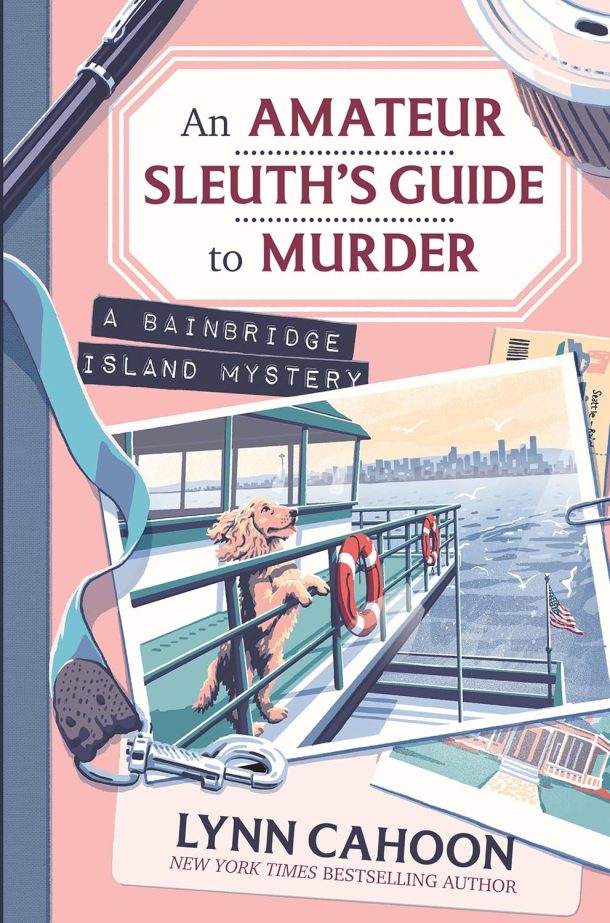 An amateur sleuth’s guide to murder by Lynn Cahoon
A discarded bride starts a new life as, yes, an amateur sleuth. Meg Gates was just days away from her wedding when the groom and one of her bridesmaids left together on the honeymoon she had planned. Now she’s cleaning out the apartment in Seattle she shared with Romain and heading with her dog, Watson, to Bainbridge Island, where she grew up. On the island, she’ll have support from her best friend, Natasha, who owns a bakery, and Dalton, her brother’s best friend and her own childhood buddy, who works on the ferry. She plans to work part-time at her mom’s bookstore, live in an apartment over her aunt’s garage, and spend her off hours doing research for local mystery author L.C. Aster. She’s also thinking about her longtime ambition to write a guide teaching regular people how to solve mysteries. Then a mystery is dropped into her own lap: Lilly Aster’s agent, Robert Meade, is found dead on Lilly’s dock after she fired him for stealing, and Lilly, of course, is a suspect. Meg is sure she’s innocent, but the police chief—Meg’s uncle Troy—isn’t convinced. So Meg, Dalton, and Natasha team up, and Meg uses her old Nancy Drew powers to investigate while seeking to develop useful tips for her book. It comes out that Meade had lent money to several locals, including Natasha, and that Lilly has an ex-husband who often visits her. When Romain reappears, Meg’s mom thinks she should try to rekindle their romance, but it’s obvious to everyone else that Dalton is in love with her, and although she’s not ready for a new romance, Meg knows she’ll never forgive Romain.Cahoon launches a promising new series with endearing characters and a charming locale. Kirkus Reviews, April 2025
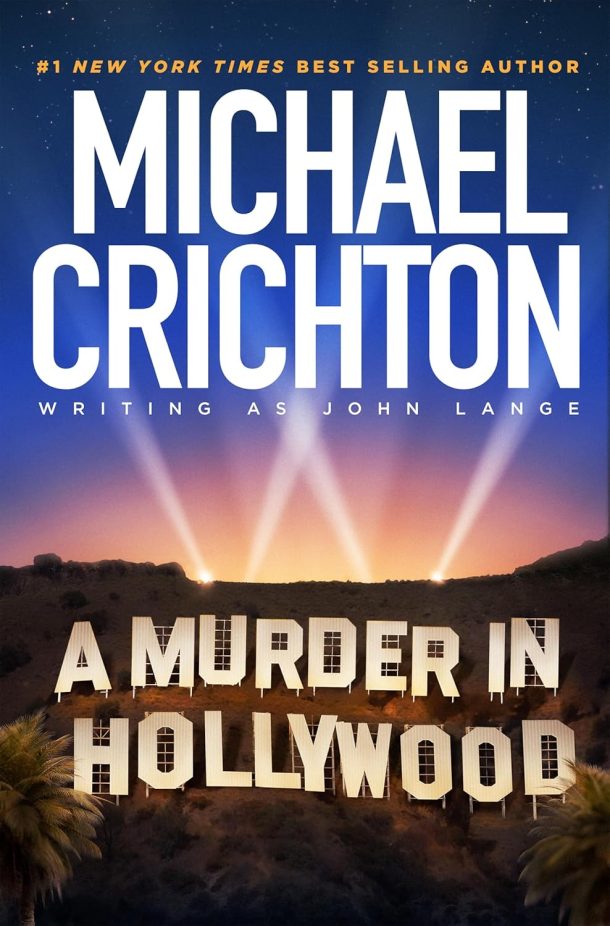 A murder in Hollywood by Micheal Crichton
In this sterling posthumous mystery from Jurassic Park author Crichton (1942–2008), written under his pseudonym John Lange in the 1970s, but never published, film publicist Harvey Jason gets caught up in chaos after perpetually drunk screenwriter Arthur McDougall is found dead in his Tucson hotel bathtub during a troubled 1973 shoot. Before dying, McDougall brawled with Clete Williams, star of the epic western Bloodrock, and left a trail of resentment among the cast, including Oscar nominee Brenda Conrad and emotionally unstable newcomer Sally Oldman. As director Tom Franklin ushers production through injuries and flash floods after McDougall’s death, Bloodrock’s neurotic producer taps Harvey to manage the film’s compounding PR disasters. Harvey’s job gets more difficult when nervous studio executives send insurance investigator Harlow Perkins to look into McDougall’s death. Suspecting foul play, Perkins uncovers a web of secrets and rivalries connecting some of the most unsavory people in Hollywood. As personal and professional stakes ramp up for the sprawling ensemble, Crichton ushers the proceedings to a pitch-perfect climax. Sharp humor, convincing dialogue, and breakneck pacing bring both the mystery and the movie set to life. Film buffs will enjoy this one just as much as mystery lovers. Publisher’s Weekly, February 2026
 Love bites by Cynthia St. Aubin
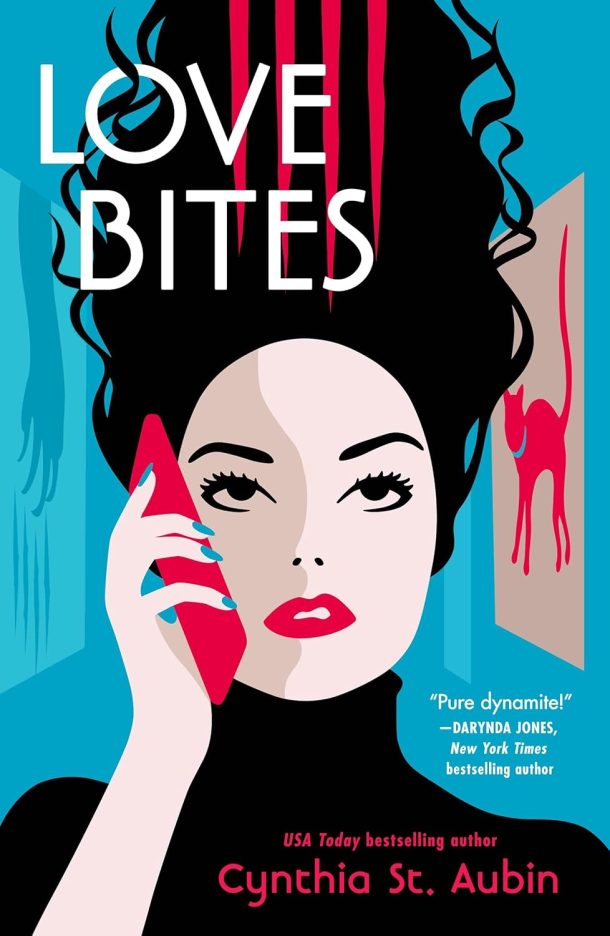
In this snarky, sexy series opener, St. Aubin (The Summer of Perfect Mistakes) weaves a supernatural suspense tale with the messy beginnings of a love triangle. Desperate for work and at emotional rock bottom following a difficult divorce, Hannalore “Hanna” Harvey parlays her master’s degree in art history into a role as art gallery owner Mark Abernathy’s personal assistant, only to swiftly discover the job is nothing like she expected. Her mysterious, mercurial, and alluring employer proves unpredictable and possibly even dangerous, though Hanna is initially too busy bringing order to his chaotic world to worry. Then one of Abernathy’s many lady friends is murdered and the ruggedly attractive Det. James Morrison takes an interest in both Abernathy and Hanna. Increasingly disturbed by her boss’s enigmatic behavior, not to mention the corpses that continue to pop up in his wake, Hanna must decide whom to trust, especially as she comes to suspect that Abernathy may not even be human. Though she’s torn between Abernathy and Morrison, Hanna remains able to hold her own—and fiercely devoted to her three cats—in the face of increasingly dangerous circumstances. The humor is wacky and the cast is quirky, but the mystery feels grounded. Though a cliffhanger ending frustrates, it’s sure to leave readers eager for more. This is a promising start. Publisher’s Weekly, September 2025