


BIOGRAPHY
| Cornwell, Patricia Daniels | True crime |
| Giuffre, Virginia Roberts | Nobody’s girl |
| Hamilton, James | Constable |
 Nobody’s Girl by Virginia Roberts Giuffre
Jeffrey Epstein’s most prominent accuser describes her harrowing victimization. When Giuffre first fell into the orbit of Epstein and his partner/aide de camp, Ghislaine Maxwell, she was a teenager who’d already had long experience with sexual abuse. Her father and a family friend molested her, she writes; later, after escaping an abusive rehab facility, she was raped by a man proffering false promises of modeling gigs. In 2000, her father was working at Donald Trump’s Mar-a-Lago club in Florida and helped her get a job at the spa there. That’s where, she writes, she met Maxwell and Epstein, who, offering promises of massage training, forced her into a two-year hell of sexual service. The first half of Giuffre’s memoir, chronicling this experience, is at once highly disturbing and compelling reading; with the assistance of collaborator Amy Wallace, she’s delivered a composed yet righteously infuriated account of how Epstein manipulated and abused her, then shared her with others. Psychological conflicts abound—she appreciated the money and some of the creature comforts, but she needed to block out the abuses to appreciate them. Giuffre is careful about naming which of Epstein’s famous friends she was trafficked to—one “well-known Prime Minister” goes unnamed, and she admits being afraid to name powerful men. “First and foremost, I am a parent,” she writes, “and I won’t put my family at risk if I can help it.” Giuffre, however, is open about her experiences with Epstein, Prince Andrew, and the late MIT professor Marvin Minsky. The second half of the book chronicles how she balances marriage and raising a family while pursuing legal recompense for herself and other victims following Epstein’s death and Maxwell’s conviction. That material is less bracing, but it helps underscore the importance of the stakes for her. In light of her suicide in April 2025, it makes the story all the more tragic. She was just getting started as an activist, and her voice here is resolute and clear. A valuable document of abuse, and the strength required to counter it. Kirkus Review, October 2025.
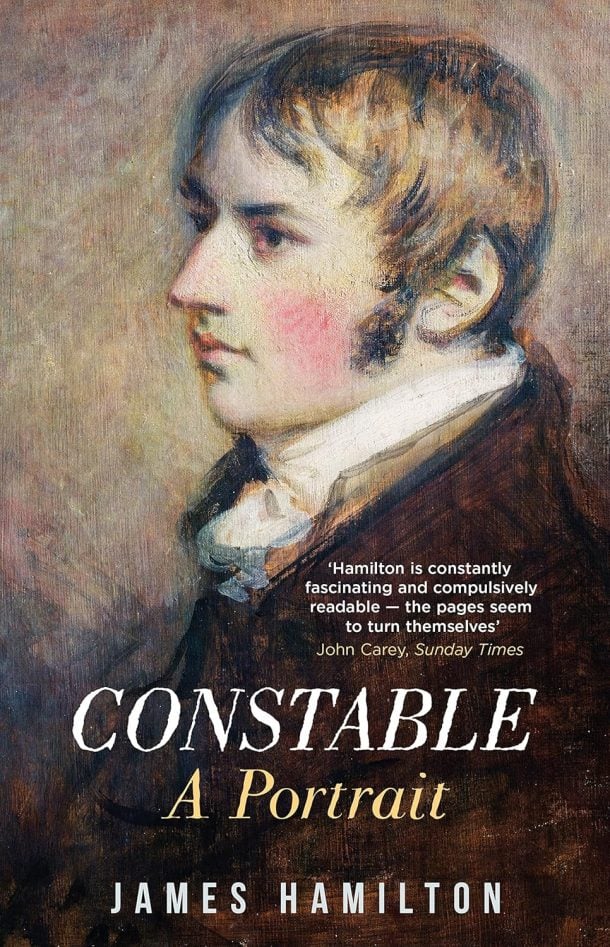 Constable: A Portrait by James Hamilton
A biography of the pioneering English landscape painter. In this vibrant text, cultural historian Hamilton, author of a biography of J.M.W. Turner, paints a unique portrait of John Constable (1776-1837). Born in Suffolk, Constable is renowned for his landscape paintings, particularly those inspired by the countryside where he spent his youth, now commonly known as “Constable Country.” As the author writes, “from innumerable boyhood walks in the country John began to bring home drawings. This was ominous, and began to cast its shadow.” While his parents wished for him to become a parson or perhaps carry on the family business, Constable had other aspirations. In his painting, he was “attentive to detail, spontaneous in gesture, brave in his use of colour, and so powerful an advocate for his native landscape that even after two hundred years his work is scrutinised for social and agricultural information.” As his skills developed, Constable became increasingly conflicted between painting portraits and painting landscapes. “There could be money in portraits; but for a young man drawn to landscape painting there was only struggle,” writes Hamilton, who also examines Constable’s experiences as an art student at the Royal Academy in London. While his time in London made an impression, he felt “artistic talent, his own and that in others, should be nurtured in tranquility,” further strengthening his connection to home. In addition to exploring elements of Constable’s personal life, Hamilton describes the rapid rise of his reputation in France and the effects this recognition had on his career. Through skillful use and analysis of Constable’s writings, Hamilton takes a deep look into his subject’s life, including his influences, challenges, and tragedies, as well as the misconceptions that have followed the man behind the paintings. The book includes a selection of four-color photos of Constable’s work. An intimate, enlightening look at an indispensable painter.Kirkus Reviews, September 2022.
Return to top
COOKING
| O’Brien, Katrina | The classic Australian cookbook |
Return to top
GENERAL FICTION
| Bradford, Barbara Taylor | The wonder of it all |
| Burke, Caro Claire | Yesteryear |
| French, Dawn | Enough |
| Haig, Matt | The midnight train |
| Harding, Robyn | Strangers in the villa |
| Lim, Rebecca | The graduate |
| Patchett, Ann | Whistler |
| Ryan, Jennifer | The palace women |
| Smith, Tom Rob | Twenty years together |
| Stockett, Kathryn | The calamity club |
| Strout, Elizabeth | The things we never say |
| Stuart, Douglas | John of John |
| Turner, James Houston | The identity factor |
| Yang, Shuangzi | Taiwan travelogue |
 Yesteryear by Caro Claire Burke
A tradwife influencer wakes up to find herself living the old-style life she’s been peddling. To her millions of followers, Natalie Heller Mills’ life appears perfect: Married to the handsome son of a wealthy, family-values-touting U.S. senator, she spends her days posting content of herself churning butter, baking, and crafting in her impeccable farmhouse kitchen; tending to the chickens and other livestock; and posing with her ever-expanding brood against the picturesque barn and rolling fields of her newly acquired Idaho farm, catchily dubbed “Yesteryear.” But the women who follow her don’t know about the nannies and other modern-day cheats that make the farm and family run. They don’t know Natalie’s husband is soft, shiftless, and perhaps not the sharpest tool in the shed. And they certainly don’t know that Natalie is not even close to being the “flawless Christian woman” she projects. “The mother every woman wanted to be, and the wife every man wanted to come home to”? Yeah, that’s just for Instagram. When Shannon, the producer Natalie hires to broaden her reach, exposes the disconnect between Online Natalie and Offline Natalie, the influencer’s perfect facade begins to crumble and her dream life becomes a nightmare. After an indeterminate amount of time—“Was it a day, a week, a month?”—Natalie wakes up to find herself in a hardscrabble, early-19th-century version of Yesteryear, with children she doesn’t recognize though they insist they’re hers and a husband who looks, but doesn’t act, like her spouse. How did Natalie get here? Is it a prank, a reality show, time travel? In Natalie, Burke has given us an absolutely riveting character—bitchy, narcissistic, and uncaring, yet also incongruously relatable and wickedly entertaining. As it sends up both MAGA and online culture, this deliciously funny, topical, and fiercely intelligent debut also probes deeper questions about authenticity, ambition, kindness, celebrity, consumerism, and what it means to be a woman in America today. It’s also a propulsive page turner, impossible to put down. A remarkable debut—both a book for the moment and one that will endure. Kirkus Reviews, December 2025.
 The Graduate by Rebecca Lim
Fei Fei Chou wants to prove herself in her new job at a prestigious law firm. She wants to prove she’s there because she has earned her place, not because she’s a ‘diversity hire’ or because her boss has a fetish for Asian women. Fei is determined to take revenge on an unidentified man who kidnapped and raped three girls from her school 30 years ago. The only clues she has to go on are from her communication with one of the victims, Hailey, and her memory of seeing the word ‘Paukeaho’ on a box, which led her to a mysterious cattle station in central Queensland whose accounts were handled by the law firm for which she now works. Newly hired as a graduate, Fei will use her position however she can to access the firm’s records and connections – and uncover the rapist’s identity. Set in the heart of Melbourne, The Graduate is a gritty and brutal legal thriller that is also a woman’s story of exorcising her demons from a traumatic experience. Fei is an admirable protagonist, beginning as an insecure and meek graduate, unsure where to begin in her quest for revenge and if she is even capable of it. But her anger grows and she becomes furious at the trauma she and many young girls have gone through, the injustices that go unchecked, and the blatant prejudice she confronts at work every day. As you learn just how personal these crimes really are to Fei, she grows into a woman confident in her own voice and unwavering in her mission for revenge. Readings, April 2026.
 Whistler by Ann Patchett
A chance meeting in a museum unlocks a long-closed door in a family’s past. Of a piece with her last three novels—Commonwealth (2016), The Dutch House (2019), and Tom Lake (2023)—Patchett’s latest explores the evolution of families over time, romantic secrets, and step-relationships, again giving these topics the wry and tender treatment that is distinctively hers. As it begins, Daphne Fuller’s attentive husband, Jonathan, notices that a man has been following them through the Metropolitan Museum of Art. At first they chalk it up to the fact that “old guys love [Daphne],” as she told Jonathan decades ago, a notion he has held onto “like a souvenir postcard from another era.” But it turns out that, though Daphne doesn’t recognize him, Eddie Triplett is her former stepfather. Like the author herself, as recalled in her 2020 essay “Three Fathers,” Daphne has had three dads. Her biological father, a deep-sea fisherman named Buddy Zabriskie, left the family early; her current stepfather, Lucas Ekker, lives with her mother in retirement in Massachusetts. Ekker is an unprepossessing sort Abby met working as the publicist for his self-help books, Positivity!, Positively Positive!, The Positivity Workbook!, Positive Every Day!, ad infinitum. The man in the museum, Eddie Triplett, was also someone her mother met through her job in publishing, and once Daphne realizes who he is, she remembers that “[their] hearts were forever stitched together.” This is because Daphne and Eddie were in a serious car accident when she was 9 years old, after which her mother immediately divorced him and evicted him from their lives. The details of that accident—among them lies the reason the novel is named after a horse called Whistler—are gradually wheedled out of Daphne by her younger sister, Leda, a clinical psychologist in New York and a reliable source of insight on the narrative’s key issues. “‘You make it sound like I’ve been keeping all this from you, but I’m not,’ [Daphne] said. ‘Who goes through life thinking about what happened when they were nine?’ ‘It’s all people think about,’ Leda said.” An evocative and moving tribute to the death-defying, heart-opening, infinitely redemptive power of storytelling. Kirkus Reviews, April 2026.
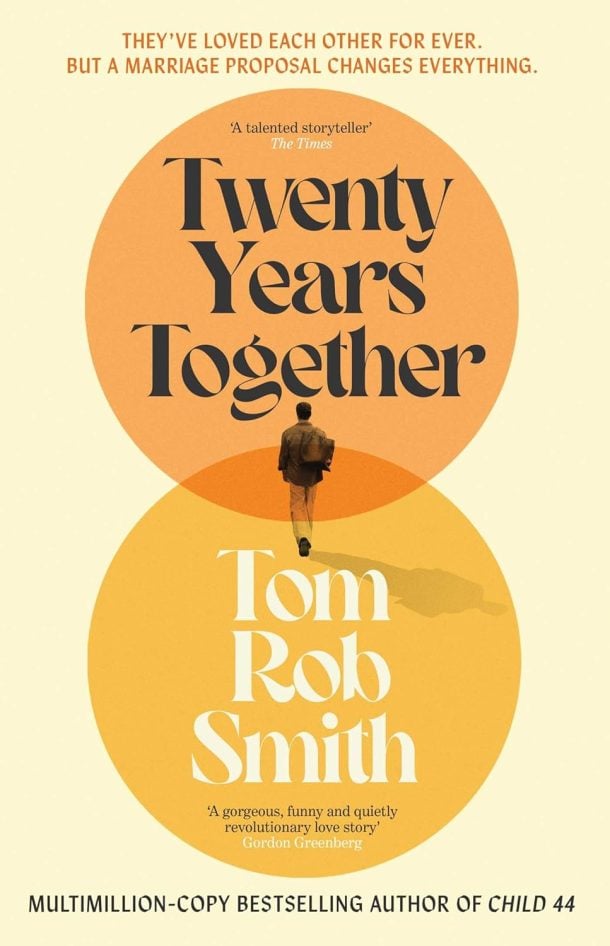 Twenty Years Together by Tom Rob Smith
In a Soho bar in 1992, Danny, a scruffy trainee nurse, meets the suave Spaniard Luis, a high-profile lawyer. It’s an unlikely hook-up but after spending the night together Luis asks Danny to attend a wedding of friends with him. Twenty years later Danny and Luis are still together and the friends, Emma and John, are celebrating their 20th wedding anniversary. At the party Danny gets the sense that his relationship with Luis is seen as somehow less important even though it has endured as long as Emma and John’s marriage. It is here that the idea of asking Luis to marry him takes hold although, at that time, a civil partnership is their only legal option. Danny wants to do it ‘properly’ – formal proposal, engagement ring, engagement party and a big wedding for close friends – even though he’s not sure if that’s what’s expected for gay marriages. Doubts inevitably creep in. What does marriage change after 20 years? Will Luis say yes? Is this just Danny’s midlife crisis? Are they about to split up? The process of getting married forces them both to address the past and to focus on what they want from life now and into the future. Danny reconnects with his estranged parents and Luis returns to Spain to re-examine the life he turned his back on so many years ago. Will Luis return? Will Danny find other options in his absence? Tom Rob Smith teases out such questions as both partners ultimately confront their own internalised homophobia – the sense that their life choices were somehow a disappointment. Twenty Years Together is certainly not a disappointment and will speak to couples of all persuasions thinking of marriage as the next step in their relationship. Good Reading Magazine, May 2026.
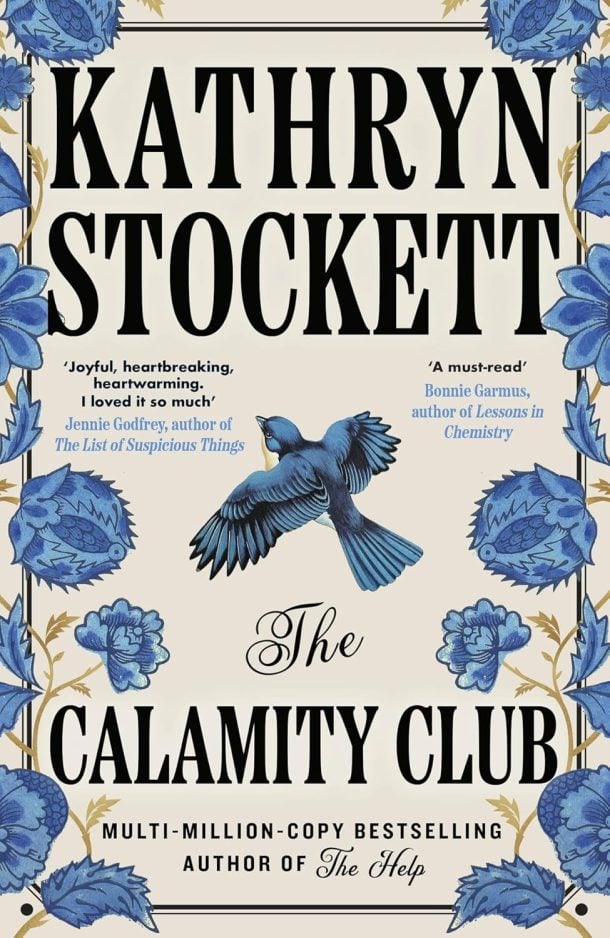 The Calamity Club by Kathryn Stockett
Stockett’s vibrant follow-up to her bestselling 2009 novel, The Help, traces the intersecting lives of an exasperated older sister, a precocious orphan, and an enterprising woman in 1933 Mississippi. Eleven-year-old Meg Lefleur endures a miserable existence at the Lafayette County Orphan Asylum for Girls in Oxford. Singled out by the cruel director, Meg is forced to toil in the institution’s offices rather than attend school. Too old to be adopted, she counts down the days until her 12th birthday, when she’ll be sent to work in a Biloxi cannery—though she still clings to hope that the mother who abandoned her might return. Meanwhile, Birdie Calhoun, 24, is forced into action when back taxes threaten the rural home she shares with her mother and grandmother in the Delta. She travels to Oxford to ask her younger sister, Frances, for help, only to discover that Frances’s supposedly charmed life is far less so than it seems. There, Birdie crosses paths with Meg and Charlie, a down-on-her-luck woman with a wild idea for making a fortune and reclaiming control of her life. The pace slackens at times, but Stockett holds the reader’s attention with her colorful characters. By turns hilarious and heartbreaking, this offers a memorable view into the impossible choices faced by women in the Great Depression.Publisher’s Weekly, March 2026.
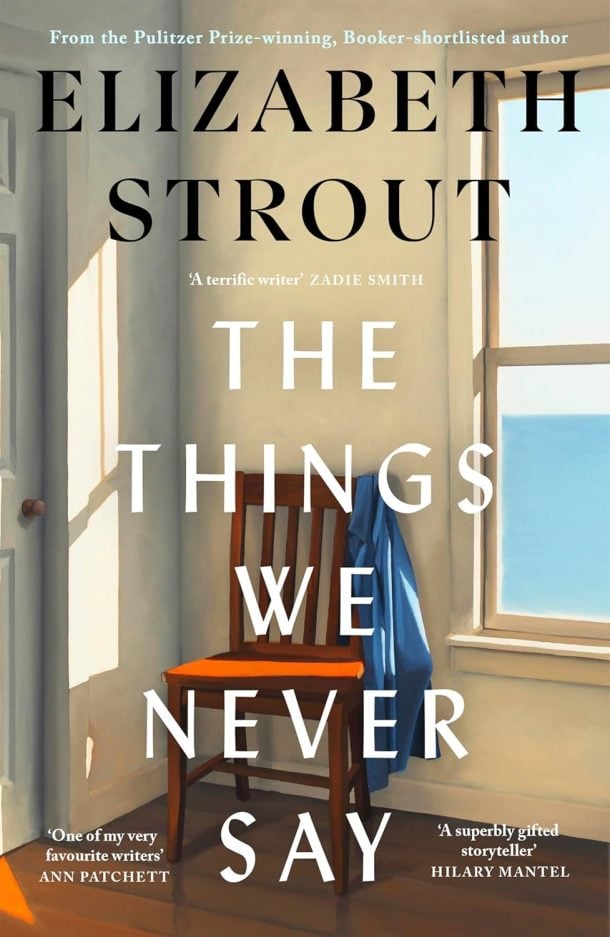 The Things We Never Say by Elizabeth Strout
A married high school teacher confronts his despair and isolation in this insightful outing from Strout (Tell Me Everything). Artie Dam, 57, has a beautiful home on the Massachusetts coast, a long and stable partnership with his wife, Evie, and a job he loves, but he can’t shake his “accretion of loneliness,” nor can he bring himself to reveal it to anyone. Recalling the suicide of a character in a novel he read, Artie is reminded that “people do die of loneliness” and decides to end his life. After he nearly drowns in a sailing accident, his brush with mortality renews his desire to live, but he’s rocked again when his 27-year-old son, Rob, confides in him that a DNA test showed he’s not Artie’s biological child. As father and son reimagine their bond, Artie must decide whether to jeopardize his marriage by telling Evie what he’s learned. Some of the episodes feel a bit random, but Strout masterfully explores her central themes (after a “lunatic” former president is reelected, a clear reference to Trump, Artie feels like the “country was committing suicide”) and offers timeless observations, suggesting, for example, that her characters feel distant from those they love most because “to say anything real was to say things that nobody wanted to know.” This will stay with readers. Publisher’s Weekly, March 2026.
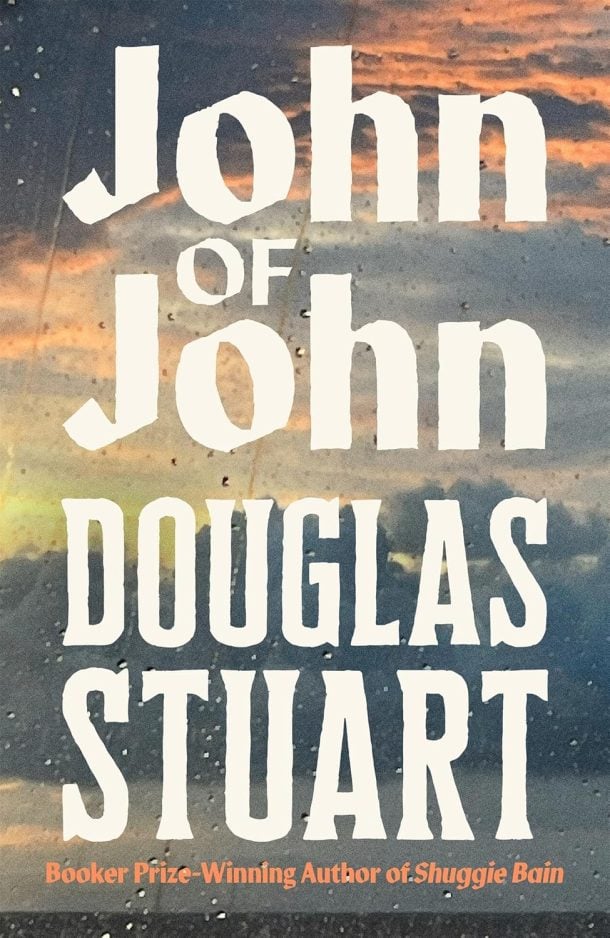 John of John Douglas Stuart
In Scotland’s Hebrides islands, a closeted gay man returns home to an insular community of sheep farmers and weavers, where complications and secrets await. Stuart follows his Booker Prize–winning debut, Shuggie Bain (2020), and acclaimed second novel, Young Mungo (2022), both set in Glasgow, with a coming-of-age story set in a very different part of Scotland. John-Calum Macleod has left art school in Edinburgh, broke and without prospects, called home to the Isle of Harris by his father because his grandmother is unwell. Ella, his mother’s mother, lives with her former son-in-law on his croft while her remarried daughter lives elsewhere with her husband and younger children. The reason for this unusual arrangement will become clear slowly, along with other key issues: Why Cal’s father, also named John, a pillar of the extremely conservative local Presbyterian church, is so tortured; what led to the end of his marriage; whether Cal’s attempts to hide his sexuality from everyone except the neighbor boy who used to be his lover have been successful. When that boy, Doll Macdonald, gives Cal an icy cold shoulder upon his return, his attention falls on his father’s best friend, Innes MacInnes, a never-married man who lives with his own ancient, infirm father and emotionally estranged brother. Could Innes possibly be gay? Cal wonders. The 22-year-old Cal exists at the confluence of two profoundly different cultures. On the one hand, he speaks Gaelic with his father, works nights weaving traditional tweed on their loom, helps with the sheep, and attends his father’s evangelical church. On the other, he takes ecstasy, goes to a booze- and sex-focused hullabaloo on a party bus, tries to find a hook-up in the personal ads (it seems to be the 1990s). The central question of the book, which is facing all the main characters, is whether it’s possible to inhabit the place one calls home as one’s genuine self. Stay or go? Life or death? By the end, this issue is resolved in a variety of tragic and hopeful ways. With his gift for creating vibrantly specific characters and settings, Stuart again taps profound human truth. Kirkus Reviews, December 2025.
 Taiwan Travelogue by Yang Shuangzi
A (fictional) Japanese writer explores the colorful and complex culinary, linguistic, and political dynamics that shaped life in 1930s Taiwan. Originally published in Mandarin Chinese in 2021, the book is presented as a translation of a rediscovered 1954 Japanese novel by a young writer named Aoyama Chizuko. Based on the fame of a film adaptation of her novel A Record of Youth, Aoyama is invited on a lecture tour by the government-general of Taiwan and a women’s group. She lands on a busy, colorful island where “everything teemed and surged toward me under the cobalt sky.” Amidst the frenzy of “charades-like gesturing” in the process of negotiating with a marketplace fruit vendor, she is rescued by a charming young woman, who turns out to be her translator. As she and the woman, whom she nicknames Chi-chan, travel together, she finds herself drawn into an increasingly deeper friendship and begins to think that all is not as it seems. For the daughter of a concubine who was sent to live with her mother’s poor jute-farming family, Chi-chan reveals an amazing proficiency with languages; she is also well versed in popular culture and remarkably skilled at rolling dice. As Aoyama insists on probing her friend about her past, Chi-chan continues to hold back, insisting that the closeness she longs for is out of reach. Their journey together approaches its end, and Aoyama gets closer to uncovering Chi-chan’s true history, but will that bring them closer together or tear them further apart? Yáng’s sharp observation blends with sensitive, sometimes subversive political meditations to create a colorful portrait of pre–World War II Taiwan. A moving account of friendship in the shadow of the Japanese Southern Expansion policy. Kirkus Reviews, August 2024.
Return to top
HISTORICAL FICTION
| O’Farrell, Maggie | Land |
Land by Maggie O’Farrell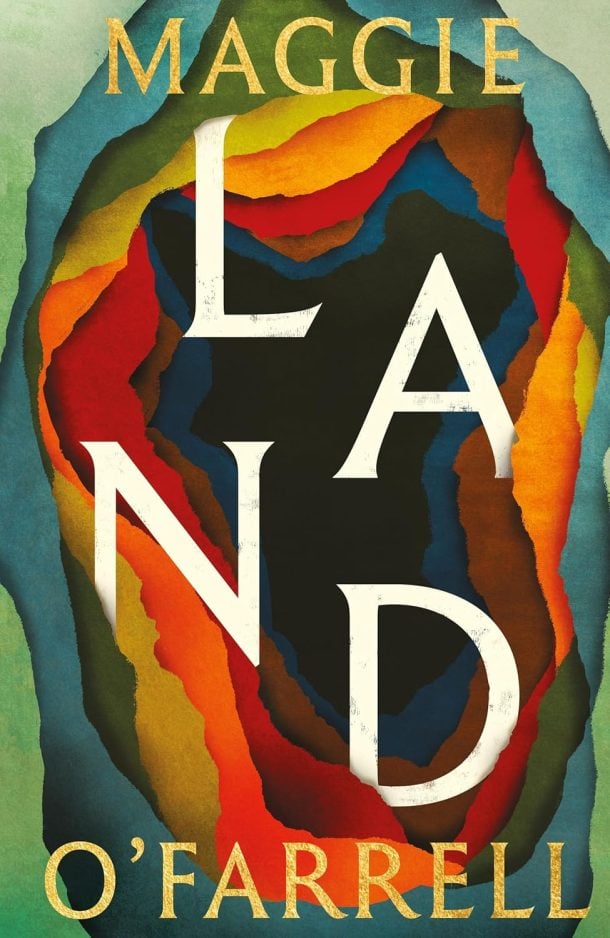
A father and son stumble on an ancient Irish sacred site, with lasting consequences. It’s 1865 when the normally taciturn Tomás reels out of a mysterious wooded copse in rural Ireland, babbling nonstop. He and his 10-year-old son, Liam, have been surveying for the hated British, who need native speakers to learn place names and boundaries from the locals, then render them into English. But now, as he tells his pregnant wife, Phina, and daughters, Enda and Rose, back in Dublin, he plans to give up that job to make “a map of how this land really is, of how it has always been, of what lies beneath whatever order or disorder others might impose upon it.” Oh, and he has taken their life savings to lease land near the copse from a local aristocrat; they will live in a ruined cottage, abandoned years ago during the Great Hunger that emptied the Irish landscape and sent Tomás and Phina as children to a grim workhouse. This is the dramatic premise of O’Farrell’s evocative and impassioned 10th novel. After Tomás’ baffling announcement, the narrative rewinds some millennia to reveal the copse as the source of a spring with magical powers, in which a young girl finds a ring that belonged to her vanished father, the last of Ireland’s original inhabitants. Back in the 19th century, baby Eugene, born in the family’s new home, “is not as other children”; he never speaks and appears to have mystical understanding. He and his siblings, each a skillfully drawn individual, forge separate destinies over the following decades, embodying O’Farrell’s key themes: the conflict between Catholicism and ancient ways, the subjugation of women, the brutality of the English ruling class, the people’s connection to the land. A gruesome exorcism is the first of many disasters that befall the family—so many that only O’Farrell’s pungent reminders of Ireland’s long and tragic history keep the litany of sorrows from seeming excessive. The radiant closing pages offer a measure of relief from the generally dark tone. Steeped in Irish history and folklore, alive with a sense of wonder. Kirkus Reviews, April 2026.
Return to top
MYSTERY
| Anderson, Jack | The return of Moriarty |
| Bowen, Rhys | From cradle to grave |
| Bright, Verity | A witness to murder |
| Christie, Agatha | The seven dials mystery |
| Connelly, Michael | Ironwood |
| Rämö, Satu | The clues in the fjord |
| Ross, L. J. | Heavenfield |
| Sullivan, Tim | The monk |
| Todd, Charles | A Christmas witness |
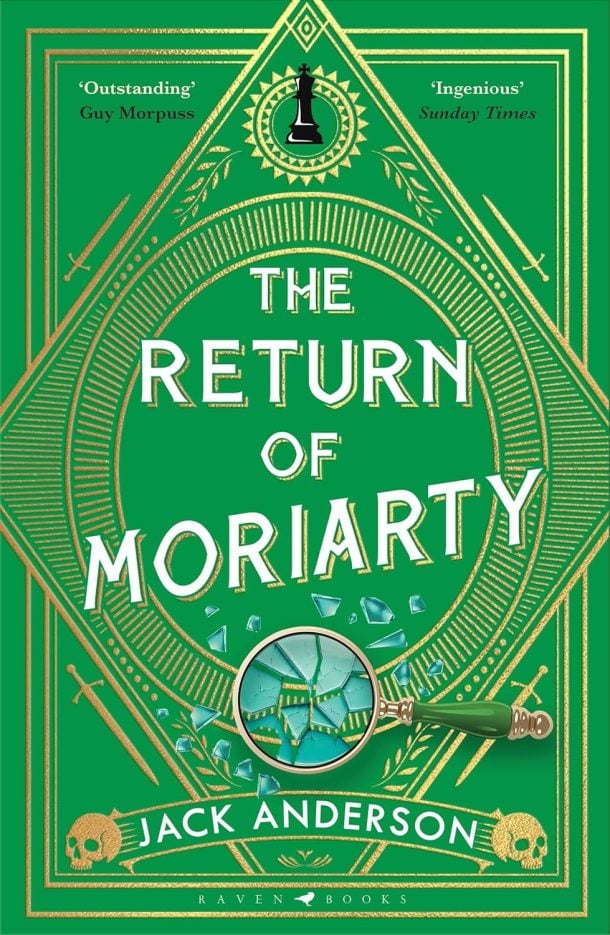 The Return of Moriarty by Jack Anderson
When the world’s most famous consulting detective and his criminal nemesis meet at the edge of Switzerland’s Reichenbach Falls, only one of them walks away. And not the one you might expect. Returning in 1891 to her childhood home in Bavaria six years after she departed in disgrace to enroll in the medical school of Copenhagen University, Clara Mendel faces a chilly reception. Her beloved mother is dead. So is her stepfather, Alexander Alber. The family who remain—Alexander’s sisters, Dorothea and Margarethe; his brother, Klaus; and their father, Baron Alber—have their differences, but one belief unites them: Clara’s not really part of the family. Her stepaunts and stepuncle are especially suspicious of her financial legacy from their late brother and her motives for returning for Alexander’s exhumation. Aggrieved cousin Friedrich Alber demanded the exhumation because he claims that the bejeweled golden sword Ahnensäbel, a family treasure buried with Alexander by the grieving baron, is rightly his. But when the tomb is opened, the sword is missing. So the Albers mend fences among themselves long enough to freeze out Clara, as she apparently deserves for some long-unexplained scandal. What does all this have to do with Sherlock Holmes and Dr. James Moriarty? For quite a stretch, Anderson acts as if this question were pivotal, blocking out the names of the two archenemies when they appear in a letter and refusing even to allow Moriarty’s name to be uttered till long after most readers have worked out his role in the case themselves. What remains is the intricately layered saga of a deeply dysfunctional Bavarian family where both murder and Moriarty feel right at home. Come for the title, stay for the domestic hijinks that’ll give the archcriminal a run for his money. Kirkus Reviews, September 2025.
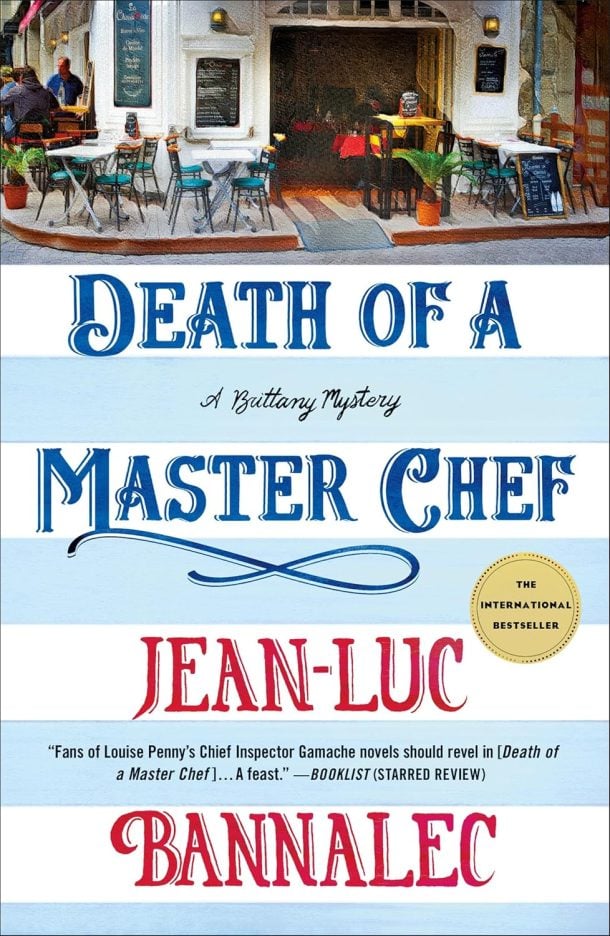 Death of a Master Chef by Jean-Luc Bannalec
A seminar near Saint-Malo leads Commissaire Georges Dupin of Concarneau into one of the strangest investigations in his Breton police career. Although Dupin rarely finds seminars helpful in honing his investigative skills, the native Parisian, who’s finally adjusted to life in remote southern Brittany, looks forward to a chance to study the customs—especially the foodways—in the north of his adopted province. The famed Marché de Saint-Servan, with its plentiful stalls of luscious local cheeses, seems like the ideal place to start until a ruckus midmarket reveals one woman stabbed to death and another fleeing from police. The victim, Blanche Trouin, is a celebrated local chef, and the escapee is her sister, Lucille, also a prominent chef and Blanche’s bitter rival. Upon her arrest, Lucille refuses to talk. But while she’s in investigative custody, Blanche’s husband is also murdered. Normally, Commissaire Huppert of Saint-Malo would be charged with investigating Blanche’s death, but a second murder prompts Dupin’s boss, Prefect Locmariaquer, to form a team including Dupin and Dupin’s seminar partner, Commissaire Gaston Nedellec, to handle the complex case. The “Britt Team” will embody what the seminar is designed to promote: cooperation among the different Breton departments. But solving a murder that Lucille Trouin must have committed coupled with a crime she couldn’t possibly have committed is no easy task, and Dupin must stretch his wits to ensure that Finistère, his home department, holds up its end. Dazzling detection and equally fine cuisine. Kirkus Reviews, March 2024.
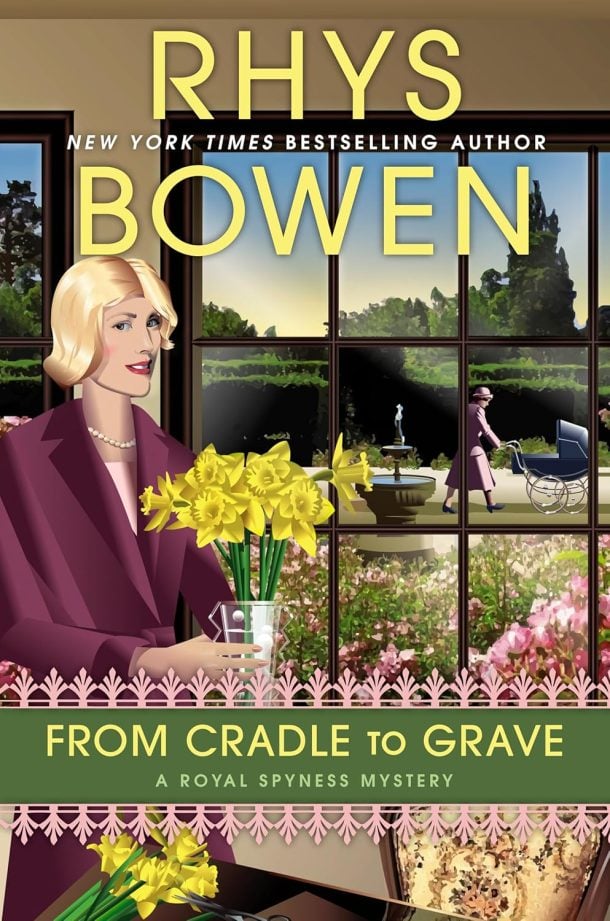 From Cradle to Grave by Rhys Bowen
An aristocratic young mother proves a dab hand at solving murders in 1937. Lady Georgiana O’Mara is a cousin to both the new King George VI and the Duke of Windsor, who abdicated to marry the rapacious Mrs. Simpson. She’s married to the Honorable Darcy O’Mara, heir to an Irish title, but they don’t have much money even though Darcy works for the government in a hush-hush position. Luckily, she’s the heir to her well-off godfather, who’s letting Georgie, Darcy, and their son, James, live in his home. Everything is going well until Georgie’s bossy sister-in-law, Fig, Duchess of Rannoch, sends a much-too-proper nanny to take care of James, and announces that she intends to visit herself to make sure things run as she insists they should. Thoroughly intimidated, Georgie unhappily puts up with her unwanted visitors. Darcy encourages Georgie to go to London to visit her friend Zou Zou, a Polish princess who might help her find a nanny more to her liking. When Georgie arrives at her friend’s house, Zou Zou is rushing off to a funeral for a young man who died in a tragic accident, but Georgie soon runs into another friend, Belinda, who’s just returned from Paris. Another young man has just died in an apparent accident, but there’s something that doesn’t sit well with Georgie about the deaths. The death of a third young man sets the alarm bells ringing, and a fourth death sends sirens blaring, urging Georgie to look for connections among the deceased. They were all Darcy’s age and all set to inherit estates. Why were they targeted for death? The pre–World War II ambiance provides an apt setting for some ingenious murders in a case worthy of the clever sleuth. Kirkus Reviews, November 2025.
 Ironwood by Michael Connelly
More crimes of every shape and size bedevil the paradise of Santa Catalina Island, off the coast of southern California. Police substation director Sgt. Stilwell, who really doesn’t want you to know his first name, is leading the interception of an aircraft that’s just landed when everything goes sideways, ending Dep. Ilsa Ramirez’s career and Dep. Alton Quigley’s life. After the book opens with such a bang, Stilwell settles into his customary routine, now tinged by grief. He identifies cartel courier Gonzalo Kalas as the man who fled the plane during its brief stint on the ground, then hears that Kalas has eluded police custody. Stilwell finds a keychain in a backpack Kalas insisted wasn’t his, with a key that belonged to Angela Metier, who went missing several years ago. He contacts Det. Renée Ballard, the only paid member of the LAPD’s Cold Case Unit, then sees the case he’d expected to close with the discovery of Angela’s body opening even wider when he and Ballard link Angela’s death to the unsolved disappearances of several other female hikers. Stilwell’s attempts to identify the vandals who chopped down several rows of vintner Oliver Marquez’s grape vines and defaced the island’s famous chimes tower with the bold letters “FSID” quickly lead to suspects whose apprehension presents problems that call for a diplomat rather than a police officer. Throughout, veteran Connelly intertwines the cases in a way that provides a satisfyingly comprehensive sense of Stilwell’s complicated workload, which is much greater than the sum of its parts. And when Stilwell follows one of them up the daisy chain to uncomfortably high-level conspirators, the stage is set for a climactic showdown that’s also a highly effective cliffhanger. Welcome back to Catalina, where every day brings exciting new adventures—especially if you’re in law enforcement. Kirkus Reviews, March 2026.
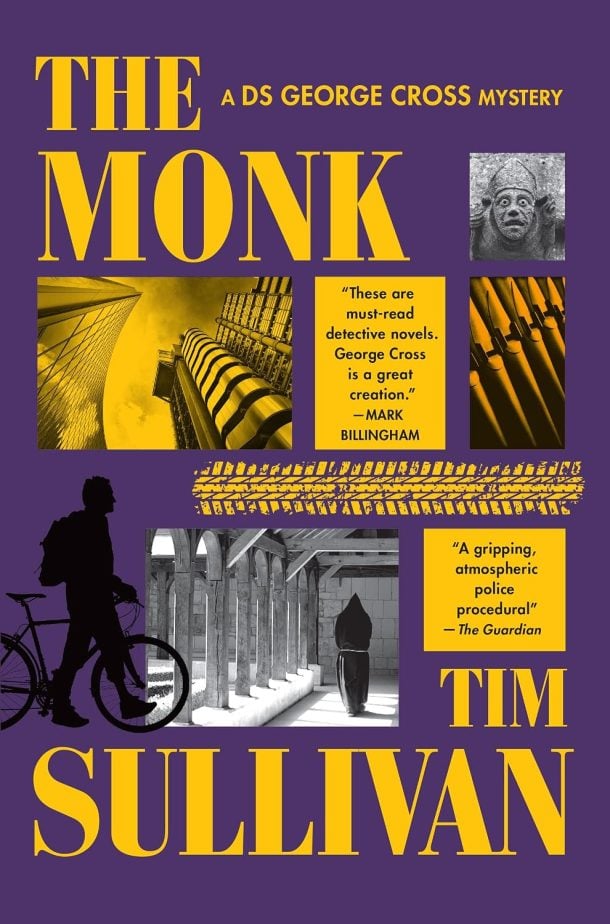 The Monk by Tim Sullivan
A meticulous English detective cracks a tight monastic community to solve a brutal murder. The normally unflappable DS George Cross is unnerved by the crime scene of his latest case. The body of Dom Dominic Augustus, who was recently reported missing from St. Eustace’s monastery, has been found brutally beaten in the woods several miles from Bristol. Cross, who’s on the autism spectrum, and his partner, DS Josie Ottey, focus their probe on the monastery and its nine residents, who unanimously declare that Dominic had no enemies. An additional person of interest is a wealthy collector of religious artifacts. Methodical questioning of the monks yields small clues that build a clear picture. So obsessed does Cross become with the case, or maybe with the monastic community as a whole, that he misses his weekly meeting with his father, Raymond, in order to probe St. Eustace’s more deeply. Primarily a clever procedural with a focus on forensics, the story includes many crisp exchanges with persons of interest informed by Sullivan’s experience as a screenwriter. In this fifth entry of the series, Sullivan also rewards fans by expanding the personal stories of his Somerset detective team. Cross’ absent mother suddenly reappears. He finds friendship with jaunty forensics investigator Michael Swift, who was introduced as an antagonist in The Patient (2026). Swift is in “a quasi-committed relationship” with police staffer Alice Mackenzie, and readers get a glimpse of Ottey’s relationship with her mother, Cherish. A delightful final twist will leave many readers impatient for Cross’ next case. A top-notch series that deepens with every installment.Kirkus Reviews, February 2026.
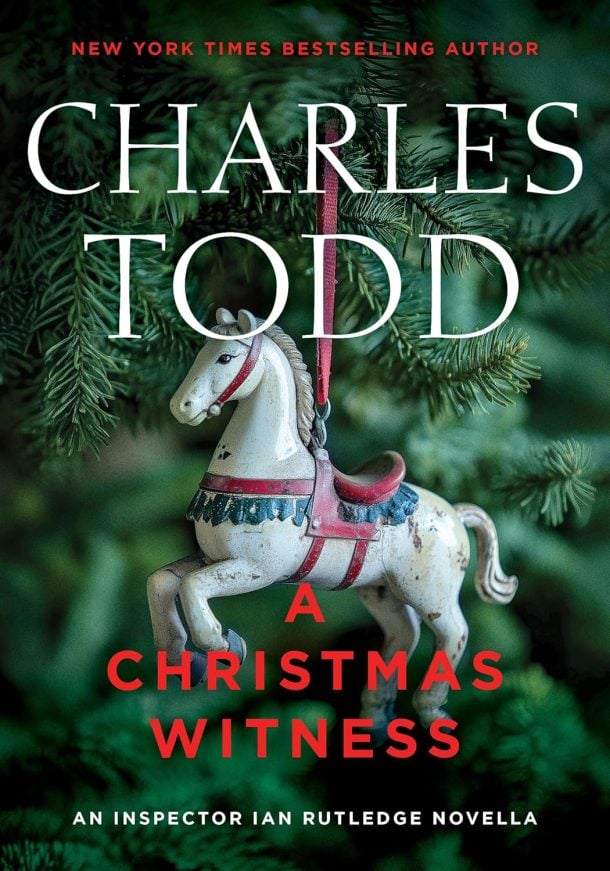 A Christmas Witness by Charles Todd
Todd’s latest whodunit featuring Scotland Yarder Ian Rutledge (after A Game of Fear) finds the long-running series in top form. In 1921, WWI veteran Rutledge is still plagued by shell shock and haunted by the voice of Cpl. Hamish MacLeod, whom he executed for refusing to follow an order that both knew would result in senseless bloodshed. Rutledge’s plans to spend Christmas with his sister are disrupted when his boss, Chief Superintendent Markum, directs him to Kent, where well-connected ex-colonel Lord Braxton claims an unidentified horseman tried to run him down, badly battering him before escaping. Braxton is sure it was a targeted attack and fears the assailant will strike again, so Rutledge puts aside his Christmas plans to investigate. Though he’s determined to tackle the inquiry with his typical diligence (and help from the voice in his head), Rutledge struggles with moral ambivalence about aiding a former military man. Todd keeps readers off-balance throughout and poignantly explores his lead’s emotional struggles as he interviews the people of Kent and comes to suspect that Braxton isn’t telling the whole story. Inspector Rutledge shows no sign he’s running out of steam. Publisher’s Weekly, July 2025.
Return to top
NON FICTION
| Beers, Laura | Orwell’s ghosts | 828.91 BEER |
| Kieza, Grantlee | Ellen Savage and the heroes of AHS Centaur | 940.545 KIEZ |
| Sopel, Jon | UnPresidented | 324.973 SOPE |
| Wales, Jimmy | The seven rules of trust | 302 WALE |
| Whitmont, Debbie | The man who couldn’t wait | 364.152 WHIT |
 Orwell’s Ghosts by Laura Beers
This invigorating study from historian Beers (Red Ellen) investigates what George Orwell’s life and writings can teach contemporary readers about modern controversies. Charting the development of Orwell’s politics and philosophy, Beers notes that the author had become by his own account “a bit Bolshie” while attending the elite Eton boarding school, and that witnessing Britain’s oppressive regime in Burma while enlisted in the Indian Police Service “awakened his social conscience.” Evaluating competing ideological claims to Orwell’s legacy, Beers argues that Orwell would have regarded skeptically individuals who invoke his name (and his dystopian novel, 1984) to complain about being de-platformed by social media companies for politically contentious views, citing Orwell’s belief that his publisher had been within its rights to renege on their agreement to put out Homage to Catalonia in the late 1930s because it feared the report would undermine the anti-Franco cause in Spain. Beers has a knack for finding fresh angles on the much discussed author, highlighting both his overlooked sense of humor and the less savory aspects of his character, including his failure to consider the oppression of women in his writings on inequality and his disrespect for “women’s boundaries and bodily autonomy” (he made “repeated unwelcome advances on women” and opposed abortion). This is a valuable exploration of what it actually means to be “Orwellian.” Publisher’s Weekly, April 2024.
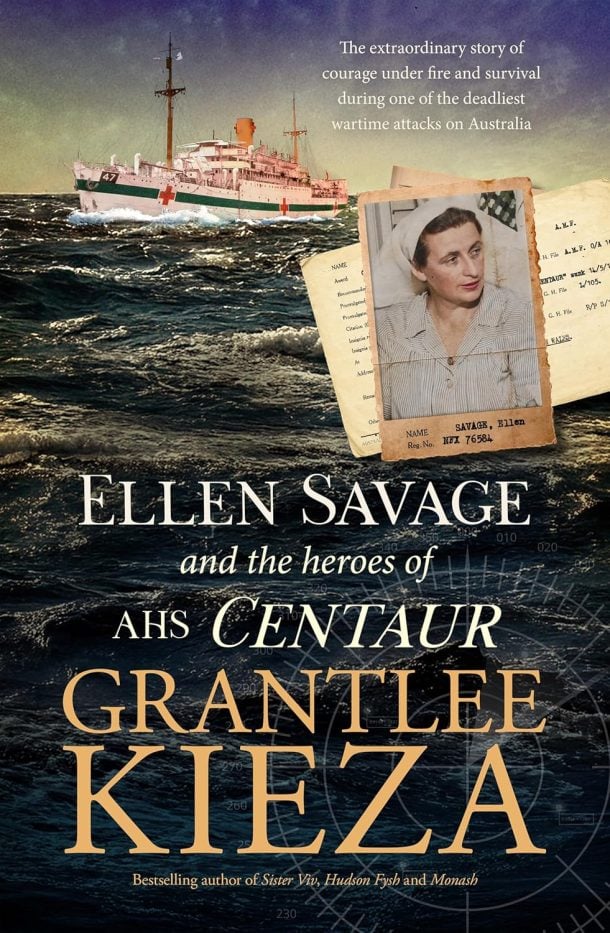 Ellen Savage and the Heroes of AHS Centaur by Grantlee Kieza
Grantlee Kieza’s latest dive into Australian history focuses on the Australian Hospital Ship Centaur, torpedoed and sunk by a Japanese submarine off Moreton Island in 1943. The only surviving nurse, Ellen Savage, was celebrated as a hero for her courage. Although injured herself, she worked tirelessly and without complaint to maintain morale and assist others. Of the 332 on board AHS Centaur there were only 64 survivors, most of them clinging to all manner of debris they joined together as well as possible to form a ‘survival island’. Tormented by circling sharks, they waited 34 hours before their rescue ship, an American destroyer, arrived. While ‘Nell’ Savage has a central role in the story, Kieza sheds light on the lives of many other victims of this attack. Kieza also successfully highlights the vulnerability of Australia in this crucial period of the War in the Pacific, when victory was far from assured. Stories like this one are worth retelling because they are mostly unknown to younger generations. While I enjoyed this important and well-written book, I wanted to read more about the extent of German and Japanese attacks on shipping in Australian waters and around. The havoc wreaked by German U-boats is well known. Less so are the dangers posed by their Japanese counterparts. Kieza notes Axis claims of Allied attacks on their hospital ships, but doesn’t elaborate and the question is left hanging. On the whole, Ellen Savage and the Heroes of AHS Centaur is a valuable contribution to Australia’s war history, but left me wanting more. Good Reading Magazine, May 2026.
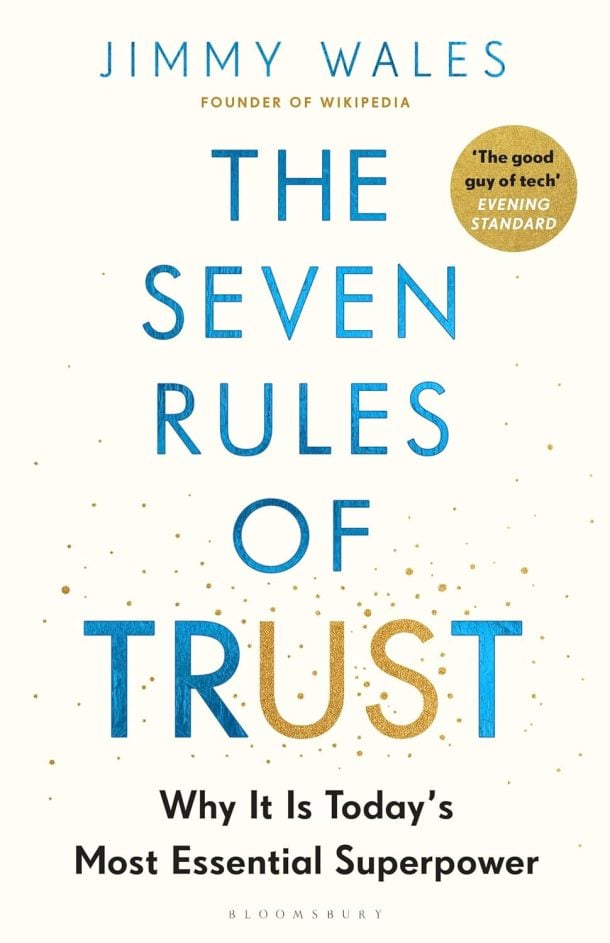 The Seven Rules of Trust by Jimmy Wales
Lessons learned from an encyclopaedic commitment to facts. This motivational monograph isn’t helped by a framework that emphasizes its unoriginal aspects, but it’s easy to warm to Wales’ eloquent case for the “sunny, pro-social view of human nature” behind Wikipedia’s unlikely rise. His big idea was a tough sell. An online encyclopedia that anyone can write or edit? Hopelessly naïve. So said TV comedians and august publishers when Wales launched Wikipedia in 2001. But by the 2010s, his nonprofit was widely admired—“the last bastion of shared reality,” the Atlantic said. To Wales, nothing happens without trust. Wikipedia editors “assume good faith” from fellow volunteers, and because “people are natural reciprocators,” this fosters thoughtful debate, transparency, and fidelity to documentable facts. With polls showing Americans’ faith in institutions and one another on a decades-long decline, he means to inspire a “restoration of trust.” Wales’ “rules,” presented as subheadings for the first seven chapters, aren’t revolutionary. Some aren’t even his. One—“Want Trust? Give Trust.”—rewords a statement attributed to Chinese philosopher Lao Tzu. But they’re productive starting points for the author’s reflections on the Wikipedia way, which he augments by interviewing various thinkers. Most compellingly, he shows how Wikipedia’s emphasis on civility helps attract ideologically and demographically diverse contributors, resulting in “articles of higher quality than politically homogenous teams,” an academic study found. Wales shares interesting behind-the-scenes anecdotes about Wikipedians’ rigor. An editorial discussion about punctuation and capitalization in the title of a Star Trek movie resulted in a 40,000-word exchange. While he occasionally writes like someone scheduling a bland corporate retreat—organizations should conduct a “trust inventory”—Wales’ appreciative tributes to diligent Wikipedia contributors provide instructive examples for readers inspired to counter falsehoods wherever they arise. Wikipedia’s founder makes an invigorating plea for collaboration and respectful debate. Kirkus Reviews, August 2025.
Return to top
ROMANCE
| Carey, Anna | Love scene |
Return to top
SCIENCE FICTION & FANTASY
| Haddon, Seth | Volatile memory |
| North, Claire | Slow gods |
| Sullivan, Cameron | The red winter |
 Volatile Memory by Seth Haddon
Fantasist Haddon (Reclaimed) combines sapphic romance, fast-paced mystery, and fascinating worldbuilding in his thrilling first sci-fi novel. Sable Alzian was 26 when she died from a gunshot wound on the distant planet Pholan’s World. Fingers point to VisorForge, a producer of bionic face masks with products like Rattlesnake, Hyena, and Rabbit, which enhance wearers’ abilities to see, hear, and react. Fused to Alzian’s head at the time of her death was VisorForge’s top-of-the-line prototype, Hawk. Though it’s now discarded in a rubbish heap, the mask continues to transmit signals, attracting freewheeling scavenger Wylla, who’s hoping to upgrade her own outdated headgear. Wylla’s surprised to find that Alzian’s consciousness, by some techno-fluke, lingers in the mask. Pursued by VisorForge agents who want the mask back, Wylla, at Alzian’s urging, dons the Hawk, enabling the pair to share body and mind as they steal a spaceship, jump through time warps, and battle androids, all while searching for Alzian’s murderer. Haddon channels his heroines’ strange double consciousness through narration that cycles between second person and first-person plural, creating a dizzying effect. Packed with combat, intrigue, and budding love, this is an exciting new direction for Haddon. Publisher’s Weekly, February 2025.
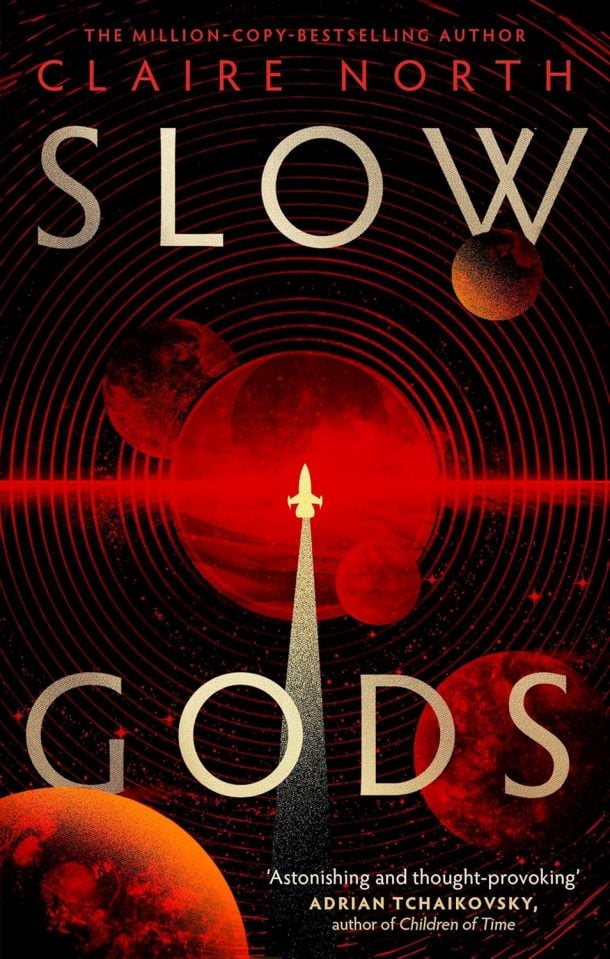 Slow Gods by Claire North
One person’s quest to find meaning in life—and the universe. The pseudonymous North’s latest is a deeply philosophical standalone SF epic that brilliantly and subtly utilizes elements of cosmic horror to complement its metaphysical speculations. Mawukana na-Vdnaze is a laborer on a world ruled by a star-spanning regime that purports to reward hard work with increased socioeconomic status, called Shine. In fact, those who cheat and lie get ahead—so long as they don’t get caught. When a godlike machine known as the Slow sends messengers to multiple star systems warning that they have approximately 100 years to prepare for a supernova event that will obliterate everything in its path, the corrupt leaders of Maw’s planet attempt to cover up the Slow’s warning, essentially sentencing their subjects to death. Amid the ensuing chaos, Maw is wrongfully arrested and sent off-world to a labor camp. He volunteers to pilot a space-jumping arcship, generally a short-lived job as most die shortly after interfacing with the ship’s navcomm systems. A jump goes wrong, and everyone on the ship is killed except Maw. Though completely unharmed, something is irrevocably changed deep within him; he’s a copy of himself, “a monster made in the dark.” As the end of the world looms for billions of people, Maw sets out on a jaw-dropping journey of enlightenment by charging into the darkness of space and his altered mind. The character development isn’t particularly noteworthy, but adept worldbuilding, grand-scale storytelling, and philosophical speculation more than make up for it. Maw’s conversations with various characters and his thoughtful introspection about the seeming meaninglessness of it all will leave readers—somewhat surprisingly—invigorated: “We are the seeds of the forest, are we not? Where we fall, others may grow. So live…Before all is dust: live, and blaze bright.” The best kind of science fiction: mind-blowing and wildly thought-provoking. Kirkus Reviews, August 2025.
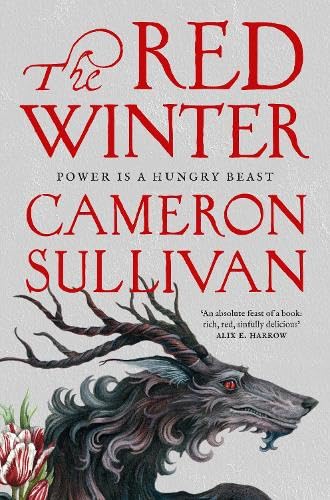 The Red Winter by Cameron Sullivan
Historical horror? Dark fantasy? Queer romance? All of the above! “I was hundreds of years old before I ever met him, but that day we were both young.” While visiting his Florence offices in 2013, attorney Sebastian Grave unearths a bloodstained lambskin glove that belonged to a past lover—a man he’d met in the 18th century. Nestled within this frame narrative is a tale of desire, werewolves, and the French Revolution. In telling his story, Sebastian introduces Sarmodel, the demon with whom he shares a body, and a succubus named Livia contributes chapters in which Joan of Arc, her notorious ally Gilles de Rais, and the archangel Michael all make appearances. First-time novelist Sullivan wields the tools of multiple genres deftly, but what really makes this book special is its central character. Sebastian has powerful magic at his disposal, but he’s also human enough to fall hard for a hot young nobleman. When Sebastian goes hunting for the Beast of Gévaudan, he’s not looking for adventure. The first time, it’s because he can’t resist Antoine Avenel d’Ocerne. The second time, it’s because he dreams of a reunion with his love—even though he knows this is a hopeless wish against the advice of Sarmodel. Using Sebastian as a narrator keeps things light, in part because he has a droll, contemporary voice and in part because it makes the worldbuilding feel natural. There are footnotes, but there are no infodumps. The fact that Sebastian doesn’t know exactly what he is sets the tone for storytelling that leaves a great deal unexplained while providing enough detail to keep the reader engaged. Deploying Sarmodel as a sort of alter ego and allowing Livia to offer her own perspective on Sebastian also adds both depth and charm. A delightful, genre-defying debut. Kirkus Reviews, January 2026.
TRAVEL ANECDOTES
| Hamley, T. C. | Vodka in a vegemite jar | TRV 551.31 HAML |
Return to top
New additions to eBooks at SMSA
EBOOKS
| General Novels | McGovern, Petronella | Every time she wakes |
| General Novels | Murray, Jo | Dissection of a murder |
| General Novels | Tunnie, Georgie | Over to you |
| General Novels | Veen, Johanna van | Bone of my bone |
| General Novels | Walsh, Rosie | The one day you were my husband |
| General Novels | Wright, Michelle | Good boy |
| Mystery | Heath, Rebecca | The last encore |
| Mystery | Kawamura, Genki | Exit 8 |
| Mystery | Leitch, Fiona | The Cornish castle murder |
| Mystery | Spain, Jo | Never to be found |
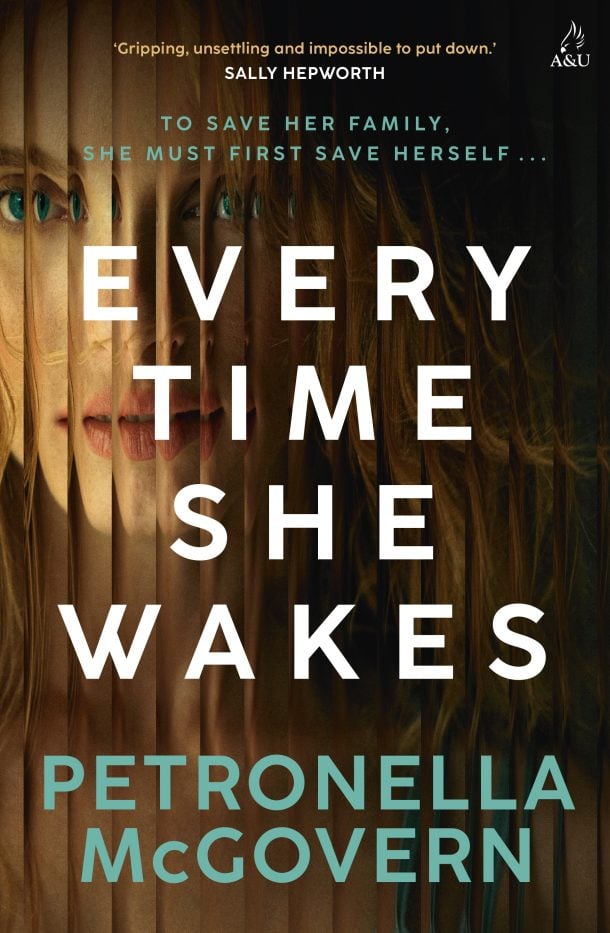 Every Time she Wakes by Petronella McGovern
Suzanna Vitale is awake and fearful. There’s a bushfire only 30km away, her eldest daughter isn’t home from post-exam cocktails and her husband’s previous trauma with fires has been retriggered. Thankfully, two local firefighters arrive to evacuate them. Once they’re on the road, Suzanna realises something isn’t quite right. Just as she realises they’ve been kidnapped, the van crashes. Suzanna wakes, expecting to be in hospital. But everyone is safe and asleep at home and the bushfire is 120km away. When she logs onto the news, the date is a fortnight earlier – 3 November. Is she going crazy or is something else going on? After another kidnap and car crash, Suzanna wakes again to 3 November, and key elements of her life are different. Stuck in a recurring loop, Suzanna must work out why her life keeps replaying – and why the decisions she makes are changing the course of her current life. I love this novel’s premise, and the sliding door chances offered to Suzanna to save not just her family but herself, as she learns the importance of being true to yourself and not giving away your power and agency. A thrilling, page-turning read. Good Reading Magazine July 2026.
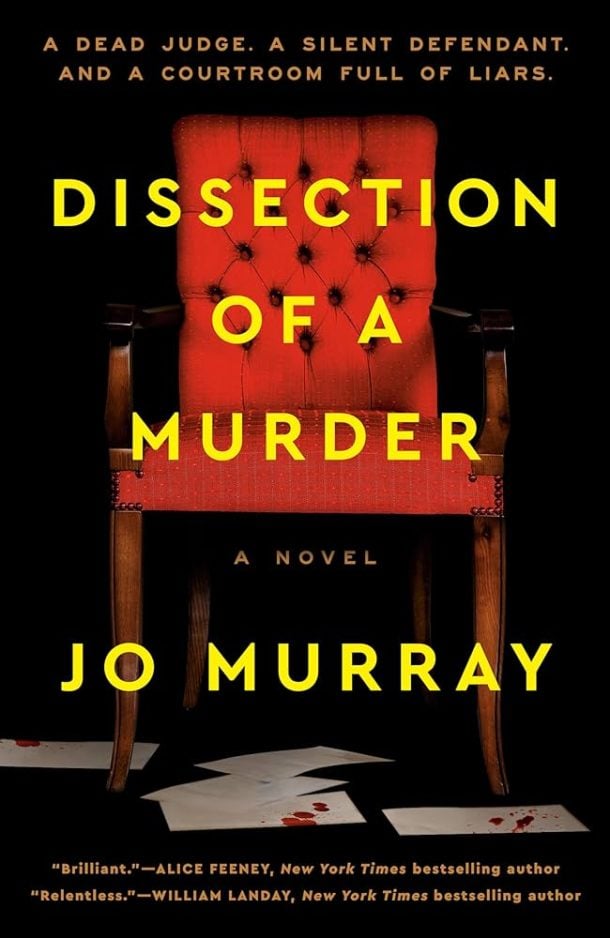 Dissection of a Murder by Jo Murray
The stakes couldn’t be higher for up-and-coming British defence attorney Leila Reynolds as she prepares for her first murder trial against her prosecutor husband in Murray’s razor-sharp debut. Leila, a scrappy barrister in Durham, England, is defending club bouncer and ex-con Jack Millman, who’s accused of killing Crown Court judge Anton Smythe. Because Jack insists he will not provide information for the customary defence statement before trial, but only give his version of events in court, Leila scrambles to investigate the case herself, gathering evidence and witness statements that put Jack in a positive light. All the while, she avoids tipping her hand to her spouse, prosecuting counsel Julian Kesler, who has been acting suspiciously in recent weeks, leading Leila to worry he’s having an affair. Compounding her stress are anonymous threats from someone who seems not only familiar with her every move, but also with explosive secrets from her past. Former barrister Murray lays out her intricate plot with the aplomb of a seasoned lawyer steering a jury to a verdict, shedding light on procedural idiosyncrasies and gender inequality within the British legal system en route to a jaw-dropping final twist. Readers will find this criminally captivating. Publishers Weekly, May 2026.
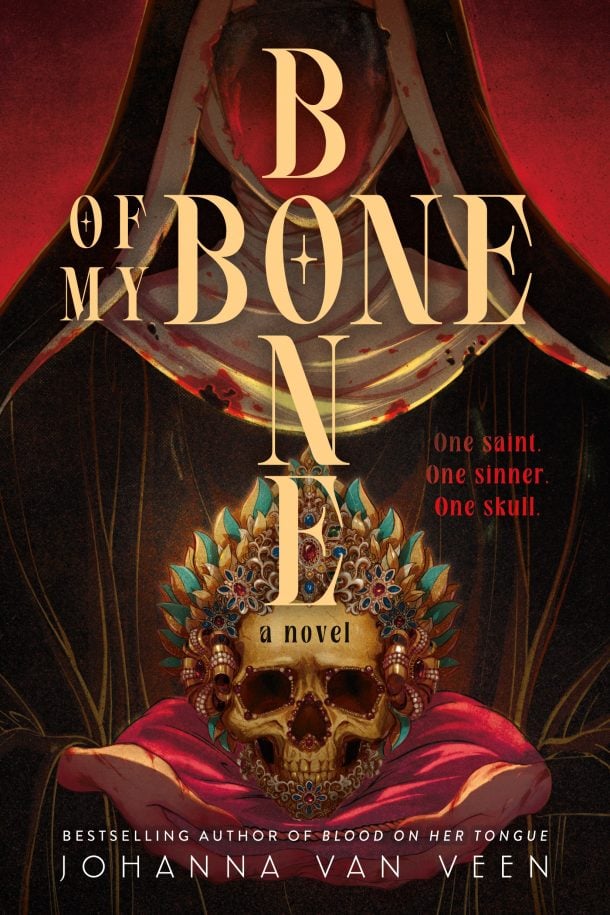 Bone of my Bone by Johanna Van Veen
Bone of my Bone is set during the Thirty Year’s War in Bavaria. Elsebeth randomly meets a nun named Ursula while running from soldiers, and they find a mortally wounded body on the road, holding a box with a saint’s skull. He’s been told that if you reunite the skull with its body, the saint will grant you a wish. Ursula believes the story wholeheartedly, and while Elsebeth has seen too much war to believe in miracles, she can’t leave Ursula alone. As they begin their quest to find the saint’s grave, they’re stalked by a necromancer, his undead servant, and hungry ghosts killed by battle and starvation. There is SO MUCH I could talk about; the folk legends, the historical depictions of witchcraft, the mundanity of war, the religious arguments between Ursula (a Catholic) and Elsebeth (a Protestant) – half the dialogue is a back-and-forth argument about the nature of belief. The story is both horrifying and fascinating, but what stood out to me was the developing romance. Ursula and Elsebeth believe their relationship is sacred because love is a gift to God, and this felt like such a novel way of approaching queer history. The author included a bibliography at the end, which I will definitely be perusing. Van Veen pulled the rug out from me so many times, with a show-stopping conclusion that was well earned. I can’t wait to read her other novels, and reread this book many times. Good Reading Magazine, July 2026.
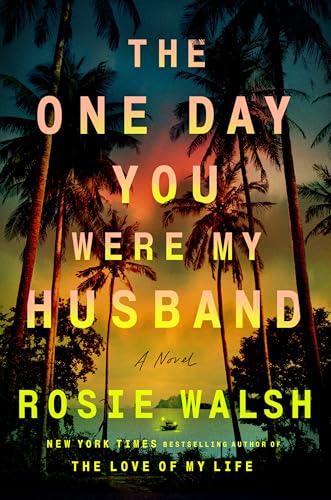 The One Day You Were my Husband by Rosie Walsh
In this barn burner of a novel from Walsh (The Love of My Life), a woman unearths disturbing truths about her short-lived first marriage. In 2022, former surgeon Carrie Cole leads a sedate life in Devon, England, with her second husband, Robin, and their young twins. With Robin struggling to find work, Carrie accepts an invitation to travel to Stockholm for a conference held by Roof, the Airbnb competitor through which she leases her vacation property. While she’s there, she plans to meet with a prominent Swedish surgeon who could reignite her medical career. Browsing Roof for rentals in Stockholm, Carrie comes across a property owned by Johan Kullberg, the man she married 12 years earlier in Thailand who was arrested for drug trafficking the day of their wedding. Johan insisted that Carrie leave Thailand and forget him, but the shock of stumbling upon him gets the best of Carrie’s curiosity. After arriving in Stockholm, she meets up with Johan and learns details about his arrest that dramatically recast the past decade of her life. With breakneck pacing, simmering romantic tension, and jaw-dropping twists, this raucously entertaining domestic thriller stands apart from the crowd. It’s pure popcorn. Publishers Weekly, May 2026.
 Good Boy by Michelle Wright
Cookie has been incarcerated for more than two decades. With his release finally in sight, he is asked to join a program that rehabilitates shelter dogs. He is hesitant, not because he dislikes dogs – he doesn’t – but because he avoids group programs and the scrutiny that comes with them. Most of the other prisoners don’t even know Cookie’s real name. He has always been called Cookie, sometimes ‘One Tough Cookie’, not because of any hardened reputation, but because he is serving time for murder. The nickname doesn’t suit him. Cookie is fearful, withdrawn, and marked by a prominent facial scar, yet he accepts the label because it helps him remain unnoticed. Cookie is paired with a troubled dog named Nigel, who is anxious, destructive and unlikely to pass the program. Cookie knows this failure will mean euthanasia. As their relationship deepens, Nigel becomes ‘Good Boy’. In an act of desperate compassion, he escapes the low-security prison to find someone who will care for Good Boy, if only for a few days. This is a beautifully told and poignant novel about a damaged man and the redemptive power of love, forcing Cookie to reassess his life and question what shaped him. I really loved Good Boy. At first it appears to be a simple, tender story about a man and a dog. As it unfolds, it reveals multiple layers of backstory, personality and circumstance, showing how a single decision can alter the course of a life. Good Reading Magazine, 2026.
 The Last Encore by Rebecca Heath
Secrets, lies, murder and even love await in Rebecca Heath’s latest psychological thriller, The Last Encore. The remaining members of The Cedrics Band reunite on the fictional Sparrow Hawk Island off the coast of South Australia to perform a private show and film a documentary. It’s their first time together since the tragic death of their lead singer, Jonny Rake, 18 years earlier. In the present, a body is discovered on the island and communication with the mainland is cut off. It’s then that old secrets begin to surface, and questions are raised about Jonny’s death. As tensions rise, everyone must work together to survive. The story weaves together the voices of those gathered on the island: Florence, their host; Lara and her husband, Edward, the band’s former keyboardist turned accountant; Adam, the guitarist and Jonny’s brother; and Monet, Jonny’s 17-year-old daughter. Their perspectives are interspersed with blog posts from Ricky, the band’s number-one fan, offering an outsider’s obsession and insight into the band’s troubled past. Heath (The Wedding Party) uses the island’s isolation to build a sense of claustrophobia. She moves effortlessly between the different voices and timelines to reveal glimpses of the past that slowly intertwine with the present. The shifting perspectives create both intimacy and suspense, allowing readers to uncover each character’s motives piece by piece. The result is a taut, atmospheric mystery filled with sharp twists and emotional undercurrents that fans of Heath’s previous novels will devour. Books + Publishing, November 2025.
Return to top
AUDIOBOOKS
| General Novels | Barelli, Natalie | The housewife |
| General Novels | Church, Meagan | The mad wife |
| General Novels | Kuttner, Naomi | The retired assassin’s guide to country gardening |
| General Novels | Okie, Lauren | The best worst thing |
| General Novels | Rijks, Miranda | Don’t answer the phone |
| Romance | Tomforde, Liz | The right move |
| Mystery | Claire, Ann | A cyclist’s guide to villains & vines |
| Mystery | Ellis, David | Keep them close |
| Mystery | Khavari, Kate | A botanist’s guide to tradition and treachery |
| Mystery | Mackintosh, Clare | The butler |
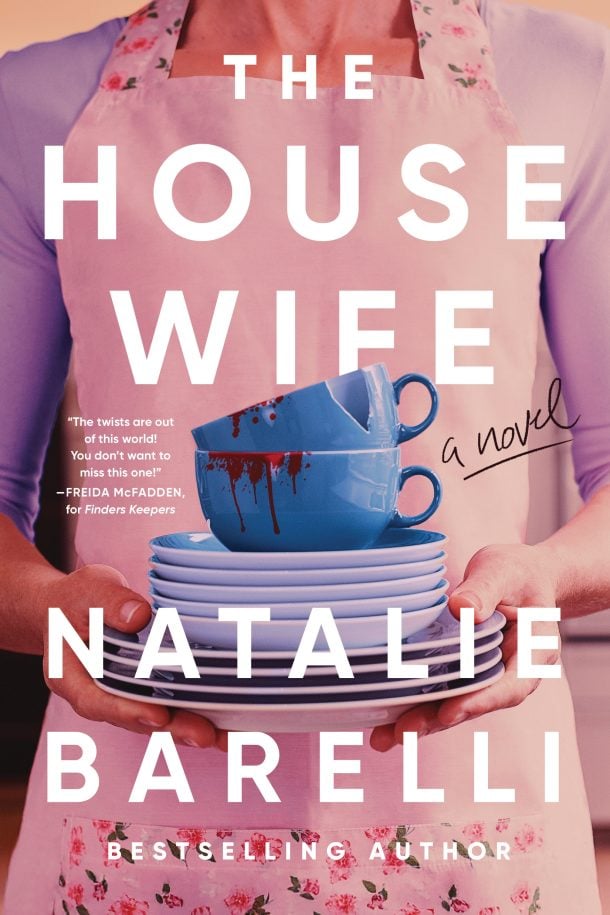 The Housewife by Natalie Barelli
Being greeted with the first line, ‘I’ve been underestimated my whole life,’ it certainly made me want to read more. From the outset, I am dropped into a conversation between our main character, Jodie, who is covered in blood, and a police officer, Detective Bates. The tone is immediately set. Jodie is the perfect housewife. She is an amazing cook, loves to clean and falls in love with psychologist Dr Roy Davies. Their life appears perfect in their Beverly Hills home. However, not all is as it seems, and this carefully crafted facade begins to unravel. Jodie remains in the shadow of her husband’s late first wife, Deborah, a much-loved woman whose presence seems to haunt their day-to-day lives. As Jodie learns more about the lead-up to Deborah’s death, she discovers that Deborah had become somewhat of a recluse. The deeper she investigates, the more she questions whether her husband was really the perfect partner he portrays himself to be. Determined to uncover the truth behind Deborah’s death, Jodie refuses to stay silent. The lies she encounters only fuel her desire to know more, and her persistence drives the story forward. If you are a fan of Freida McFadden, this book is for you. Some readers may find Jodie frustrating, but I adored her dark humour and determination. She is complex, multi-layered and is driven by truth and justice, even if she pursues them in unconventional ways. This fast-paced, addictive page-turner will certainly appeal to fans of psychological thrillers. Good reading Magazine, July 2026.
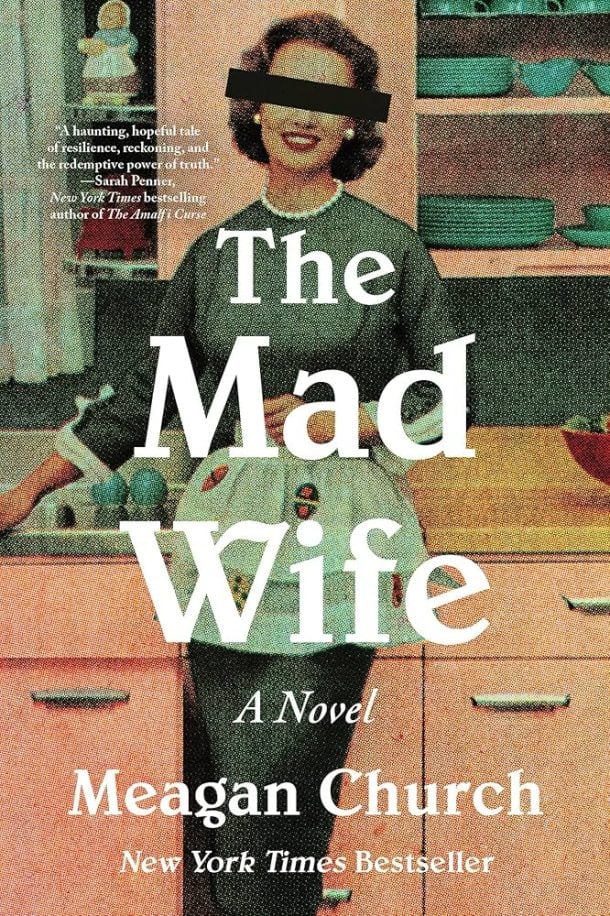 The Mad Wife by Meagan Church
Lulu Mayfield is just trying to hold it together as a 1950s suburban housewife amid expectations as rigid as her famed gelatin desserts and as monotonous as her green stamps–a life very different from her rural upbringing. After giving birth to her second child, she becomes obsessed with and later horrified by the new neighbors across the street. As she starts to spiral, she worries what lengths her husband will go to in order to bring her to heel, and only finds solace in sharing her insomnia with a (possibly) stray cat. She can’t trust her friends, her husband, or the doctor foisted upon her–and maybe not even herself–until the threat of a lobotomy becomes all too real. The tension in Church’s latest (after The Girls We Sent Away, 2024) is palpable, with perfectly timed twists in this nod to Sylvia Plath. Book clubs will find much to discuss about the unattainable expectations placed on women throughout history, the lengths that grief and isolation will take us to, and the fact that mental health cannot be separated from general health. Booklist, October 2025.
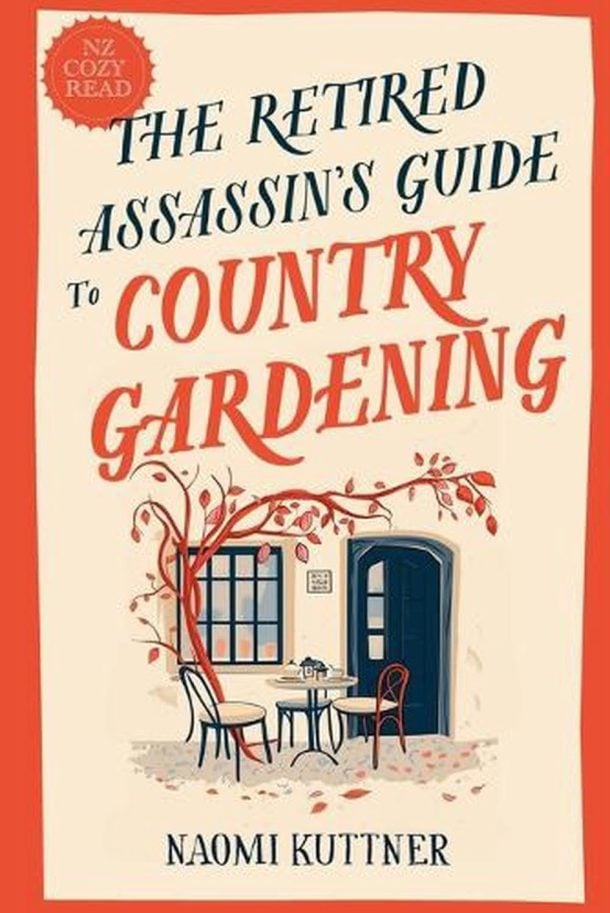 The Retired Assassin’s Guide to Country Gardening by Naomi Kuttner
Narrator Thomas Barker is a bold and effective choice as Dante, delivering a deep, intimidating voice and slightly world-weary tone that perfectly fits the character of a retired MI6 assassin trying to bury his past. As Dante attempts to settle into a quiet, quaint New Zealand village where gardening is a major pastime, the town’s wealthiest and least-liked businessman is shot, and his assistant is murdered. Barker adjusts his pacing with precision, reflecting Dante’s inner struggle between wanting peace and slipping back into old instincts. His character portrayals are equally impressive. Eleanor, the cool-witted partner in sleuthing; Charlie, the gardener with an affinity for those who have passed on; Tim, the masterful bully; and so many others. The colorful personalities are all distinct, authentic, and vividly depicted. Kirkus, 2026.
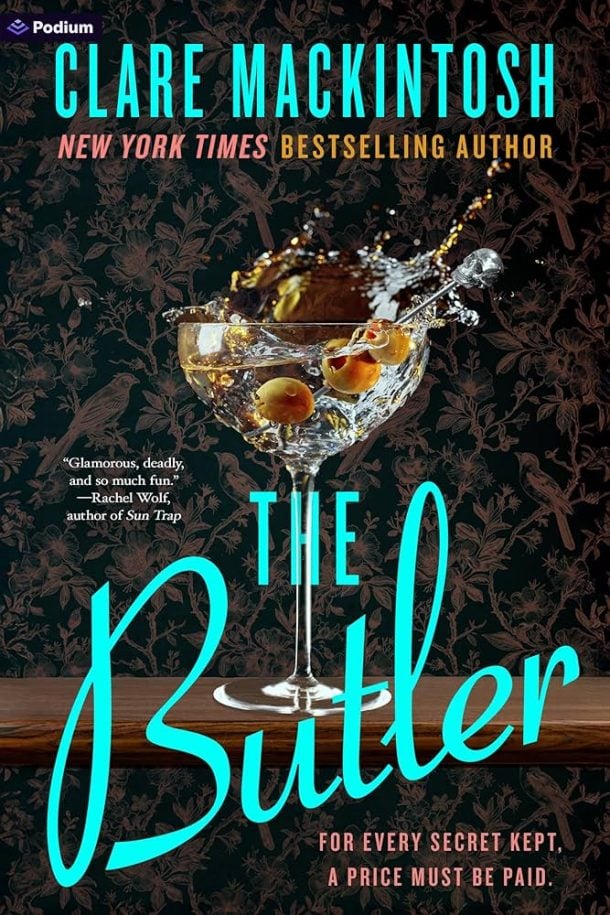 The Butler by Clare Mackintosh
When death strikes a posh house party, the consummate manservant turns amateur detective. A brief prologue sets the scene for Mackintosh’s whodunit, describing a luxury villa on the outskirts of Cannes, where a corpse lies undiscovered on the bottom of the sparkling swimming pool (“right in the center, little more than a dark shadow against the sharp white tiles, lies a body, waiting for the dawn”). The story begins four days earlier, as butler-for-hire Baxter (his first name is never revealed) arrives at Villa Sérénité, finding it anything but serene after a wild shindig thrown by its ostensible caretakers. Unfazed, Baxter has the place in impeccable shape by early evening with the help of Miriam and Thierry, his hand-picked housekeeper and chef. Balding, middle-aged Alec Prescott, who’s renting the villa for the week to celebrate his son Carter’s 21st birthday, arrives first with his much younger girlfriend, Kaitlyn. Next comes Alec’s ex, Sylvie, then their friends Francesca and Damian, an actress and producer promoting their latest film at the festival. Carter and his attractive girlfriend, Jade, complete the party. In addition to the obvious tension between Sylvie and Kaitlyn, it’s soon clear that almost everyone in the house has reasons to resent Alec, who insults Francesca, refuses to invest in Damian’s next movie, threatens to stop funding Carter’s tech startup, and harasses Miriam. (And that’s just the first day.) While shopping in town, Baxter encounters Red, a young vagabond pickpocket who has connections to the villa, and perhaps to a notorious burglary gang. It seems everyone has designs on Alec’s money—money Baxter is beginning to suspect Alec doesn’t really have. As a first-rate, professional butler, Baxter is discreet, resourceful, unflappable, and perceptive—exactly the qualities he needs in his unexpected new role of unofficial detective. He’s also kind, with a touching backstory. The other characters are also deftly portrayed, though they’re somewhat one-dimensional. The story moves along swiftly, with snappy dialogue, colorful descriptions of the setting and food, and humorous moments. Mackintosh hits all the expected mystery genre beats, including plenty of surprising twists that keep the narrative feeling fresh and a satisfying ending that hints at further adventures in Baxter’s future. The perfect butler headlines this entertaining mystery. Kirkus, January 2026.