


BIOGRAPHY
| Cunneen, Margaret | The boxing butterfly |
| Jackman, Ralph | Detention |
| O’Brien, Patricia | Errol Flynn |
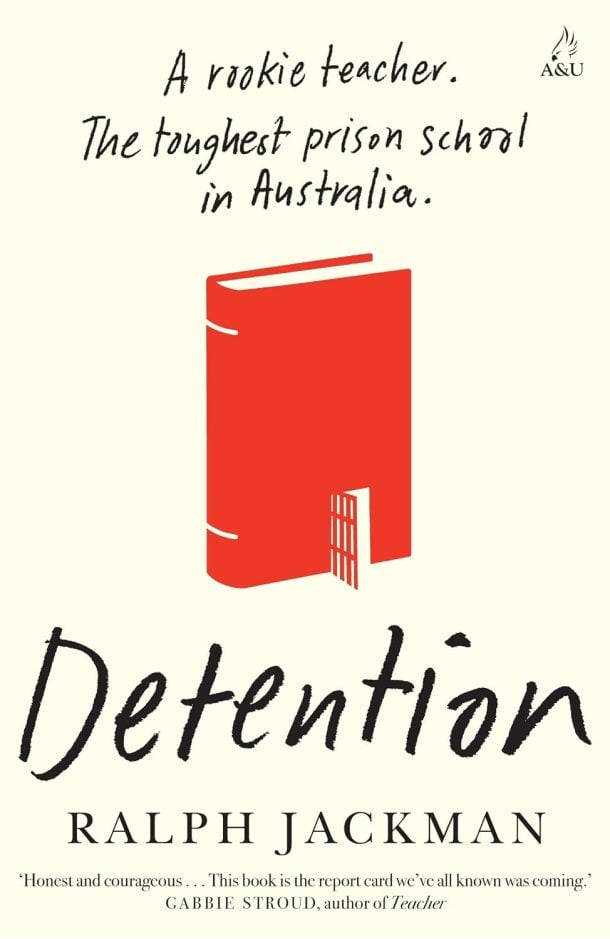 Detention by Ralph Jackman
Until recently, corporal punishment – physical force intended to cause pain – was a typical practice in many schools. ‘Times have fortunately changed,’ reflects Ralph Jackman. However, for young people behind bars in juvenile detention, ‘we continue to subject vulnerable children to the more damaging effects of isolation and solitary confinement’ as a form of punishment. In his former life, Jackman reported on dangerous situations from a safe distance. Now, as a recent graduate schoolteacher, Jackman is thrown in the deep end teaching literacy and numeracy in Melbourne’s Parkville Youth Detention Centre, working with teenage boys on remand awaiting trial. The practicalities, challenges and dangers of prison life are detailed, woven with human stories of students learning to read, write and communicate. Detention offers a human-centred recount of Jackman’s experiences with his students, framed by broader observations around respect for human rights within the Department of Justice and Community Safety Victoria. The value of learning, and the impact it has on the lives of students, drives the book’s narrative. The learning isn’t all one way; Jackman’s students taught him ‘the extent to which young people possess qualities like courage, determination and humour in the face of hardship’. Detention is an enlightening call to action. Good Reading, July 2026
Return to top
CLASSICS
| Grenville, Kate | The idea of perfection |
| Poe, Edgar Allan | The murders in the Rue Morgue |
| White, E. B. | Charlotte’s web |
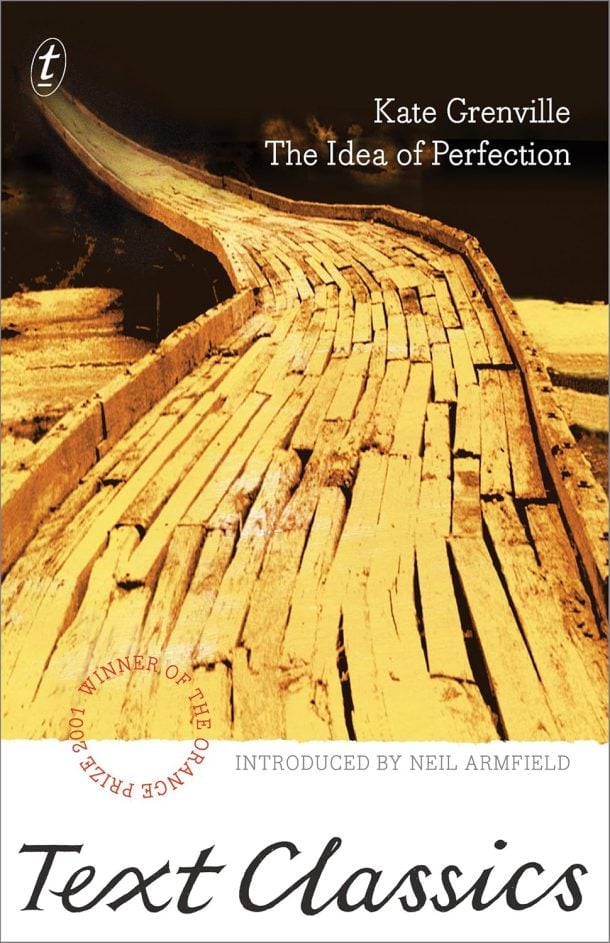 The Idea of Perfection by Kate Grenville
There’s a smile—if not an outright belly laugh—on every page of this delicious comic novel (winner of Britain’s 2001 Orange Prize), the fifth from the Australian author (Albion’s Story, 1994, etc.). The setting is the amiable little backwater of Karakarook in New South Wales, to which engineer Douglas Cheeseman is sent, to supervise the dismantling of the town’s moribund landmark, the Bent Bridge. At the same time, Harley Savage, an irreversibly plain middle-aged woman who has left three husbands and as many sons behind her, arrives in Karakarook to help its Heritage Committee build a museum celebrating indigenous arts and crafts (Harley being a sometime curator, and an expert quilter). The tenuous, ineffably awkward relationship between Harley and Douglas is played out within a richly funny context of local folks and their doings, beginning when the two collide on the street, after which she inadvertently rescues him from an angry cow, their first “date” (for tea) leaves both with food poisoning, and they’re forced to decision point when the good women of the Heritage Committee form a “blockade” against bulldozers aimed at the Bent Bridge. Meanwhile, the town banker’s beautiful wife Felicity Porcelline finds herself helplessly attracted to Karakarook’s Chinese butcher (and amateur photographer) Alfred Chang—with predictably disastrous seriocomic consequences. Grenville moves among their separate (and conjoined) stories with easy skill. The unfailingly delightful incidents dramatize the demolition of each major character’s “idea of perfection”: Felicity lives for physical beauty; Harley labors to subsume her vagrant “dangerous streak” into preservation of the environment and the past; Douglas worships the beauty of logical structures and the bountiful usefulness of concrete. All—including the stray dog that attaches itself to Harley—eventually discover the considerable pleasures of human (and animal) imperfection. Wonderful entertainment: a cockeyed romance that will have you cheering for all of these unlikely, wayward lovers. Kirkus Reviews, May 2010.
Return to top
COOKING
| Johnson, Heather | The “I love my air fryer” cooking for one recipe book |
| Johnson, Kelly | 50 Cooking for one |
Return to top
GENERAL FICTION
| Aoyama, Michiko | Hot chocolate on Thursday |
| Barelli, Natalie | The housewife |
| Greaney, Mark | The hard line |
| Greer, Andrew Sean | Villa Coco |
| Healey, Jane | Crescendo |
| Johnston, Anna | When lemons give you life |
| Kane, Darby | Such a clever girl |
| Kanon, Joseph | Istanbul passage |
| Katherine, Judith | Simply beside herself |
| Kawaguchi, Toshikazu | Before I knew I loved you |
| McGovern, Petronella | Every time she wakes |
| McGurl, Kathleen | The girl from Bletchley Park |
| MinOn, Steve | First name second name |
| Nugent, Liz | The truth about Ruby Cooper |
| O’Flanagan, Sheila | Secrets between friends |
| Patterson, James | Rocket’s red glare |
| Rogers, Matt | The damned |
| Russell, Dwayne | Killing for sport |
| See, Lisa | Daughters of the sun and moon |
| Song, Yu-Jeong | My memory bookshop |
| Trigiani, Adriana | The view from Lake Como |
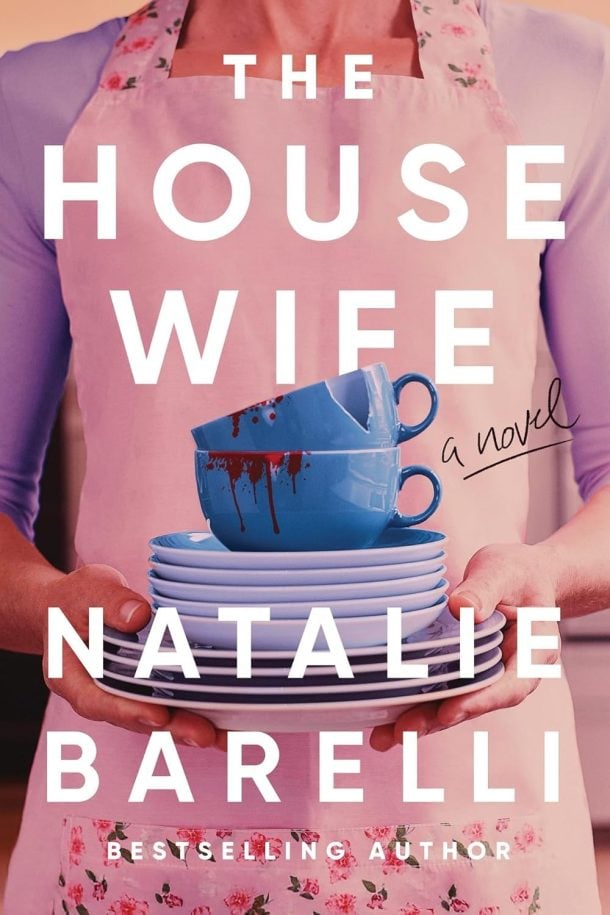 The Housewife by Natalie Barelli
Being greeted with the first line, ‘I’ve been underestimated my whole life,’ it certainly made me want to read more. From the outset, I am dropped into a conversation between our main character, Jodie, who is covered in blood, and a police officer, Detective Bates. The tone is immediately set. Jodie is the perfect housewife. She is an amazing cook, loves to clean and falls in love with psychologist Dr Roy Davies. Their life appears perfect in their Beverly Hills home. However, not all is as it seems, and this carefully crafted facade begins to unravel. Jodie remains in the shadow of her husband’s late first wife, Deborah, a much-loved woman whose presence seems to haunt their day-to-day lives. As Jodie learns more about the lead-up to Deborah’s death, she discovers that Deborah had become somewhat of a recluse. The deeper she investigates, the more she questions whether her husband was really the perfect partner he portrays himself to be. Determined to uncover the truth behind Deborah’s death, Jodie refuses to stay silent. The lies she encounters only fuel her desire to know more, and her persistence drives the story forward. If you are a fan of Freida McFadden, this book is for you. Some readers may find Jodie frustrating, but I adored her dark humour and determination. She is complex, multi-layered and is driven by truth and justice, even if she pursues them in unconventional ways. This fast-paced, addictive page-turner will certainly appeal to fans of psychological thrillers. Good Reading, July 2026.
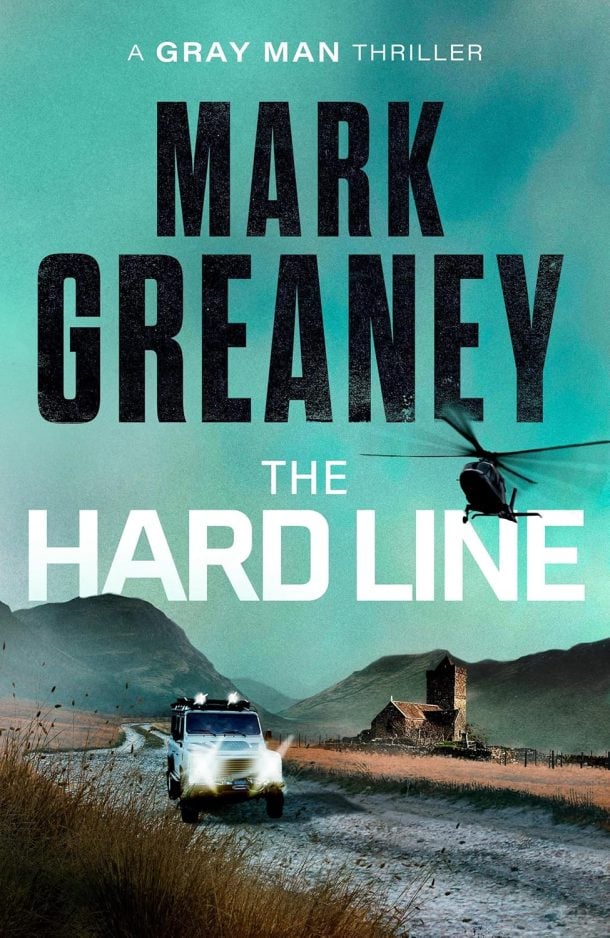 The Hard Line by Mark Greaney
Revenge is the order of the day in this action-packed Gray Man thriller. That freelance assassin Court Gentry has enemies shocks no one. Code-named Violator in his CIA days, he has since become the Gray Man, so elusive that some think him a myth. He’s not complicated: “If I’ve got pants on, I’ve got a gun on,” he describes himself succinctly. In this episode, everybody wants something. James Westwood wants to be senator and eventually president, and isn’t above committing treason to get there. Two fearsome killers, each with his own agenda, want Gentry dead. Gentry himself wants to get to Russia for contract work, but first he must get out of Bulgaria, where he kills Northern Irish criminal Charlie Coyle in a gunfight. Hyperline Level IIIA body armor saves Gentry’s life in that encounter, but now he must face Charlie’s dad, Campbell Coyle, whose “one singular objective in life” is to come to America and cut a bloody swath to exact deadly revenge on “the man who had murdered his son.” The elder Coyle is a “bad man with a dark history, and he came from a long line of men with dark histories.” Yet he understands how much he and the Gray Man have in common, that they are both “God’s living proof” that humans have not progressed in 800 years. There’s also Lancer, a dangerous former Navy SEAL turned assassin who says that “Court Gentry is the man who put me in prison in Cuba, and he’s gonna pay.” Meanwhile, series regular Zack Hightower spies on his biological daughter. He means no harm but simply wants to know that she’s well, but what follows is one damn thing after another. At first it looks like a separate plot line, but everything comes back to the Gray Man. The story is nearly 500 pages of gunfire, explosions, a spring-loaded wrist stiletto, treason, vengeance, blood, bodies, and a teenage girl who loves her adoptive father and doesn’t know bio dad even exists. Fun for fans of fictional mayhem. Kirkus Reviews, January 2026.
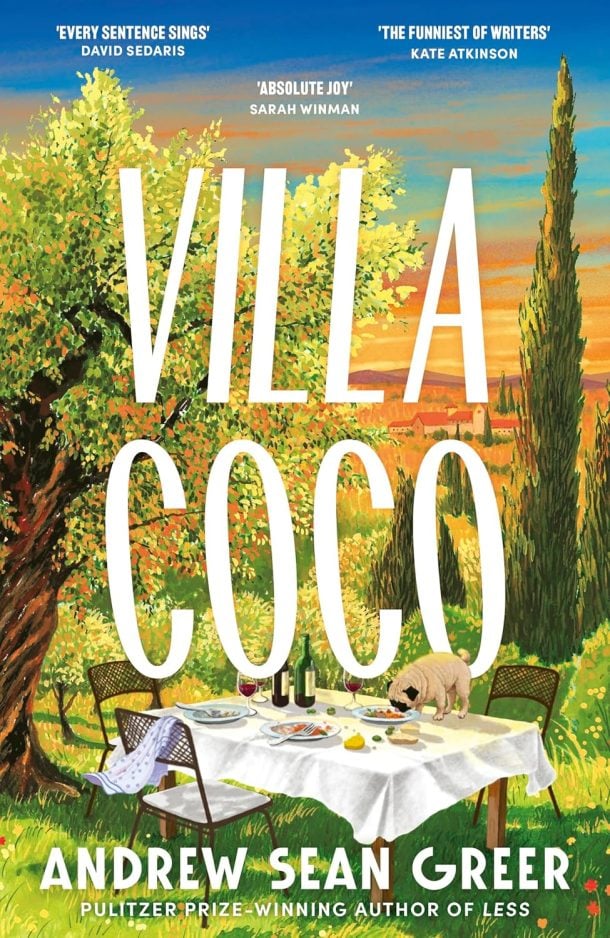 Villa Coco by Andrew Sean Greer
Part caper, part coming-of-age story, Greer’s latest comic examination of life entertains and edifies—not an easy balancing act. Greer’s protagonist—referred to throughout by names other than his own—is a recently graduated American archivist given a chance to redeem his underwhelming academic performance when he becomes the “adjutant” to an elderly and acerbic Baronessa living in the Tuscan countryside. His short-term assignment is to catalog the contents of her rambling, unkempt home, Villa Coco. As he awaits permission to begin that job, he’s called upon to attend to the aging septic system, help trim the roses, and assist the Baronessa (and a cast of supporting characters) with a variety of sometimes mysterious tasks and missions. The Baronessa’s villa is enchanting and filled with art and artifacts; she seems to have led a charmed life but “our young man” (one of the narrator’s sobriquets) encounters what seems to be a curious lack of urgency on her part when it comes to inventorying the fabulous acquisitions of a lifetime. All is gradually revealed in Greer’s trademark style of observational humor, keen descriptions, and affectionate exposition of his characters’ foibles. As our young man negotiates his new life in Italy, complete with language challenges and romantic entanglements—including a farcical bedroom episode involving his gay paramour, that man’s wife, and her female lover—he begins to heed the lessons in life and love imparted to him by the Baronessa and her old friends. Cinematic possibilities appear throughout the novel: the lush surroundings of Villa Coco, the Baronessa’s tart observations, the transformation of the narrator’s wardrobe. Sadly, Maggie Smith is no longer available to do justice to the role of the Baronessa. A delightful distraction from the mundane. Kirkus Reviews, April 2026.
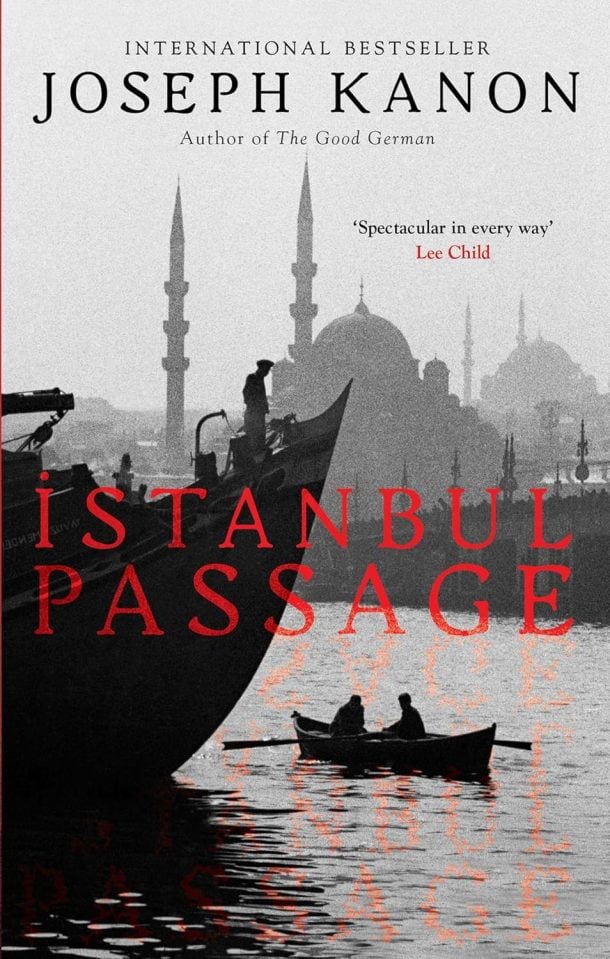 Istanbul Passage by Joseph Kanon
In 1945 Istanbul, Allied veteran Leon Bauer is running spy missions under the cover of a U.S. tobacco-importing business. With the war over, U.S. operations are closing up shop in the neutral capital, but Leon has one last big job: to take possession of a Romanian defector in possession of important Russian secrets and get him flown to safety. The rub is the defector, Alexei, was involved in a heinous massacre of Jews four years earlier. Kanon (The Good German, 2001, etc.) extends his mastery of the period novel with this coiled tale of foreign intrigue. Though not much happens, plotwise, in this dialogue-driven book, Leon hardly has a moment to relax, immersed in a world of moral and political upheaval. When he first arrived in Istanbul with his wife Anna, the city was a paradise with its scenic river view, cultural riches and feeling of mystery. Now, badly injured in an accident, Anna lives in a nursing home, awake but uncommunicative, leaving Leon to contend with a circle of friends and associates he can’t trust. After shooting rather than getting shot by his duplicitous supervisor in a tense late-night encounter along the river, he can avoid suspicion only so long before the brutal secret police, Emniyet, are onto him and the secretly stashed Alexei. There is little about the novel that is not familiar, but this is comfort fiction of the smartest, most compelling and nonpandering kind. Even as he evokes classics such as Casablanca, The Quiet American and A Perfect Spy, Kanon shows off his gift for morally gripping themes, heart-stopping suspense and compelling characters. With dialogue that can go off like gunfire and a streak of nostalgia that feels timeless, this book takes its place among espionage novels as an instant classic. Kirkus Reviews, May 2012.
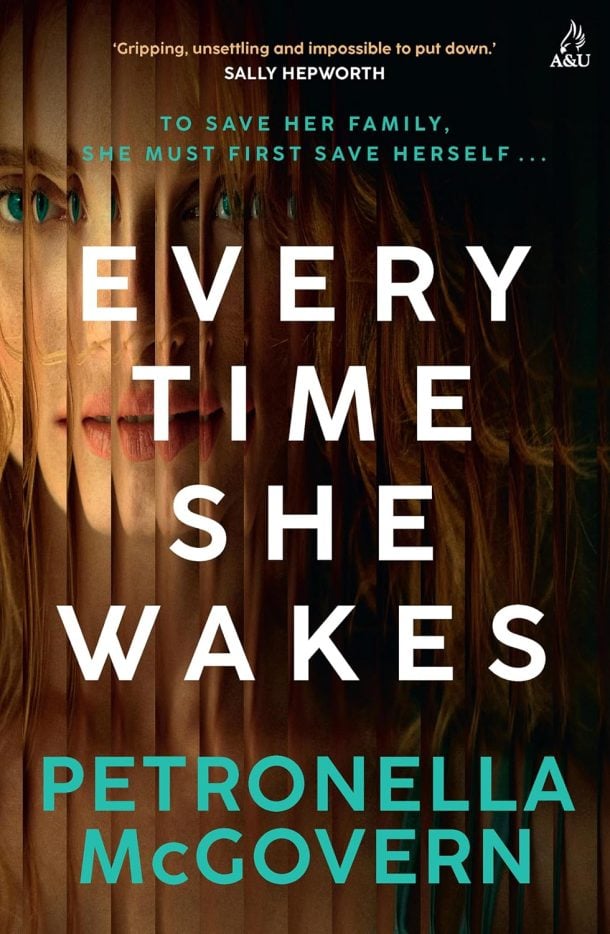 Every Time She Wakes by Petronella McGovern
Suzanna Vitale is awake and fearful. There’s a bushfire only 30km away, her eldest daughter isn’t home from post-exam cocktails and her husband’s previous trauma with fires has been retriggered. Thankfully, two local firefighters arrive to evacuate them. Once they’re on the road, Suzanna realises something isn’t quite right. Just as she realises they’ve been kidnapped, the van crashes. Suzanna wakes, expecting to be in hospital. But everyone is safe and asleep at home and the bushfire is 120km away. When she logs onto the news, the date is a fortnight earlier – 3 November. Is she going crazy or is something else going on? After another kidnap and car crash, Suzanna wakes again to 3 November, and key elements of her life are different. Stuck in a recurring loop, Suzanna must work out why her life keeps replaying – and why the decisions she makes are changing the course of her current life. I love this novel’s premise, and the sliding door chances offered to Suzanna to save not just her family but herself, as she learns the importance of being true to yourself and not giving away your power and agency. A thrilling, page-turning read. Good Reading, July 2026.
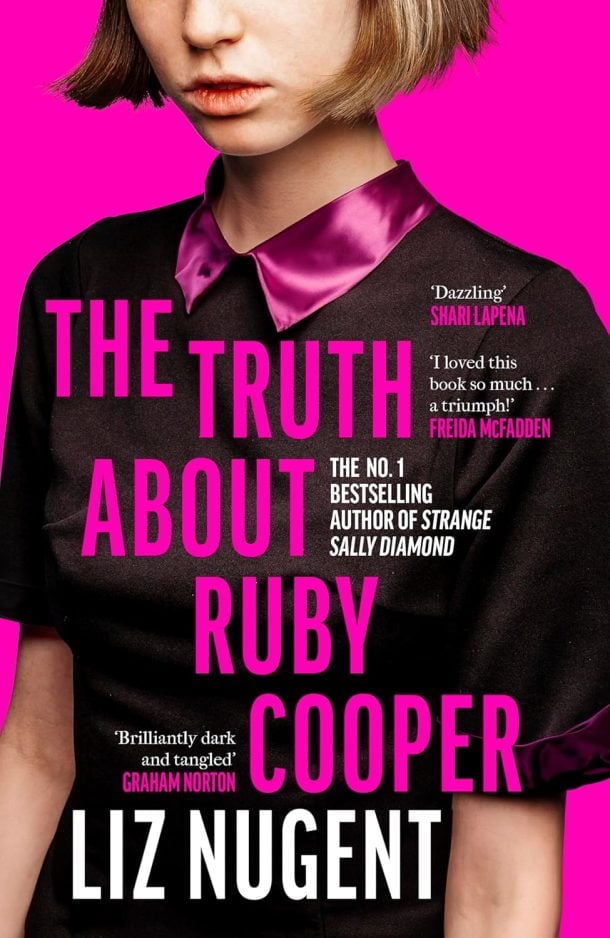 The Truth About Ruby Cooper by Liz Nugent
Let’s start with an understatement: award-winning Irish bestseller Liz Nugent certainly knows how to spin a compelling yarn. Not just compelling with a capital C, but in all caps. She has a great knack for hard-to-like, even horrendous, protagonists, and a masterful touch for pulling readers into and through a story, no matter how disturbing. In her sixth novel in 12 years, The Truth About Ruby Cooper, Nugent immerses readers in the family-shattering aftermath of an incident between Ruby, the teenage daughter of a popular Boston pastor, and Milo, her beautiful older sister Erin’s boyfriend, one afternoon when the pair are alone together in the Cooper family home. Ruby and her mother flee to Ireland. Erin and her father stay in Boston. Many lives are immediately upturned, and the wreckage continues for years, and decades, spreading like poison. Guilt and shame, anger and blame. How do you come back from the worst thing you’ve ever experienced? Nugent doesn’t spare readers, delivering haymaker reveals early that other authors may save for a denouement. Then she scratches deeper. She has a rare ability to pack in a novel’s worth of drama into the first half or third of a book, without it feeling overstuffed, then delivering even more unforgettable moments the rest of the way. The smooth writing, layered and nuanced storytelling hums with authenticity. The Truth About Ruby Cooper is far from an easy read, given its events, but it is a brilliant one. Good Reading Magazine, May 2026.
 Daughters of the Sun and Moon by Lisa See
See’s stirring novel (after Lady Tan’s Circle of Women) interweaves the stories of three Chinese immigrants in 19th-century Los Angeles. In 1870, the small, dirty city is home to just 180 Chinese residents, including 30-odd women. That year, Dove’s scholarly Cantonese father earns a large “bride price” by arranging her marriage to an elderly Los Angeles merchant who covets the status conferred by a young, beautiful wife. After Petal’s starving peasant family sells her into servitude, she’s forced to perform sex work at a brothel controlled by one of the city’s Chinese tongs. By chance, Dove and Petal meet Moon, a happily married woman trying to get pregnant, and they bond over their mutual powerlessness. (“Not one of the thirty-four Chinese women in Los Angeles came here by choice,” Moon observes dryly.) All three are endangered when white rioters loot the Chinese community and massacre nearly 20 men in October 1871. See builds a taut story from precise details, such as the fact that Petal will have to service an average of seven men a day, six days a week, to earn out her four-year contract. Without minimizing the period’s racism and misogyny, See offers an inspiring vision of female resilience. Publisher’s Weekly, March 2026.
 The view from lake Como by Adriana Trigiani
A good Italian American daughter’s 30-something rebellion forces her entire family to reckon with their choices, resulting in a happily-ever-after for all that’s like the best affogato: rich, bitter, sweet. Giuseppina “Jess” Capodimonte Baratta lives in her parents’ basement, and it’s not the finished kind, but more like an old-fashioned cellar with a bed and a dresser. Her family has long struggled with money problems, so many that Jess had to go to community college instead of the four-year institutions her sister and brother attended. At 33, she’s landed back at her childhood home in Lake Como, New Jersey (known for its location between a lake and the Atlantic Ocean), because she’s left her husband, Bobby Bilancia, heir to Bilancia Meats and blue-eyed local heartthrob. Jess may not know what she wants for her life, but it isn’t nightly TV and then several kids with Bobby, whose idea of sophistication runs to capicola-ham rosettes. Then Uncle Louie, the proprietor of Capodimonte Marble and Stone who has mentored Jess as his deputy, dies of a heart attack and leaves the business in her hands. Unfortunately, there’s also some funny business that includes a side hustle with an associate known as “Googs” and a quarry’s worth of unpaid taxes. Jess chooses to ignore her overbearing mother’s advice and fly to Carrara, the home of the world’s most beautiful stones—and stonemasons, like Angelo Strazza, whose specialty is applying fragile gold leaf to carved pieces. From brushing up on her Italian to investigating Uncle Louie’s somewhat mysterious past, Jess soon discovers she needs less of her family’s assistance than she or they ever believed. Trigiani risks gilding the lily here, but by placing Jess’ love affair with Angelo alongside her love affair with her own future, she maintains a balance that will leave readers as satisfied as an Italian Sunday dinner would.A fairy tale stuffed with a meaningful moral, this is a funny and heartwarming novel. Kirkus Reviews, July 2025.
Return to top
HISTORICAL FICTION
| Banville, John | Venetian vespers |
| Parris, Rachel | Introducing Mrs Collins |
| Scarrow, Simon | Warlord of Britannia |
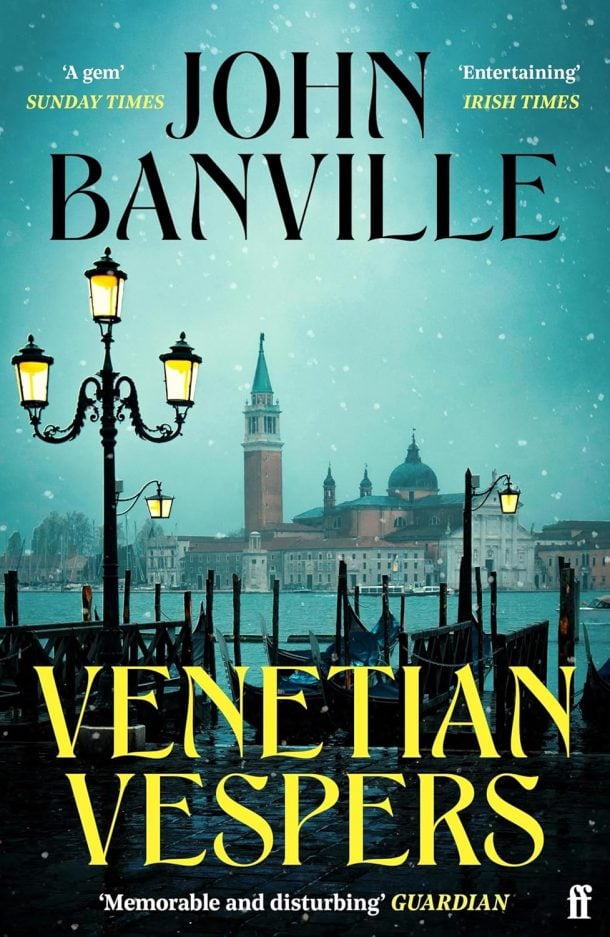 Venetian Vespers by John Banville
A trip to Venice takes a dark turn for a British writer and his American wife. Evelyn Dolman introduces himself to the readers of Banville’s latest, set in the late Victorian era, as “a man of letters,” initially hoping for a career that will cement him as “a lord of language,” regarded more highly than Tolstoy and Shakespeare. Alas, the Briton has become a mere “Grub Street hack,” with one bright spot in his life: He has recently married Laura Rensselaer, the daughter of an American oil magnate who has hired Evelyn to write his biography. After Laura’s father dies in a riding accident, Evelyn learns that she was disinherited, and he and his bride go to Venice so that she might recover from her loss. Shortly after arriving at an apartment in the city, Evelyn, at Laura’s suggestion, pays a visit to a cafe, where he runs into a man named Freddie, who claims to have been a schoolmate of Evelyn’s. Evelyn is skeptical, but his doubts are cast aside when he meets Freddie’s beautiful sister, Francesca, with whom he is instantly taken. Evelyn returns to the apartment, drunk, and sexually assaults his wife; the two had seldom been intimate before, and Evelyn regards the attack as an act of revenge. The next morning, Laura is gone, and Evelyn suspects he’s either losing his mind or the victim of a mysterious scam: “Everything was a puzzle, everything a trap set to mystify and hinder me.” Banville once again proves himself a master of suspense, and he captures a noir version of Venice perfectly. Evelyn is a fascinating character: monstrous, certainly, but is he really being manipulated? Is he manipulating the reader? It’s an open question, and a testament to Banville’s considerable skill as a storyteller. Dark, twisty, and consistently smart: vintage Banville. Kirkus Reviews, June 2025.
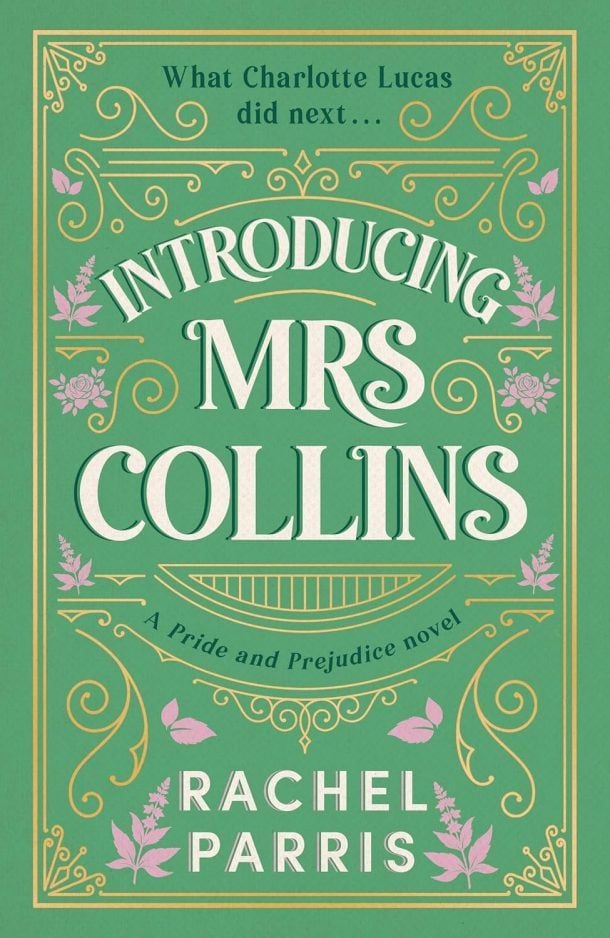 Introducing Mrs. Collins by Rachel Parris
In her debut, Parris imagines what Pride and Prejudice character Charlotte Lucas’ life might have been like after her marriage to Mr. Collins. Charlotte is known to readers as Elizabeth Bennet’s best friend from Pride and Prejudice. Unlike Elizabeth, who marries for love, Charlotte is not quite so lucky. She marries Mr. Collins, the stable but slightly awkward clergyman she describes as “tall, dark, and…pious.” Charlotte knows her prospects are slim, and she’s determined to marry well to provide a future for herself, even if that future doesn’t involve passion. With Mr. Collins as her husband, Charlotte lives a life that is safe and calm—but unexciting. While Mr. Collins treats her well, their relationship never feels particularly romantic. And then Charlotte meets Col. Fitzwilliam, Mr. Darcy’s cousin. Sparks fly instantly, and soon Charlotte finds herself sneaking around to spend more time with Fitzwilliam. Their attraction shouldn’t grow into a full-blown love story for many reasons, chief among them Charlotte’s marriage. That doesn’t stop them from developing feelings that may very well lead to heartbreak. A happily-ever-after seems nearly impossible, and to be sure, not every character here will end up happy, which may be a point of contention among some Pride and Prejudice fans. Staunch Austenites might blanch at this depiction of the characters they’ve come to love, although the book will be welcome to others who longed to see Charlotte take center stage and find her own happiness. It’s also satisfying to read the inner thoughts of Mr. Collins and come to view him a less mockable character. Parris gives Charlotte’s quest for happiness a more modern romance-novel feel than the original text—for example, Charlotte defends her feelings for Fitzwilliam by saying, “If God made me capable of love, then it must be his will that I find it.” While some of the characters’ actions may seem surprising, there have been enough Pride and Prejudice retellings that there’s plenty of room for one where Charlotte follows her bliss. An interesting and surprising look at a classic story and an often-forgotten character. Kirkus Reviews, October 2025.
Return to top
MYSTERY
| Lowndes, Marie Belloc | The Chianti flask |
| MacBride, Stuar | Blood, rust, and steel |
| Malanowska, Kaja | Fog |
| Martin, Faith | Murder in the parish |
| Oswald, Jame | The rest is death |
| Sciascia, Leonardo | The day of the owl |
| Slaughter, Karin | The secrets we hide |
| Ward, Gareth | Murder and mojitos |
| Watson, Katy | Lively midwinter murder |
 The Chianti Flask by Marie Belloc Lowndes
Best known for The Lodger, Lowndes (1896–1947) inverts the traditional courtroom drama in this psychologically complex mystery, first published in 1935. Laura Dousland has been charged with murdering her husband, Fordish Dousland, by poisoning his wine with rat poison, supposedly motivated by his mistreatment. One witness, a physician who was a golfing acquaintance of Fordish, testifies that the deceased, who was depressed and may have been suicidal, asked him whether the rat poison Fordish had requested his wife to purchase would be painless if administered to a human. The key proof incriminating the defendant comes from the household’s sole servant, Angelo Terugi, who insists that the flask containing the tainted Chianti that killed Fordish mysteriously vanished the night Fordish drank from it. That damning account is interrupted by the defendant, who protests that Terugi has confused that night with a prior incident when her husband concealed a flask to keep the servant from imbibing from it. The jury’s verdict comes early on, leaving Lowndes to tease out over the rest of the book whether the jurors’ decision was the right one. This is another obscure title worthy of resurrection as a British Library crime classic. Publisher’s Weekly, January 2022.
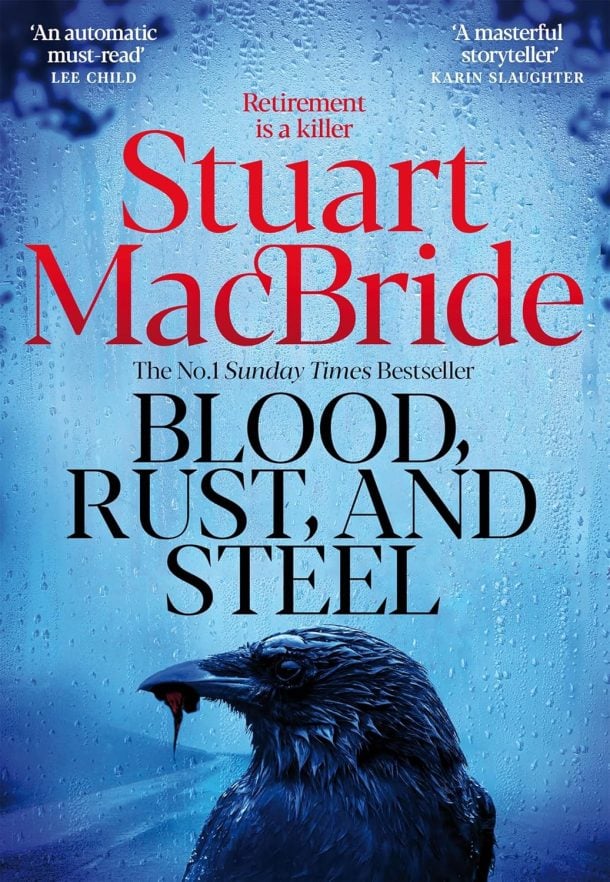 Blood, Rust, and Steel by Stuart MacBride
MacBride’s sprawling third noir featuring queer Scottish DI Roberta Steel (after And the Corpse Wore Tartan) manages to justify its considerable length. After 30 years on the force, Steel is eagerly anticipating her last day on the job and planning “a monster blowout retirement party so debauched that Police Scotland would speak of it forever in awed whispers.” Because her unit is shorthanded, however, she’s saddled with a horrific case in her final weeks. At a rest stop, civilian Scott Baird has discovered human bones in a trash bin. Before Steel can make any headway on the case, a second set of bones is found among the debris, which appear to belong to the victim’s unborn child. Steel’s failure to identify any leads results in disparaging press coverage, and subplots involving a political protest and departmental strife raise the stakes. While MacBride takes his time arriving at the solution, he keeps the suspense taut and laces Steel’s inquiry with gruff humor. British procedural fans will be happy to go along for the ride. Publisher’s Weekly, June 2026.
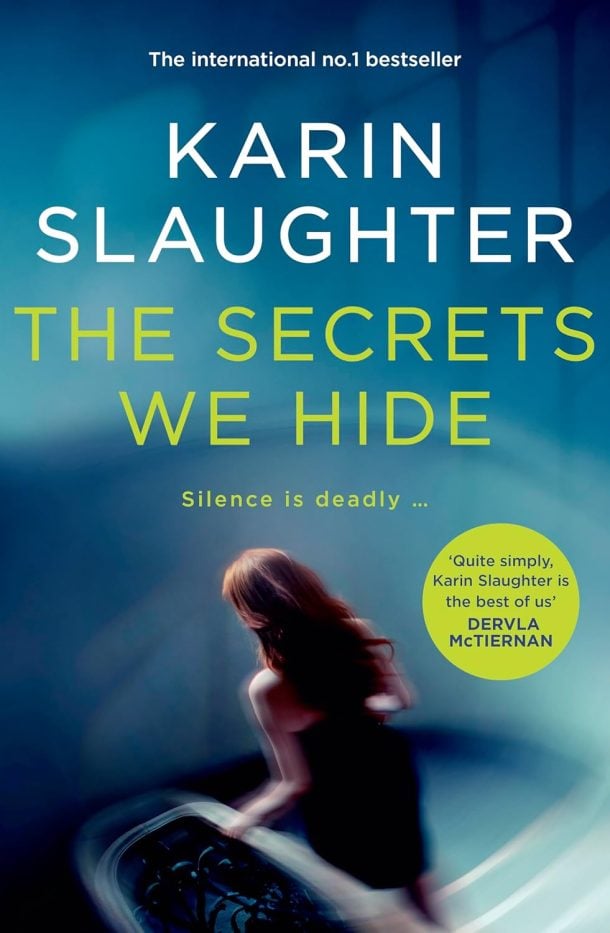 The Secrets We Hide by Karin Slaughter
Slaughter’s satisfying sequel to We Are All Guilty Here sees North Falls, Ga., sheriff Emmy Clifton investigate a complex murder case with the help of her estranged sister. Emmy is leaving her mother’s burial with her sister, Jude, and son, Cole, when she hears gunshots. The trio follow the sound to the home of Allison Vickery, a retired North Falls detective turned PI, whom they find dead beside her barely breathing teenage daughter. The perp gets away, and Emmy ends up investigating the case with help from her officers and from Jude, a feisty retired FBI agent who left North Falls 40 years earlier. During Emmy’s inquiry, she discovers $300,000 squirreled away in Allison’s attic and learns she was trying to escape her abusive marriage to Bill Garrison, scion of one of the most respected families in North Falls. Bill swears he’s innocent, though his alibi is shaky. The evidence also points to other suspects including Allison’s violent ex, her former DEA colleagues, and a local drug lord. The combustible chemistry between Emmy and Jude lends this the friction its predecessor lacked, and Slaughter remains as skilled as ever at probing the darker side of life in Georgia. This bodes well for the future of the series. Publisher’s Weekly, May 2026.
Return to top
NON FICTION
| Haberman, Maggie | Regime change | 973.93 HABE |
| Lattouf, Antoinette | Women who win | 305.4209 LATT |
| Pitt, Helen | Luna Park | 994.41 PITT |
 Regime Change by Maggie Haberman & Jonathan Swan
Of malevolence, chaos, and vengeance as national policy. New York Times political reporters Haberman and Swan examine the profound differences between the first and second Trump presidencies, suggesting that present excesses might have been avoided “if he had served a consecutive second term”—for, absent his years in the wilderness plotting retribution, “he would never have accumulated the power he now wielded.” President Trump now surrounds himself with heavily vetted loyalists; even before he took office anew, “officials on the Trump transition team had already searched candidates’ social media accounts for any criticisms of Trump after the riot at the Capitol.” And the authors argue that competence comes second to appearance, as with his choice of a onetime Texas lawmaker to head the CIA: “He’s straight out of central casting.” Thus Kristi Noem, Pete Hegseth, Karoline Leavitt, and others, with some quickly discarded when the optics go bad—“I don’t know why I picked her,” Trump says of former Attorney General Pam Bondi. The news in this newsworthy book, based on more than 1,000 interviews with people “close to President Trump” (including one with Trump himself), is sometimes trivial—Trump leaves a mess wherever he eats, for one tidbit, and staff have to check the trash to make sure he hasn’t thrown out sterling silver utensils. More often, it speaks to Trump’s driving obsessions, among them how best to play to the camera, as when he and JD Vance tag-team to upbraid Ukrainian President Volodymyr Zelensky, a confrontation that Trump characteristically called “better than The Apprentice.” Interestingly, the authors note several instances in which Trump treats Vance dismissively, with the hint that Marco Rubio might well emerge as Trump’s anointed successor in 2028. All in all, they write, Trump “lived in a bubble, shuttling between his private clubs and the White House, and he was rarely shown anything but good news,” even as he regularly—and apparently willfully—creates bad news all on his own. A powerful chronicle of uninhibited, solipsistic power exercised with few positive results. Kirkus Reviews, June 2026.
Return to top
ROMANCE
| James, Eloisa | The last Lady B |
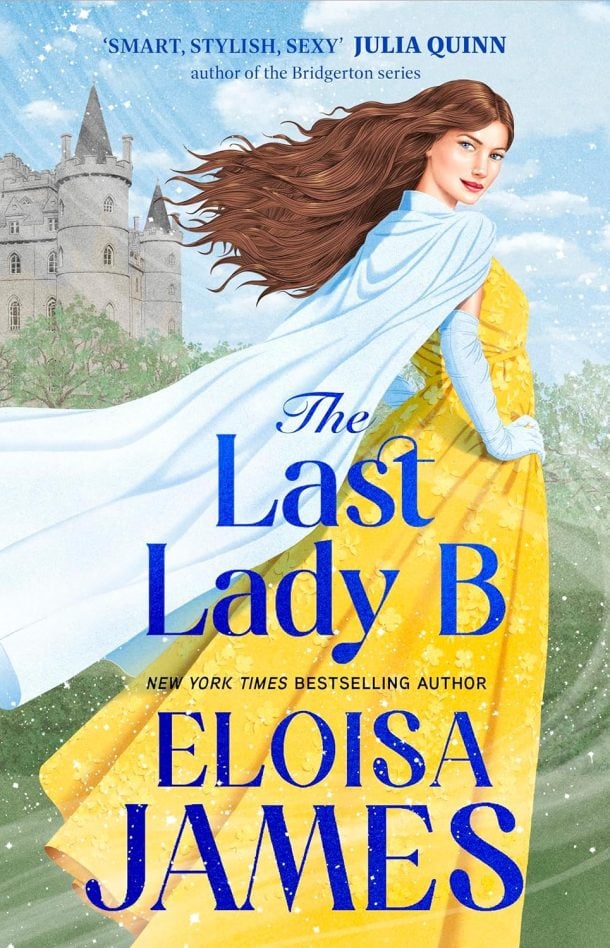 The Last Lady B by Eloisa James
Dripping with suspense and sensuality, this standalone Regency from bestseller James (the Accidental Brides series) proves she remains at the top of her game. Genevieve “Evie” Hughes marries the decades older, thrice-widowed Lord Burnsby, whom she believes to be kind and harmless, in exchange for his agreement to put up the dowry for her younger sister, Rosie. She travels with her new husband to his hunting lodge, a converted abbey in the Scottish Highlands, to celebrate his 70th birthday. The servants say the lodge is haunted by Burnsby’s previous wives, and Evie immediately begins searching for the ghosts. Also in attendance are Burnsby’s heir, Lance; his wife, Colette; and Lance’s friend, Sir Godric Everley, a solicitor with ties to the British government, who makes clear his negative opinion of both Burnsby and fortune-hunting Evie. Worse, Evie discovers that her husband’s mistress, Sophonisba Ainsworth, has lived at the abbey for years, causing Evie to question her previous assessment of Burnsby’s character. As the intrigue ramps up—complete with death, scandalous revelations, criminal allegations, and the potential for supernatural interference—sparks fly between Evie and Godric. The gothic abbey proves a perfect backdrop to their tumultuous and compulsively readable romance. It’s an unmitigated delight. Publisher’s Weekly, February 2026.
Return to top
SCIENCE FICTION & FANTASY
| Rutherford, Mara | A curious kind of magic |
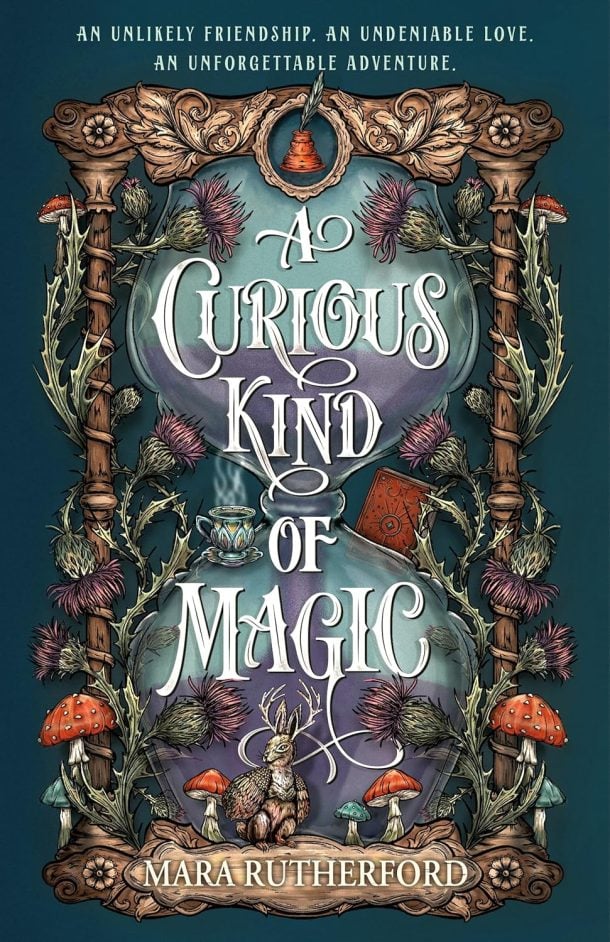 A Curious Kind of Magic by Mara Rutherford
Two teens’ unlikely partnership impels them on a quest to break a curse in a Scottish folklore–inspired adventure from Rutherford (A Multitude of Dreams). All Willow Stokes needs in life is her comfortable cottage, her loyal kitten Argyle, her best friend (and secret crush) Finlay, and, following her father’s death, enough money to pay the rent on his failing curiosity shop. Business would boom if the establishment’s “magical” wares contained any magic. Upon meeting traveler Brianna Hargrave, who’s capable of enchanting ordinary objects, Willow sees a way to save her father’s shop. Bri doesn’t view her ability as a gift, though; to her, it’s a curse that she’s determined to break. But since Willow needs magic, and Bri needs Willow’s help to find the only grimoire that can accomplish Bri’s goal, they begrudgingly team up. Accompanied by Finlay, the pair set out on a perilous mission, along the way risking everything they love and uncovering dark secrets. Despite a somewhat plodding pace, the novel features lovably rendered characters, sharp wit, and a slow-burning friends-to-lovers romance, making for a delightfully cozy tale. Publisher’s Weekly, July 2025.
Return to top
New additions to eBooks at SMSA
EBOOKS
| General Novels | London, Julia | Rules for aging and larceny |
| General Novels | MinOn, Steve | First name last name |
| General Novels | Piper, Sally | People like us |
| Mystery | Bell, Alice | Grace expectations |
| Mystery | Burrowes, Grace | A gentleman far from home |
| Mystery | May Cobb | All the little houses |
| Mystery | Sullivan, Tim | The tailor |
| Mystery | Uketsu | Strange buildings |
| Romance | Bailey, Tessa | Hook, line, and sinker |
| Scifi/Fantasy | Chakraborty, Shannon | The adventures of Amina al-Sirafi |
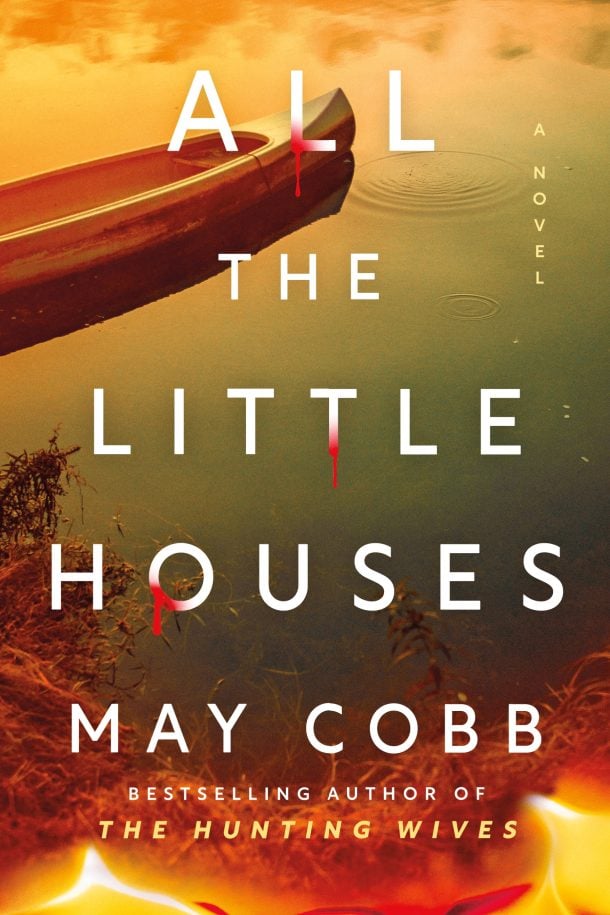 All the Little Houses by May Cobb
Cobb (The Hollywood Assistant) takes readers to a small Texas town in the 1980s, where codependent mother-daughter duo Charleigh and Nellie Anderson rule the social scene. Though they’re part of the richest family in Longview, both grapple with crippling insecurities. Coming from poverty, Carleigh tries extra hard to fit in with Longview’s social elite, and popularity doesn’t come naturally to her unfriendly, domineering, and sometimes violent daughter. When a religious family that lives off the land arrives in town, Charleigh and Nellie’s world is thrown into a tailspin. The Swifts lead a life so different from the lives of Longview’s upper-crust elite that the family becomes a point of fascination, much to the ire of Charleigh and Nellie, who vow to eliminate the perceived threat that the new family brings to the Andersons’ hard-fought existence at the top. The novel begins with a body floating in the lake and ends with a stunning reveal of who has killed whom after a series of shocking events. Cobb offers a salacious peek into the lives of trad wives and materialistic upper-class families, in which Charleigh and Nellie’s toxic relationship is the driving force of the story. Readers will be glued to the page, gawking at the messes Cobb’s characters make. Library Journal, October 2025.
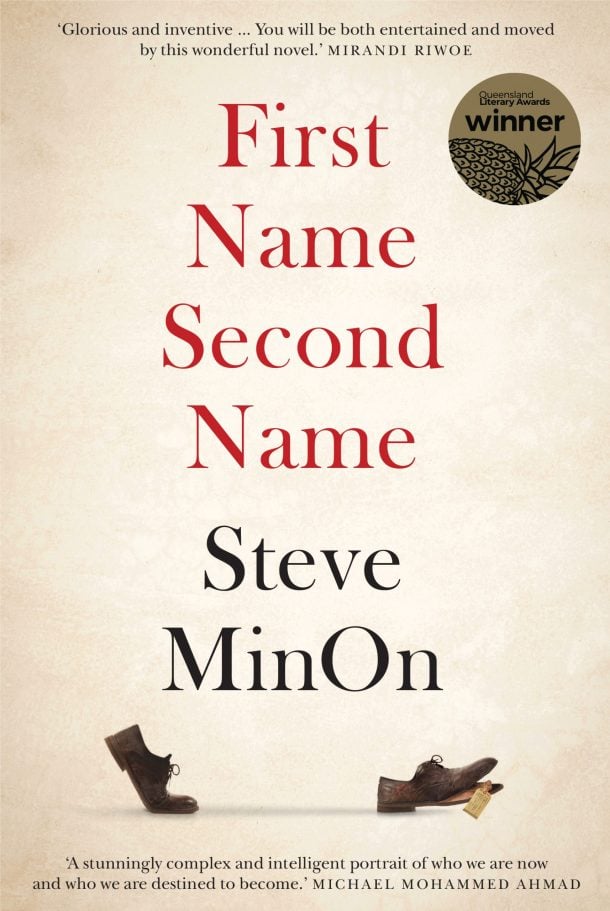 First Name Second Name by Steve MinOn
The protagonist of Steve MinOn’s debut novel First Name Second Name, Stephen Bolin, is a mixed-race gay man born in North Queensland, a background very similar to MinOn’s own. However, the reader shouldn’t assume too strong an autobiographical influence, as the novel’s Stephen narrates his story as a dead man. It begins with a note he’s left at his deathbed for his sisters, asking them to repatriate his remains back to Innisfail, his birthplace. He also stipulates the means of transport – they should carry his body strapped to a litter made from poles of bamboo. When his sisters, unsurprisingly, don’t cooperate, he makes the pilgrimage himself as a decomposing corpse. This bizarre request is inspired by the Chinese folkloric concept of ‘jiāngshī’, an undead or reanimated corpse called a Chinese hopping vampire. The story itself, however, is concerned less with myth and legend than with the genealogy of Stephen’s family, incorporating the Chinese diaspora in Australia. Four successive generations of his family are depicted, struggling to find their way in a culture where racial identity and origins are fraught issues and where those who don’t belong are alienated. MinOn writes well and in this novel he’s successfully depicted how the divisive nature of modern Australia has been shaped by history. As well, he’s devised a highly inventive and original means of telling his story. Good Reading Magazine.
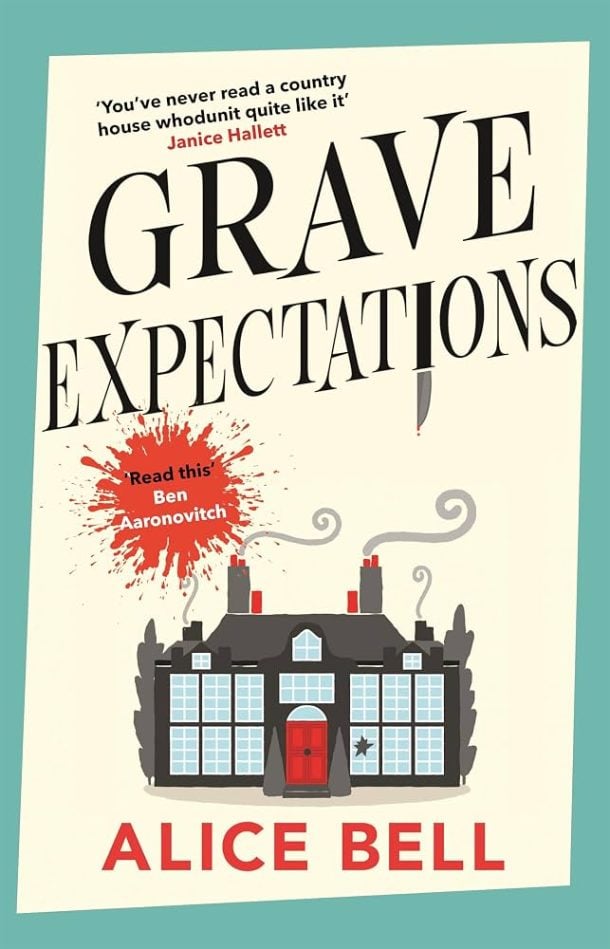 Grave Expectations by Alice Bell
Bell shines in her sharp, funny debut, a supernatural whodunit centered on medium-for-hire Claire Hendricks. Claire and her best friend, Sophie, are headed to a former monastery in the small English town of Wilbourne Major, where Figgy Wellington-Forge, Claire’s university friend, has invited her to entertain the family with her gift. Readers will quickly deduce that Sophie is actually a ghost who serves as Claire’s spirit guide and eavesdrops on her marks to provide information that makes her powers seem more impressive. But Figgy’s plans to hold a séance as a birthday treat for her grandmother go awry when Nana dies suddenly. Her ghost appears to Claire and Sophie to inform them that, while her death was natural, she’s met the ghost of an unknown person inside the house’s library who was recently murdered. Claire decides to help solve the mystery, and enlists some of Figgy’s more trustworthy kin, while heeding Nana’s warning that someone in the family was the killer. The adroit plotting, which cannily plays with mystery tropes, is amply leavened with humor. Fans of the British TV series Randall and Hopkirk (Deceased) will be eager for more adventures from Claire and Sophie. Publisher’s Weekly, July 2023.
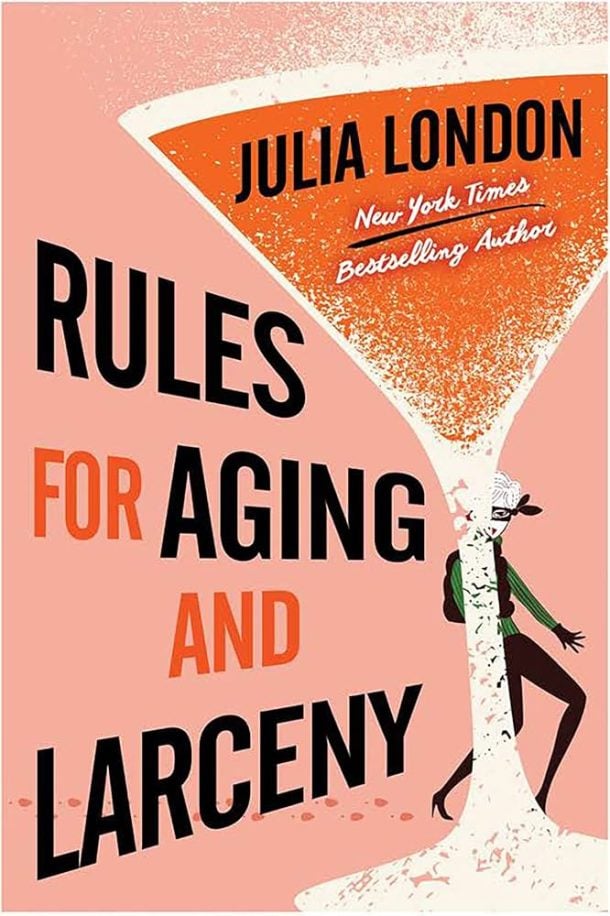 Rules for Aging and Larceny by Julia London
Romance novelist London’s (While It Was Snowing) delightful blend of caper story and women’s friendship hits each note perfectly. Frances Deluca is a widow in her 70s whose son has moved away. At loose ends after being kicked out of the pickleball club for being too competitive, she longs for the days when she and her girl gang pulled off criminal heists, only targeting those who deserved it. Frances then attempts a solo scam that lands her in the hospital and exposes a serious health concern. Knowing that time is at a premium, as it is for anyone her age, she decides to reconnect with the three women who were her partners in crime until a betrayal scattered them. She convinces Irene, Joan, and Edie to undertake one last caper. Edie has the perfect target in mind: the “dudebro” who conned her granddaughter out of all her money. Now the four women, plus a few helpers, plan their biggest heist of all. This is a warmhearted, lively novel of found family finding one another again amidst a fast, fun caper. Will appeal to fans of Richard Osman’s “Thursday Murder Club” books and Fannie Flagg’s “Fried Green Tomatoes at the Whistle Stop Café”. Library Journal, May 2026.
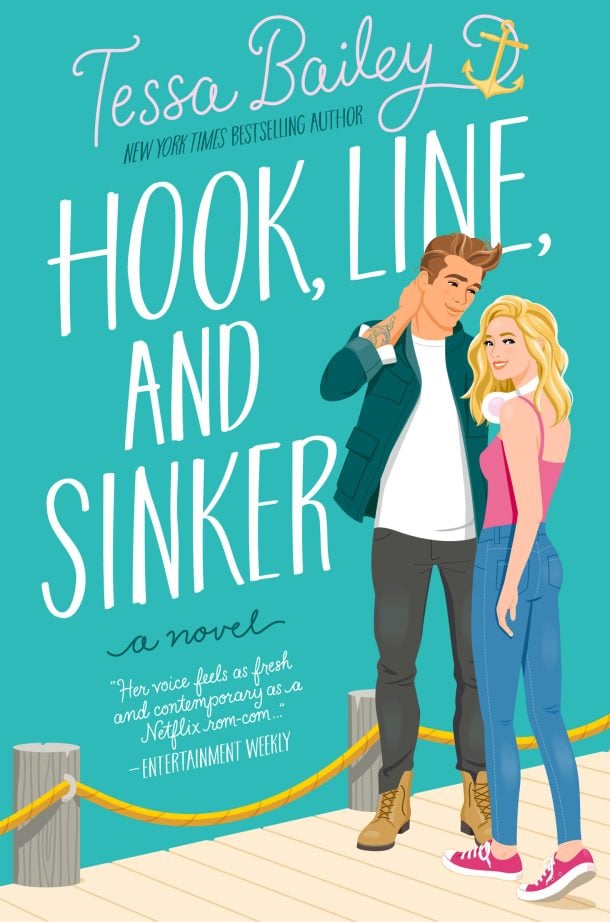 Hook, Line, and Sinker by Tessa Bailey
Bailey’s second Bellinger Sisters novel (after It Happened One Summer) sizzles with romance and wit. Though Hannah Bellinger’s stepfather is a well-known movie producer, she’s determined to be successful on her own merit and begins her career in L.A. as a production assistant. When her director crush, Sergei, needs a location for his latest movie, she suggests using fishing town Westport, Wash., hoping to sneak in a visit to her sister, Piper, and Piper’s fiancé, Brendan. It proves logistically impossible for Hannah to stay with Piper during filming, so she asks her friend Fox Thornton, a member of Brendan’s fishing crew, if she can crash in his spare room instead. Hannah and Fox struck up a fast friendship when she visited Westport the previous summer and have texted every day in the six months since. Despite Fox’s love-’em-and-leave-’em reputation, Hannah can’t help but feel there’s something real between them. But is she willing to risk their friendship and chance getting her heart broken or should she play it safe with Sergei? Bailey expertly captures both the intense chemistry and true friendship between Hannah and Fox as she takes them through humorous mishaps and miscommunication. This sparkling rom-com will have readers hooked. Publisher’s Weekly, January 2022.
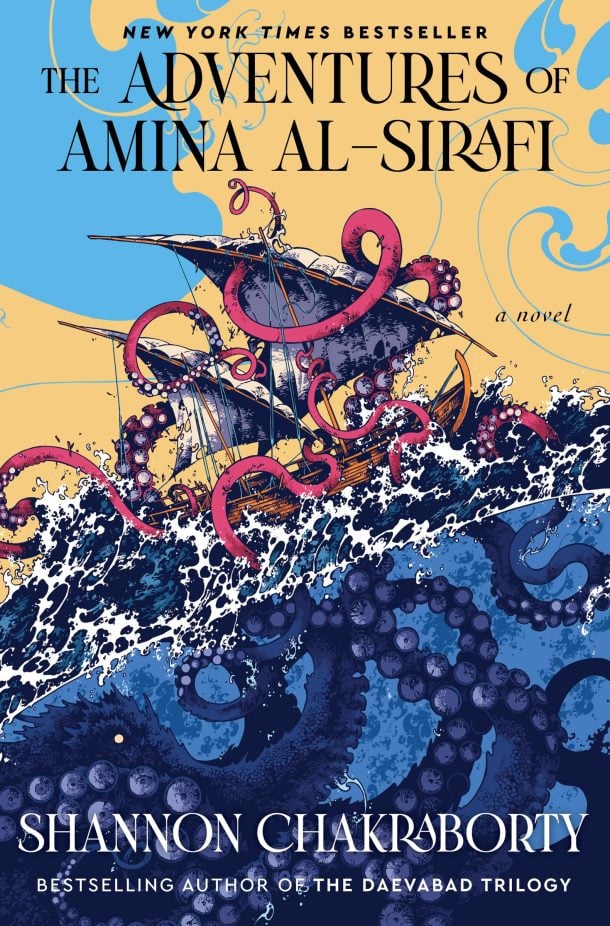 The Adventures of Amina al-Sirafi by Shannon Chakraborty
A legendary pirate embarks on one last caper in this entertaining 12th-century historical fantasy from Chakraborty (City of Brass, written as S.A. Chakraborty). Years of dangerous seafaring earned Amina Al-Sirafi a reputation as a fearsome pirate captain, but everything changed when she gave birth to her daughter, Marjana, and quietly left bandit life behind her. Then Salima, the mother of a former crewmate, flushes her out of hiding and offers her a million-dinar deal to retrieve Salima’s granddaughter, who was kidnapped by the sorcerer Falco Palamenestra. Amina can’t refuse the temptation to return to the sea and secure Marjana’s financial future. She recruits her old crew to help her, and together they uncover Falco’s real motives. Too late they realize that their foe has powers beyond their capacity to fight, but Salima leaves Amina no choice but to press on despite the odds when she threatens Marjana’s life. If readers are not won over by the playful plot twists and thrilling action sequences, they will fall for the charmingly crooked cast and dry humor. This swashbuckling adventure is sure to delight. Publisher’s Weekly, October 2022.
Return to top
AUDIOBOOKS
| General | Adams, Ellery | Invasive species |
| General | Ellison, J. T. | It’s one of us |
| General | Greenwood, Bryn | Nobody knows you’re here |
| General | O’Brien, Jenny | The secret dressmaker |
| Historical | Erskine, Barbara | The story spinner |
| Mystery | Dooey-Miles, Samantha | Under the hammer |
| Mystery | Faber, Jacqueline | The department |
| Mystery | Firestone, Jo | Murder on sex island |
| Mystery | Gray, Claudia | The rushworth family plot |
| Scifi/Fantasy | Kelly, Seana | Wicked wicche |
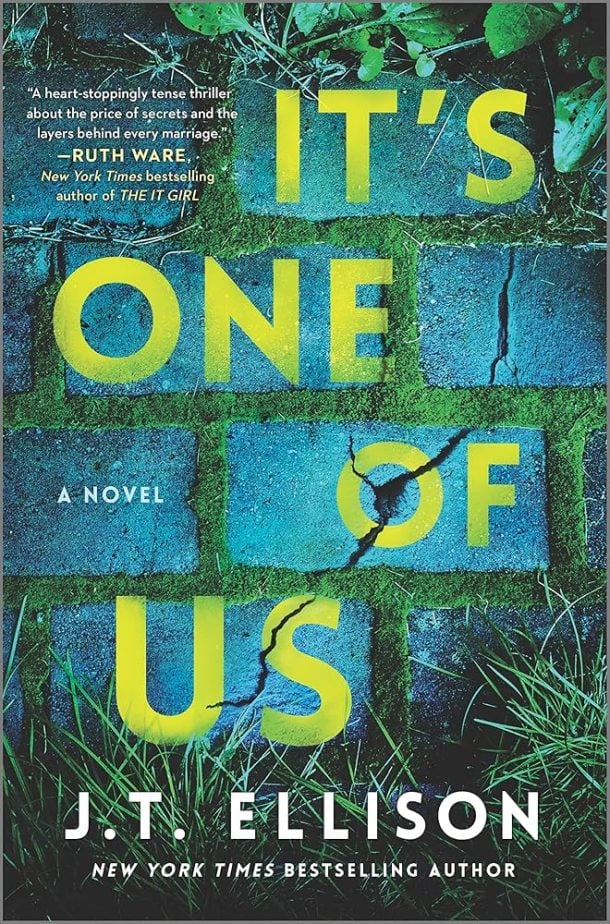 It’s One of Us by J.T. Ellison
Julia Whelan navigates the emotional issue of infertility with empathy and compassion. She allows desperation into her voice as Olivia Bender’s latest fertility treatment fails. Ironically, Olivia’s husband was a sperm donor decades ago and has 28 offspring. Now, children who are curious about their parentage form a Facebook group, with DNA tests proving their relationships. One of them is a killer. Olivia feels betrayed by her spouse, but she also has secrets that could end her marriage. Whelan’s skill in revealing them is impressive. As the chase for the killer progresses, Whelan adds tension by increasing her delivery speed. In an author’s note, Ellison divulges her own infertility struggles, adding more emotional depth to the story. Kirkus Review.
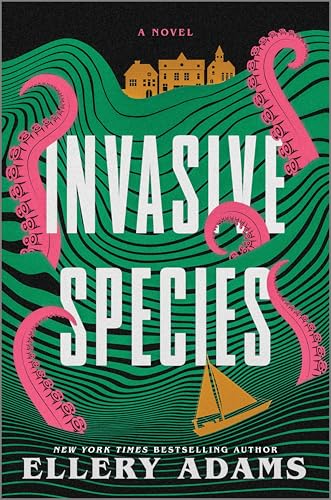 Invasive Species by Ellery Adams
Courtney Patterson vividly narrates this horror novel. In the fictional town of Cold Harbor, Long Island, a centuries-old monster lives in a creepy mansion. Three neighbors become involved with her just as she needs to renew her powers through horrific acts. Two of the women’s children band together with a local housekeeper to defeat the monster. Patterson creates a unique voice for each character, performing Icelandic and Long Island accents, wealthy hauteur, and working-class desperation. She also captures the fear of children who are facing both metaphorical and literal demons. Her renditions are captivating. Patterson drops listeners into a world of supernatural thrills. Kirkus Review.
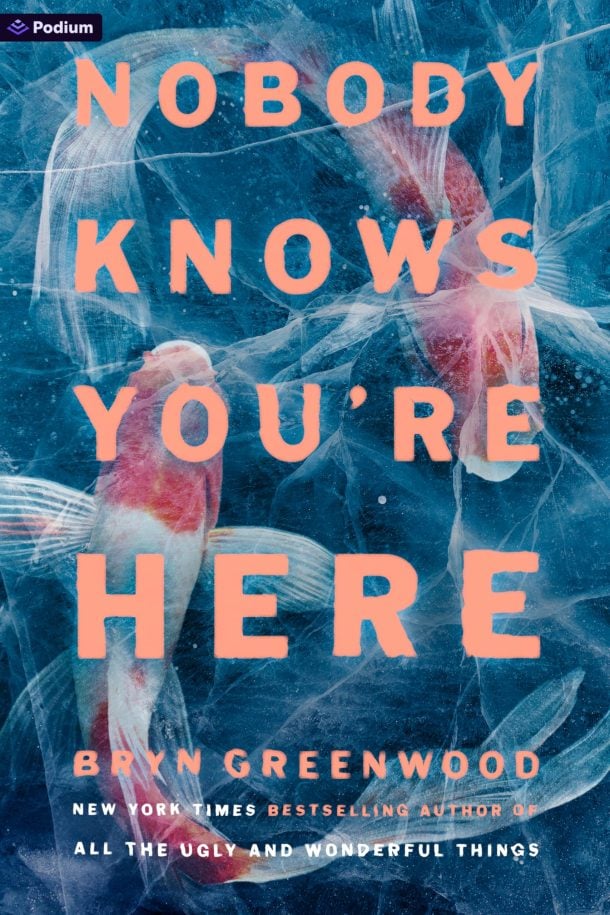 Nobody Knows You’re here by Bryn Greenwood
In Greenwood’s psychological thriller, a young woman uses her wits to survive after she’s taken against her will. Recently rendered jobless, Beatrice Meadows worries she’ll soon be on the streets. After meeting a kind stranger, she unexpectedly wakes up in a room she doesn’t recognize. While food and clothes are made available to her, Beatrice is locked inside this room. According to her “jailer,” Isabel, she’s there to be nanny to the children (fellow abductees) that eventually show up. Not everything is harrowing—Beatrice cares for the kids and meets a seemingly warm hearted groundskeeper named Aiden. But she and the children most definitely can’t leave, lest they be punished—possibly by one of the callous “goons” who occasionally drop off kidnap victims or, scarier still, take them away (“Maybe They would kill us all”). Beatrice, with no access to a cell phone or the internet, is ostensibly in the middle of nowhere. That, however, doesn’t stop her from contemplating escape, or attempting it when she has the chance. Greenwood’s novel is steeped in mysteries beyond Beatrice not knowing where she is; for example, she can’t be sure her indifferent father, or anyone else, is even looking for her. Aiden and Isabel are likewise unpredictable—they also seem to be victims of whatever organization is behind the kidnappings, but how much of what they tell Beatrice is the truth? Beatrice, who narrates, makes for a laudable hero; she’s bright, empathetic, patient when it counts the most, and a mental powerhouse. Some of what she endures is vicious, though the author implies much of the violence and consistently lets suspense drive the narrative. All of this begets a sublime final act that focuses on the enigmatic characters and their complicated relationships. A dynamic cast elevates this tense story of resolve in the face of captivity. Kirkus Reviews, September 2025.
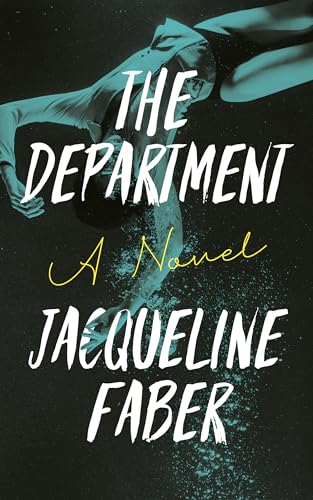 The Department by Jacqueline Faber
Faber’s crackling debut centres on a philosophy professor who gets entangled in the case of a missing student. When Neil Weber was six years old, he watched a woman drown without trying to help save her. The trauma of that episode informed his decision to study human behaviour; it also compels him to intervene when his campus is roiled by the disappearance of student Lucia Vanotti. Weber has a fuzzy memory of offering Vanotti a cigarette once, and, despite having no authorized role in the investigation, he reaches out to her family and friends for details about her disappearance. His actions arouse suspicion from the police, which Weber ignores, until his inquiry leads him to fear that one of his best friends might be involved. Faber alternates between Weber’s present-day narration and Vanotti’s perspective, including flashbacks to her childhood and a chronicle of the year before she vanished, keeping even careful readers off-balance throughout. Nuanced characterizations and the author’s gift for evoking the rhythms of campus life are sure to delight fans of Peter Swanson. Readers will be eager to see what Faber does next. Publishers Weekly, November 2024.
 Murder on Sex Island by Jo Firestone
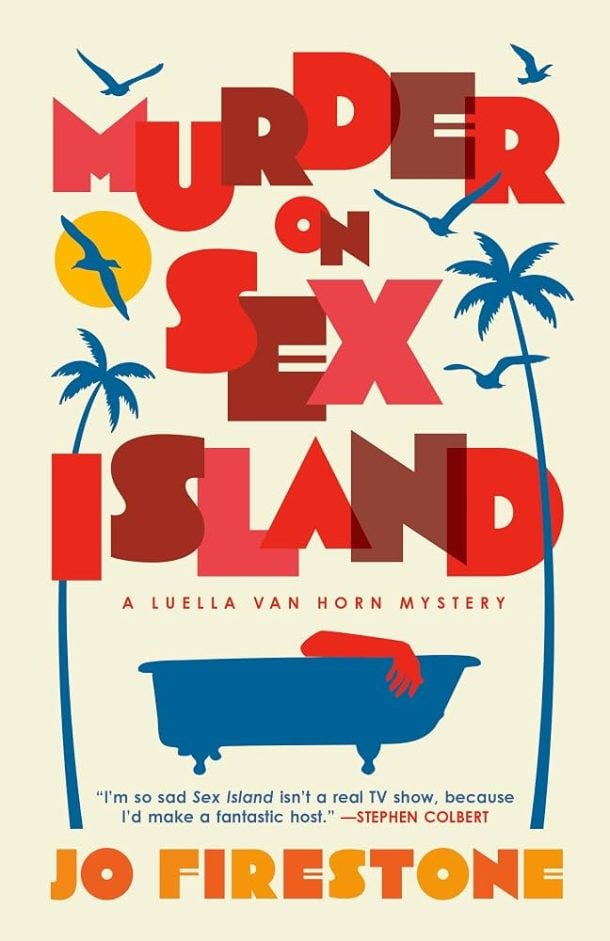
Comedian and actor Firestone debuts with a hilarious cozy set during the production of a reality dating show. When David G., one of the most popular contestants on Sex Island, goes missing, the show’s producers hire Staten Island PI Luella Van Horn to go undercover as a contestant to find him. As Luella blends in with the cast, she eyes everyone as a potential suspect, especially Sex Island’s lecherous director, ruthless producers, and shady crew. She soon learns that all the male cast members were jealous of David G., and all the women wanted him just as badly as it looked on TV. Then things start to go awry for Luella: she discovers a body in her bathtub, accompanied by a threatening note; she’s drugged; and she starts to fall for a fellow contestant. As her castmates battle for a cash prize, Luella knows she’s in danger, but she’s determined to solve the case and maintain her professional reputation. Firestone scores major points with her outrageous premise, laugh-out-loud one-liners, and fast-paced plot. It’s a tropical blast of sun, sex, and sleuthing. Publisher’s Weekly, March 2025.
 The Rushworth Family Plot by Claudia Gray
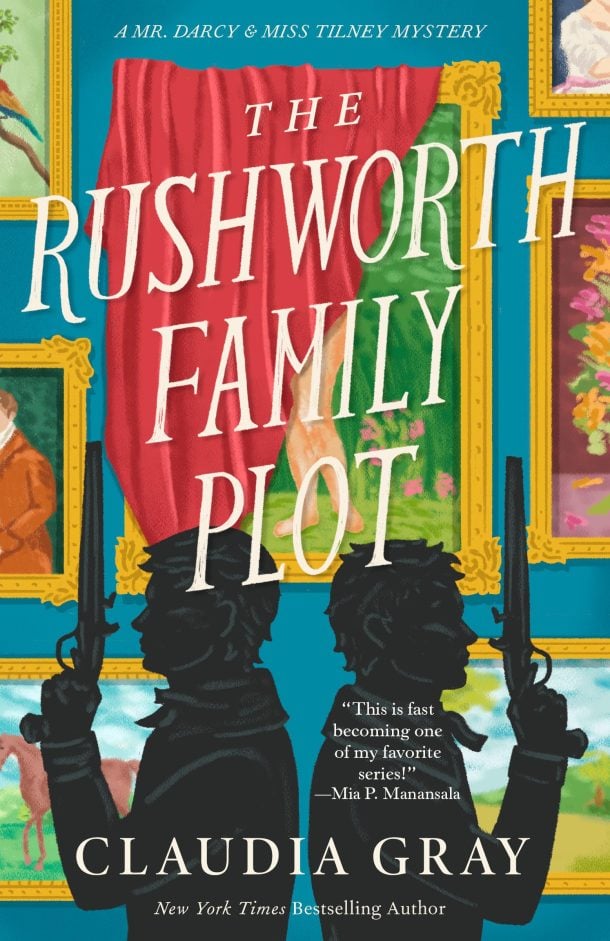
Gray’s clever fourth Jane Austen homage (after The Perils of Lady Catherine de Bourgh) keeps her winning streak alive. In 1823, Jonathan Darcy (son of Pride and Prejudice’s Fitzwilliam Darcy) and his sleuthing colleague, Juliet Tilney (daughter of Northanger Abbey’s Catherine Morland), are in London to participate in the social season and possibly find a mate—an unwelcome prospect, since each harbors romantic feelings for the other. When Jonathan’s family must return to Pemberley, he’s forced to board with his father’s friend, Sir Thomas Bertram. Jonathan and Juliet get a respite from their mandated socializing after Maria Rushworth, Bertram’s black-sheep sister, arrives at the family home, and then someone close to her is strangled to death with a length of rope. As a result, the amateur sleuths eagerly exit the London rat race and tap into their deductive acumen. Gray continues to effortlessly capture the language and tone of Austen’s novels, this time heating up the series’ sparkling romance plot while delivering her most intricate puzzle to date. It’s a delight. Publisher’s Weekly, November 2025.