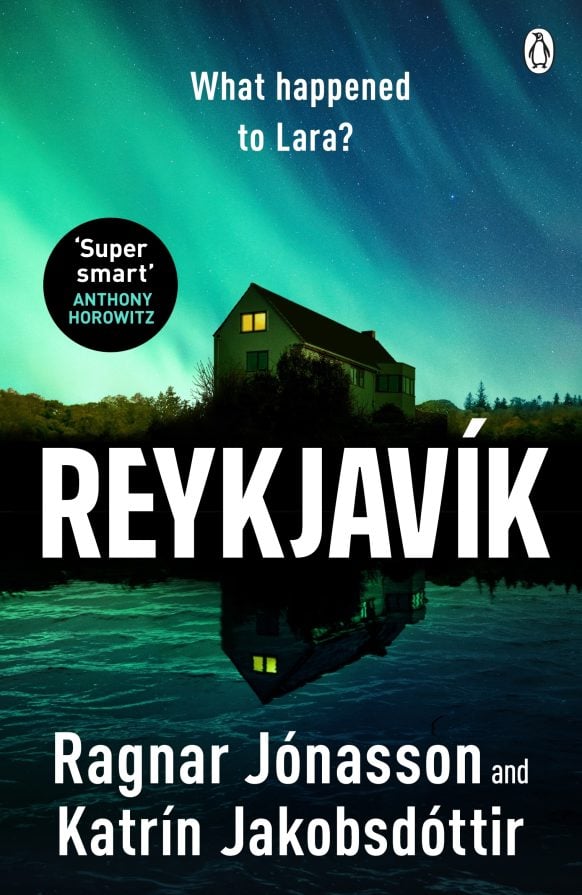
Reykjavík by Ragnar Jonasson & Katrin Jakobsdottir
Reykjavík is an interesting collaboration between noted Icelandic crime writer Ragnar Jónasson and the then Prime Minister of Iceland Katrín Jakobsdóttir, which seems to have been written mostly during the Covid-19 lockdown.
The story spans 30 years, and begins with the disappearance in 1956 of a 15-year-old girl who was working as a summer holiday home help for the only couple resident on the small island of Videy, just off the coast of Reykjavík. Junior police officer Kristján Kristjánsson travels to the island to commence an investigation. The employers claim that the girl simply walked off without warning, but the police officer establishes that no boats left the island at the relevant time. He is told that she probably drowned herself, taking all her belongings with her, but this is implausible. A thorough search is conducted of the island, without uncovering any evidence of what has happened to Lára Marteinsdóttir.
Back on the mainland, the young officer is directed by a superior to drop the case and not to follow up hints that a prominent property developer might have relevant information, on the grounds that the girl has probably run away and will eventually turn up. But no trace of Lára turns up, and the disappearance becomes Iceland’s greatest unsolved case.
The book then moves on in ten-year steps, with a little more information appearing but no real progress in solving the mystery until in 1986 a reporter on a disreputable scandal sheet newspaper writes a series of articles trying to solve the mystery of Lará’s case. Was she murdered? Could she still be alive and living overseas? He interviews people who might have some answers, including the girl’s parents and the police officer, who now holds a senior position. He gets some anonymous cryptic contacts and announces that he will finally print a solution to the case in a forthcoming article in his newspaper.
Iceland is agog with speculation, but it becomes clear that senior levels of government, law and business a powerful group of senior figures in business, law and politics may not want the truth revealed at a time when Iceland is in the world spotlight.
The narrative skilfully interweaves the investigation of Lará’s disappearance with real-life events of August to October 1986. These include celebrations of Reykjavík’s 200th anniversary and the seminal Reykjavík Summit, when US President Ronald Reagan and Soviet leader Mikhail Gorbachov came face to face to begin negotiating extensions to the Strategic Arms Limitation Treaty. That summit is also regarded as the beginning of the end of the Cold War and the collapse of the Soviet Union.
Eventually, the disappearance case is resolved and a full explanation is achieved. This book is an intelligent and well-constructed crime thriller, although its conclusion is perhaps a bit weaker than the earlier part of the narrative. However, lovers of Icelandic crime novels will no doubt find it highly readable.
Reviewed by Peter Maywald
SMSA Member
Find this book in SMSA Library