
BIOGRAPHY
| Doucet, Lyse | The finest hotel in Kabul |
| Hustvedt, Siri | Ghost stories |
| Leo Xiv, Pope | Freedom under Grace |
| Rogers, Jim | Holding on to happiness |
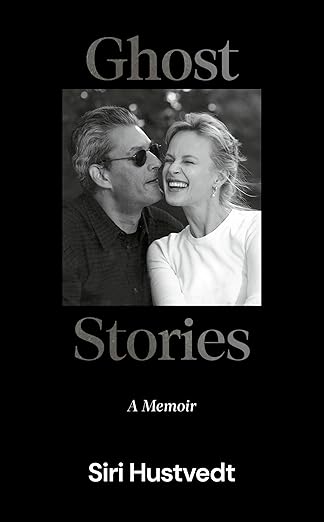 Ghost Stories by Siri Hustvedt
“I am alive. My husband, Paul Auster, is dead,” writes Hustvedt (Mothers, Fathers, and Others) in the opening sentences of this tender tribute to Baumgartner author Auster, who died of lung cancer in 2024. What follows is a catalog of Auster’s final months, full of hospital stays, emails to concerned friends and family, and Hustvedt’s late-night memories of the couple’s 43 years together. “If your father dies… I will lose my everyday,” Hustvedt recalls telling the couple’s daughter, Sophie, shortly after Auster was diagnosed in 2023. She infuses memories of everyday activities like checking the mail, cooking dinner together, and reading each other’s proofs with a palpable romantic magic. After Auster’s death, Hustvedt wrenchingly captures the way time was “deranged beyond recognition” as she wandered their Brooklyn home in his clothes, ate his favorite meals, and sat staring at his untouched pens and typewriter while being plagued by the aroma of his cigars. The book’s title comes from Auster’s stated desire to return as a ghost; Hustvedt sweetly fulfills his wishes by recounting anecdotes from his life and sharing letters he wrote to her and their children. The result is an elegy that’s at once heart-swelling and devastating. Publishers Weekly, May 2026.
Return to top
GENERAL FICTION
| Ahern, Cecelia | Love unlocked |
| Aridjis, Chloe | The shadow of the object |
| Atkinson, Kate | Our noble selves |
| Boyd, William | Cold sunset |
| Cline, Emma | Switzy |
| Cusk, Rachel | Life of M |
| Dean, Abigail | The death of us |
| Green, Sophie | The frock shop |
| James, Marlon | The disappearers |
| Kuang, Rebecca F | Taipei story |
| Lapena, Shari | Getting away with murder |
| Moriarty, Liane | Big little truths |
| Ōtani, Akira | The night of Baba Yaga |
| Picoult, Jodi | Hollow bones |
| Riley, Gwendoline | The palm house |
| Tokarczuk, Olga | Primeval and other times |
| Woods, Tess | The Cairo bridal shop |
| Wu, Jessy | Good intentions |
 Our Noble Selves by Kate Atkinson
Atkinson (Normal Rules Don’t Apply) delivers a boisterous yet weighty historical murder mystery set in post-WWII London. In 1949, war correspondent Harry Flynn is rootless and alone, having returned to England after being captured by the Japanese in Singapore. Back in London, where he’s tormented by flashbacks of forced labor, he takes a job helping to plan the Festival of Britain, an exposition celebrating the history and people of the British Isles. Colleague Delphine Dubois insists he join her for a drink, after which she goes missing and eventually turns up murdered. Flynn, the last person to see her alive, becomes a suspect. He thinks he’s being framed, but can’t prove it; he has no memory of the evening and doesn’t know why he woke up with a badly bruised face. Gradually, the puzzle comes together, thanks in part to revelations about Delphine’s history in the French Resistance. Atkinson skillfully juxtaposes the emotional scars of war with laugh-out-loud farce, as when Flynn, as part of his festival duties, is tasked with judging painfully bad poetry, or when a notorious former sex worker wins a baking contest and becomes an idol of British housewives. The plot, stacked with blackmail and betrayals, builds to a satisfying resolution. This entertaining romp has a good deal of depth. Publisher’s Weekly, July 2026.
 Cold Sunset by William Boyd
Boyd’s satisfying latest adventure for travel writer turned amateur spy Gabriel Dax (after The Predicament) finds Dax trying to ferret out a Russian mole in the 1960s. F.T. Falkner, a British poet who participated in WWII’s Ultra codebreaking operation before moving to California to teach, suspects that his former Bletchley Park colleague, Angus Fairford, was a double agent for the Soviet Union during the war. Faith Green, Dax’s recruiter at MI6’s Institute of Developmental Studies, orders him to confront Fairford, who was once Faith’s mentor. Fairford admits to being a double agent and agrees to identify other “termites” in British Intelligence. Meanwhile, Kit Caldwell, a triple agent in Moscow, wants to be extricated with Dax’s help. Dax heads overseas, but their escape goes awry, having been compromised by someone in MI6. Despite Dax’s belief that he’s only posing as a secret agent and lacks the ruthlessness of professionals like Caldwell and Faith, it’s rewarding to watch him improve his tradecraft, coolly dispatch assassins, and land a few victories he doesn’t just stumble into. With its blend of humor and sturdy plotting, this series remains a welcome addition to the espionage genre. Publisher’s Weekly, August 2026.
 Switzy by Emma Cline
“Disconcerting, this mental ice floe, populated only by David, floating off into the polar darkness,” writes Cline (The Guest) about the partially knowable 70-something protagonist of her starkly beautiful latest. David Hastings, a wealthy and once powerful businessman, is traveling by company jet through the night over Greenland, but his polar darkness is caused not only by geography but a neurodegenerative disease. He repeatedly loses track of his memories and surroundings, only to find himself drifting toward oblivion and hanging on to shards of insight about his condition. Soon, the reader gathers from such poetic fragments that David’s devoted assistant, Cody, has helped him arrange to die by euthanasia in Zurich. Before David’s appointment in Switzerland, the plane touches down in London, where David plans to meet his emotionally distant daughter. Next, he hopes to see his estranged boarding school friend, Tom, in France. There’s a bit too much pressure on the stakes of David’s desire to make amends with Tom, but this distraction is easy to forgive thanks to the brilliant prose exhibited on every page. Indeed, the novel’s lucidity is remarkable considering the dimming of David’s inner light, which Cline portrays with a laser focus and deep sympathy. It adds up to a striking meditation on mortality. Publisher’s Weekly, August 2026.
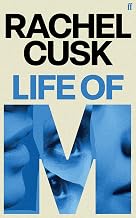 Life of M by Rachel Cusk
A writer befriends a movie star named M and proceeds to write an imagined version of M’s life story in this fascinating and complex work of metafiction from Cusk (Parade). The middle-aged writer, ungendered and unnamed, is struck near the beginning of the novel when M says “that starring in a film as a child had immediately brought her childhood to an end.” The writer is reminded of comments by the author of a popular memoir — details evoke Sad Tiger by Neige Sinno — “who was saying the same things about the deeds of her stepfather.” What follows is a mix of ambiguous first-person plural vignettes depicting routine life in the writer and M’s unnamed cosmopolitan city and close third-person chapters focused on M reflecting on her work and persona. As an actor and fashion brand ambassador, M’s “work is to be herself,” but the essence of that self remains mysterious. As the writer’s manuscript reaches completion, the writer reappears on the page, and both the writer and M offer fascinating insights about the fraught autobiography project and M’s fear of losing control of her presentation. This is spectacular. Publisher’s Weekly, June 2026.
 The Death of Us by Abigail Dean
A divorced couple reunites for the sentencing of the serial killer who shattered their lives in this moving literary thriller from bestseller Dean (Day One). Thirty years ago, the South London Invader broke into the home of playwright Isabel Nolan and her husband, lawyer George Hennessy. The couple made it out shaken but alive; their relationship, however, never recovered. Decades later, the Invader—retired policeman Nigel Wood—has been caught, tried, and convicted, and Isabel and George, now in their 50s, are preparing to deliver victim statements before his sentencing. The story mostly unspools through Isabel’s testimony, in which she recounts her and George’s tumultuous marriage and addresses her assailant with all the emotion she no longer dares to share with her ex-husband. Her decision to publicly out herself as a victim of the Invader helped bring the killer to justice—and helped her find her voice as a writer—despite protestations from the fiercely private George. That rich dynamic, plus a poignant subplot about the orphaned daughter of one of the Invader’s victims, add texture and novelty to the narrative. As in her two previous works—Girl A, which focused on an adult survivor of parental abuse, and Day One, which depicted the aftermath of a school shooting—Dean transforms tragedy into art with surgical prose and a steely gaze. It’s a triumph. Publisher’s Weekly, January 2026.
 Taipei Story by Rebecca F Kuang
Lily Chen is spending her summer in Taiwan as part of an exclusive language program, confident that she can become fluent in Chinese in just 10 weeks. But as soon as she arrives, Lily begins to doubt herself. She’s certain she should feel a connection to her heritage, but why is she acting like a tourist? What is she doing wrong? To make matters worse, her apartment is tiny and she can’t stand her passive-aggressive roommate. In the stifling humidity of Taipei, tensions are at boiling point as Lily pushes herself towards an identity she can’t quite grasp. Kuang is no stranger to talking about language, academia and translation. But compared to her Babel and Katabasis, this felt like an incredibly personal narrative, as the story is broken up into small moments, reflections and memories – almost like reading another person’s diary. We get to know Lily intimately, and I was impressed at Kuang’s masterful characterisation. Lily feels so human, she can be insufferable due to her stubbornness and lack of introspection, but also entirely relatable through her homesickness. The story appears simple – Lily explores Taipei while trying to learn Chinese – but this is an incredibly nuanced book. Kuang deftly says so much with so little; her polished and thoughtful prose is interspersed with a consistent dry humour, comically conveying Lily’s sense of being the odd-one-out. The story approaches everything from conflicting identities, cultural appropriation, the unspoken parts of family history and the numb shock of losing a grandparent you were never close to. A fascinating, engaging read. Good Reading Magazine, September 2026
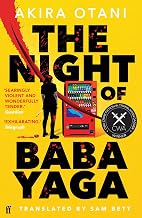 The Night of Baba Yaga by Akira Otani
A young woman falls in love with a crime boss’s daughter in Otani’s gripping English-language debut. In 1979 Tokyo, 22-year-old Yoriko Shindo is kidnapped by yakuza boss Genzo Naiki. He offers her a deal: if she agrees to be the bodyguard and chauffeur for his teenage daughter, Shoko, he’ll let her live. The sheltered and aloof Shokoinitially shows no interest in Shindo, but they slowly develop a connection as the only women in their testosterone-fueled world. When a smitten Shindo learns more about Shoko’s troubles—her mother’s mysterious disappearance, her upcoming arranged marriage to a sadistic yakuza enforcer—she resolves to help set the teenager free. In a Thelma & Louise–style act of desperation, the pair goes on the run, both knowing full well that they won’t be able to evade Naiki and his henchmen for long. Otani’s artful, staccato sentences, deftly translated by Bett, draw readers in, and an unexpected time-jump midway through the novel gives it an ingenious jolt of life. This tender yet furious crime saga will leave readers hungry for more from Otani soon. Publisher’s Weekly, April 2024.
 The Palm House by Gwendoline Riley
A “40-ish” London woman sheds her “flippant” Northern English family for regular drinks with her fellow contributors to Sequence, a highbrow magazine, in Riley’s marvelous latest (after My Phantoms). Much of narrator Laura Miller’s focus is on 49-year-old editor Edmund Putnam, a 25-year veteran at Sequence who was recently passed over for promotion. Everyone calls him Putnam except for the overly familiar new boss, Shove, an oblivious philistine who calls him Ed. When Putnam quits soon into Shove’s tenure, it’s for many reasons, one being Shove’s mission to remake the magazine into a “sort of London version of the New Yorker.” Others keep their heads down, despite finding the new editorial strategy pointless and silly, but Putnam is too pure for that. It’s a quality Laura admires, though she recognizes the privilege required to afford it—she lives with two flat mates and centipedes, while he has an immaculate waterfront loft. Interspersed throughout are poignant but unsentimental flashes of Laura’s personal history—her teen obsession with a stand-up comedian that ends badly, a Withnail-like lover she sees casually as a young woman, and her narcissistic mother’s poor conversation—all of which implicitly signify the value of her chosen company. It’s a deeply sympathetic and thoroughly unpretentious portrait of literary life. Publisher’s Weekly, June 2026.
Return to top
HISTORICAL FICTION
| Harris, Robert | Agrippa |
| Weir, Alison | The Boleyn secret |
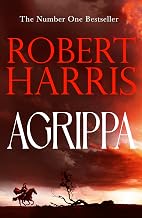 Agrippa by Robert Harris
A dying Roman recalls his lifelong friendship with the man who became Emperor Augustus. A few short years before the Common Era, Agrippa writes his memoir. In his waning days at age 50, the old Roman general remembers his eventful life, which has been so tightly tied to his friend Octavius’. He began life as Marcus Vipsanius Agrippa, a plebeian, a nobody who was taunted as a “mother-killer” because his mother died in childbirth. Octavius, on the other hand, is a great-nephew of Julius Caesar, whom they both admire. As they enter manhood, they fight bravely in Rome’s savage wars, both civil and foreign. Agrippa promises Caesar that he will always protect Octavius, who can be sickly, and he lives up to that commitment. That loyalty becomes his destiny. And when Caesar puts him in command of an army, he knows that is what he was born to do. Put briefly, Agrippa develops into the Roman Republic’s most renowned general and oversees great feats of engineering such as the aqueducts, while Octavius eventually becomes Emperor Augustus. The former ascends by merit, the latter by blood. This is no ordinary friendship, nor is it an equal one. When the emperor wants to adopt one of Agrippa’s sons, for example, Agrippa has no choice but to agree. When he is asked to divorce his wife and marry someone else, what’s a good soldier to do? “You are part of my family,” Augustus tells him. “I want you by my side for eternity. Besides, I shall need you to guard my back in the Underworld.” Agrippa comments: “He punched my arm. A joke.” Much is impossible to know after two millennia, and author Harris weaves a strong story that honours history and imagines vivid details. There are great naval battles, disastrous storms at sea, and the threat posed by Antony and Cleopatra. Women are often interchangeable—who can produce a son? And through it all, Rome descends into dictatorship. A compelling mix of history and imagination. Kirkus Reviews, June 2026.
Return to top
MYSTERY
| Allingham, Margery | The mind readers |
| Bannalec, Jean-Luc | An island of suspects |
| Chandler, Raymond | The lady in the lake |
| Chowdhury, Ajay | Eden falls |
| Craven, M. W. | The final vow |
| Dent, Susie | Death writ large |
| Dunbar, James | Blood moon |
| Foley, Lucy | Murder at the Grand Alpine Hotel |
| Kirk, J. D. | The last bloody straw |
| Osman, Richard | We chase shadows |
| Robb, J. D. | Fury in death |
| Todd, Charles | A day of judgment |
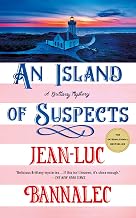 An Island of Suspects by Jean-Luc Bannalec
A beautiful Breton island is the scene of an ugly murder. Two days before Commissaire Georges Dupin is scheduled to mark his 10th year in Brittany with a party planned by his colleagues, he gets a call about a body found in the harbor at Doëlan. The dead man turns out to be Patric Provost, a resident of Belle-Île, one of three small islands off the Breton coast. Dupin’s decade of service has never before brought him to Belle-Île, and he’s instantly smitten. The sea offers a cavalcade of blues, and the lichen-covered rocks glitter green, silver, lavender, and even pink. Each turn of the road brings a vista more spectacular than the last. Dupin’s investigation is far more prosaic. Provost was a miserable old codger who seemed bent on thwarting the hopes and dreams of every one of his Bellilois neighbours. So, as the title suggests, there’s no dearth of suspects. Unfortunately, Dupin’s thorough interviews generate a timetable that eliminates all of them. It takes considerable ingenuity and luck to determine who could have been in the right places at the right times to dispatch Provost, but insight strikes in the nick of time, allowing Dupin’s well-deserved celebration to go forward as planned. The star of the show, as always, is the meticulously described local colour, with extra marks this time for showcasing a little-known gem. Bannalec’s puzzle may be timeworn, but his Brittany is timeless. Kirkus Reviews, February 2025.
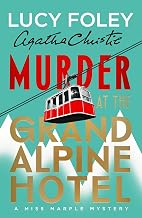 Murder at the Grand Alpine Hotel by Lucy Foley
Foley (The Midnight Feast) honors the legacy of Agatha Christie with this sterling mystery that finds legendary sleuth Miss Jane Marple traveling to Switzerland in 1950 with her friend, Dolly Bantry, and Dolly’s prim assistant, Diana Glass. The women are delighted by the luxuries they find upon checking in to the Grand Alpine Hotel, located in an isolated region of the Swiss Alps. The trip sours, however, when someone at the resort turns up dead and a powerful blizzard subsequently strands the guests. Eccentric disguises and stolen gold bars add color to a mystery that starts with familiar tropes but grows increasingly unpredictable as Miss Marple’s investigation proceeds. Foley’s side characters—aging movie star Sylvia Sinclair; powerful political candidate Anthony Narracott and his wife, Catherine; six skiing nuns who pray in the adjacent chapel; and French detective Moreau, who conveniently shows up after the first murder—live up to the casts Christie constructed in her books. Foley’s Miss Marple, meanwhile, perfectly blends the investigative prowess and unassuming disposition that’s long made the character so beloved. Golden age mystery fans will adore this faithful update. Publishers Weekly, June 2026.
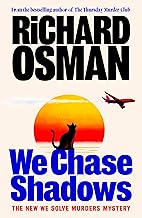 We Chase Shadows by Richard Osman
The We Solve Murders investigators are bored. The team: bestselling author, Rosie; retired policeman, Steve; and his daughter-in-law and ex-bodyguard, Amy; along with new office manager, Felicity, haven’t had a murder to solve in six months. At least in Steve’s case, there’s nothing keeping him from quiz nights at The Brass Monkey. After Rosie’s appearance on a chat show however, the team are contacted by Vern Blackwood, a ‘semi-criminal’ in Málaga whose bodyguard has been killed and a weird note left on his body. Then things escalate when the team fly to Spain and another of Vern’s bodyguards is killed. Vern sells wellness products. It just so happens that the active ingredients are missing. One of six fraudsters who divided the globe, he fears he’s next after three are murdered. Suspicion falls on rival Jakob Eriksson, and the team know that Vern’s not telling them everything about their history. In a worrying subplot, the sales of Rosie’s latest book are tanking. Osman’s humour and signature juxtaposition between the grisly and mundane are ever present, where talk of murder is interrupted by discussions around the quickest ways of navigating England’s B roads, or who knows the capital of Malawi (just in case it comes up in the next quiz). As the title suggests and with the author’s track history, there are multiple suspects, some of whom don’t make it to the denouement. The final plot twist is gobsmacking but makes perfect sense. Magnificent, as usual. Good Reading Magazine, September 2026.
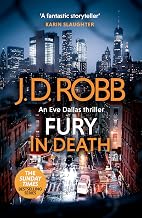 Fury in Death by J.D. Robb
Thirteen years ago, way back in 2048, scientific genius Steve Redman narrowly escaped death in a gas explosion that killed his pregnant wife and infant son and 200 other residents of their New York City apartment building the night before he planned to report his suspicions about the company to the FBI. Now the bill is coming due for Banner-Wyst. The first death to be discovered is that of Lawrence Chu, Redman’s colleague and trusted friend, whose tenure as director of bioengineering science ends when he’s beaten to death. For quite a while, Dallas and her partner, Det. Delia Peabody, know less about this mystery than their readers do. But when Ezra Dent, a consultant to Banner-Wyst who worked with Redman and Chu back in the day, is murdered in exactly the same ferocious way, Dallas and Peabody, with help from Roarke, Dallas’ tech-billionaire husband, promptly put the pieces together and determine who they’re looking for. The search for Redman, who went AWOL from his hospital bed without a trace six years ago, has its own challenges. So does Dallas’ attempt to get cooperation from partners Calvin Banner and Jacob Wyst, who are clearly in the crosshairs of a killer who seems a lot less monstrous than they are. If the breaks in the case are suspiciously convenient in arriving, readers can pride themselves on taking sides against a mega-corporation whose self-avowed ecological saintliness is undermined by its leaders’ underhanded dealing. A satisfying thriller that will warm the hearts of fans who already take comfort in hating the forces of evil. Kirkus Reviews, May 2026.
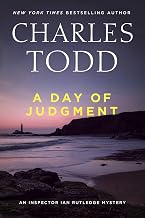 A Day of Judgment by Charles Todd
Scotland Yarder Ian Rutledge’s promotion to chief inspector is disrupted by a difficult case in Todd’s brilliant latest historical mystery featuring the tortured investigator (after A Christmas Witness). In 1921, Rutledge’s boss, Chief Superintendent Markum, orders him to travel to Northumberland to investigate the death of Oswin Dunn, a pilot whose body washed ashore near Lindisfarne, “the cradle of Christianity in England.” The location makes the drowning a concern for the Church of England, which is worried that Dunn’s death on the sacred island could stir up bad press. Aware that he must tread carefully, Rutledge begins searching for a murderer after an autopsy reveals that Dunn was fatally bludgeoned before entering the water. The chief inspector pursues two possible motives for the killing: anti-German prejudice directed against Dunn for having a German brother-in-law, and anger over Dunn’s investigation of the sinking of the British Royal Navy’s HMS Ascot just before the 1918 armistice. As usual, Rutledge is haunted throughout by the ghost of a man he killed in WWI, and Todd expertly balances a moving depiction of Rutledge’s torment with a masterful whodunit plot. The author is in fine form. Publishers Weekly, January 2026.
Return to top
NON FICTION
| Behrendt, Larissa | The first inventors | 305.899 BEHR |
| Flanagan, Richard | Heresies | 824.4 FLAN |
| Macintyre, Ben | Redwood | 327.120 MACI |
| Marshall, Tim | Prisoners of geography | 320.12 MARS |
| Pronk, Ben | We’re all going to die | 150.198 PRON |
| Vallejo Moreu, Irene | Consolations | 170.44 VALL |
| Wrigley, James | Retire life ready | 332.024 WRIG |
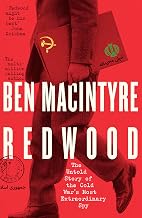 Redwood by Ben Macintyre
A Soviet spy was enticed to defect by false promises of an erectile dysfunction cure, according to this riveting real-life thriller. Bestselling historian Macintyre (The Siege) revisits the story of Vladimir Kuzichkin, a KGB agent in Tehran after the 1979 overthrow of the Shah. The Revolutionary Guards kept a ruthlessly tight watch over Kuzichkin and the communist Tudeh Party he oversaw, filling him with paranoia that drove him to drinking and, subsequently, chronic impotence. In desperation, he contacted Tehran-based MI6 agent Ian McCredie, offering him Soviet secrets, including about Tudeh plans to overthrow the Ayatollah, in exchange for asylum—and an impotence cure, which he was certain capitalist medicine possessed. (No such treatment yet existed, but MI6 didn’t disabuse him.) After exfiltrating Kuzichkin, Western intelligence agencies leaked the planned revolt to the Ayatollah, who began executing communists. (“Gradually it dawned on Western analysts that removing the last bastion of opposition in Iran had actually bolstered the regime’s strength…. As the scale of the bloodletting became apparent, a queasiness set in.”) Macintyre’s lively espionage saga, full of brush-pasts and dead drops, stands James Bond on his head: tall, muscley, blue-eyed Kuzichkin was wracked with sexual insecurities that he poured out to McCredie in boozy bathroom heart-to-hearts. The result is a morally murky tale of manipulation and unforeseen consequences. Publishers Weekly, September 2026.
 Prisoners of Geography by Tim Marshall
Is geography destiny? Perhaps not, but Manifest Destiny certainly had a geographical component—and so, writes former Sky News correspondent Marshall (“Dirty Northern B*st*rds!”: And Other Tales from the Terraces: The Story of Britain’s Football Chants, 2014, etc.), will a future world in which the United States may not be a superpower. “When Vladimir Putin isn’t thinking about God, and mountains, he’s thinking about pizza,” writes the author. Pizza and, of course, the Ukraine, his next-door neighbor and a ripe plum for any vision of a Russian empire. Geography has a grim matter-of-factness to it: argue that the Mongols came exploding out of Central Asia due to a bumper crop in grass or that the Vikings left Scandinavia because of the horrible monotony of the fjords, and you’re likely to be pegged as a determinist without sufficient regard for free will. Yet, as Marshall argues in this pop excursus, geography does have something to do with how we live. Some of us have endless fields of grain, others water, others oil, and even if technology has freed us from some of the limits of old—allowing us to fly, as he puts it, from Missouri to Mosul to unleash a bomb or two—the facts of the land often trump other considerations. In a sense, Marshall’s arguments are old-fashioned. In another, they’re of an everything-old-is-new-again tenor, since, he suggests, 100 years from now, Beijing and New Delhi will still be fighting over resources and there will still be an imposing mountain wall between them. And that pizza that Putin is thinking about, the wedge of the North European Plain, is eternal: “a century from now,” Marshall writes, “Russia will still be looking anxiously westward across what will remain flatland.” Compulsive globe-spinners won’t find much new in these pages, but Marshall’s broad survey of events in the light of geographical realities goes a long way to explaining Putin’s concerns—and, for that matter, those of the CIA as well. Kirkus Reviews, September 2015.
Return to top
ROMANCE
| Gilmore, Laurie | The Daisy Chain Flower Shop |
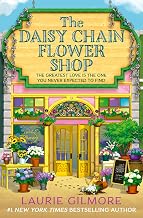 The Daisy Chain Flower Shop by Laurie Gilmore
Bestseller Gilmore (The Gingerbread Bakery) welcomes readers back to quaint Dream Harbor for another gentle small-town romance with Hallmark movie vibes. Daisy Scott is just “one in a long line of Daisies,” including her mother and grandmother, to run her family’s flower shop. Business is struggling after the last three weddings Daisy was hired to decorate resulted in quick divorces. With town gossips labelling her cursed, she’s stuck primarily making funeral wreaths. It doesn’t help her unlucky in love reputation when her ex-fiancé comes to town scouting wedding venues. To save face in front of the happy couple, she impulsively claims town newcomer Elliot as her boyfriend. Given that he’s been attracted to Daisy since noticing her at city council meetings, Elliot, an architect remodelling the local inn, is happy to fake a relationship to help her business and boost her reputation. With previous couples from the Dream Harbor series popping up to offer Daisy advice on her supposed new relationship, it isn’t long before real sparks ignite between her and Elliot. The plot offers few surprises but plenty of comfort, especially for returning readers. Dream Harbor remains a cozy spot to linger. Publishers Weekly, May 2026.
Return to top
SCIENCE FICTION & FANTASY
| Corey, James S. A. | Leviathan falls |
| Durst, Sarah Beth | Sea of charms |
| Sanderson, Brandon | Blightfall |
 Leviathan Falls by James S.A. Corey
Daniel Abraham and Ty Franck, writing as Corey, stick the landing in their spectacular ninth and final Expanse space opera (after Tiamat’s Wrath), set in a future where humanity has begun to expand beyond the solar system. For decades, human communities on a number of planets have been subject to the rule of the Laconian Empire—but its ruler, Winston Duarte, is no longer in control after a failed experiment that he’d hoped would grant him immortality, but instead changed him into something other than human. Meanwhile, the extraterrestrial threat to mankind remains, heightened by the discovery that the ancient alien intelligences that created the ring gates that enable intergalactic travel were themselves wiped out by something even more powerful. Reluctant hero James Holden is again committed to doing whatever he can to protect and unite humanity, aided by his crew on the Rocinante, who each face painful choices on the way to the gut-punching conclusion. Multiple perspectives—including that of a ruthless antagonist—create empathy with each member of the scrappy cast without ever slowing the pace or oversimplifying the interstellar intrigue. This fully satisfying resolution renders the entire series an all-time genre classic. Publishers Weekly, November 2021.
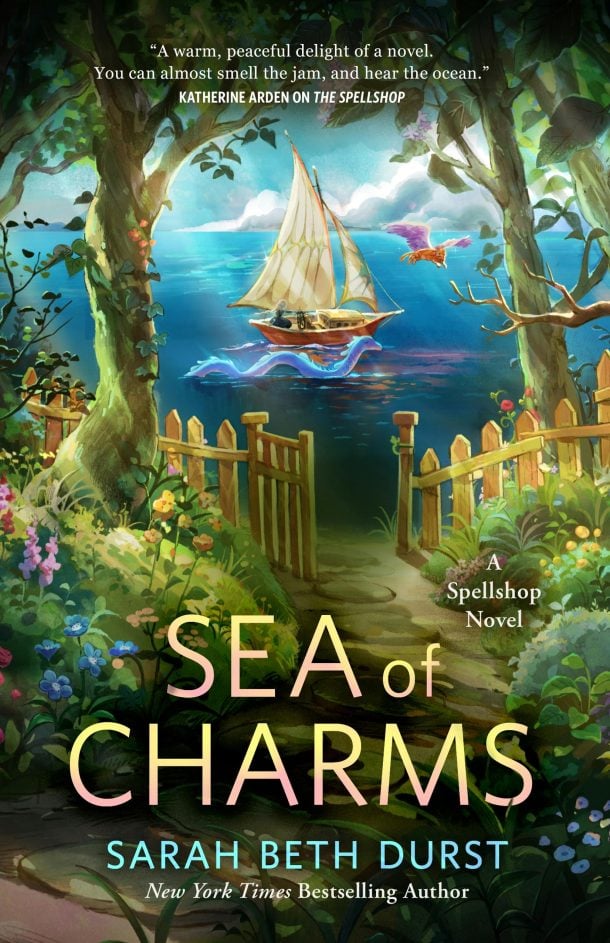 Sea of Charms by Sarah Beth Durst
This cute and quirky cozy romantasy, the third standalone set in the world Durst established in The Spellshop, takes to the Crescent Islands Empire’s seas to find adventure, love, and family. Sailor Marin’s life turned upside down two years ago when she discovered that her then-fiancé was trying to sabotage her family’s supply-running business. After the Emperor is overthrown, Marin returns to her home island’s End-of-Harvest Festival, where she discovers that her ex-fiancé has assumed control of the loan her parents took out for her boat and is demanding it be repaid in full just after the winter solstice. Marin and her wonderfully eclectic crew—including dashing new addition Dax, a virtuosic composer who’s traveling with them—embark on a series of entertaining escapades as they work to secure the funds to pay off the debt and keep her parents from losing their home. As in previous instalments, the revolution subplot plays out in the background and off-page while the story proper stays focused on the everyday stakes of ordinary—if fantastical—lives. Readers will find it a warm-hearted and thoroughly entertaining escape. Publishers Weekly, July 2026.
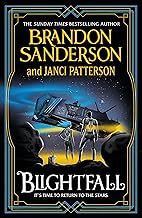 Blightfall by Brandon Sanderson
Set in Sanderson’s Skyward universe and spun off from his and coauthor Patterson’s Skyward Flight series, this spirited trilogy launch sees a peaceful mission to a remote human space colony go sideways. After defeating “oppressive galactic empire” the Superiority, the human and alien inhabitants of planet Detritus start contacting other worlds. When communication attempts with far-flung Blightfall prove unsuccessful, flight-leader Arturo Mendez, pilot Sadie Chay, and other teen members of military unit Skyward Flight accompany diplomats on an in-person visit. Evidence indicates that Blightfall’s humans don’t have spaceships, but when Detritus’s delegation arrives, armed drones destroy the diplomats’ vessel, forcing Arturo and company to crash-land. Blightfall’s inhibitor field prevents them from hyper-jumping home, summoning reinforcements, or warning would-be rescuers, so while it’s clear they’ve “drastically misunderstood” the situation on this planet, the crew has little choice but to head for Blightfall’s lone city and find a way to save themselves. Breezy first-person narration alternates between cautious Arturo and ebullient Sadie, interspersed with interludes from amiable alien slugs. Thrilling action, chaste romance, and gentle humour maintain the zippy pace and lighthearted tone, while introspective depictions of intersectionally diverse characters add substance. It’s a blast. Publishers Weekly, September 2026.
Return to top
TRAVEL ANECDOTES
| Mackinnon, A. J. | Realms of gold | TRV 910.92 MACK |
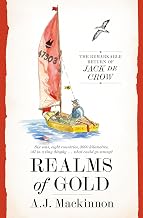 Realms of Gold by A J Mackinnon
A J Mackinnon’s account of his second voyage in a dinghy called Jack de Crow could well have been titled ‘Serendipity’. Sailing from the mouth of the Danube to Venice, via the Black Sea, the Bosphorus and numerous Greek Islands, Sandy finds himself in numerous difficult situations, some of which are life threatening. Suddenly changing weather, rugged coastlines and the fragility of his dear boat – which many pundits he meets think is too small to be embarking on such an odyssey – are frequent sources of danger. As well as the various port officials who could be relied upon to delay, if not halt altogether, the progress of Jack de Crow. But there is always a Good Samaritan, which Mackinnon attributes, in part, to the essential goodness in humanity. Or, there is a timely change in fortune – a secret cove between towering cliff faces, for example, found just in the nick of time. It is often hilarious. Readers will appreciate the dry wit and self-deprecating anecdotes. But Sandy is a well-read author with extensive knowledge of the rich history and mythology of the lands he is visiting, and the waters he is sailing through. The frank and thoughtful reflections, vivid descriptions, and fluent writing are a pleasure to encounter. Unavoidably, there is a great deal of sailing jargon and I, for one, couldn’t explain the difference between a rudder and a jib. But it doesn’t matter. This uplifting story reminds us that the best travel experiences elicit a broad range of emotions. Importantly, they are vehicles for learning, about ourselves and others, and the beautiful world we live in. Good Reading Magazine, August 2026.
Return to top
New additions to eBooks at SMSA
EBOOKS
| General novel | Kingsolver, Barbara | Partita |
| General novel | Lloyd, Ellery | Time to burn |
| General novel | Mahajan, Karan | The complex |
| General novel | Wood, Charlotte | The submerged cathedral |
| Mystery | Burrowes, Grace | A gentleman of modest ambitions |
| Mystery | Cleeves, Ann | The raging storm |
| Mystery | Hammer, Chris | Full circle |
| Mystery | Leitch, Fiona | The Cornish honeymoon murder |
| Mystery | Penrose, Andrea | Murder on Threadneedle Street |
| SciFi/Fantasy | Nix, Garth | Massif |
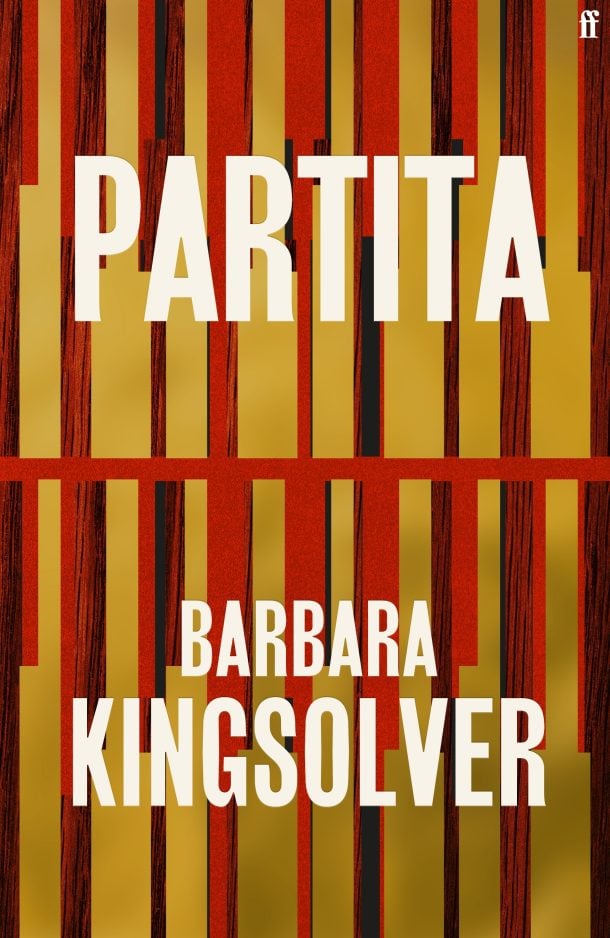 Partita by Barbara Kingsolver
Pulitzer winner Kingsolver (Demon Copperhead) returns with an engrossing story of a middle-aged woman’s forsaken talent and chance for redemption. Livia Cable, once a promising pianist, lives on a farm in Tennessee with her husband, Charlie, where she offers music lessons. Glimmers of her old life resurface with an unexpected phone call from a former boyfriend, Sigurd. From there, the novel unfurls on parallel tracks, following middle-aged Livia as she weighs whether to let Sigurd back into her life and a 20-year-old Livia as she meets Sigurd in 1989 while attending Indiana University. Though she is already seriously dating a classmate, young Livia falls for the handsome Sigurd, a typesetter and radical leftist. In the present, Livia’s reflections on their campus romance hint at how she came to be relegated to a life of “low expectations after getting shot down for chasing the pie in her sky.” Some of the dialogue feels overly expository, but Kingsolver shines in her character work, beautifully conveying how Livia’s mind is shaped by music, as in her reflections on tension and resolution (“a brief bridge of suspense moving right on to the next one, one after another, these small, satisfied hungers in succession”). This tragic story of long-held secrets will keep readers turning pages. Publishers Weekly, August 2026.
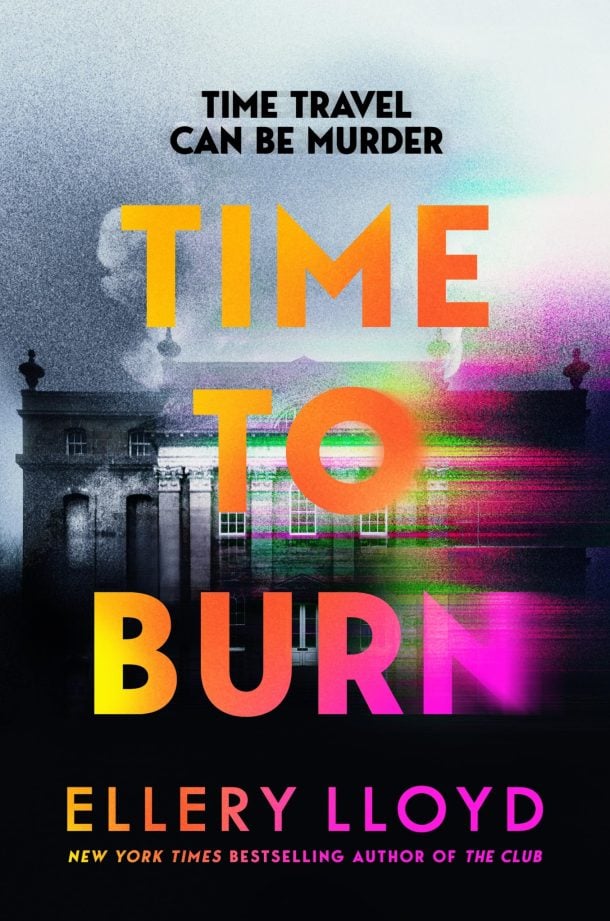 Time to Burn by Ellery Lloyd
A time tourist goes rogue in this stunning sci-fi thriller from husband-and-wife duo Paul Vlitos and Collette Lyons, writing as Lloyd (The Final Act of Juliette Willoughby). Famous for her unflinching series about the Living Family, a communal “utopian community” founded by her father that ended in tragedy, documentarian Phoebe Hunt agrees to make a film about commercial time-travel innovator Inigo Frank only after he promises her full access and editorial control. Phoebe is filming a trip to the London Blitz with Inigo’s company when the excursion goes sideways: fellow attendee Harry Allen and his girlfriend return safely, but Harry’s son, Luke, is injured, and Luke’s new wife, Sasha, misses the aperture to the present, which can’t immediately reopen. Upon seeing Sasha’s picture, Phoebe realizes she was a former Living Family kid whom Phoebe bullied mercilessly. When reality starts to shift in the present, Phoebe suspects Sasha is responsible, and questions her endgame. The authors skillfully intercut Phoebe’s paranoid present-day experience with scenes following Sasha in 1941 and excerpts from Phoebe’s series on the Living Family. Well-wrought characters lend texture and emotional resonance to the intricate and diabolically clever plot. It’s a triumph. Publishers Weekly, June 2026.
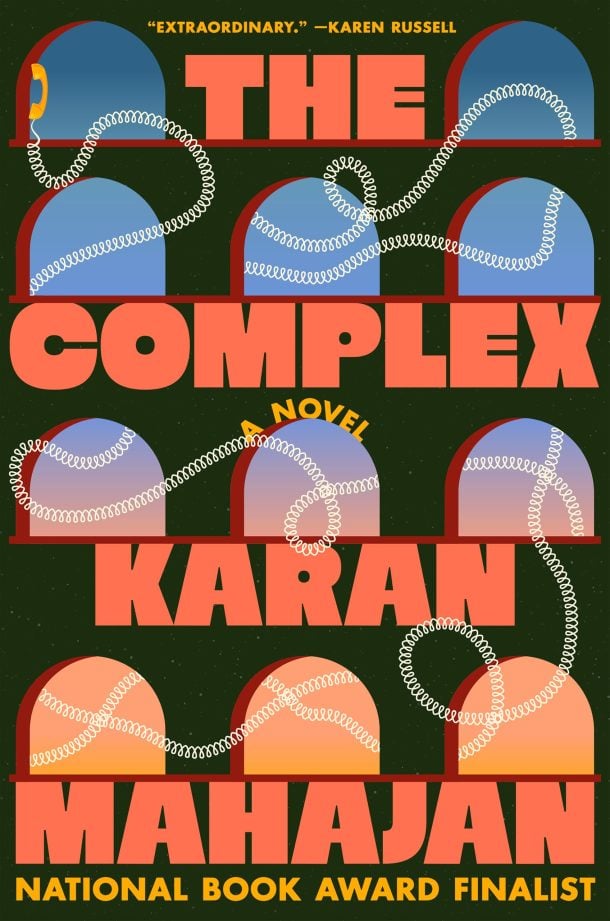 The Complex by Karen Mahajan
In Mahajan’s immersive third novel (after The Association of Small Bombs), a family tragedy unfolds against the backdrop of political upheaval in India. As the story opens in 1980, Sachin Chopra, grandson of a late revered Indian politician, is trying to forge a new life in Michigan with his wife, Gita, even as she longs to return to Delhi. During a visit there, Sachin’s lecherous uncle, Laxman, sexually assaults Gita, and the other family members, including Sachin, brush her off when she tries to tell them about it. Meanwhile, Laxman, a failed businessman, attempts to launch a new company with Karishma, the wife of Sachin’s brother Brij, and embarks on an affair with her. Brij, a broken man following his service in the Indian Air Force, physically abuses Karishma and their two sons. After Sachin and Gita move back to Delhi, Brij comes to deeply resent his brother’s presence, and eventually, Gita pushes Sachin to grasp the depth of Laxman’s depravity. In the mid-1980s, members of the far-right Bhartiya Janata Party court Laxman, hoping to win over establishment voters by exploiting his family name, and the family tensions build to a tragic denouement. Even those unfamiliar with Indian political history will be swept up by the well-drawn characters and gripping drama. The author proves himself a consummate storyteller. Publishers Weekly, January 2026.
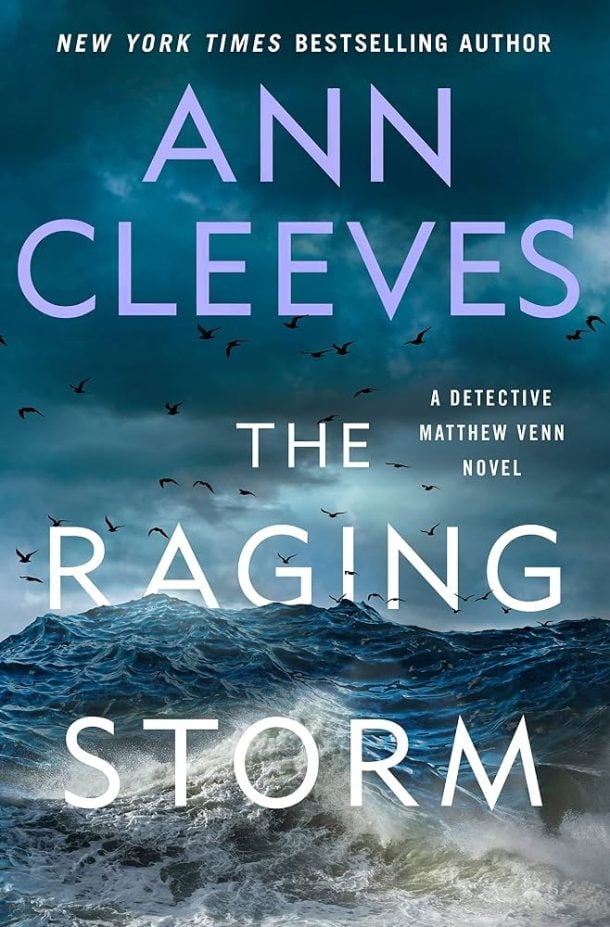 The Raging Storm by Ann Cleeves
Bestseller Cleeves’s outstanding third Matthew Venn novel (following 2021’s The Heron’s Cry) sees the detective returning to a small village on the northern English coast to solve a pair of murders. In the middle of a storm one September afternoon, Jem Rosco—sailor, bon vivant, and local legend—enters a pub in his misty hometown of Greystone to await a visitor he won’t name. A few days later, a local rescue crew responding to an anonymous distress call discovers Rosco’s lifeless body in an anchored dinghy. Det. Insp. Matthew Venn and his bickering sergeants are called from Devon to investigate. Venn is less than enthusiastic: Greystone is home to the Brethren, a religious sect his family once belonged to, and he left unceremoniously several years earlier. As the detective and his officers dig into Rosco’s past, local magistrate Barty Parker—husband of Rosco’s first love, Nell—turns up dead as well. Then Nell herself disappears, and pressure mounts to identify the killer before the body count climbs. Cleeves crafts a devilishly intricate mystery that will surprise even seasoned genre fans, and Venn remains an appealing lead every bit as memorable as the author’s Vera Stanhope or Jimmy Perez. Cleeves’s fans and newcomers alike will be hungry for the next entry. Publishers Weekly, July 2023.
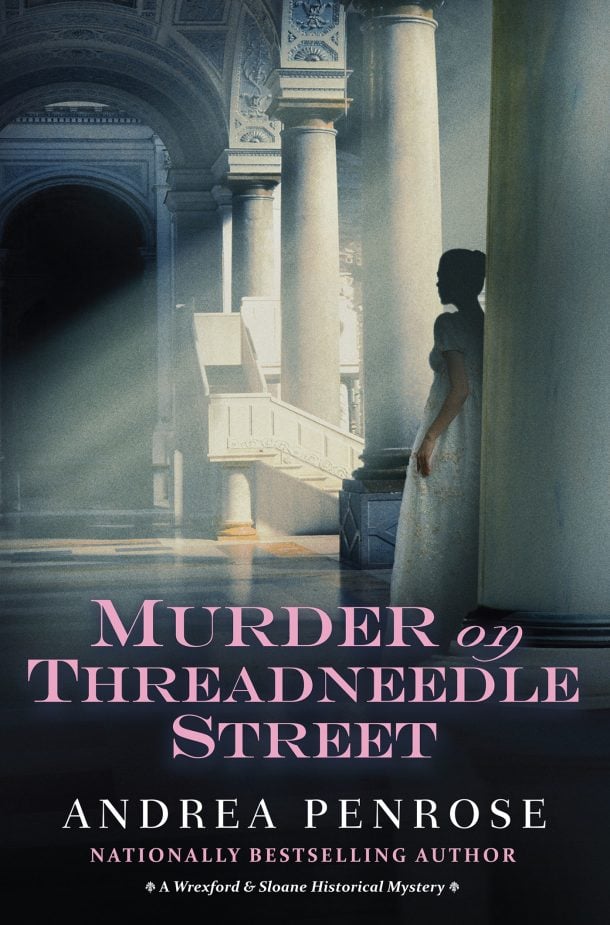 Murder on Threadneedle Street by Andrea Penrose
It takes an extended crime-solving family to help foil a murderous counterfeiting ring in Regency England. In this deft, enjoyable latest edition to the Wrexford & Sloane Mysteries, a lively family is drawn into a deadly criminal ring. Charlotte, Countess of Wrexford, has a hidden life as A.J. Quill, a satirical artist, while her husband, the Earl of Wrexford, cultivates his passion for science and new inventions. Their extended family includes Charlotte’s fetching half sister and a trio of former street urchins. One boy, Hawk, is distraught when his drawing tutor, Fletcher Campbell, is murdered on Threadneedle Street. His pleas plunge the family and their friends into a dangerous hunt. Charlotte, with her artistic eye, notes that Fletcher’s ring is missing from his dead hand. The friend who recommended Campbell to the Wrexfords reveals that the tutor’s family was neck-deep in a counterfeit money scandal that nearly brought down the Regency government and the Bank of England. The uproar sent Campbell’s artistically gifted young nephew out of the country. The earl hires an investigator, who deputizes a clutch of London street children to snoop around; the urchins barely escape with their lives. Because paper money in this era was easily counterfeited, the Bank of England offers 20,000 pounds to anyone who can use the new engineering techniques to create an inimitable bank note.The Wexfords’ new drawing tutor, Jack MacArthur, turns out exquisite work, and so he should, for he’s the missing Campbell returned from America. He also works in a gun store. The enmity between the rival prize hunters and nefarious outside players make it dangerous for the experienced sleuths to unravel a series of crimes. A primer on fake money and Regency inventions goes hand in hand with an exciting and complex mystery. Kirkus Reviews, September 2026.
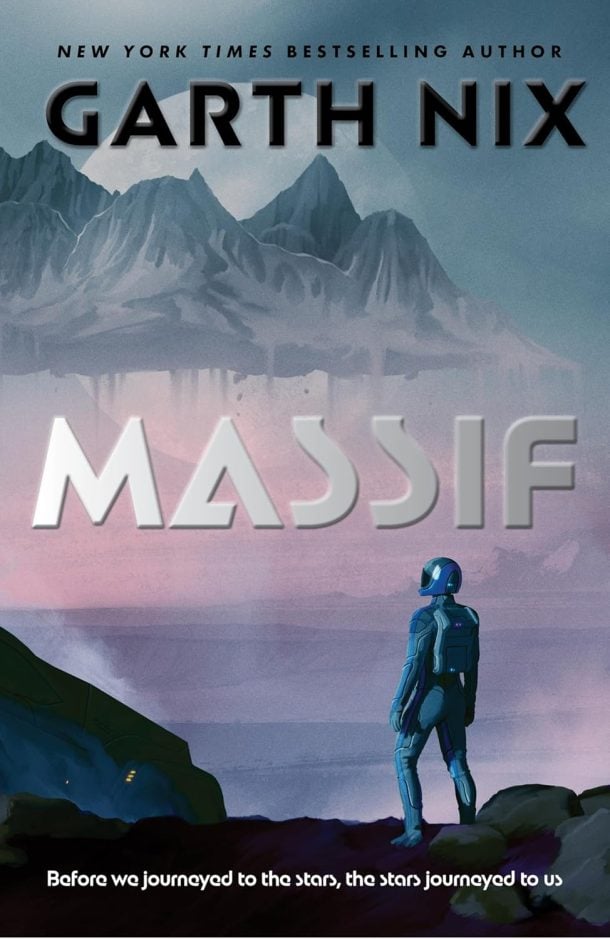 Massif by Garth Nix
Bestselling YA fantasist Nix (Sabriel) showcases his worldbuilding prowess in his first adult sci-fi novel, a riveting space opera set in the 24th century. In 2097, a mountain range, or massif, in Madagascar was lifted into the sky and began to orbit Earth. The astronauts who reached it encountered an entity that they understood to be the avatar of the massif, who informed them that the massif would leave the solar system for a time to explore the stars. Those who accompanied it returned to report that it was part of a network of such massifs, each safe for human habitation, triggering massive extraterrestrial colonization and sparking continuous warfare for centuries. Nix grounds these epic stakes in human terms, as the aftermath of one such battle leaves Kazlin Kim-Sawahla, a crewmember of the United Earth Government Navy ship Sassafras, stranded, and leads her commanding officer, ship leader Parnell Shi-Sawahla, to attempt a rescue that risks his life and his career. His endeavor coincides with efforts to understand more about the sentient massifs, why they facilitate human warfare, and what they’re seeking in the stars. The result is a staggering adventure that should win Nix a whole new set of fans. Publishers Weekly, July 2026.
Return to top
AUDIOBOOKS
| General | McKinty, Adrian | The chain |
| General | Moyes, Jojo | Paris for one |
| General | Panatier, Christian | Worry box |
| Mystery | Archer, C. J. | The Goldsmith’s conspiracy |
| Mystery | Feeney, Alice | Rock, paper, scissors |
| Mystery | Gatland, Jack | To hunt a magpie |
| Mystery | King, Laurie R. | Those who are gone |
| Mystery | O’Connor, Carlene | Murder in an Irish cottage |
| Mystery | Wade, Sabrina | Patient 7 |
| Romance | Lee, Susan | See you at the sunset |
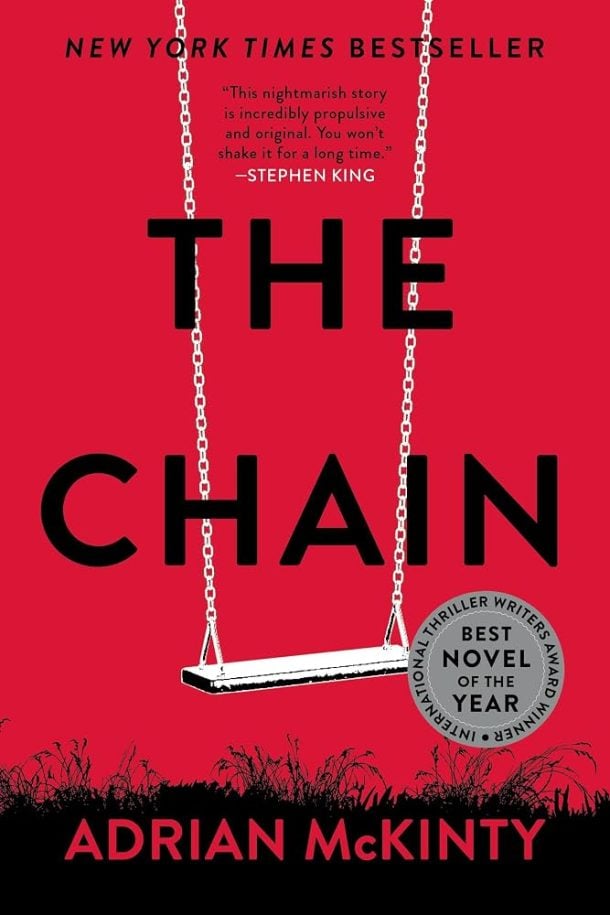 The Chain by Adrian McKinty
An original premise, relentless pacing, and strong female characters lift this nail-biter from Edgar winner McKinty (the Sean Duffy series), which takes a no-holds-barred look at how far a parent will go to protect her child. Divorced teacher Rachel Klein, a cancer survivor, lives on Massachusetts’s Plum Island with her 13-year-old daughter, Kylie. She’s driving to Boston one day to see her doctor when she gets a call from an unidentified woman who sounds upset. The woman tells Rachel that she has kidnapped Kylie, and the only way to get Kylie back is for Rachel to kidnap another child. The woman, whose own child has been kidnapped, and Rachel are now links in a chain of abductions. If Rachel doesn’t follow the program, Kylie will die. In desperation, Rachel and her retired military brother-in-law, Pete O’Neill, eventually kidnap a random child to win her daughter’s release. At that point, an angry Rachel and Pete, ignoring warnings to continue to remain silent and do nothing, go on the offensive to track down the people responsible for the kidnapping chain, culminating in a violent confrontation in a marshy area south of Plum Island. Readers won’t be able to put this thriller down. Publishers Weekly, April 2019.
 Worry Box by Christian Panatier
When a house in their ideal neighborhood comes up for sale, the Martin family–parents Alison and Nathan, biological daughter Dru, and foster daughter Lailah–moves in, hopeful about the future even if, as the girls insist, it is haunted by a helpful ghost. However, as readers know from the disturbing prologue, this is a home that has borne witness to many horrors, horrors that have caused traumatic scars in the structure of the house itself. Adding to the unease, Lailah works very hard to control her disturbing intrusive thoughts by getting them out of her head and into her worry box. But when bad things start happening, things that match what’s hidden in the worry box, it might mark the end of this family before they have the chance to really begin. Fast-paced, with a constantly shifting point of view and steadily escalating dread that will make readers squirm, this is a solid haunted house tale which knowingly plays with the trope itself, much like in Shirley Jackson’s classic The Haunting of Hill House or Carissa Orlando’s The September House (2023). Booklist, August 2026.
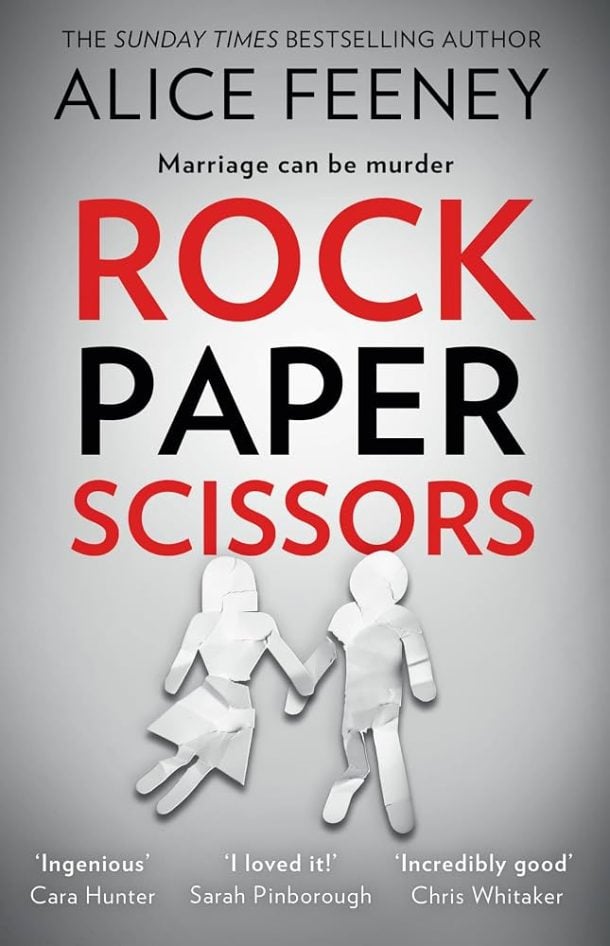 Rock Paper Scissors by Alice Feeney
Londoners Amelia and Adam Wright, the couple at the center of this craftily plotted if flawed domestic thriller from bestseller Feeney (His & Hers), are spending the weekend at spooky Blackwater Chapel in the Scottish Highlands on what is meant to be a last-ditch effort to save their 10-year marriage. Each harbors darker agendas for the weekend, as does the mysterious, hermit-like neighbor, Robin, who frightens Amelia when Amelia catches the woman peering at her through a chapel window. The plot takes some perilous turns in ways both predictable—a power outage, dangerously loose stones in the wall of the chapel’s belfry—and not, as alternating narrations from the trio open a Pandora’s box packed with secrets, lies, and betrayals. Feeney’s signature misdirection sets up gasp-worthy twists down the stretch even if they, like the characters, come off as arbitrary and artificial. In contrast to His & Hers, some may walk away from this one feeling more snookered than satisfied. Publishers Weekly, July 2021.
 Murder in an Irish Cottage by Carlene O’Connor
O’Connor’s exceptional fifth Irish Village mystery (after 2019’s Murder in an Irish Pub) takes Kildane, County Cork, garda Siobhán O’Sullivan and her fiancé, Det. Sgt. Macdara Flannery, to the remote village of Ballysiogdun. At the cottage of Ellen Delaney, Macdara’s aunt, they’re greeted by Ellen’s grown daughter, Jane, who says she returned home from a weekend in Dublin to find her mother dead. A broken window points to a break-in; other evidence suggests Ellen was poisoned and smothered. Siobhán and Macdara must work to gain the trust of the superstitious locals, who wanted Ellen’s cottage destroyed because it posed a danger being in the middle of a fairy path. O’Connor does a fine job depicting the complex relationship between the spunky Siobhán, who’s troubled by Jane’s failure to provide an alibi for her well-timed weekend away, and the reserved Macdara, who’s reluctant to acknowledge his cousin may have something to hide. Cozy readers will have a hard time putting this one down. Publishers Weekly, January 2020.
 See You at the Sunset by Susan Lee
Lee (Julia Song Is Undatable) offers up a light and charming contemporary romance perfect for the dog days of summer. Executive assistant Jia Chung has a feeling good news is coming her way at work. While out prematurely celebrating, she spends a steamy night with a stranger, lawyer Henry Shin. Unbeknownst to them, they work at the same firm and, the next morning, when Jia is wrongfully fired instead of receiving the promotion she expected, Henry is one of the signatories on the termination letter. Afraid of facing the disappointment of her high-achieving parents, she goes to stay with her grandmother at the Sunset Hills retirement community in Palm Springs—where Henry also happens to be visiting his grandfather. Success-obsessed but anxiety-wracked Henry has had his dedication to the firm tested by Jia’s termination—and his doubts only grow as he gets to know her better. Meanwhile, the residents, sensing Jia and Henry’s chemistry, become determined to set them up via “Operation Hookup.” The retirees’ hijinks add humor to a sweet if surfacy narrative about redefining one’s worth outside of familial and professional expectations. An abundance of minor conflicts (including a realtor scam, a lawsuit, and parental angst) somewhat muddy the waters, but the quirky setting and likable characters are enough to keep the pages turning. Lee fans will be pleased. Publishers Weekly, June 2026.