


BIOGRAPHY
| Ackmann, Martha | Ain’t nobody’s fool |
| Brown, Craig | One two three four |
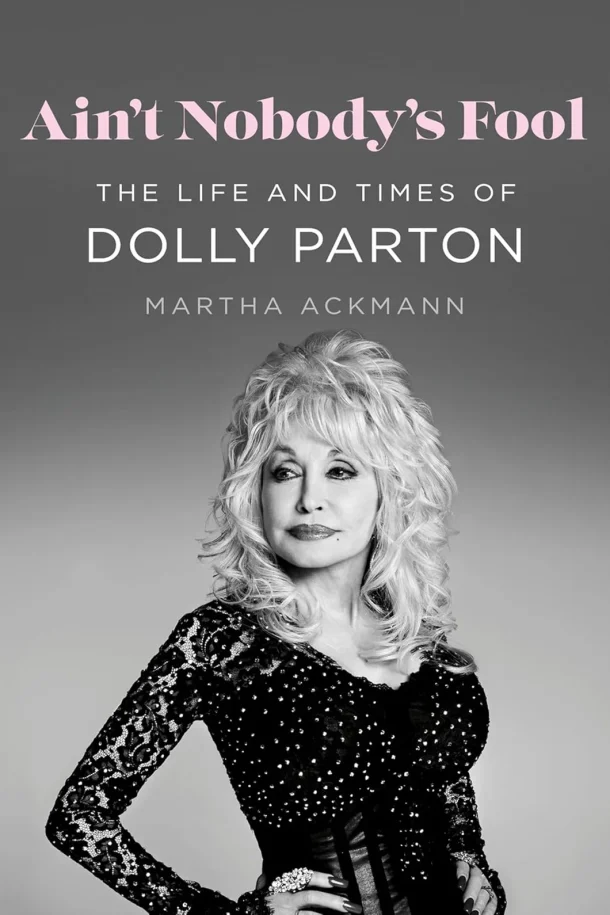 Ain’t Nobody’s Fool: The Life and Times of Dolly Parton by Martha Ackmann
Journalist Ackmann (These Fevered Days) traces the life of country music great Dolly Parton in this illuminating biography. Born in a log cabin in poverty-stricken East Tennessee in 1946, Parton expressed her musical interest early on, tapping out beats to her mother while snapping green beans and singing “to an audience of barnyard animals.” She began performing on TV and the radio in high school, but her breakthrough came after she moved to Nashville and landed a gig on The Porter Wagoner Show, where she performed until 1974. Ackmann spotlights the relentless “drive and determination” that propelled Parton to fame, and delves into such formative career decisions as holding on to the rights to “I Will Always Love You” when Elvis Presley asked to record a cover, earning her millions of dollars in royalties. Ackmann also details Parton’s personal and professional setbacks, and chronicles her later-in-life efforts to remain relevant in an industry that glorifies “new artists at the expense of veterans.” The biography’s strength lies in its studious attention to how Parton’s childhood shaped her career, as evidenced in both her songs (“Coat of Many Colors” references Parton’s being bullied over a patchwork jacket made by her mother) and her philanthropic efforts (Imagination Library, a literary-focused philanthropy, is “a testament to her father’s lifelong struggle with illiteracy”). The result is a well-rounded portrait of Parton that’s firmly grounded in her Smoky Mountain roots. Publisher’s Weekly, July 2025.
Return to top
GENERAL FICTION
| Asakura, Akinari | The final six |
| Cavanagh, Steve | One of us is guilty |
| Dhand, A. A. | The kingpin |
| Jewell, Lisa | It could have been her |
| Larsen, Ward | Rules of engagement (Large Print) |
| Lohrey, Amanda | Capture |
| Marshall, Wayne | Henry goes bush |
| Mason, Daniel | Country people |
| Mason, Meg | Sophie, standing there |
| McCall Smith, Alexander | Bertie’s theory of ice cream |
| McFadden, Freida | The divorce |
| Moriarty, Jaclyn | Time travel for beginners |
| Musa, Omar | Fierceland |
| Riwoe, Mirandi | A short history of Longans |
| Rosenfield, Kat | How to survive in the woods |
| Silva, Daniel | Ransom |
| Smith, Mark | Where truth ends |
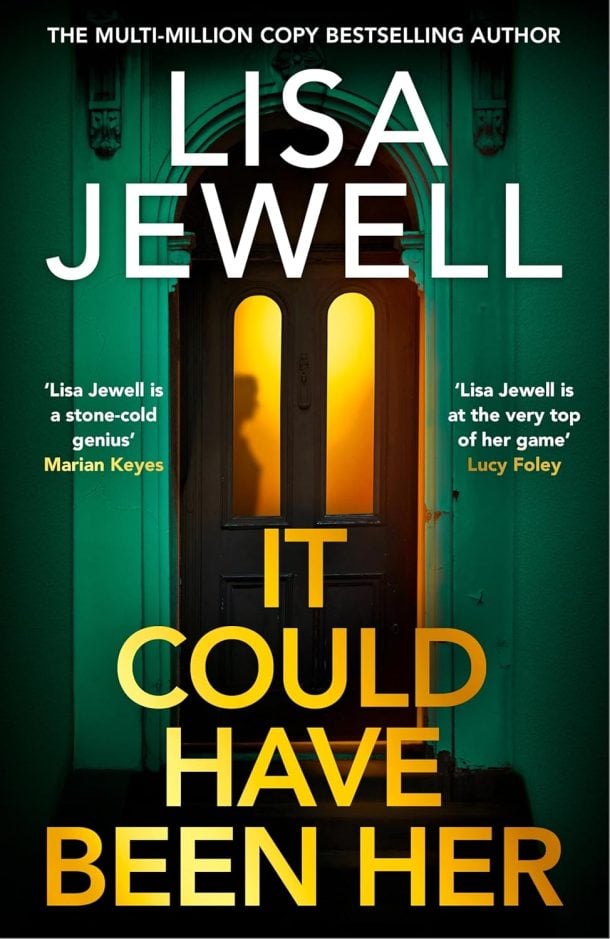 It could have been her by Lisa Jewell
A middle-aged woman channels her best Miss Marple when she finds herself facing a nightmare from her past as she seeks to make sense of her present. Jane Trevally is at a crossroads of sorts. After a traumatic childhood, she sought safety and solace in marriages with wealthy men. Now twice divorced and living with her four dogs in the crumbling English country mansion that is her birthright, she’s feeling the need to do something, to take a job, when one day a runaway dog turns up on her doorstep. The dog is chipped, and with the help of a local vet and her loyal stepson, Dexter Lombardi, Jane traces the dog’s home to the edge of Hampstead Heath, in London—a place that brings back the memory of a terrifying night from her youth, when a handsome man picked her up and took her back to this very house. Everything there felt wrong; she just managed to escape, certain that if she had stayed, she would have died that night. Now, soon after knocking on the door and returning the dog, she discovers that he had run away from an Airbnb near her house, where he had been staying with a young woman who seems to have disappeared. With the help of Dexter; his father, Tony, her second ex-husband; Tony’s former security enforcer, Tobias Wilson; and her own gift for connecting with people, Jane sets out to find the woman, taking her first steps on the path to becoming a private investigator. While Jane serves as the heart of the novel, Jewell also narrates chapters from several other characters’ points of view, all of which chip away at the horror that is the house on the Heath. By slowly revealing past and present simultaneously, Jewell keeps the mystery fresh as she plays with Gothic tropes and the timeless imagery of “a house of horrors” embodying human sin. She doesn’t flinch from exploring the depths of depravity in this house—and its humans. A haunting, timeless exploration of the evil men do—and the imprint it leaves behind. Kirkus Reviews, April 2026.
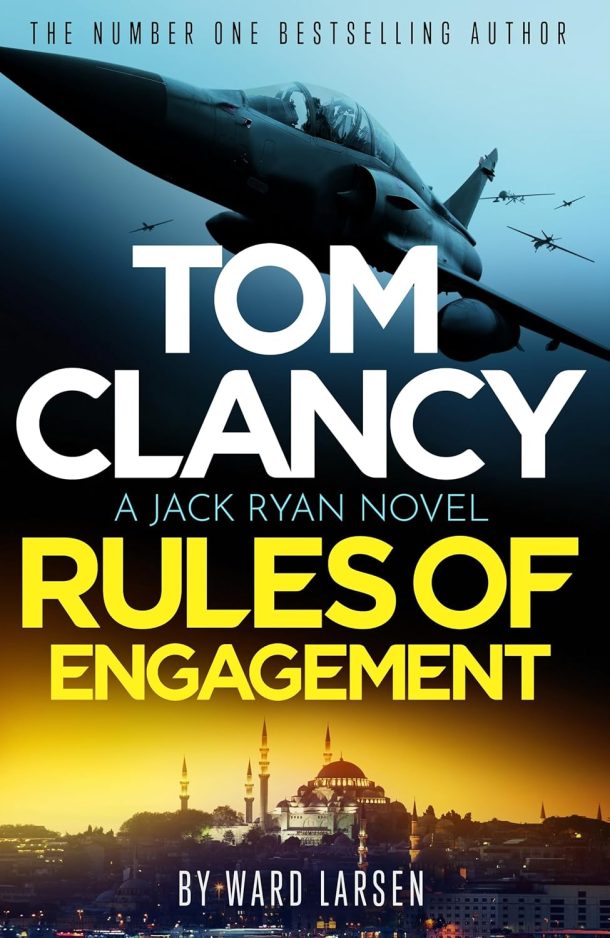 Tom Clancy rules of engagement by Ward Larsen
Deadly drones threaten chaos, and Ryans are in the thick of the fight. A U.S. Air Force C-32A crashes near Bodrum, Turkey, killing all aboard, including the secretary of commerce. American investigators suspect sabotage, which elevates the issue up to the White House. Strangely, only 15 passengers had been aboard while 16 were listed on the manifest. Gunther Klaus, a Swiss moneyman for the Russians, was supposed to be on that plane. Code-named Fulcrum, he wants to get to the West to expose Russian chicanery. On the book’s dark side, Andrei Malenkov has a “little squadron” of drones he plans to load with radioactive cesium chloride that would change the world and make him rich. Given his intended target in northern Africa, the plan sounds plausible. Unfortunately for him, he must face Americans like series regulars Ding Chavez, John “I’m too old to die young” Clark, and Lieutenant Commander Katie “What the hell are we getting into now?” Ryan. The story is rich in weapons technology and balanced by Americans, to a one, displaying courage and solid character. At the top, President Jack Ryan tries to contain a simmering geopolitical mess by talking to an unfriendly President Nikita Yermilov. The tactical level is what readers live for—the gunfights, the explosions, the drones that hunt and kill—and always, always, another threat from a deadly adversary. The demise of the Cold War certainly didn’t end the supply of material for this Clancy-created series. In a world of constant turmoil, the Clancy crew will always be busy. There’s a sameness to the novels—the U.S., with its noble leader (alas, fictional) “trying to hold together a world that’s blowing apart,” and its noble warriors, like Katie, who “seemed to find action like a moth found light.” With this novel, thriller writer Larsen makes his first entry in the Clancy series. His style fits perfectly. American honor, high-tech power, and on-the-ground bravery highlight this exciting yarn. Kirkus Reviews, April 2026.
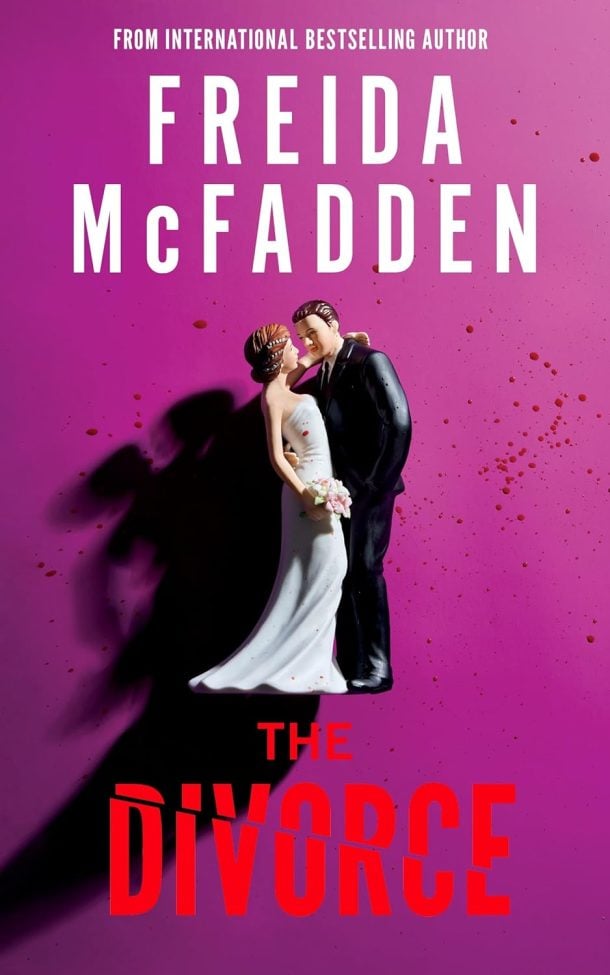 The Divorce by Freida McFadden
Dead bodies turn up in the first sentence of the prologue in McFadden’s latest domestic thriller. The mystery of who died is at the pulsating heart of this propulsive tale. As Chapter 1 begins, Naomi arrives home to find the locks changed on the front door of the gorgeous home she shares with her husband, Jeremy, and their 5-year-old son, Teddy. Jeremy steps out the front door and convinces Naomi to move out while he has their home renovated, a plan Naomi knows nothing about. It’s all a ruse, though, as the next day Jeremy tells her he wants a divorce. Naomi is shellshocked and soon discovers that Jeremy is having an affair with Veronica, a beautiful younger woman. What seems at first like a stereotypical story about a man who leaves his wife turns into something else when Naomi decides she’ll do anything to get Veronica away from Jeremy and Teddy, and Veronica decides to fight for what she thinks she deserves. Fans of stalker novels will cringe with delight as creepy things start to happen. Teddy’s stuffed elephant, a gift from Veronica, is found impaled on a kitchen knife; Naomi suspects Jeremy is gaslighting her and that Veronica tried to poison her. A weird confrontation among Jeremy, Veronica, and Naomi at Teddy’s birthday party, to which Naomi shows up uninvited, is priceless. There are three main characters, and any or all of them may be unreliable narrators. Packing the plot with dark, gasp-inducing twists, McFadden outdoes herself in a story about how highly emotional people engage in risky behavior to get what they want—but in this novel, for better or worse, not everyone will survive. Trust no one in this over-the-top tale of deception and revenge. Kirkus Reviews, April 2026.
 Fierceland by Omar Musa
Omar Musa’s second novel, Fierceland, begins with a familiar domestic scenario in Kota Kinabalu, Borneo. Two children, Rozana and Harun, desperately want their father, Yusuf, to buy them a new video game, The Legend of Zelda. Brother and sister are united in their fixation and agree that this is the best video game ever, even though neither of them have ever played it. This is not some pipe dream; Yusuf is a wealthy businessman – owner of Italian silk ties and sports cars – who has the means to buy his children whatever they want. Yusuf is in the vanguard of Malaysia’s economic boom and when he takes Roz and Harun on a business expedition deep into the jungles of Borneo, we begin to discover the dark side of his wealth – the destruction of ancient trees and ecosystems to make way for monolithic palm plantations. As Roz and Harun reckon with this shocking truth, their relationship begins to splinter and their lives take divergent turns, sending them to different parts of the globe. A family tragedy sends them back to Borneo and forces them to confront their complicity in the environmental destruction of their homeland. Kaleidoscopic in narrative scope and form, Musa traverses the jungles of Borneo, elite Sydney boarding schools, the glass-making workshops of Murano and Nigerian palm oil laboratories. While the focus of the story is on Roz and Harun, the novel is told from the perspectives of many different characters, jumping between the years, decades and centuries. While Musa propels the story forward with more straightforward narrative prose, the chapters are interwoven with poetry and verse. Musa started out as a poet and performer and there is real lyric beauty and rhythm in this writing. This is an ambitious and important novel that interweaves Malaysian history, environmental degradation, cultural heritage, artistic endeavours and f****d-up families. And that description doesn’t even scratch the surface. Highly recommended. Readings, August 2025.
 The Final Six by Akinari Asakura
Award-winning Japanese author Akinari Asakura’s The Final Six, translated into English by Australian literary translator Haydn Trowell, is a tense psychological thriller about ambition, secrets and finding humanity amid cutthroat corporate competition and a scathing hiring process. Of the thousands of people who applied for the graduate program at Japan’s most exclusive tech company, Spiralinx, only six candidates make it to the final stage. The six become close, even friends, because they were under the impression they had all been chosen to begin their careers at Spiralinx. But when the hiring process suddenly changes, the six must now choose one of them to be the only one hired. In their last interview, where they are locked in a room with nothing but six envelopes that contain their darkest, most reputation-ruining secrets, we see to what desperate lengths some would go for the job they want. With the first half of the novel a gripping locked-room mystery, and the second half debunking what happened in that last interview, Asakura shows humans at their lowest, and then opens up the possibilities for redemption. What is strikingly distinct about this mystery compared to others is that it steps back from the individuals and targets the bigger picture instead. Asakura, with careful detail and precision in every word, delivers the ultimate ‘hate the game, not the player’ thriller, condemning how cutthroat job hunting is, how unfair the hiring process can be, and questioning how much we can truly learn from someone at a first glance. Is one interview really enough to understand a person, their capabilities and strengths? Is one slight failure really enough to be tossed aside? Readings, May 2026.
 Time travel for beginners by Jaclyn Moriarty
An SF-adjacent cappuccino: Frothy on top, good hearty brew beneath. By the time you discover how the characters who narrate different chapters of this novel are connected, you’ll have long willingly suspended any disbelief about how the Sydney-based Time Travel Agency operates. Proprietor Dr. Katya Nastevski is a physicist who seems more interested in baking cakes than in refining the software she claims allows people to visit any time, any place, from last week in a nearby suburb to Mesopotamia. She hired Anna Salone, a somewhat hapless single mom to 13-year-old Nicola, following the briefest of interviews, and readers are tossed into a delicious stew of mothers, teenage daughters, eligible men, and Anna’s sweet colleagues at the Agency. Author Moriarty is clearly even less invested in physics than her Dr. Nastevski. Although there’s a massive choice of (mainly) authentic garb for historical cosplay and the staff spend loads of time researching eras of their choice (for Joon, Iron Age Mongolia and the golden age of cricket; for Anna, the Ming Dynasty and Latin American literature—she even develops “tours” of famous authors’ lives, like Frances Hodgson Burnett and Jane Austen), the real workings of the time-travel booths remain a mystery. That makes the author’s big game, the mysteries of the psyche, more obvious, despite the sometimes-madcap action. Anna longs for a partner, Nicola has mean-girl troubles, a man named Teddy has lost his wife to his brother, and a local woman, Jade, mourns her dead sister. When a software glitch brings about some resolution for the main characters, it feels as sugary as a batch of the doctor’s brownies—yet also as carefully baked, a treat for anyone who needs a reminder that time can heal anything, even the human heart. More steampunk than SF, this gently eccentric tale of familial challenges will delight fans of Matt Haig and TJ Klune. Kirkus Reviews, May 2026.
 Country People by Daniel Mason
Mason follows up North Woods with an exquisite and often hilarious tale of rural life in western New England. It centers on a California family who spends a year in Vermont, where the wife, Kate Petrosian, a Milton scholar, has accepted a one-year visiting professorship. Along for the ride are her children, 12 and nine, and her husband, floundering PhD student Miles Krzelewski, who has made zero progress on his literature dissertation. Kate, a popular professor whose campus circle Miles can’t keep up with, encourages him to make friends in the wider community. Over the course of conversations with a biologist–turned–apple farmer and a former Olympic skier, Miles finds interests in such varied activities as scything and skiing, which fuel his procrastination. Other new pals lead him to a group of hollow-earthers who believe they can reach a magical underworld through a nearby cave, if only they can find it. Miles might not buy their convictions, but he finds tremendous relief in their company, away from the “coastal elites” he could never measure up to, and their ideas give him fodder for the bedtime stories he tells the children, a creative outlet that satisfies his literary aspirations. Far from a hackneyed story of country/city culture shock, Mason’s delightful novel captures the fascinating humanity of its characters. This is beautiful, funny, and mysterious in equal measure. Publisher’s Weekly, July 2026.
 Sophie, Standing There by Meg Mason
In this smart and heartwarming outing from Mason (Sorrow and Bliss), a jilted woman’s life changes after she befriends her favorite author. Sophie Pattison, 36, enjoys her production gig for literary festivals, miking up famous novelists and learning their quirks, but her personal life is imploding. Her husband of eight years just left her for another woman, and she can’t help withdrawing from her friends. Isolated, she becomes obsessed with renowned author Lilac Dunne. After Elizabeth Strout drops out from a festival lineup, Sophie is ecstatic to learn Dunne will take Strout’s place. Much to Sophie’s amazement, Dunne takes an interest in her. Even more exciting for Sophie, the pair develops a working relationship after Dunne finds out Sophie grew up in a cult, the subject of Dunne’s next novel, and Dunne begins interviewing her for research. Through it all, Sophie attempts to rehab her love life, work through the meaning of her obsessive “parasocial relationship” with Dunne, and find unexpected connection with a colleague. Mason winks at the reader in clever metafictional asides (“If someone wrote a novel about Sophie, which they wouldn’t, but if they did”), and the plot reaches a satisfying conclusion. It’s a moving tale of a book lover’s search for her own happy ending. Publisher’s Weekly, June 2026.
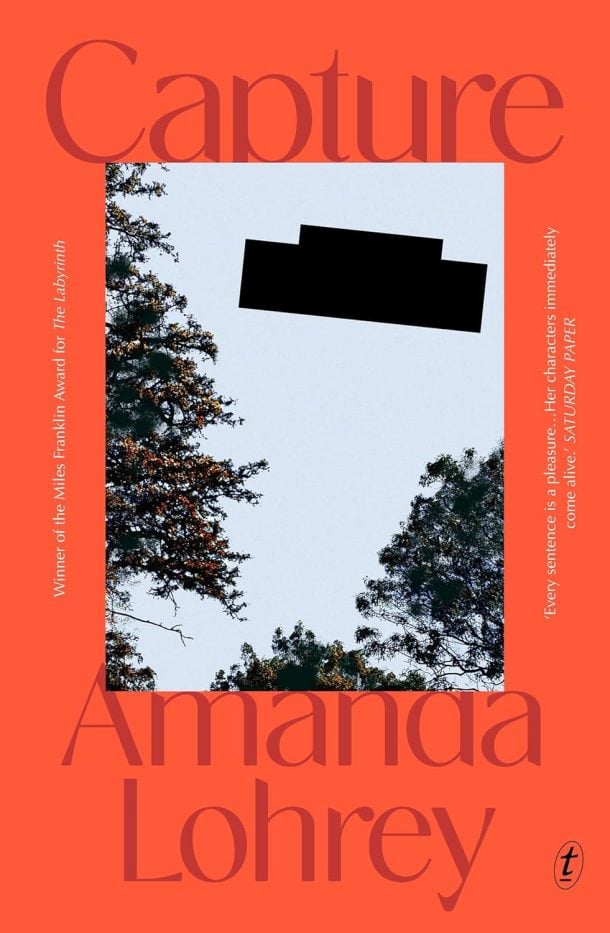 Capture by Amanda Lohrey
What a fascinating book this is! The author makes it clear that it is not intended to portray actual physical research or therapeutic practice, yet it remains a riveting read. The narrator, a psychiatrist, is commissioned by a colleague he describes as a ‘rigorous rationalist’ to research people who believe they have been abducted by aliens. Rather than treating them as patients, he studies them as ‘experiencers’ to develop a profile that may lead to a broader understanding of their claims. To avoid any suggestion of malpractice, he invites Lucy Cheng, a social historian, to observe the interviews and provide a non-medical perspective. The book is cleverly structured. After each interview, the psychiatrist debriefs with Lucy and sometimes his wife, allowing readers to reflect on each account. The experiencers come from diverse backgrounds and describe vastly different encounters: some claim they were taken from their beds, others in the open; some describe terrifying ordeals, while others find the experiences positive or transformative. Their varied stories, combined with the narrator’s thoughtful approach, make this an absorbing and difficult book to put down. Good Reading, August 2026.
Return to top
MYSTERY
| Billingham, Mark | The shadow step |
| Carter, Chris | Hide and seek |
| Connolly, John | A river red with blood |
| Gardner, Lisa | You’ll be sorry |
| Graham, Heather | A cruise to die for (Large Print) |
| Hickey, Margaret | Cold river |
| Jenkins, Joanna | Bad neighbours |
| Kelly, Julia | Betrayal at Blackthorn Park |
| Mackintosh, Clare | It’s not what you think |
| McKenzie, Dinuka | She lied first |
| Ross, L. J. | Angel |
| Swann, Leonie | Big bad wool |
| Walker, Martin | A murder in springtime |
| Wentworth, Patricia | Weekend with death |
| West, Nicola | Catch us the foxes |
| Wolf, Patricia | Hero |
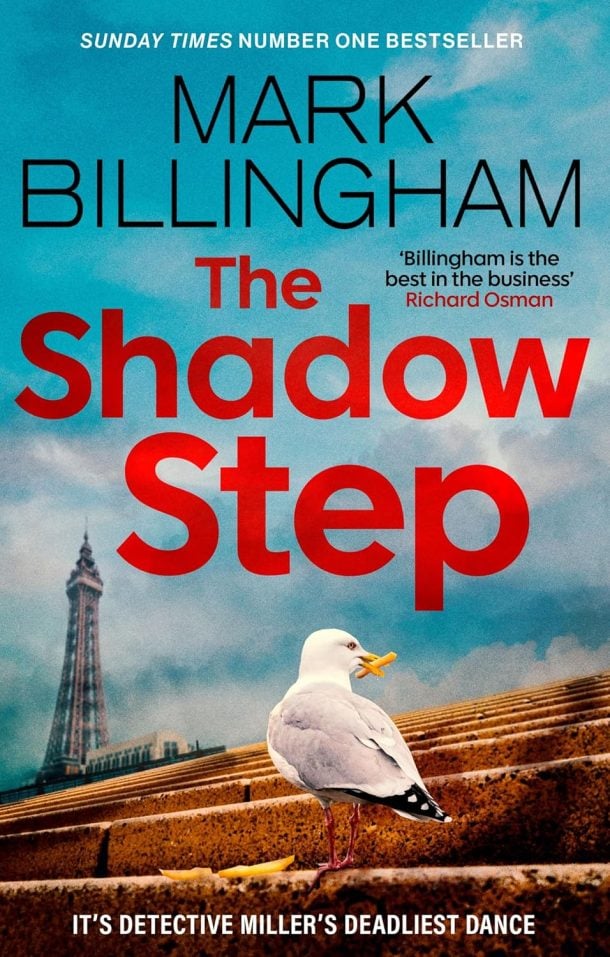 The Shadow Step by Mark Billingham
Readers shocked by the downbeat ending of What the Night Brings (2025) will be happy to know things are brighter in DS Declan Miller’s Blackpool than in DI Tom Thorne’s London. Brighter, of course, is a relative term. Shortly after Barry Cheshire’s dachshund, Ruby, is threatened by a stranger’s bulldog in Claremont Park, the stranger is fished out of the park’s pond and identified as Ezra Simmons. Everyone assumes the drowning was accidental except for Miller, who’s intrigued by a gaping wound to the man’s head. While everyone argues about whether Simmons, a drug dealer seriously in debt to another dealer, was murdered, someone knocks on Barry Cheshire’s door and fatally stabs Darren Grant, the lover who’d moved in with Stacey Cheshire, while her estranged husband sleeps through it all in the basement. Now that he has at least one incontestable homicide to deal with, Miller finds time in between his relentlessly snarky comments to his partner, DS Sara Xiu; their boss, DI Tim Sullivan; and every potential witness to focus on the crime family run by Jacqui Cutler while her husband, Wayne, languishes in prison, sent there largely by his wife’s testimony. Jacqui is so brutal at running JMC Ltd. and its affiliated tentacles that readers might be tempted to cheer when her son, Justin, is kidnapped—if Justin hadn’t been so consistently critical of the family business. The quest to recover Justin Cutler in return for an unexpected ransom draws all the major players into high-stakes, multilayered conflicts before an epilogue shines the spotlight on Finn, the hero’s seriously addicted stepdaughter. Not as powerful as Tom Thorne’s caseload, but it goes down a lot easier. Kirkus Reviews,July 2026.
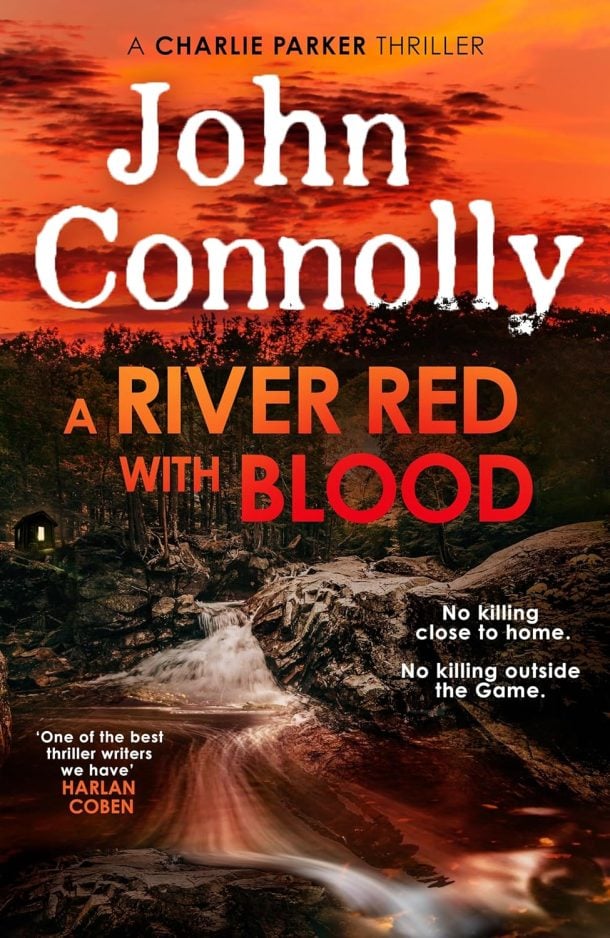 A River Red with Blood by John Connolly
A troubled boy who ran off from a Maine reform school is found dead; a girl he may have been involved with is missing; and other women are meeting cruel fates in Connolly’s latest supernaturally streaked Charlie Parker novel. At Spero School, a punishing facility to which 17-year-old Scott Theriault was shipped out by his mother and stepfather, flimsy behavioral modification methods and open bullying make life miserable for residents. Scott’s death is ruled accidental—he had been drinking before falling into a local river—but his imprisoned father is sure that foul play, not alcohol, was responsible. From behind bars, he hires private eye Parker to investigate; long haunted by the murder of his daughter, Jennifer (who has remained an active afterlife presence for him), Parker is especially sensitive to crimes against children. Meanwhile, an evil club of wealthy men with ties to Spero has reconvened to play “the Game,” which has them abduct carefully targeted women whom they rape, kill, and discard. Then there’s the unexplained targeting of Parker’s best friend, Louis, by hidden forces, a mystery that Parker asks a medium, Sabine Drew, to solve by making contact with the dead. Her report: “I’ve never before come into contact with a congregation of the dead, bound together with hostile purpose, not like this one.” Though Parker is offstage as much as on, there is no drop of interest when the focus is on other characters. The suspense is rather contained—there are no real edge-of-your-seat moments. But Connolly’s subtle handling of the supernatural element is one of the book’s distinguishing qualities. So is its occasional humor. Told that Sabine is training to be a psychotherapist, one character asks, “For the living or the dead?”A strong, if not earthshaking, installment in the long-running series. Kirkus Reviews, April 2026.
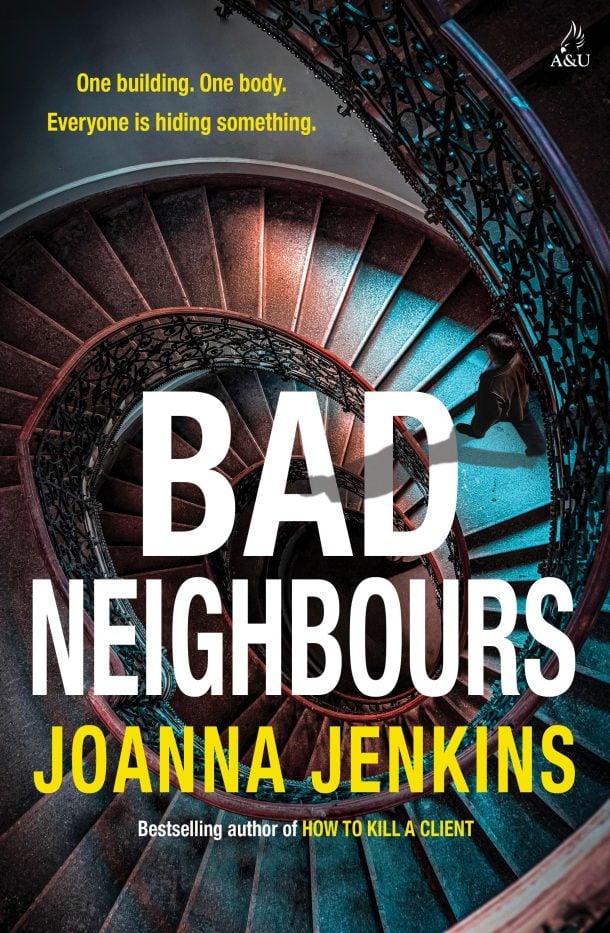 Bad Neighbours by Joanna Jenkins
Ruth Dawson, respected lawyer and reluctant sleuth, has returned to Sydney after a spell in Brisbane and a New South Wales country town. She joins a prestigious law firm and buys an apartment in Potts Point. Her neighbours are a disparate group. Some are friendly, others are not; at least one is a murderer. Early one morning Ruth is woken by the noisy arrival of an ambulance and police cars. A former resident has been found dead in the garden. Death by poison is the forensic pathologist’s conclusion. Every resident is a suspect until the police decide otherwise. Ruth, who has been living in the building for only a few months, is not seriously considered a person of interest. However, many months later when there’s another death, she’s top of the list of suspects. She decides to investigate to clear her name and, hopefully, find who is responsible for the two deaths. Bad Neighbours is a slow burn as we are introduced to residents of her apartment block and colleagues and clients at work. It heats up when the second murder happens and becomes exciting when Ruth discovers there’s a connection between her working life and her private life. Joanna Jenkins has written another cleverly constructed crime mystery with surprises, intriguing characters and humour to lighten the tension. Good Reading, August 2026.
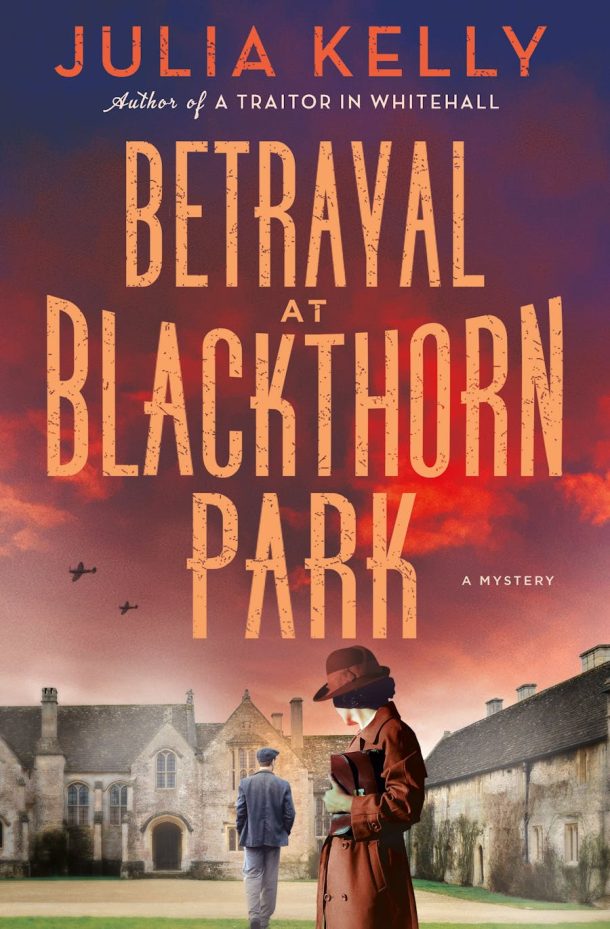 Betrayal at Blackthorn Park by Julia Kelly
In World War II Britain, a newly minted agent for the top-secret Special Investigations Unit finds her routine first assignment anything but. In A Traitor in Whitehall (2023), Evelyne Redfern went from typing to sleuthing when one of her workmates was murdered. Reluctantly teamed up with the attractive David Poole, she solved the crime, protected government secrets, and was recruited as an agent for an unofficial but vital intelligence group. Now, fresh out of training, Evelyne is sent, with David as her handler, to infiltrate Blackthorn Park, a secret government installation developing clandestine weapons, to try to figure out why some materials have gone missing. Prime Minister Winston Churchill is due to arrive there in a few days for a demonstration, and tensions are high. Evelyne arrives in the village of Benstead, where Blackthorn Park is located, pretending to be visiting a relative, and does enough snooping on her first day to convince herself that the facility is far from secure. Slipping into the grounds of Blackthorn Park that night, she finds the dead body of Sir Nigel Balram, the brilliant but unpopular engineer who heads the project. Suspicious of his apparent suicide, Evelyne takes charge until David can arrive. David poses as a police detective investigating the death and seeks to discover whether material is being stolen or sabotaged, since several of the devices made at Blackthorn Park have proved unreliable. Apart from his differences with his team, the short-tempered Sir Nigel had made enemies through his habit of sleeping with other men’s wives. Checking alibis and snooping through Sir Nigel’s paperwork open up several promising leads. So does another murder staged to look like suicide. Now Evelyne and David must find the reason for the weapon malfunctions and determine whether the murders are connected. A surprising denouement caps a budding romance in a country torn by war. Kirkus Review, September 2024.
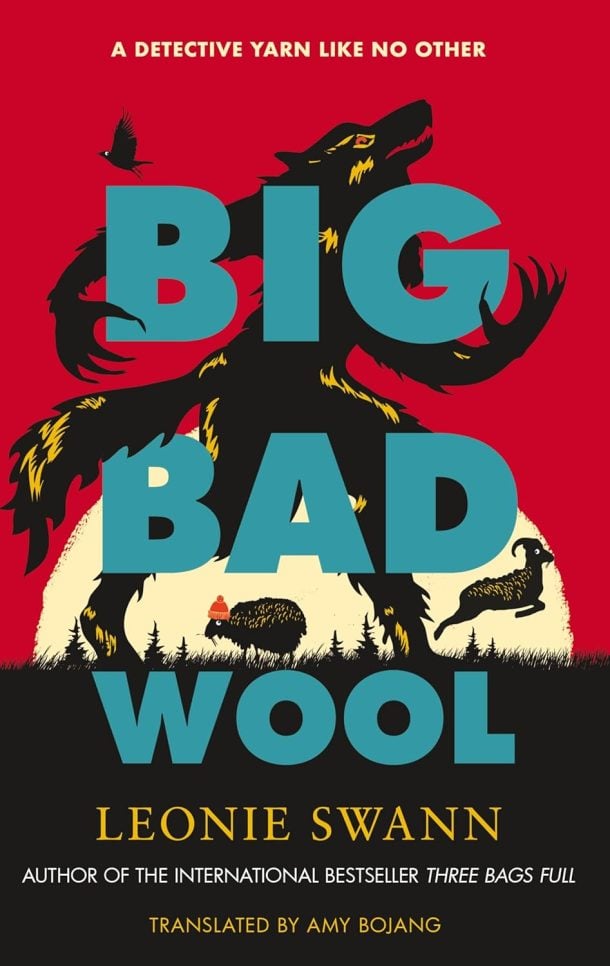 Big Bad Wool by Leonie Swann
In Swann’s witty sequel to Three Bags Full, a crime-solving flock of Irish sheep and their shepherd, Rebecca, head to a remote chateau in France for the winter season. Rebecca lives in a small camper with her mother, a tarot card reader, while the flock grazes the surrounding meadow. When several deer are found dead in the nearby forest, locals believe it’s the work of the Garou, a legendary shape-shifting werewolf. Then a human body is found with wounds similar to the deer, and the sheep—led by the clever Miss Maple—trot into action to protect Rebecca, and themselves, from harm. Soon, their investigation puts them on a collision course with a hell-bent Garou hunter. As in the previous book, Swann gives each of her animal protagonists a distinctive voice and personality, and she stirs up hilarious misunderstandings between the flock and their human counterparts. The mystery itself is brisk and surprising. Cozy mystery fans will be delighted. Publisher’s Weekly, February 2025.
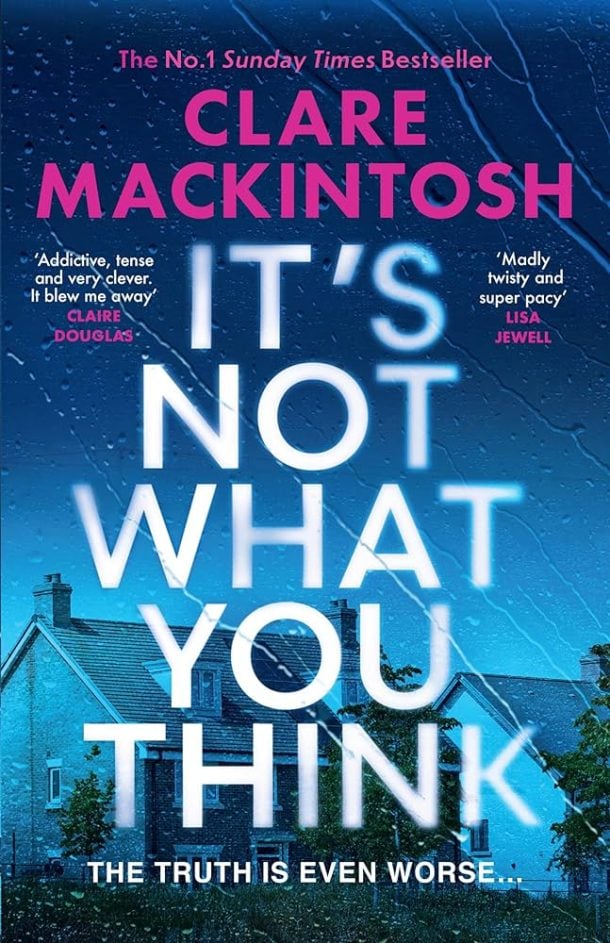 It’s Not What You Think by Clare Mackintosh
Nadeeka Prasanna, divorced from her husband, has recently met a spunky guy on a dating site. Within a few weeks, handsome Jamie Golding has moved into her family home. Maya and Nish, Nadeeka’s daughters of primary school age, were initially wary but have been won over by Jamie’s charm. Scott Hadley, the children’s father, is not pleased. Everything is going well… until it isn’t. Nadeeka suspects Jamie may be having an affair. She knows the tell-tale signs; she’s been there before. Nadeeka decides to confront Jamie and demand the truth. She arrives home; the police are there; Jamie’s body is lying in a pool of blood. Clare Mackintosh, a former police officer, has written an ingenious police procedural, artfully crafted with dashes of humour. However, the beginning will test the patience of the reader who prefers plot-driven novels. But stay with it; your perseverance will be rewarded, especially when Detective Chief Inspector Lauren Caldwell enters the fray. It’s then the crime novel becomes a gripping page-turner. Often, the author introduces us to suspects and we find out significant information before the DCI has discovered it. Many times I was on the verge of shouting out advice. Fortunately, Lauren gets there in the end… without my help. Good Reading, August 2026.
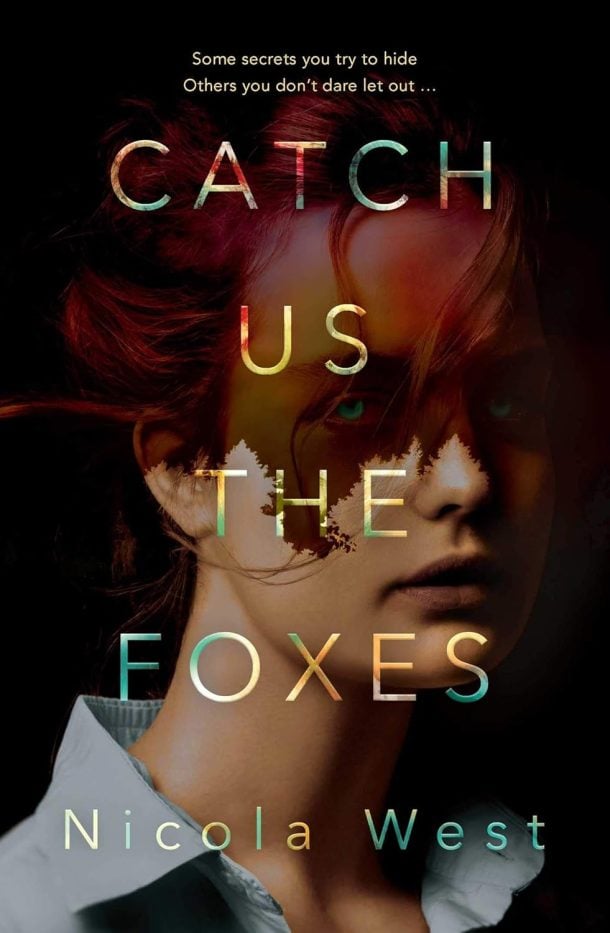 Catch Us the Foxes by Nicola West
People didn’t get murdered in Kiama. Least of all people like Lily Williams. That is until Marlowe, an intern with the local paper, is taking photos of the local show, and finds her best friend’s body in the horse stables. Seven strange symbols have been carved into the small of Lily’s back around a flayed patch of skin. Marlowe’s father is the police chief and when she takes him to the body, he makes her promise not to tell anybody about the symbols. The importance of her silence is drilled into her by his ferocity. She promises but neglects to tell him about the photos she took of the symbols. Marlowe is determined to write about Lily’s murder, but when she broaches the subject with her editor, she is rebuffed and eventually fired. In no time, journalists from around the country circle the sleepy, soporific town like vultures, in search of the story. When Marlowe finds an enigmatic message on her phone, it tells her that Lily knew she was going to die, and for Marlowe to be at the lighthouse at midnight. Upon meeting the stranger, she grasps the significance of the symbols, and that the murder is covering up a far more sinister secret that involves the town and a cult. When Jarrah, an old school friend, tells her about a strange fox hunting ritual in which Lily is the fox. Marlowe has dreams of the same ritual. Dreams or memories? What follows is a psychological thrill ride with multiple twists and back flips. An impressive debut. Good Reading, October 2021.
Return to top
NON FICTION
| Gould, Hannah | How to die in the 21st century | 306.9 GOUL |
| Leggatt, Margaret | Living with schizophrenia | 616.898 LEGG |
| Matyszak, Philip | Forgotten peoples of the ancient world | 930 MATY |
| Pascoe, Bruce | Big sky | 520.89 PASC |
| Patterson, James | Filthy rich | 364.153 PATT |
| Sahhar, Micaela | Find me at the Jaffa Gate | 956.94 SAHH |
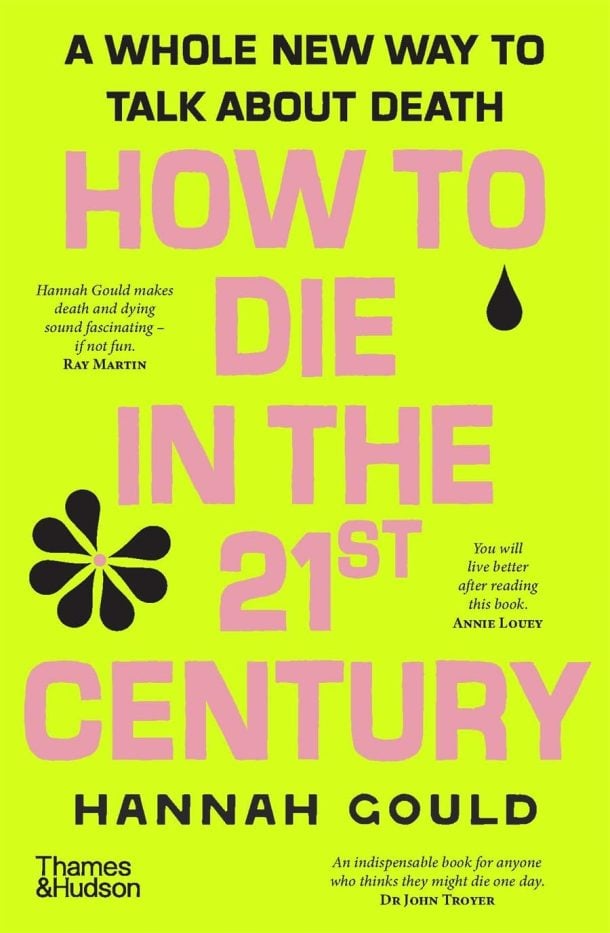 How to Die in the 21st Century by Hannah Gould
Hannah Gould wrote How to Die in the 21st Century for ‘everyone who will live, die and grieve’. (That’s all of us.) We are living longer however ‘we are not doing death particularly well.’ The book is approachable and easy to read, despite a seemingly heavy topic. The ideas are organised into six easy lessons starting with contemplating death, the realities of dying, and the inevitable disposal phase. I found the final few lessons the most intriguing, which explore the different ways that people respond in the aftermath of death, sometimes with celebration, grieving and/or memorialising. This book is gritty, confronting and practical yet profound, compassionate and positive. Gould challenges existing ‘deathcare systems’ informed by established medical, psychological, religious and cultural processes, protocols and ideologies. He explores several long-held assumptions, thoughts and beliefs about death, some of which are not particularly well matched or suitable for all humans in the 21st century. I loved the full-page quotes featured throughout, accompanied by ‘flower with dropped petal’ motif, to reinforce the key ideas. Each chapter concludes with useful and practical activities including ‘How to deliver a eulogy’, ‘How to help a grieving friend’ and ‘How to scatter ashes.’ As an accepting Homer Simpson finally offers in his interaction with Dr Hibbert: ‘Well, we’ve all got to go sometime.’ Good Reading, March 2026.
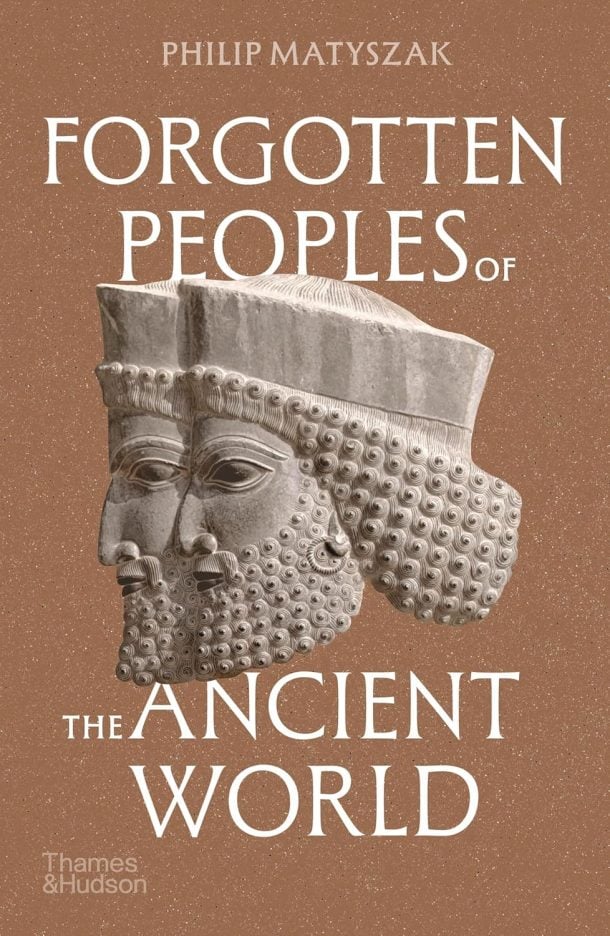 Forgotten Peoples of the Ancient World by Philip Matyszak
Lightly worn but rich scholarship highlights this reader-friendly survey of the ancient past. We know the winners of history: the Romans, the Golden Horde, Alexander the Great. However, as Matyszak asks at the outset of this good-natured exploration of long-bygone times, “what do we know of the Bactrians, apart from their two-humped camels? Or of the Samaritans, other than that one of them was good?” That’s a pointed question, for, as he goes on to note, historians and archaeologists are recasting our understanding of early civilizations, adjusting chronologies and interpretations with each new discovery. A trustworthy general pattern emerges, however, and that is that one group conquers another group and grows in power until being conquered by a still more powerful neighbor. Sargon the Great, for instance, ruled Mesopotamian tribes and made of them “rulers of an empire that stretched from the headwaters of the Euphrates to the Persian Gulf,” an empire that would fall under the control of Amorites, people whom the Akkadians considered inferior. (We know one of them, Ammurapi, by his Akkadian name Hammurabi.) The Canaanites along the Mediterranean coast were variously Hebrews, Philistines, and Phoenicians, while the so-called lost tribes of Israel may never turn up, though Matyszak gamely ventures that, given the patterns of other historical migrations, their descendants may be scattered throughout the Americas, Europe, and the Middle East. The same holds for a people known to the Egyptians as the Shekelesh, the Sicels, who moved on to southern Italy and then conquered—without much violence, it appears—the next-door island that bears their name, Sicily. Each entry for peoples ranging in time from deep prehistory to the early Middle Ages includes handsome illustrations and maps, and the author’s text is accessible, sometimes playful, and never dumbed down. Just the thing for initiates into the early history of Eurasia and North Africa. Kirkus Reviews, May 2020.
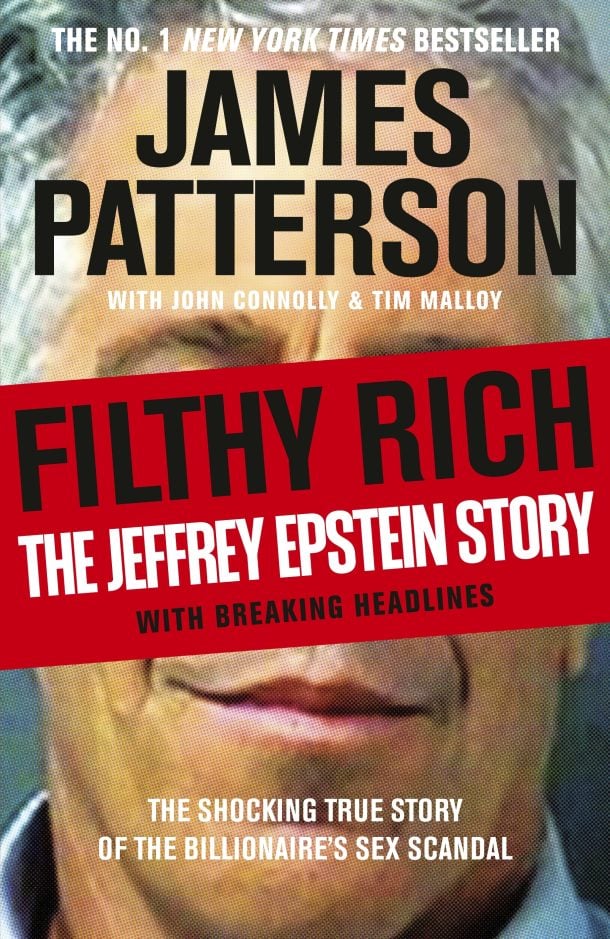 Filthy Rich by James Patterson
A shocking true crime tale of money, power, and sex from the world’s most popular thriller writer. Jeffrey Epstein rose from humble origins to the rarefied heights of New York City’s financial elite. A college dropout with an instinct for numbers–and for people–Epstein amassed his wealth through a combination of access and skill. But even after he had it all, Epstein wanted more. And that unceasing desire–especially a taste for young girls–resulted in his stunning fall from grace. From Epstein himself, to the girls he employed as masseuses at his home, to the cops investigating the appalling charges against him, FILTHY RICH examines all sides of a case that scandalized one of America’s richest communities. An explosive true story, FILTHY RICH is a riveting account of wealth, power and the influence they bring to bear on the American justice system. Goodreads, 2026.
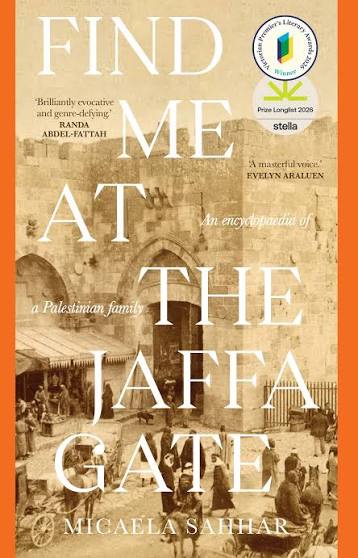 Find Me at the Jaffa Gate by Micaela Sahhar
What is the task but to find my way back to the unfragmentation of the world as we knew it; to collect the uncollected, to make the unmade? To refuse victimhood even when annihilation seems to insist on it,’ Micaela Sahhar writes. Her task is even greater than she states. In this family history, Sahhar collects her inheritances, her family stories, her time in Palestine, her culture and history and life, to ask: how does a Palestinian ever go home? In a loose collection of essays, Sahhar details her two trips to Palestine – birthright trips – and the conflict she finds at the borders, along with the love in the interior. Her grandfather fled Palestine after the Nakba, but she traces her family, other Sahhars who remain. She finds records of long-dead relatives in Palestine and meets distant relatives now alive. This work is an assertion: we have always been in Jerusalem, Bethlehem, the West Bank, Gaza, Palestine, and we always will be. Sahhar does not turn her sole focus onto Palestine, the place, though. Most of the essays are about Australia, and Palestinians in Australia, who are determined to keep their history and culture alive. They practise religion, they make food, and they mould the world with their hands. They feel a tentative relationship with First Nations Australians, who also know what it is to have your land and people taken away. They hope, and they create a better future. With this tender, loving, and sometimes angry story about the Palestinian diaspora, Sahhar demands we pay attention. She weaves the fragments she finds of family and national history into a narrative from which we cannot look away. Find Me at the Jaffa Gate is a story that traverses time and place, love and hate; it’s a story of ongoing and unforgettable Palestinian survival. Readings, April 2025.
Return to top
SCIENCE FICTION & FANTASY
| Dawson, J. R. | The lighthouse at the edge of the world |
| Francis, Max | Honour & heresy |
| Hamilton, Peter F. | Exodus: the Helium Sea |
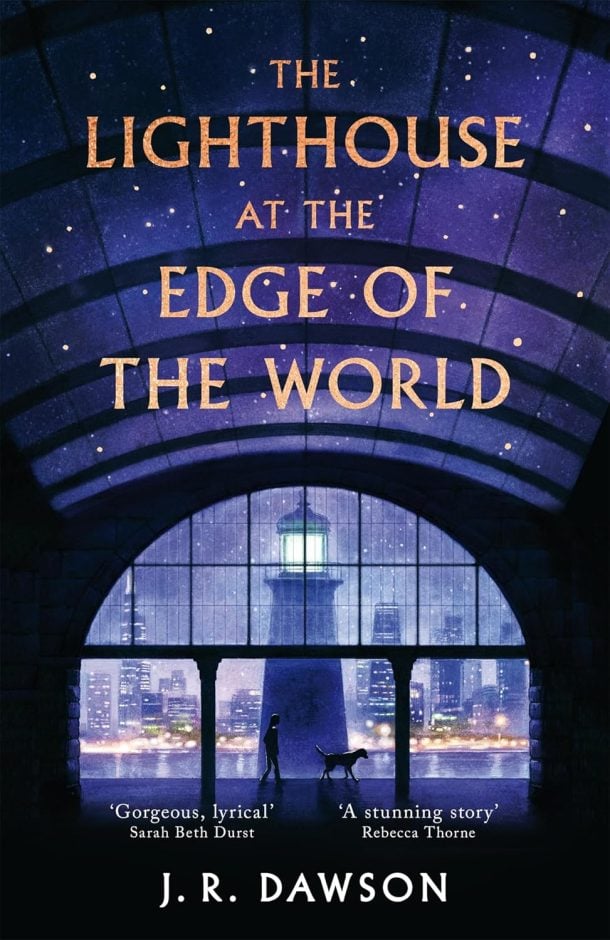 The Lighthouse at the Edge of the World by J.R. Dawson.
Greek myth, Jewish tradition, and slow-burning queer romance gracefully intertwine in this melancholy treasure from Dawson (The First Bright Thing). Nera’s whole life has been spent in the lighthouse at the edge of Chicago that guides her father as he ferries dead souls across Lake Michigan to the underworld. When grieving Chicagoan Charlie, who has been able to see ghosts since the death of her sister, Samantha, six months ago, hears a fragment of a song Samantha wrote, it leads her to this liminal spot between worlds and the women’s lives collide. Nera stops Charlie from venturing into the underworld and promises to help her find a safer way to ensure that Samantha crossed over and is not lingering among the city’s ghosts, who face threats from a dark force. The women forge a sweet relationship that leads them to some emotional moments of self-discovery—and a high-stakes conflict with a demon. Incorporating historical events like the Great Chicago Fire and contemporary concerns like mass shootings and toxic familial expectations, the carefully crafted story doubles as an emotional love letter to Chicago and to life itself. The result is immersive, bittersweet, and wonderfully original. Publisher’s Weekly, April 2025.
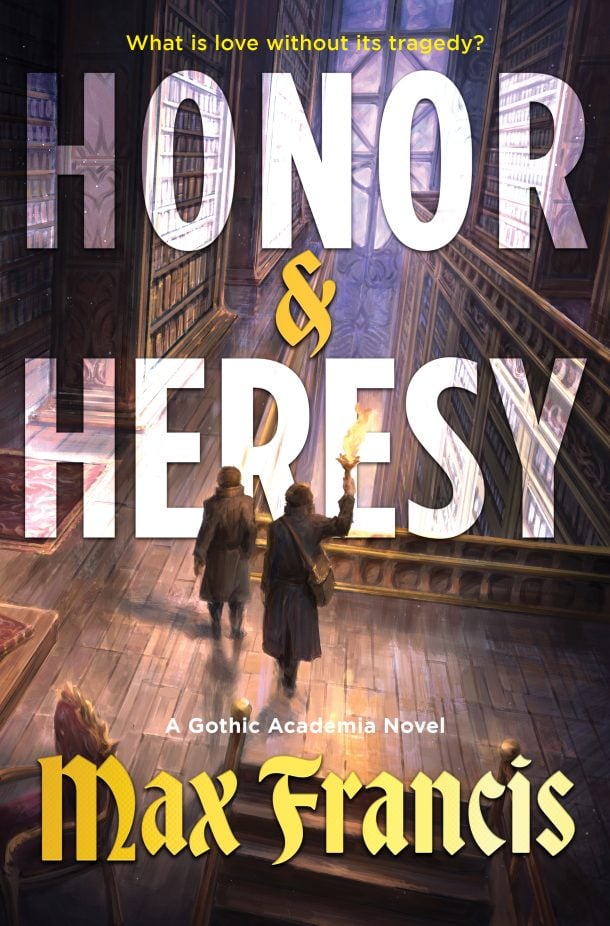 Honour & Heresy by Max Francis
Max Francis makes his highly anticipated debut with this atmospheric, gothic, dark academic fantasy of two scholars racing each other to find answers to an invasion in a haunted library. Dawnseve cares more for philosophy than battle. But, in a society that shuns literature in favour of their ongoing war, Roy must face a difficult choice: brave the front lines or investigate the identity of their foes in the Orphic Basilica, an ancient, abandoned library. When Roy chooses to unravel the mystery, it soon becomes clear that the Orphic Basilica isn’t without its own horrors. Strange voices echo down the halls, ghosts roam the bookshelves, and those who stepped foot in the library have either emerged insane or were driven to their own demise. Roy’s partner in the investigation is Percival Atherton, a manipulative, enigmatic and distractingly charming scholar who has no qualms about belittling Roy. As a fierce snowstorm isolates them from civilisation, Roy and Percival must grapple with their tormented pasts, an unexpected romance, and an age-old conspiracy whose secrets are certain to wipe Northgard from history. Filled with all the yearning of a rivals-to-lovers romance, the intrigue and fear of a dark academia, and the wonder and discovery of an epic fantasy, Honour & Heresy is ultimately a story of self-discovery amidst the chaos of war and a long, cold winter. Torquay Books, 2026.
Return to top
New additions to eBooks at SMSA
EBOOKS
| General novels | Burke, Caro Claire | Yesteryear |
| General novels | Moriarty, Jaclyn | Time travel for beginners |
| General novels | Moriarty, Liane | Big little truths |
| General novels | Reeves, Ben | Everything was beautiful and nothing hurt |
| Mystery | Davies, M. R. G. | A game of murder |
| Mystery | Dent, Susie | Death writ large |
| Mystery | Leitch, Fiona | The Cornish Christmas pantomime murder |
| Mystery | Prewett, A. T. | The Picasso ransom |
| Mystery | Sandler, Rosie | Murder takes root |
| Romance | Gilmore, Laurie | The daisy chain flower shop |
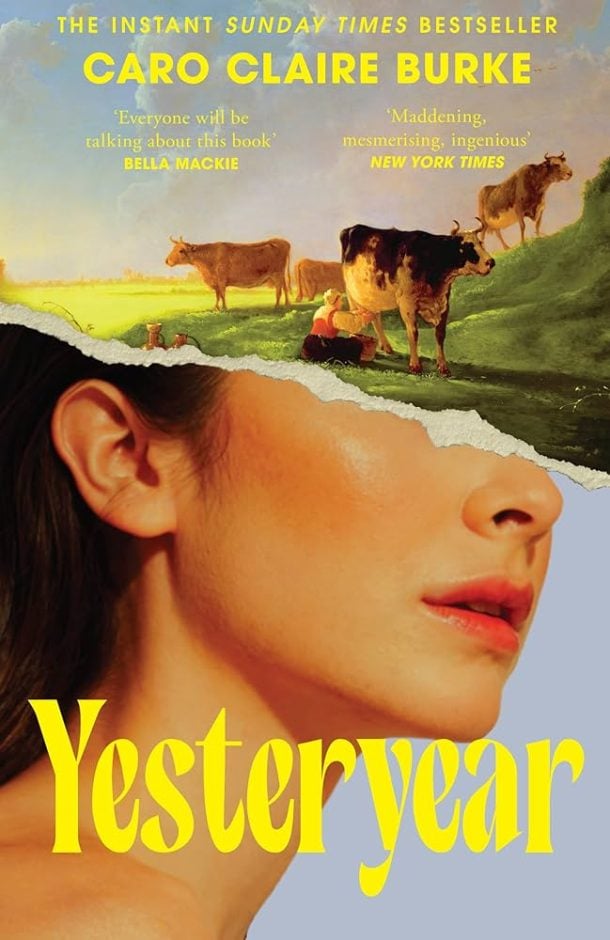 Yesteryear by Caro Claire Burke
What happens when an influencer who touts the benefits of a traditional lifestyle has to actually live in the past? That’s the tantalizing premise of Caro Claire Burke’s debut novel, Yesteryear, a provocative portrayal of gender dynamics in the 21st century. Natalie Heller Mills has more than 8 million followers on social media, and they look to her for homemaking advice. If she can homeschool six children, serve milk fresh from a cow and bake her own bread, surely it’s possible for anyone? Of course, behind the scenes, nannies, producers, top-of-the-line appliances and grocery stores are the real heroes of the Millses’ enchanted-seeming existence, and Natalie’s husband digs up more rocks in the fields than potatoes. Still, appearances are what matter, and Natalie has that on lock. But everything changes when Natalie wakes up one morning in an actual pioneer-era life, with nary a cell phone to be seen. What is going on, and how can she get back? Burke, a co-host of the podcast Diabolical Lies, packs more ideas and themes into Yesteryear than can be fully explored in one novel, and readers are bound to be divided on the effectiveness of the ending. But it’s pretty much impossible not to be bewitched and bewildered by the novel’s complicated main character. Natalie may be unlikable, but in Burke’s bleak outline of the options for modern womanhood, many of her choices are understandable. Yesteryear is an entertaining and unpredictable debut that readers will yearn to discuss. Bookpage, April 2026
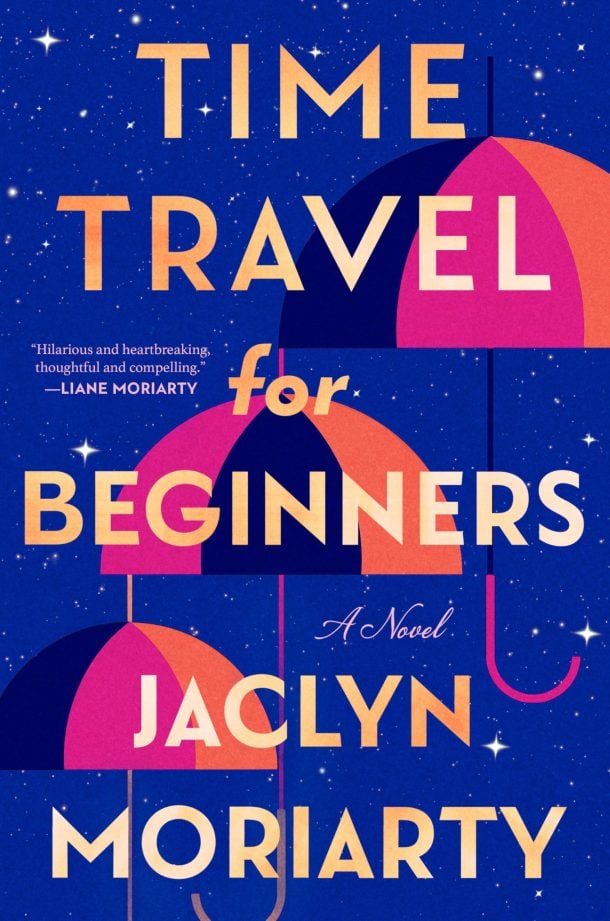 Time Travel for Beginners by Jaclyn Moriarty
An SF-adjacent cappuccino: Frothy on top, good hearty brew beneath. By the time you discover how the characters who narrate different chapters of this novel are connected, you’ll have long willingly suspended any disbelief about how the Sydney-based Time Travel Agency operates. Proprietor Dr. Katya Nastevski is a physicist who seems more interested in baking cakes than in refining the software she claims allows people to visit any time, any place, from last week in a nearby suburb to Mesopotamia. She hired Anna Salone, a somewhat hapless single mom to 13-year-old Nicola, following the briefest of interviews, and readers are tossed into a delicious stew of mothers, teenage daughters, eligible men, and Anna’s sweet colleagues at the Agency. Author Moriarty is clearly even less invested in physics than her Dr. Nastevski. Although there’s a massive choice of (mainly) authentic garb for historical cosplay and the staff spend loads of time researching eras of their choice (for Joon, Iron Age Mongolia and the golden age of cricket; for Anna, the Ming Dynasty and Latin American literature—she even develops “tours” of famous authors’ lives, like Frances Hodgson Burnett and Jane Austen), the real workings of the time-travel booths remain a mystery. That makes the author’s big game, the mysteries of the psyche, more obvious, despite the sometimes-madcap action. Anna longs for a partner, Nicola has mean-girl troubles, a man named Teddy has lost his wife to his brother, and a local woman, Jade, mourns her dead sister. When a software glitch brings about some resolution for the main characters, it feels as sugary as a batch of the doctor’s brownies—yet also as carefully baked, a treat for anyone who needs a reminder that time can heal anything, even the human heart. More steampunk than SF, this gently eccentric tale of familial challenges will delight fans of Matt Haig and TJ Klune. Kirkus Reviews, May 2026.
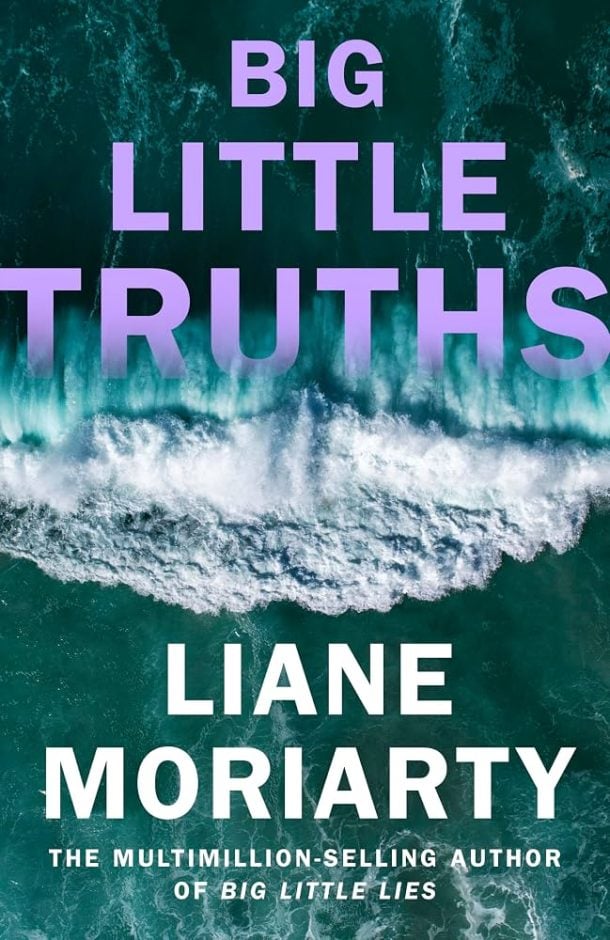 Big Little Truths by Liane Moriarty
Ten years later, the friends from Big Little Lies (2014) have new headaches, traumas, and secrets. Moriarty has reclaimed her girl group after their HBO-funded joyride in Monterey, California, with a sequel that returns them to Australia’s (apparently just as beachy and bougie, though fictional) Pirriwee Peninsula. She writes this in a brief author’s note that also suggests the new book can be read independently of either the first or the series, which is not wrong, but it certainly helps to come in with a clear mental directory of this large cast and their complicated relationships—and if you remember which actor played whom so much the better. As the novel opens, a bizarre incident occurs in the principal’s office at the local high school: A severed finger arrives in the mail. The day this occurs becomes known as D-Day, and vignettes from it are placed at intervals through the book, as are snippets of dialogue from the transcripts of “safe space” counseling sessions held in its aftermath for the students, now 15 and 16 and causing their parents lots of typical teen trouble. Also in play: Madeline’s 50th birthday party, complicated by the fact that she’s found a lump in her breast and her husband, Ed, has been behaving strangely. Her bestie, Celeste, is still dealing with the fallout from her evil husband Perry’s death in the first book, including an awkward relationship with his mother, Mary-Louise, and her twins’ having learned unpleasant truths about their late father. All the kids are crazy about their brilliant new history teacher, Melody Montclair, who’s assigned them a project concerning misunderstood historical figures that will bring Winston Churchill into the mix. Melody is also charming the mothers, whom she’s gotten to know by joining their Beach Boot Camp. There’s no shortage of plot, but Moriarty’s real gift is for witty dialogue and relatable characters. Once you get them straight, you’ll follow them anywhere…and there are indeed seeds for another sequel. Kirkus Reviews, August 2026
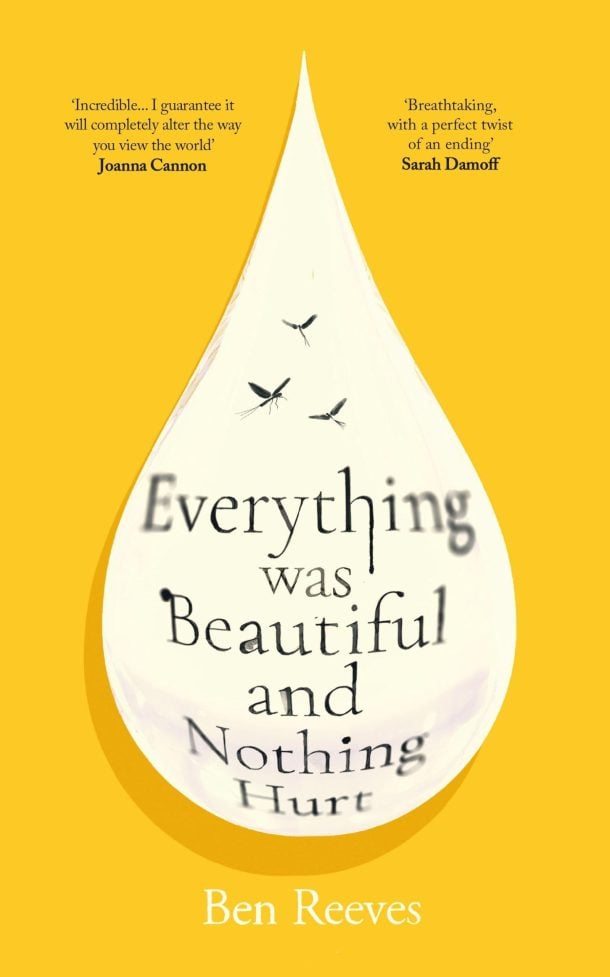 Everything was Beautiful and Nothing Hurt by Ben Reeves
Reeves debuts with a tender novel about a sympathetic Grim Reaper who lives as a handsome young man on the outskirts of London. Travis Smith has a day job in photo restoration, but his true calling is to visit people in their last moments, such as his 81-year-old neighbour, John, with whom he discusses poetry before John says “I know why you’re here” and dies. He befriends Layla Preston, a seven-year-old girl who lives across the hall from his apartment, and strikes up a romance with Layla’s mother, Dalia, despite his misgivings over his knowledge that Layla will soon be stricken with a life-threatening disease. Later, Travis observes Dalia’s attempt to reconcile with her ex-partner, Nick, Layla’s father, who struggles with an alcohol addiction. Reeves manages to avoid sentimentality, due in part to Travis’s even handed view of humanity, and the novel’s message about the importance of treasuring every moment of life is affirming rather than cloying. (Informing one of his charges that he has only nine minutes to live, Travis asks the man, “What are you going to do with them?”). Fans of Matt Haig will be satisfied with this bittersweet tale. Publishers Weekly, May 2026.
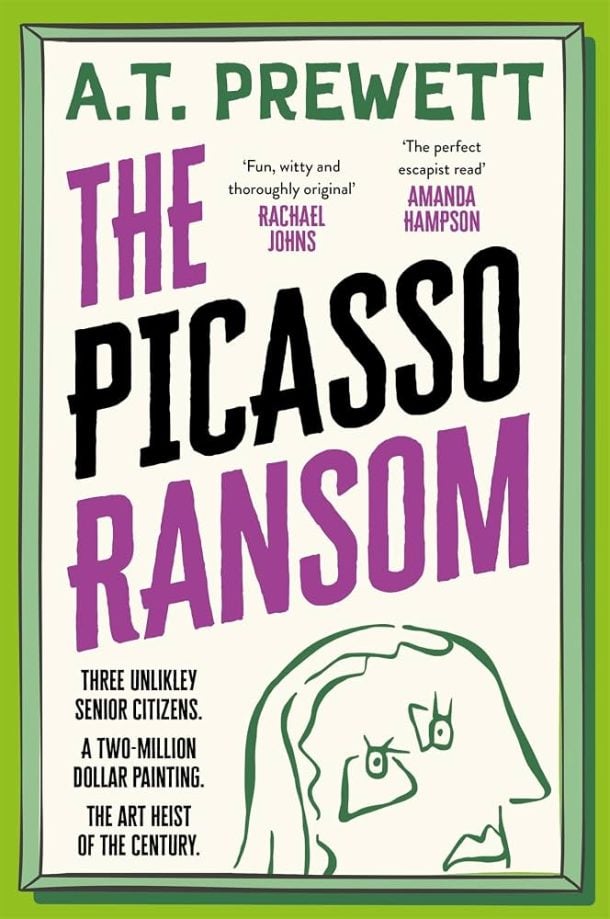 The Picasso Ransom by A.T. Prewett
In the prologue of A T Prewett’s debut novel, we learn that Pablo Picasso’s ‘Weeping Woman’, bought for $1.6 million, was stolen from the National Gallery of Victoria in Melbourne. It happened in 1986 and the culprits have never been identified. Prewett has taken the facts known and allowed his creative juices free rein. Phoebe, aged 69 and retired, enrols in an evening course at the Melbourne School of Art. Unfortunately, within weeks, it is announced that due to cuts in government funding the course is to be cancelled at the end of the year and the School of Art closed down. Students are angry; there’s shouting, placards and pleadings. Phoebe decides that’s not enough; more should be done to emphasise their disappointment. She enters the National Gallery of Victoria, audaciously unscrews the Picasso painting from its wall mounting and leaves the building. Phoebe notifies the government ‘Weeping Woman’ will not be returned until the funding is reinstated and the decision to close the School of Art reversed. This enchanting cosy crime romp blends fact with fiction. A bit of judicious pruning would have tightened the narrative. The incompetence of gallery staff, police, management and practically everyone we meet is unbelievable but totally acceptable as The Picasso Ransom is so entertaining. Good Reading Magazine, September 2026
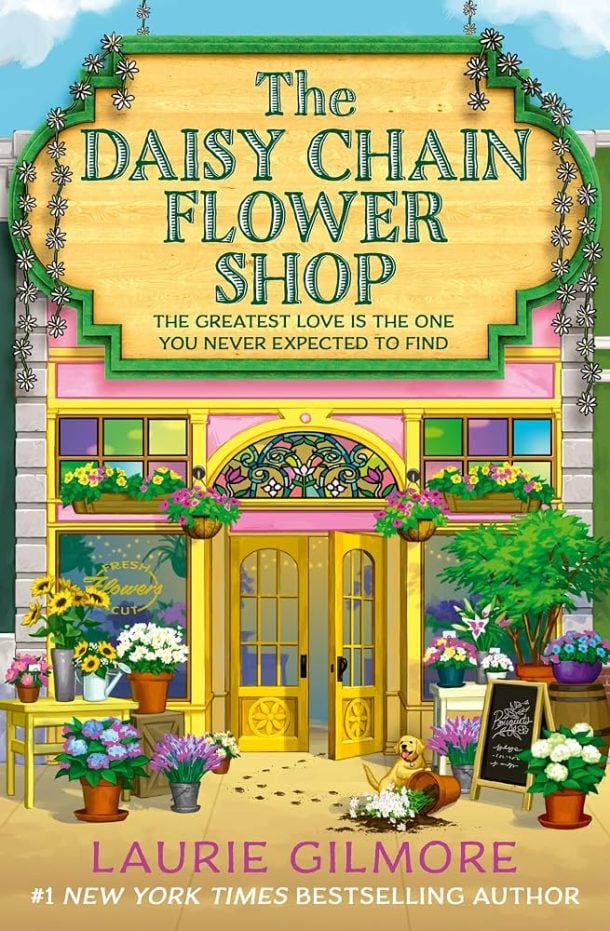 The Daisy Chain Flower Shop by Laurie Gilmore
With both an ex-fiancé and an ex-boyfriend, Daisy Scott has always been somewhat unlucky in love. When the mayor of Dream Harbor tells everyone he dreamt that there was a black cloud over Daisy’s flower shop, tongues really start wagging. Now branded by the town’s other residents as “cursed in love,” Daisy finds sales of wedding flowers at the Daisy Chain Flower Shop plummeting. So, when newcomer Elliot Parker walks into her shop at the same time Daisy’s ex-fiancé is parading his new bride-to-be around, something snaps. Daisy suddenly finds herself introducing Elliot as her boyfriend. Perhaps if everyone in Dream Harbor thinks Daisy is back in the romance game, flower sales at her shop will pick up again. Now if Daisy can just convince Elliot to go along with her fake-dating scheme! With a setting that rivals the Gilmore Girls’ Stars Hollow for cozy charm and a plot that perfectly pivots between moments of comic absurdity, heartfelt emotions, and sexy romance, the latest wonderfully warm and whimsically witty entry in Gilmore’s Dream Harbor is sublimely satisfying. Booklist, April 2026
Return to top
AUDIOBOOKS
| General | Dook, Alex | Nothing personal |
| General | Franklin, Miles | My brilliant career |
| General | Moore, Donna | Knit one, heist one |
| Historical novels | Cleary, Madeleine | The butterfly women |
| Mystery | Archer, C. J. | The spy master’s scheme |
| Mystery | Gatland, Jack | Whisper for the reaper |
| Mystery | McCluskey, Laura | The wolf tree |
| Mystery | O’Connor, Carlene | Murder in an Irish pub |
| Mystery | Ryan, Iain | The casino |
| Scifi/Fantasy | St. Aubin, Cynthia | Love sucks |
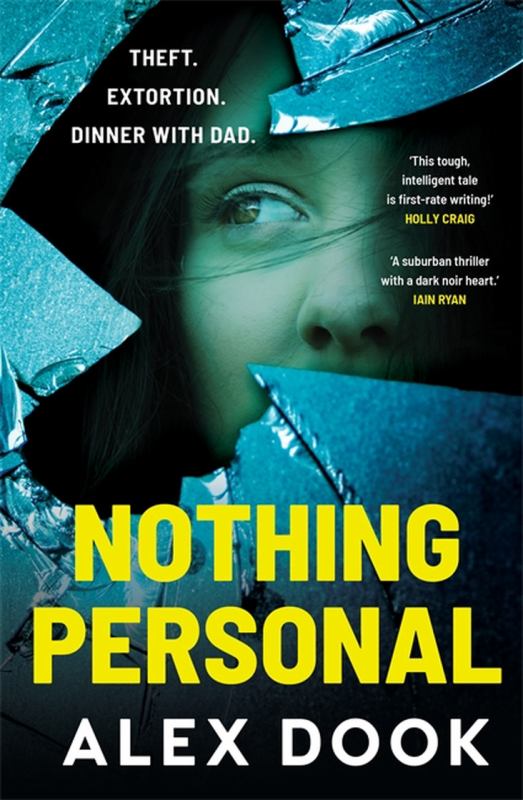 Nothing Personal by Alex Dook
In Alex Dook’s Nothing Personal, Lola McKenzie is tired of always being one step ahead, only to find herself two steps back. Her father, broke after a few years of retirement, can’t pay his bills or cover house repairs on his own. Her low-paying job and dodgy boss aren’t helping ease the pressure at all. So, was it really wrong of her to steal a bag full of cash she found on her boss’s desk to alleviate some of her financial troubles? When her boss goes missing shortly after, trouble comes looking for Lola. At the bottom of the bag was also a USB drive, but what could be stored on it that has so many people after her now? Amid the fast-paced action and high stakes, the novel poses an interesting moral dilemma to the reader: Was what Lola did okay because her struggles are systemic and beyond her control? Or is there no excuse for stealing, no matter the circumstances? Dook (Gunpowder Creek) balances sharp humour with genuine tension through incredibly compelling writing that keeps readers turning pages. He creates characters who feel messy, believable and deeply human, making it easy to become invested in Lola’s choices even when they spiral out of control. Nothing Personal is a gritty, darkly comedic crime thriller that is perfect for fans of Garry Disher and Tim Ayliffe, and a character study that questions what is morally defensible and what is a step too far. Books+Publishing, June 2026
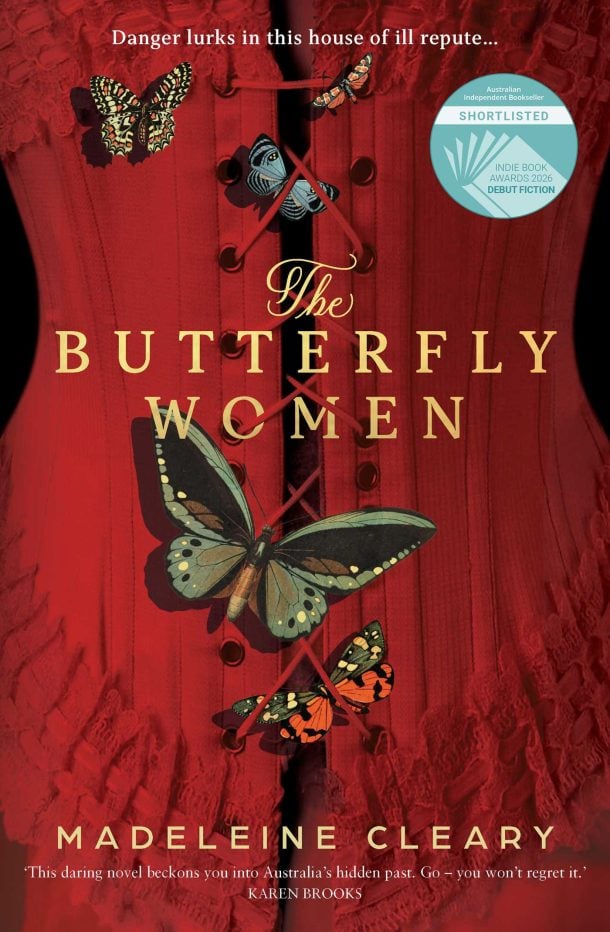 The Butterfly Woman by Madeleine Cleary
There is no doubt that the Melbourne of today is a vastly different city from that of 1863. Using recently discovered facts about her family’s involvement at that time in the sex trade of that city, Cleary has woven a story about the characters in the up-market brothels of Little Lonsdale Street, known as Little Lon, as well as the streetwalkers of the nearby lanes and terraces. Cleary has researched court documents and newspapers to weave her story about the women who owned and worked in the brothels or lived in the alleys, and especially one who dressed in her police constable husband’s uniform to patrol the streets when he was too drunk to work. Characters include an austere and puritanical magistrate, his highly sociable brother and their younger sister, employed by the Argus newspaper to write about what the society women of the town were wearing, but she yearns to write hard news. By day, the Papillon is an elegant coffee house, selling cakes and tarts, but at night it becomes a luxurious brothel. It is a social centre for many eminent men of Melbourne who gather there. The employees, known as ‘dressed girls,’ wear silks and satins, and always are perfumed and coiffed, in comparison to the ragged women selling their bodies in the streets. Those streets are not safe as there is a murderer at large, killing young women, so the young female reporter, aided by women from the brothels, starts investigating the murders. There is a good story lurking in this wordy novel, sometimes obscured by other details, but Cleary places the women of 1863 Melbourne firmly at the centre of the action. Suspending disbelief, readers will be left wondering if the austere magistrate really has found true love. Good Reading Magazine, June 2025
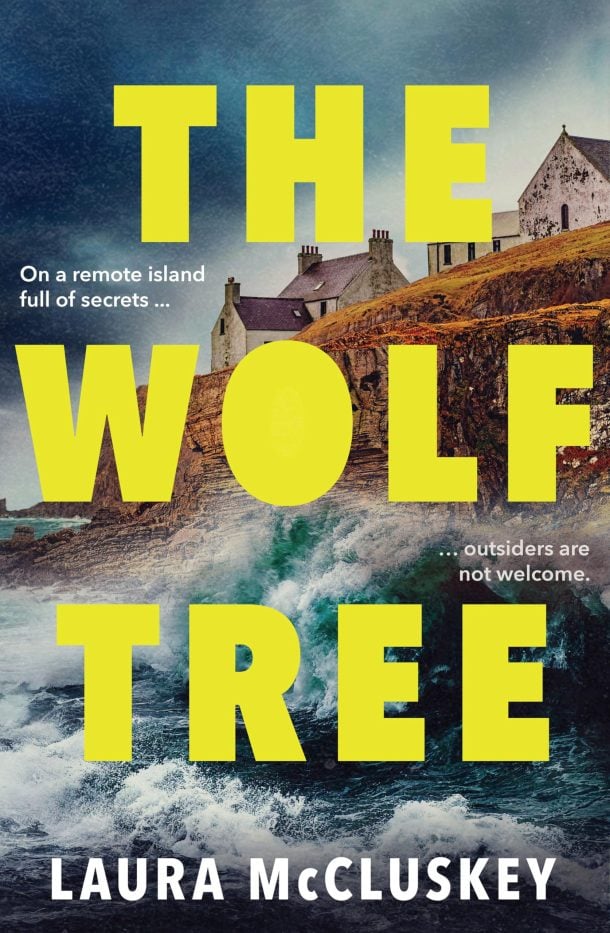 The Wolf Tree by Laura McCluskey
McCluskey’s debut novel, The Wolf Tree, is an atmospheric and gripping thriller set on a remote Scottish island, where isolation and secrets run deep. From the first page to the last, this story holds you in its thrall. When young Alan Ferguson is found dead at the base of a lighthouse, his drowning is presumed a suicide. Detectives Georgie Lennox and Richie Stewart are sent to investigate, but their arrival on Eilean Eader – a windswept island of only a few hundred residents – proves anything but routine. Stranded for four days due to an unrelenting storm, the detectives face hostility from the insular community, where even longtime mainland transplants remain outsiders. As they dig deeper, they uncover a chilling link to a century-old mystery: the unexplained disappearance of three lighthouse keepers in 1918. The men’s journals hint at loneliness and despair, yet their fates remain unsolved. Meanwhile, the island’s present-day residents cling to their superstitions and traditions. With only one shared phone line, a single communal computer, and the village pub and church as social hubs, the islanders are bound by isolation and an eerie sense of secrecy. The enigmatic pastor exerts an unsettling influence over his flock, adding to the tension. As their departure nears, the detectives begin piecing together the intricate ties between past and present. On Eilean Eader, the truth follows its own rules, but will they survive to tell the story? A masterfully crafted thriller set against a haunting landscape, this novel delivers a compelling mystery with an unforgettable twist. Good Reading Magazine, February 2025
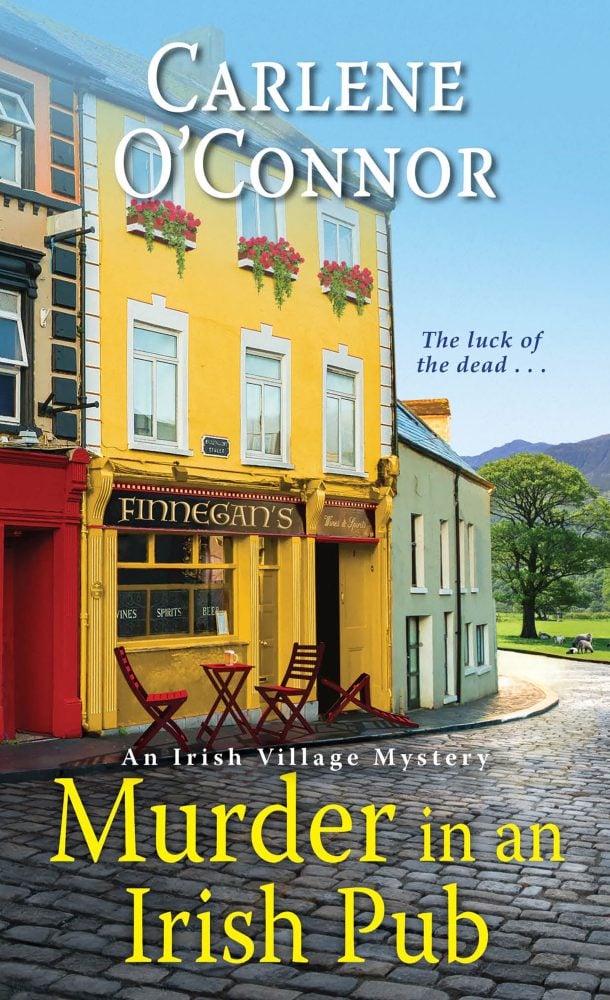 Murder in an Irish Pub by Carlene O’Connor
O’Connor’s pleasing fourth Irish Village mystery (after 2018’s Murder in an Irish Churchyard) finds officer Siobhán O’Sullivan and her significant other, Det. Sgt. Macdara Flannery, coping with crowds, gambling, and excessive drinking during a high-stakes poker tournament in Kilbane, County Cork. When cheating occurs, followed by the death of the renowned player dubbed the Octopus in a pub’s locked storeroom, Siobhán is skeptical about the verdict of suicide, though a note was found with the body. Suspects include the Octopus’s two rivals, a mysterious blond waitress who may have been in cahoots with the Octopus, and townspeople who bet far more than they could afford to lose. Siobhán also worries about the potential involvement of her many siblings, a reputed jewel thief in town, the state of her relationship with Macdara, and the well-being of the waitress and the Octopus’s pregnant wife. A clever twist on the locked-room mystery and the convivial village community will leave cozy readers well satisfied. Publishers Weekly, February 2019
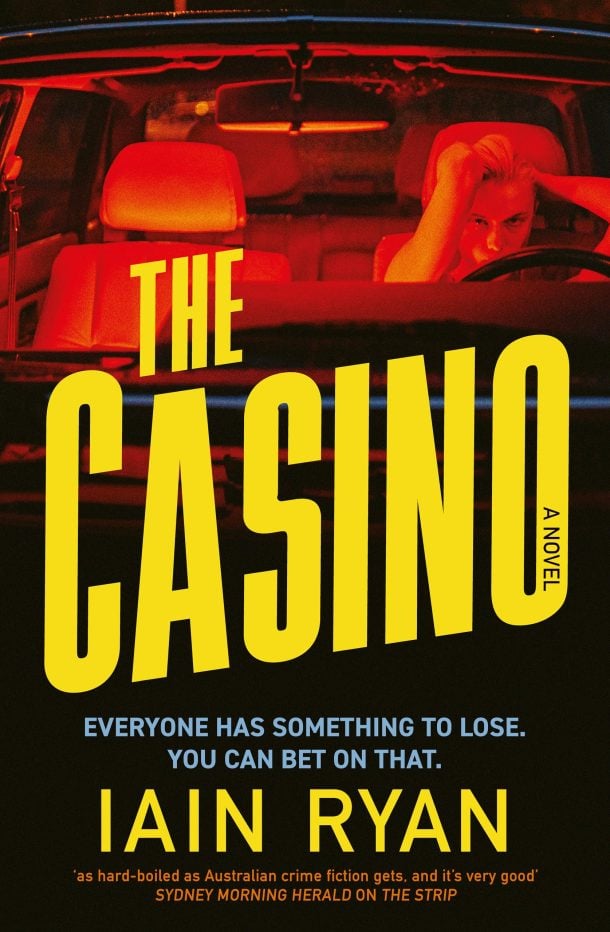 The Casino by Iain Ryan
This is the third in the series of books about crime on the Gold Coast in 1980s, this time focusing on the opening of a casino (with the thinly veiled name, ‘The Saturn’). Crime queen Colleen Vinton owns the casino. The corruption of the police force remains unchecked: Inspector Ron Bingham is still in Vinton’s pocket. Lana Cohen continues to keep tabs on her bent colleagues, while being called in to investigate the grisly find of a severed hand on a beach. She’s reunited with fellow cleanskin, Bruno Karras, who seems distracted. But then, she’s also distracted by her new love interest, Charlie, who works as a croupier at the casino. A private detective, Ewan Hayes, takes a Melbourne journalist’s daughter, Grace Holloway, to the Gold Coast to escape criminal elements. They stay at the Saturn and Ewan is also asked to find a missing man, Herb Fleming. Grace wants to help and reveals herself to be a very capable investigator. Also looking for Herb is a policeman from Internal Investigations, ‘Miami’ Vince Walters, who’s struggling with his various addictions. Unfortunately, Herb is found on the beach in the same place as the severed hand, where an explosive kills or injures several of the investigating team. Lana, Vince and Ewan form an unlikely team, trying to find the killer of Herb and the victims of the bomb. None of the major characters survive unscathed. The denouement contains more than one unexpected twist. This is fast-paced, superbly plotted crime. Readers will eagerly await the next book. Good Reading magazine, February 2026