


BIOGRAPHY
| Carr, Bob | Bring Back Yesterday |
| Enriquez, Mariana | Somebody is walking on your grave |
| Rieden, Juliet | Quentin Bryce |
| Wyndham, Susan | Elizabeth Harrower |
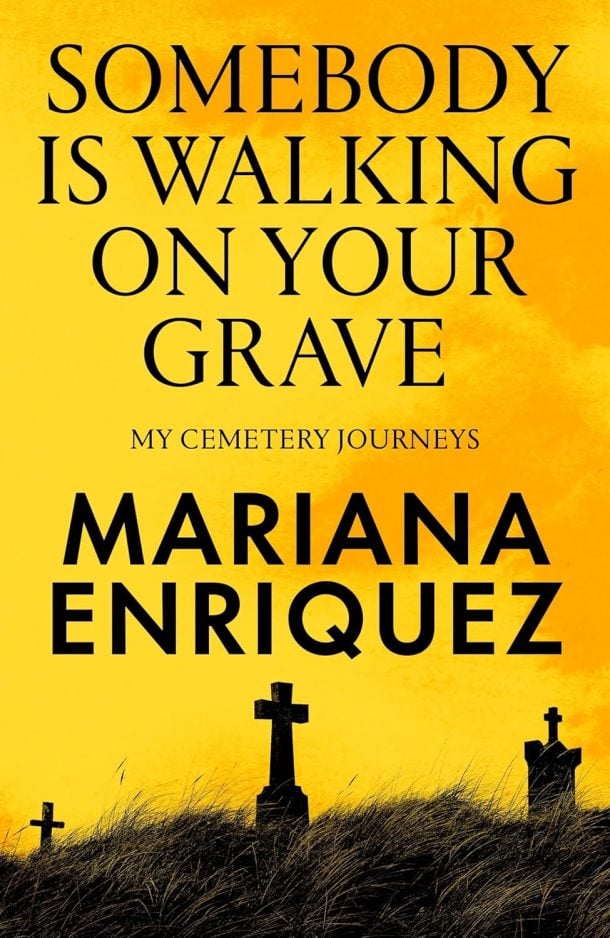 Somebody Is Walking on Your Grave: My Cemetery Journeys by Mariana Enriquez
Argentinian horror novelist Enriquez (Our Share of Night) makes her nonfiction debut with this evocative travelogue-cum-memoir chronicling the two decades she’s spent visiting cemeteries. Enriquez–whose obsession was sparked after visiting Italy’s “staggering” Staglieno cemetery in her 20s—crosses continents in her search for burial grounds both famous and lesser-known. Among those spotlighted are London’s Highgate Cemetery, the site of Karl Marx’s surprisingly “imposing” grave; Savannah, Ga.’s famously beautiful Bonaventure Cemetery, which she likens to “an ancient but not abandoned temple”; and Australia’s Rottnest Island, which houses an Aborigine burial ground that was used as a campground until the 1990s and is currently marked by “minimal signage, as if they wanted to avoid ruining someone’s vacation.” Enriquez’s reports are peppered with fascinating trivia about each place: the character of nearby cities and towns, histories of architecture and politics, along with weirder anecdotes about corpse relocations and apparitions. Physical descriptions of each space—whether carefully curated or dilapidated, built for the rich or for the indigent—are likewise full of texture and wonder, prompting graceful ruminations on the fluidity of time and memory (Enriquez admits to a “nostalgia for everything, especially for what I’ve never experienced”). The result is an eccentric and enlightening peek into how memorialization happens across the world. Publisher’s Weekly, April 2025.
Return to top
GENERAL FICTION
| Abdel-Fattah, Randa | Discipline |
| Adelaide, Debra | When I am sixty-four |
| Auster, Paul | Timbuktu |
| Baldacci, David | Hope Rises |
| Brownlee, Victoria | The Writers Retreat |
| Dovey, Ceridwen | A concise compendium of wonder |
| Gray, Madeleine | Chosen family |
| Groff, Lauren | Brawler |
| Harper, Georgia | Dove |
| Hoover, Colleen | Woman down |
| Jewell, Lisa | Invisible girl |
| Jones, Tayari | Kin |
| Kitching, Jess | The Secrets of Strangers |
| Leather, Stephen | Underdogs |
| Martel, Yann | Son of Nobody |
| Morison, Judi | Secrets |
| NDiaye, Marie | The witch |
| Saunders, George | Vigil |
| Toibin, Colm | The News From Dublin |
| Toltz, Steve | A rising of the lights |
| Webster, Allayne L. | Maisy Hayes is not for sale |
| Wright, Fiona | Kill your boomers |
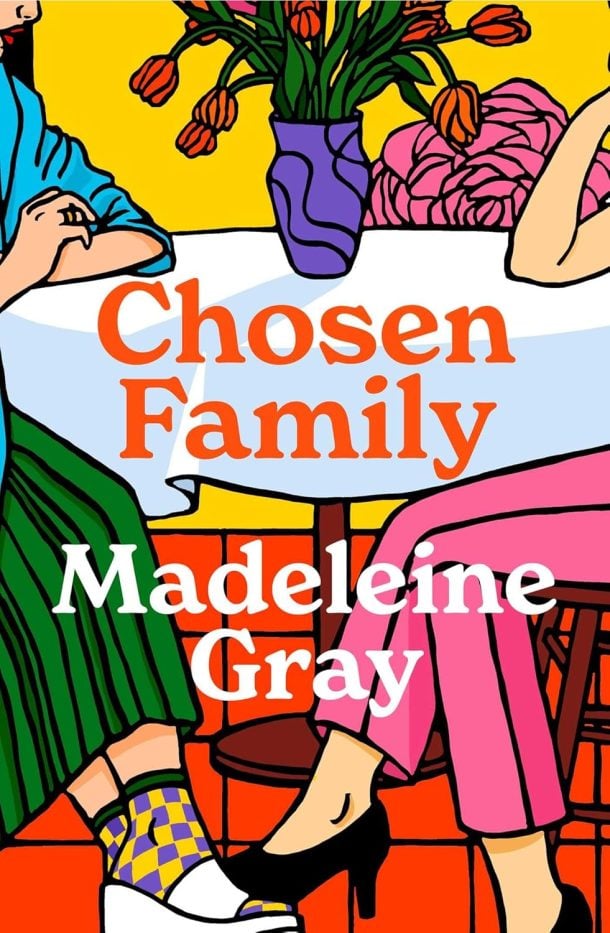 Chosen Family by Madeleine Gray
The old saying ‘You can’t choose your family, but you can choose your friends’ is the entire backdrop of the new novel from Madeleine Gray, and if there’s one trope I am always on board for, it’s a well-told found-family story. This one did not disappoint. Chosen Family centres on Nell and Eve, who first meet as two clever and quite lonely teens. They’re both a little odd, which we all know is not conducive to a great high school experience. For this reason they become each other’s sanctuary, until an act of betrayal pulls them apart. We follow the two over the next 18 years from when they reconnect at university, where Eve has finally found her place in the world and acceptance of her sexuality, to motherhood and all the messiness in between. This is a story about friendship and love in all it’s forms. It’s also about families, grief and the human experience. Gray’s characters are well formed and interesting, with dialogue that feels real, and the random alternating points of view between Nell and Eve, and occasionally other characters, make you feel as though you are inside their heads. It’s this insight that gives the most heart-rending moments. I also loved the normalisation of gay relationships, and the very Australian backdrop of Sydney. Being able to picture places and scenes brings the story to life even more. After having mixed feelings about Gray’s debut Green Dot, I was a little nervous about this one, but I needn’t have been. It is funny, insightful, and moving. Not to mention very smart and sexy. Loved it. Good Reading Magazine, December 2025.
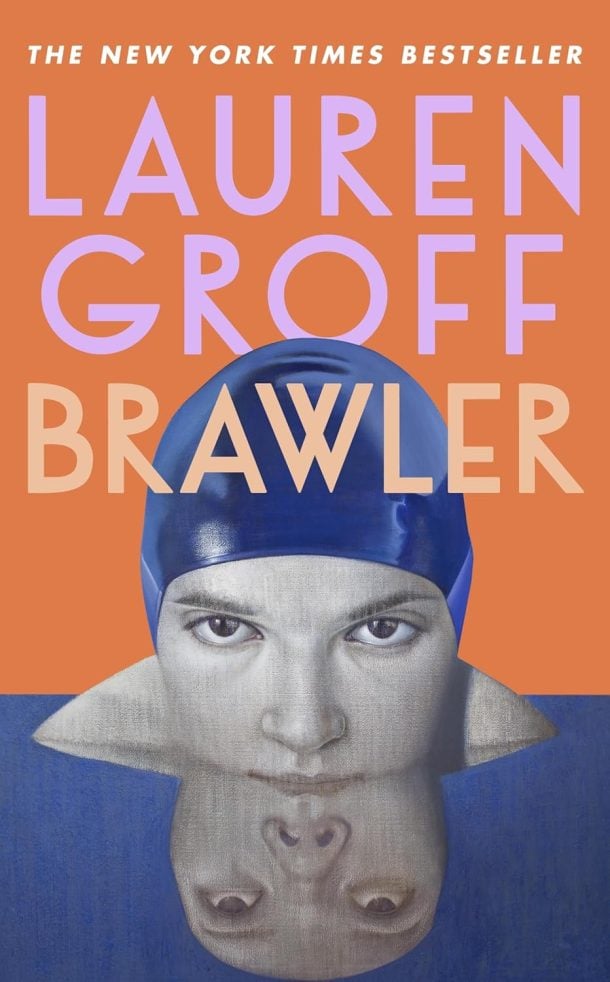 Brawler by Lauren Groff
Nine stories of guile and instinct punch up the human predicament. It’s no surprise that a book called Brawler should provoke, ambush, and, yes, gut-punch its readers. Those familiar with Groff’s supple fiction will expect this, combined with startling, pinpoint sentences: “Human decency could still overcome hunger, then.” These nine stories follow her earlier collections, Delicate Edible Birds (2009) and Florida (2018); the stories in Florida, named after her adopted home state, crackle with the urgency of precarious lives, and won the Story Prize. This latest is more geographically diffuse but still aflame with combustible characters in harrowing corners. The first story, “The Wind,” has a prosaic title and a haunting, generational imprint as three small children and their mother use the yellow school bus as cover to try to escape domestic violence. The perpetrator, their father, is a cop; their allies work with their mother at the local hospital. In 18 pages, the title lifts into stunning poignancy and leaves the reader breathless. The final story, “Annunciation,” is almost twice as long and, like “The Wind,” told in the first person. It begins when its young protagonist’s family skips her college graduation and sends instead “a dozen carnations dyed blue and a gift certificate to a clothing store for middle-aged women.” This glint of humor serves its purpose in a tale marked by a surprise ending and a capacious eye for the improvisations of young women. The mothers in this book are often absent, drunk, emotionally remote, or ridiculous, but never villains. Instead, Groff attaches her ethical acuity to their children. She appends an author’s note, providing a kernel of motive for each of her installments. “Brawler,” about an unruly teen diver with a dying mother, exists in the wake of her own history, Groff says: “I became a writer because I was a swimmer.” In the coiling dread and frank feminism of her work, this incandescent author makes clear with her newest fiction why she won the 2022 Joyce Carol Oates Prize. This audacious collection surprises readers with the vivid lives few of us notice. Kirkus Reviews, February 2026.
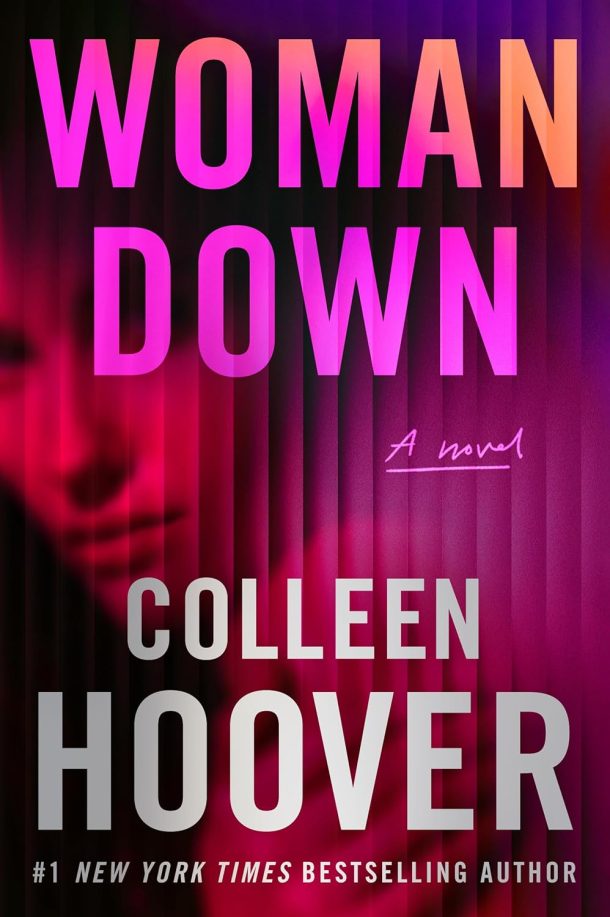 Woman Down by Colleen Hoover
Bestseller Hoover (It Ends with Us) delivers a first-class thrill ride in this twisty erotic suspense novel. Petra Rose, a bestselling romance novelist, suffers a crisis of confidence after a movie adaptation of one of her books generates anger among her readers. Hoping to regroup and tune out the online backlash, she rents a mountain cabin for a solo vacation to plot her next novel away from her husband and kids. Soon after arriving, she meets a handsome stranger who introduces himself as Det. Nathaniel Saint—and who serves as just the inspiration Petra’s been looking for. She decides to base her next hero on Saint, who gamely agrees to contribute to “research sessions” that soon drip with chemistry, though Saint also wears a wedding ring. As their illicit relationship deepens, Petra and readers alike will come to question some of Saint’s stories and his all too convenient presence in her life. Hoover keeps the sexual tension and suspense high as she builds to a truly shocking revelation. This is sure to be a hit. Publisher’s Weekly, October 2025.
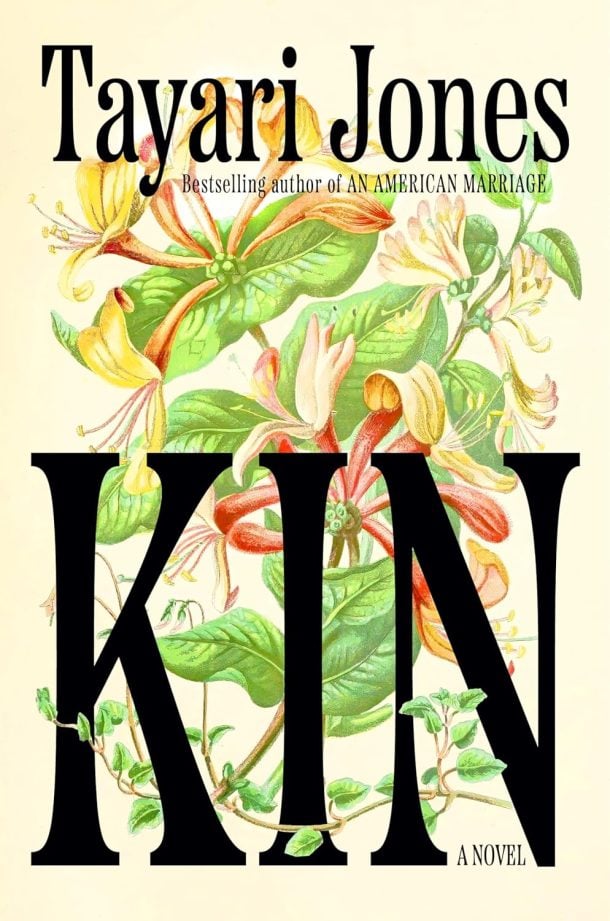 Kin by Tayari Jones
The story of a lifelong friendship born in hardship and tempered by adversity. Growing up in Honeysuckle, Louisiana, in the 1950s, Vernice and Annie are best friends who share an unhappy bond: Both have lost their mothers. When Niecy was 6 months old, her father murdered hers. Annie’s abandoned her when she was still “womb-wet.” As girls, they’re inseparable, but their paths diverge in young adulthood. Cautious, sensible Niecy goes to Spelman College, where she finds a community of strong Black women, then marries into a wealthy family. Desperate to find her mother, Annie runs away from home and embarks on a journey that will take her to some of the less savory corners of the Jim Crow South. Even though they’re separated by distance and circumstance, their closeness endures—as does the trauma of mother loss. Niecy and Annie are both rich, captivating characters and the ways in which their lives complement each other is emotionally satisfying—for them as well as the reader. As Annie puts it, “Nobody would for one second think to call me shy if I stood next to Niecy—who has been a young lady since the day she was born. And with me around, nobody would ever call Niecy poor or homely. In that way, we kept each other from being the thing we most didn’t want to be.” This is Jones’ first new novel since An American Marriage (2018), and it’s reminiscent of that critically acclaimed and bestselling work. As in her last book, the author interrogates social injustice through the lens of personal relationships while exploring the ways in which it shapes those relationships, and she does this in language that is intimate, conversational, and musical all at once. For instance, this is how Niecy recollects an encounter with a kind woman: “‘Oh Cher.’ The sympathy in her voice was thick and sticky like Pet Milk. I opened my lips like a baby bird, starving in a forsaken nest.” Beautifully written and powerfully compelling. Kirkus Reviews, February 2026.
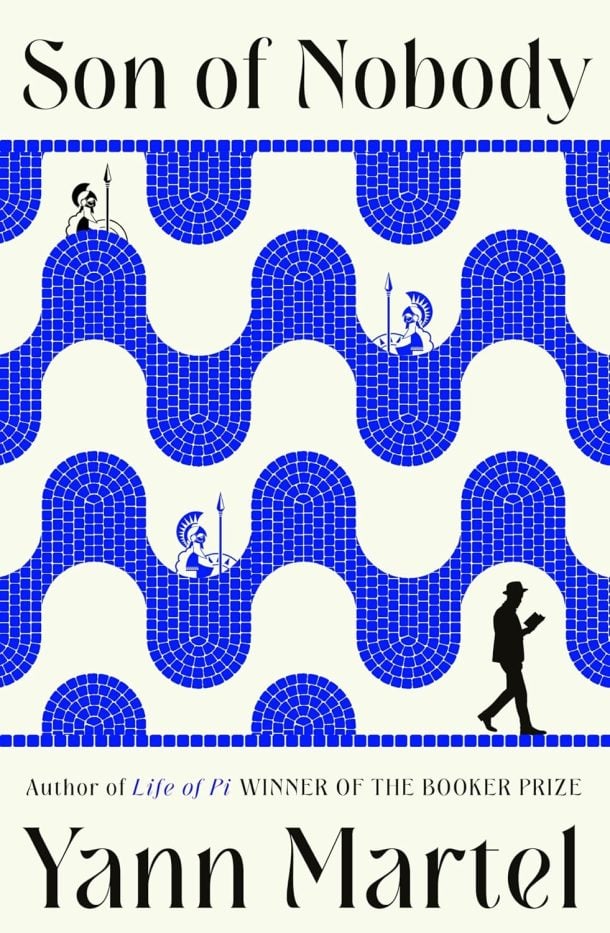 Son of Nobody by Yann Martel
In the inspired latest from Booker winner Martel (Life of Pi), a literature scholar discovers an alternate account of the Trojan War. Harlow Donne, a Canadian PhD student, has left behind his failing marriage and his young daughter, Helen, for a year’s scholarship at Oxford. There, his dissertation on Homer’s Iliad is sidelined by his discovery of a long-lost work titled The Psoad, whose hero is not highborn like Homer’s Achilles but a Greek commoner: Psoas of Midea, son of nobody. In passages of The Psoad translated by Donne, the reader learns of Psoas’s feats and trials, including his battle with Prince Mestor of Troy, to whom Psoas declares, “I am no less of a man than you are.” Like The Iliad, The Psoad is in dactylic hexameter, but Donne opts to render it in a more accessible style, which he describes as “an unfettered, bare-boned attempt at Greek folk dance.” In Donne’s own story, which unfurls in footnotes to the translation, the scholar muses on the line between fact and fiction, human nature and sorrow, and the power of Homer’s Iliad compared to the Gospels. Some may find Martel’s grand motifs a bit overdrawn, but his hero’s devotion for ancient poetry is contagious (“The authority of the Gospels relies on its claim to truth, while that of The Iliad relies on its power to captivate”). It’s an appealing labor of love. Publisher’s Weekly, December 2025.
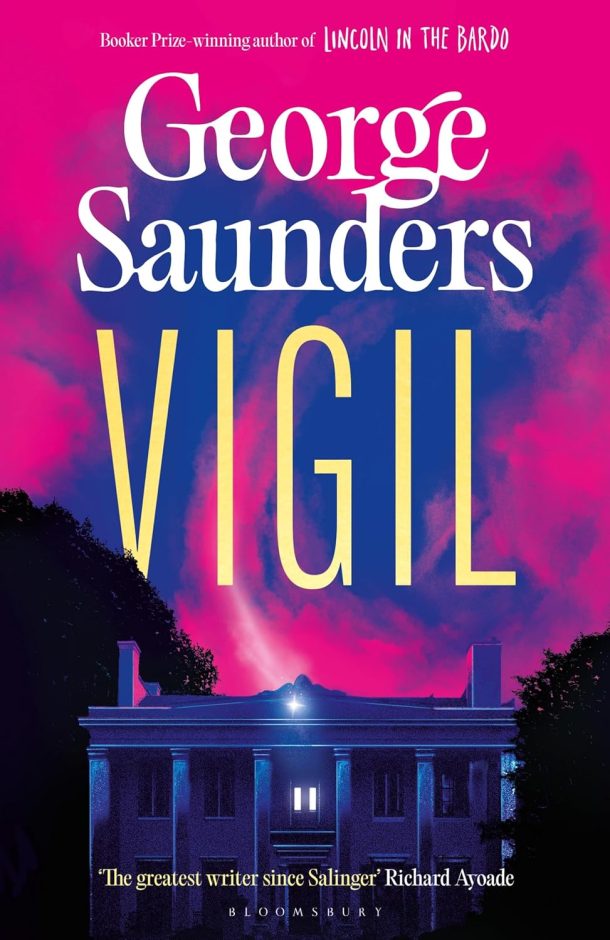 Vigil by George Saunders
A ghost attempts to guide an unrepentant oil executive toward redemption and the afterlife in the staggering latest from Saunders (Lincoln in the Bardo). The story takes place over the course of one night, when the spirit of Jill Blaine descends to Earth and takes on human form at the home of K.J. Boone, her latest “charge.” As opposed to the hundreds of others Jill has visited at the end of their days, the terminally ill Boone is uninterested in finding peace or reckoning with his misdeeds. Instead, he revels in his accomplishments, taking credit for the U.S.’s decision to abandon the Kyoto Protocol, which one of his lobbyists ridiculed as the “Intergovernmental Panel on Climate Crap” for “greenies with hostile agendas.” A fiery French colleague of Jill’s shows up to help, repeatedly crying “Quelle horreur!” as he tries to convince Boone of the devastating effects of climate change by showing him specimens of endangered bird species felled by wildfire smoke. Alone with Jill, Boone recalls his childhood, his experiences as a “Wyoming hick” at college in Michigan, and his defiant rise to power, during which he came to be unfairly seen, in his view, as “the villain… the principal baddy.” What emerges is not a simple story of redemption, though. As more of Boone’s transgressions are revealed, Jill decides she hates him, and the novel barrels into gleefully absurd territory while posing weighty questions about salvation and justice and whether they’re even feasible. Saunders has outdone himself with this endlessly irreverent work of art. Publisher’s Weekly, October 2025.
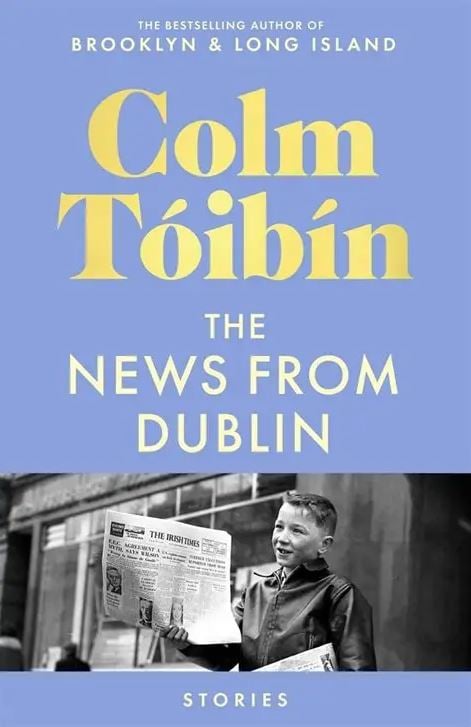 The News from Dublin: Stories by Colm Tóibín
The protagonists of these finely crafted stories from Tóibín (Long Island) reflect on their lives and how they wound up where they are. For the aging Irish narrator and his younger Jewish American lover in “Sleep,” it was “Germany, Ireland, the internet, gay rights, Judaism, Catholicism: they have all brought us here. To this room, to this bed in America.” In “The Journey to Galway,” an Irishwoman grapples with grief in the wake of WWII. The story begins with the unnamed woman noting an “unusual silence,” and her tale comprises painful recollections of those she lost in the war. “A Free Man” follows Joe, a failed Maynooth pontifical student and former math teacher, from Ireland to Barcelona, where he hopes to start a new life following a lengthy prison term for molesting teen boys. “The Catalan Girls,” a novella, centers on discreet and resolute Montse, who, as a 10-year-old, migrates with her mother and elder sisters Conxita and Núria (“the rude one”) from Spain to Argentina only to return 50 years later. The quiet humanity of Tóibín’s characters is as arresting as his knack for rendering relationships and place. This collection offers much to admire. Publisher’s Weekly, January 2026.
 A Rising of the Lights by Steve Toltz
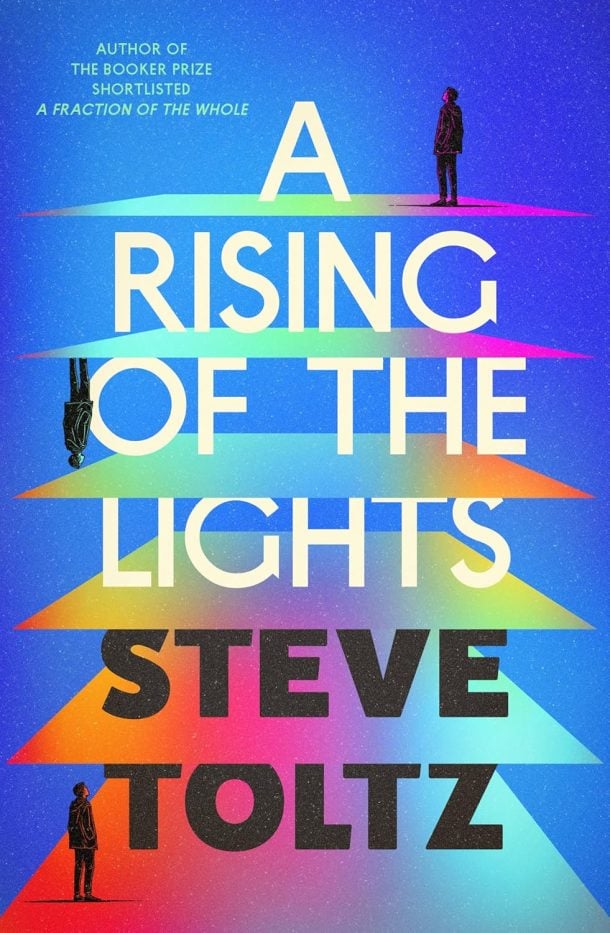
Welcome back Steve Toltz, the author that swept everyone I know into a state of joy and parental upheaval with his debut novel, A Fraction of the Whole. Of course, Toltz has not stopped writing since that 2008 novel, and I have lapped up every offering with relish. But this, his new novel, is a return to his scathing, epically proportioned reflection on modern life. You will laugh aloud as you recognise the insidious madness of what is happening. It is satirical, it is painful, and it is us – all of us. Get your hands on a copy and read it in one weekend. Rusty Wilson is our antihero, and he is navigating the terrain of life with a sinking feeling. His wife has left him, his twin sister does not want to know him, his parents are living separately in nursing homes, he is beset with financial troubles, and his job has gone to an AI tool. Of course, there is hope. And love and redemption as well, because how else would we laugh if there were not? It is a wild ride, but Rusty Wilson has form. It’s a difficult novel to describe, but here is my best shot: take a Jim Jarmusch film (say, Coffee and Cigarettes), plonk it with a Samuel Beckett play (Happy Days?) and mix it well with our own (and missed) John Clarke’s humour (The Games) and you are getting close to how outrageously absurd and humane this novel is. It is satirical, it is painful, and it is us – all of us. Get your hands on a copy and read it in one weekend. It will help with Monday, I promise. Rusty Wilson for PM. Readings, March 2026.
Return to top
HISTORICAL FICTION
| Helfer, Monika | Last house before the mountain |
| Hotere, Andrea | The vanishing point |
 Last House Before the Mountain by Monika Helfer
In Helfer’s spare, subtle English-language debut, an Austrian family is transformed during WWI. Maria and Josef Moosbrugger raise their four children in the shadow of a mountain outside a village, where their neighbors deride their poverty and worry the beautiful Maria will have a corrupting effect on the local men. Shortly after Josef departs in 1914 for military service, the mayor swoops in with offers to provide the family with food—but only if Maria tolerates his caresses—and Maria meets Georg, a traveler from Germany, whose ruddy hair and expressive manner make him the antithesis of the dark, saturnine Josef. Maria resists the mayor, and the children almost starve, and though Georg visits Maria only a few times, they fall in love. When Maria becomes pregnant, the villagers blame Georg. Josef, however, had twice come home on leave before the pregnancy, and when he returns for good after the war, he refuses to look at or speak to Margarethe, the daughter he insists is not his. Helfer brings a great deal of nuance to her exploration of female desire and vulnerability, male power, and community division. This should win the author wider recognition in the U.S. Publisher’s Weekly, January 2023.
Return to top
MYSTERY
| Binet, Laurent | Perspectives |
| Bishop, D. V. | Carnival of lies |
| Bowen, Rhys | Vanished in the crowd |
| Burke, James Lee | The Hadacol boogie |
| Castillo, Linda | An evil heart |
| Coles, Richard | Murder under the mistletoe |
| Harris, C S. | When The Wolves Are Silent |
| Kenyon, Georgina | The Egyptologist’s curse |
| Lombard, Nap | Murder’s a swine |
| McKinty, Adrian | Hang on St. Christopher |
| Mercier, Mercedes | The couples retreat |
| Rhodes, Kate | Deadman’s pool |
| Turner, Darlene L. | Echoes of darkness |
| Uketsu | Strange buildings |
| Watson, Katy | A very Lively murder |
 Perspectives by Laurent Binet
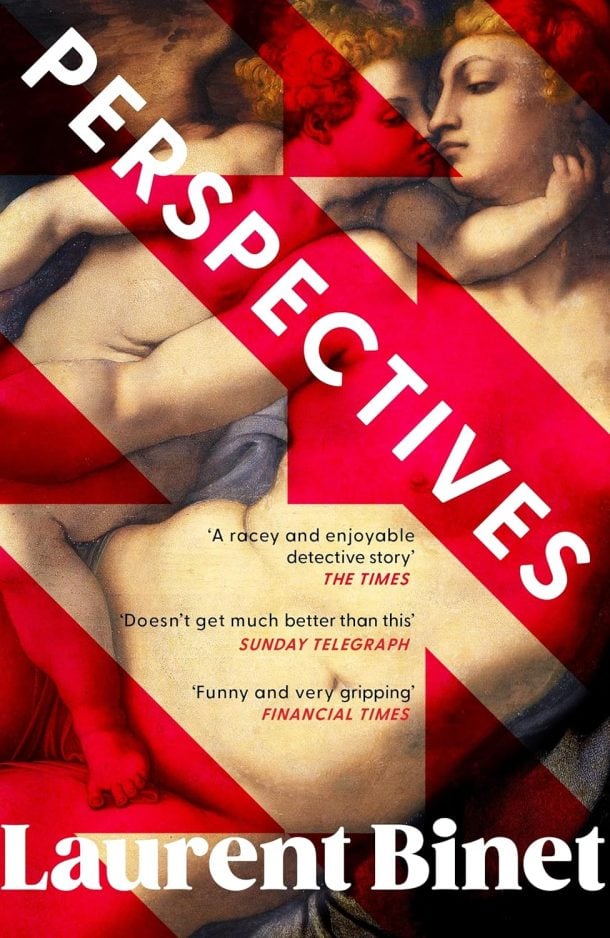
Binet (HHhH) paints an entertaining and layered portrait of art and politics in Renaissance Florence. The novel is largely composed of letters discovered in a 19th-century Tuscan antique shop by the narrator, a French tourist, who commits to faithfully translating them. From the letters, the reader learns of Giorgio Vasari’s investigation on behalf of the Duke of Florence into the murder of Jacopo da Pontormo, a painter who at the time of his death in 1557 was finishing a fresco deemed outrageous by Italy’s religious orders. Complicating the murder investigation is the discovery in Pontormo’s atelier of a portrait of the Duke’s daughter, Maria, as a naked Venus, which could sully the princess’s honor and jeopardize her politically calculated upcoming marriage. The letters recount Vasari’s interviews with other artists as he tries to get to the bottom of Pontormo’s death and determine the origin of the portrait. The cache also contains other correspondences, notably between Catherine of Medici, Queen of France, and the Duke’s daughter. Throughout, Binet weighs in on the importance of art via reflections from his characters, an undercooked theme compared to the crackerjack depiction of the period’s political intrigue. By the end, though, Binet masterfully weaves together the story’s multiple threads. Readers will be captivated. Publisher’s Weekly, March 2025.
 Vanished in the crowd by Rhys Bowen & Clare Broyles
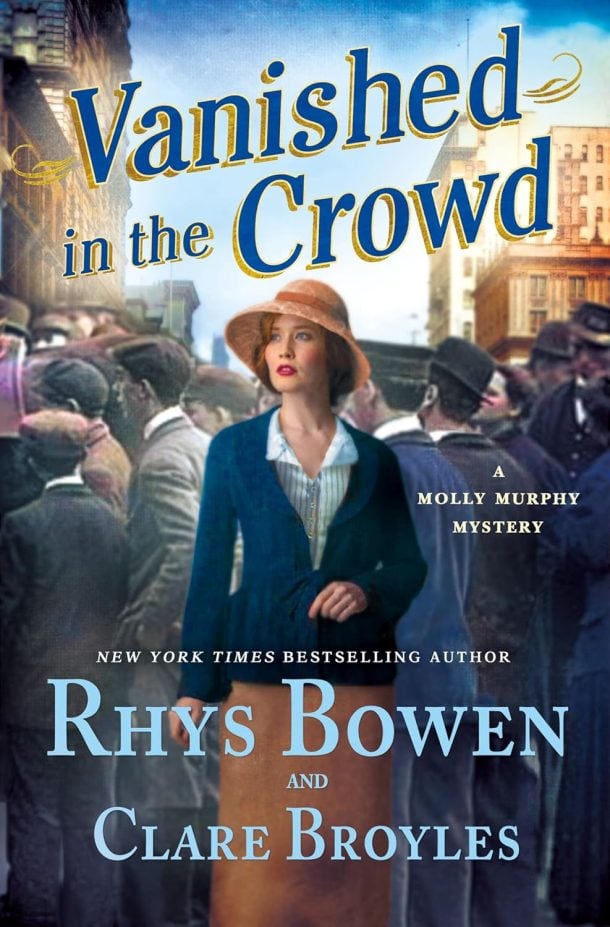
A former detective is inspired by the suffragist movement to return to the job she loved. Molly Murphy Sullivan and her husband, Daniel, the newly created FBI head in 1909 New York, live with their adopted daughter, Bridie, and two younger children on Patchin Place, a dead-end street in Greenwich Village. Across the street live Molly’s closest friends, Elena “Sid” Goldfarb and Augusta “Gus” Walcott, both from society families, both with independent means, both lesbians, suffragists, and socialists who are paying for Bridie to attend private school. Now Sid and Gus, who are hosting a Boston Walcott cousin and a fellow Vassar graduate, are concerned because Willa Parker, a third expected guest who’s a scientist from Philadelphia, hasn’t arrived. Even though they suspect Willa may not want to be found, Sid and Gus hire Molly to find her. Willa is far smarter than her husband, but because she’s a woman, his name is on their scholarly papers and he’s in control of their research at Penn University. Molly is especially inclined to take the case because she’s peeved with Daniel, who hasn’t told her that he hasn’t been paid by the FBI and is using their savings to pay his men. Meanwhile, the city is getting ready for a celebration of the 300 years since Henry Hudson sailed up the river now named for him and 100 years since Robert Fulton invented the commercial paddle steamer; Bridie’s school is decorating a float in one of the parades that have all New York and many foreign guests involved. Molly’s friends are working on another float sponsored by wealthy suffragist Alva Belmont, and Molly suspects they’re planning a protest. The case will lead to Willa’s shooting on the float and her friends’ arrest for their protest. As Daniel labors to provide security for the foreign dignitaries involved, Molly follows up on a tangled mess of clues to find the truth. A colorful mystery based on historical events that focuses on the status of women. Kirkus Reviews, March 2026.
 The Hadacol Boogie by James Lee Burke
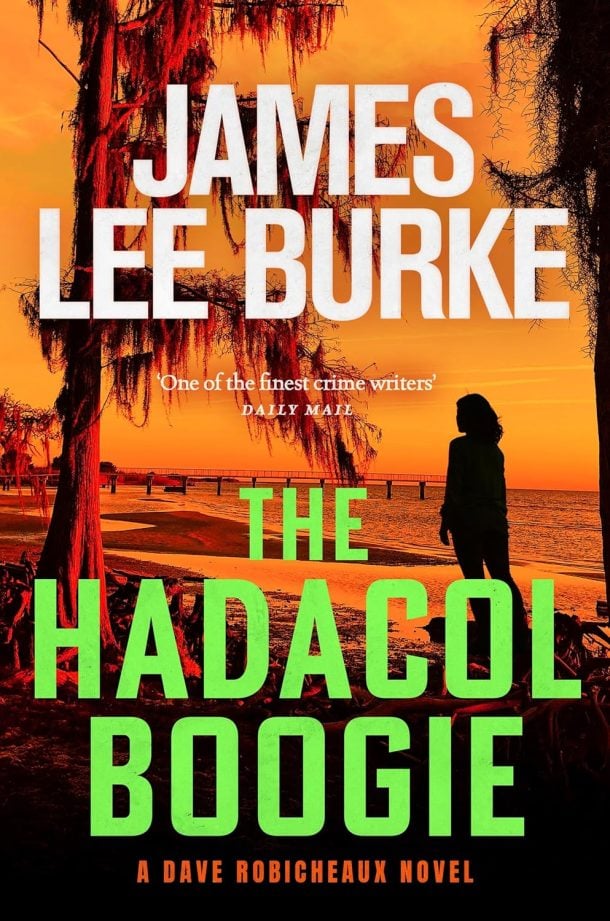
New Iberia Detective Dave Robicheaux, who’s been kept mostly on the sidelines for the past five years, makes a welcome return in a starring role in this turn-of-the-20th-century tussle. Dave arises from sleep to see a bunch of kids set off a bottle rocket into his backyard. The rocket lights a fire he promptly puts out, but the kids, who mean no harm, turn out to be witnesses who saw a tall stranger in a black raincoat drag a big plastic bag into his yard. The bag turns out to contain the remains of a young woman who’s been stripped, drugged, and murdered. Who killed her, who dumped her in Dave’s yard, and who is she? Dave and his new partner, Det. Valerie Benoit, hunker down to answer all three of these questions. The victim turns out to be Clemmy Benoit, an obvious relative about whom Val has little to say and a friend of Dave’s adopted daughter, Alafair, a novelist who’s come for an extended visit. The suspects include Lloyd D’Anjou, a redneck colleague who’s bent on harassing Val; Jerry Carlucci, the skeevy owner of a saloon, a café, and a brothel; and Sidney Ludlow, a mobster seeking to open a casino on land he means to acquire one way or another. Since this is New Iberia, they’re all guilty of something. So are Dave and his old pal Clete Purcel, a private detective who’s fallen off the wagon; both of them periodically surrender to their righteous rage. When Alafair is kidnapped, the sense of danger is intensified for fans who remember that her father has already outlived three wives. The hero’s goal—“I’ve got to find a way of seeing things the way they really are”—has rarely been more resonant. Kirkus Reviews, October 2025.
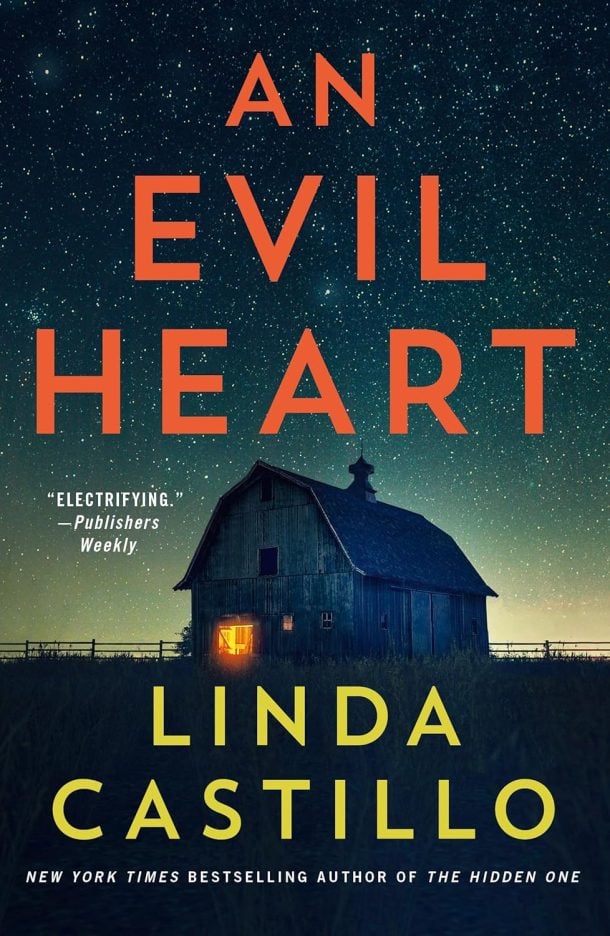 An Evil Heart by Linda Castillo
At the start of Castillo’s thrilling 15th mystery featuring Ohio police chief Burkholder (after 2022’s The Hidden One), the body of 21-year-old Aden Karn turns up on a desolate road with crossbow wounds in his abdomen and mouth. Raised in a respected Amish family, Aden was happily engaged to a respectable young woman and appeared to be an unlikely target for a violent crime. As Kate begins her investigation, however, she learns that Aden might have been more complicated than he seemed: he was reportedly a mean drunk who often visited the shady Brass Rail Saloon, and was friends with Vernon Fisher, a young man on rumspringa who spends most of his time drinking, smoking, and womanizing. Meanwhile, the strangled body of 26-year-old Paige Rossberger is found half-submerged in a nearby creek. Paige wasn’t Amish, but Kate becomes convinced there’s a connection between the murders. Though some readers will piece the puzzle together more quickly than Kate does, Castillo’s punchy prose and well-developed characters keep the pages turning, and a subplot involving Kate’s upcoming nuptials to her longtime love will tug at readers’ heartstrings. Series fans will be eager for the next entry. Publisher’s Weekly, November 2023.
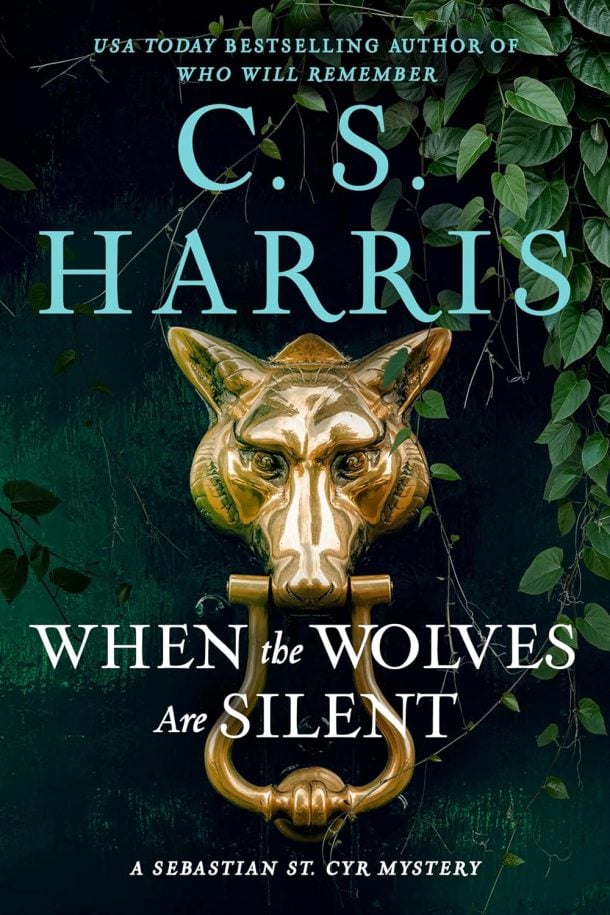 When the wolves are silent by C.S. Harris
When multiple murders rock the nobility of Regency England, an aristocratic sleuth steps in to solve them. It’s 1816. The Right Honorable Bayard Wilcox, 13th Lord Wilcox, awakens in the middle of the night to the smell of smoke and a fuzzy memory on London’s Primrose Hill. After he barely escapes the fire that engulfs the body he presumes to belong to Marcus Toole, son of the eminent Sir Samuel Toole, Bayard turns to his uncle, Sebastian St. Cyr, for help. Fortuitously, Sebastian, aka Viscount Devlin, is an esteemed and experienced investigator. Both familial duty and deep curiosity fuel Sebastian’s probe. Instead of dallying to wait for confirmation of the corpse’s identity, he wonders whether there’s a link to the recent death of another nobleman, Gilbert Keebles, two weeks ago. St. Cyr’s 21st case is brimming with members of the nobility, so many of them suspects that readers may feel challenged just to keep them all straight. The investigation spreads a wide net, featuring interviews by both Sebastian and his best friend, Sir Henry Lovejoy; Lovejoy’s wife, Hero; and others. Harris’ style and deeply researched details give her whodunit a sense of historical authenticity that’s bolstered by a culminating historical note. The location of the fatal fire, Primrose Hill—north of Regent’s Park in present-day London—figures prominently in Druidic practices, and the novel offers a deep dive into Celtic legends figured by the wolves of the title. A gracefully written period mystery packed with interesting historical background. Kirkus Reviews, April 2026.
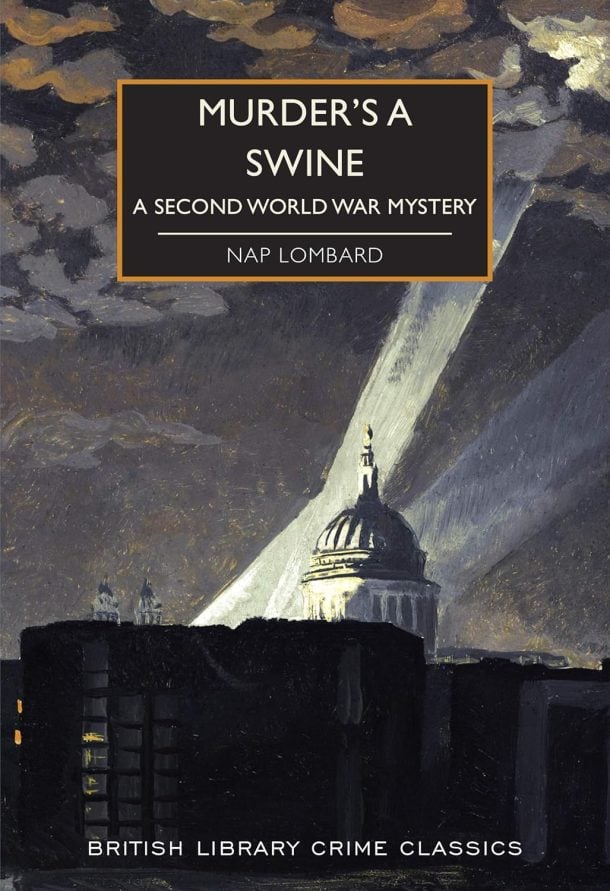 Murder’s a swine by Nap Lombard
Nestled beneath the playful title and byline, a pseudonym for then-married Gordon Neil Stewart and Pamela Hansford Johnson, is an equally madcap case of murder during the London “sitzkrieg” originally published in 1943. Featherstone Mews air warden Clem Poplett and Stewarts Court resident Agnes Clunkershill Kinghof, nee Sidebotham, find the first victim buried among the sandbags inside the No. 2 shelter for Stewarts Court. Agnes’ neighbor Adelaide Foster Sibley, who’s already been properly spooked by the vision of a blue pig’s head outside her window, tearfully identifies the dead man as Reginald Coppenstall, the brother she hasn’t seen in nearly 30 years, and the most likely killer as Reg’s son, actor Maclagan Steer, who’s the heir of her significant family estate. The only problem is that the other neighbors who had access to the shelter—deaf, retired French cafe owner Jeanne-Louise Charnet, government bureaucrat George Warrender, medical student Felix Lang, Mrs. Sibley’s flatmate Phyllada Rowse, aka Phyllada Rounders, the creator of deathless young fictional heroine Fernia Prideaux, and Agnes’ husband, Capt. Andrew Kinghof—don’t include Steer. The campaign of improbable terror launched by someone calling himself “THE PIG-STICKER” continues until Mrs. Sibley is dead and her will reveals that she hasn’t left a penny to Steer after all. The bigwig Scotland Yard sends to investigate turns out to be Agnes’ cousin Lord Herbert Whitestone, better known as Pig, and it’s no surprise when Agnes and Andrew run sleuthing rings around him, though their detection is upstaged by several broadly comic set pieces: a Punch and Judy show, a production by the Milmanscroft Guides, and a meeting of the Free British Mussolites. Zany period antics for those who’ve had enough of the present day. Kirkus Reviews, December 2021.
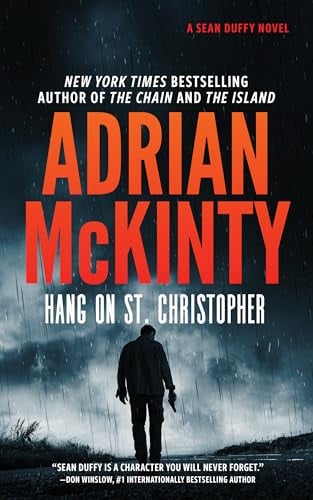 Hang On St. Christopher by Adrian McKinty
McKinty impressively balances action and intimacy in his appealing eighth adventure for Northern Ireland’s Det. Insp. Sean Duffy (after The Detective Up Late). It’s July 1992, and Duffy is commuting from Scotland to Belfast six days per month, counting down the hours until he can retire from the Royal Ulster Constabulary. While Duffy’s boss is holidaying in Spain, a murder is reported in Belfast: well-liked portrait painter Quentin Townes was killed in what Duffy’s colleagues quickly label a violent carjacking. Duffy, on the other hand, has a hunch that the attack was targeted. Soon, he unearths a plot linking foreign forces to the IRA, a discovery that makes him a target for ruthless assassins and sends him to the U.S. to solve the puzzle. As always, Duffy is a sly, lovable narrator, peppering the narrative with witty asides and copious references to 1980s and ’90s British pop culture. Enriched by McKinty’s brisk plotting, illuminating glimpses at a difficult period of Irish history, and poignant reflections on aging, this is a cracking good time. Publisher’s Weekly, July 2025.
Return to top
NON FICTION
| Bates, Laura | The new age of sexism | 305.3 BATE |
| Coupe, Stuart | Saffron incorporated | 364.106 COUP |
| Finlay, Victoria | Fabric | 677 FINL |
| Fisher, Max | The chaos machine | 302.231 FISH |
| Ghosh, Amitav | The nutmeg’s curse | 363.7387 GHOS |
| King, Richard | Brave new wild | 363.7 KING |
| Moffat, Clair | The Phoenix Project | 650.1 MOFF |
| A century of James Frazer’s The golden bough | 291.13 FRAZ | |
| The Spectator Best of Notes on… | 808 MOOR |
 The Chaos Machine by Max Fisher
A veteran journalist examines the rise of the social media giants and the dangers they have created for our society. Fisher, a columnist and international reporter for the New York Times, dives into the chaotic social media landscape, synthesizing dozens of interviews from a wide range of sources. Focusing primarily on Facebook, the author walks through the key steps in the progress of the technology, seeing the advent of algorithms as a turning point. By tracking the sites that consumers visit, algorithms allowed for precise targeting for future contact. The best-performing sites gave users a sense of belonging, usually by denigrating “outsiders.” Over time, the result was increasing social and political polarization, with debate and discourse replaced by attacks that could easily spill into the offline world. Fisher is spot-on when he describes how the promotion and manufacture of moral outrage were not glitches in the system but inherent features. Senior leaders at Facebook received countless warnings about potential problem areas; claiming that they would address them, they never did. The company had rules to exclude certain posts, but they were inconsistent, vague, and overly complex (more than 1,400 pages). The author capably explains the many complex elements involved, but his liberal perspective is occasionally too evident. The mere mention of Donald Trump often makes him splutter with indignation. He has much to say about right-wing groups but little about those on the left. Nonetheless, Fisher is a diligent reporter, and when he maintains his focus on the mechanics of social media, he makes numerous important points. He even suggests that social media has become so counterproductive that we should consider shutting down the big firms—he aptly cites the murderous computer HAL in Stanley Kubrick’s 2001: A Space Odyssey—or at least forcing a thorough restructuring process. It’s a sensible idea worth discussing, but given the power of big tech, it’s unlikely to happen. An often riveting, disturbing examination of the social media labyrinth and the companies that created it. Kirkus Reviews, September 2022.
Return to top
POETRY
| Kirkham, Nora | Landing |
Return to top
ROMANCE
| Gilmore, Laurie | The Christmas tree farm |
| Hoffs, Susanna | This bird has flown |
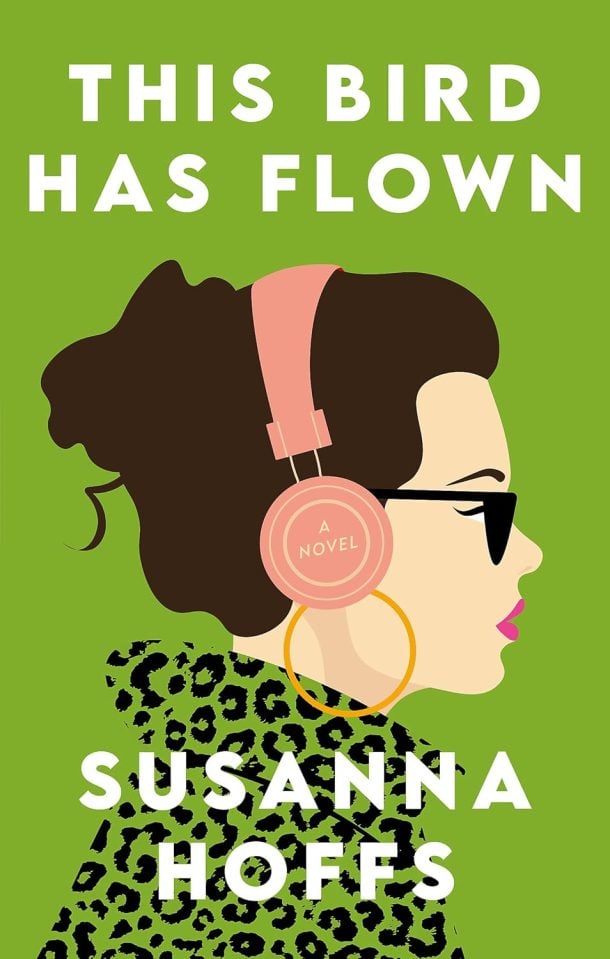 This Bird has flown by Susanna Hoffs
A semiforgotten singer seeks love and a new hit song in this debut from Hoffs, the co-founder of the Bangles. Thirty-three-year-old Jane Start is afraid she might already be a washed-up one-hit wonder. Ten years ago, she found success with a cover of a song by the enigmatic rock star Jonesy. But she hasn’t had a hit since, and now she finds herself so desperate for work that she’s playing a private gig at a bachelor party. Her manager and best friend, Pippa, sends Jane to London to recuperate from the humiliation of singing karaoke to a group of drunk bachelors and the pain of being recently dumped by her boyfriend of four years. On the plane, Jane meets an Oxford literature professor named Tom Hardy, and the two manage to charm each other with their in-flight conversation. Impulsively, Jane kisses him, and the two exchange numbers before they part. When Jane gets to London, her life becomes all about another unexpected connection—Jonesy himself wants Jane to perform at his upcoming show at the Royal Albert Hall. Jane needs the work, but the idea of performing in front of such a large crowd, and with the same mysterious superstar who was such a big part of her early career, gives her pause. When she finally hears from Tom again, the two of them fall into a heady and intoxicating relationship. But Jane starts to wonder how much she really knows about Tom and whether the figurative ghosts of his ex-girlfriends might haunt his home and his heart. She also wonders if she can ever separate herself from her hit song of 10 years ago and the man who was behind it. Hoffs writes with a snappy wit that recalls rom-com favorites like Bridget Jones’s Diary. There are the expected musical references (each chapter begins with a song title, and Jane and Tom bond over their favorite music), but there are many literature references, too—most notably to Jane Eyre and Rebecca. A fun read that’s perfect for lovers of pop music, classic books, and romantic comedies. Kirkus Reviews, April 2023.
Return to top
SCIENCE FICTION & FANTASY
| Tamaki, A S | The book of fallen leaves |
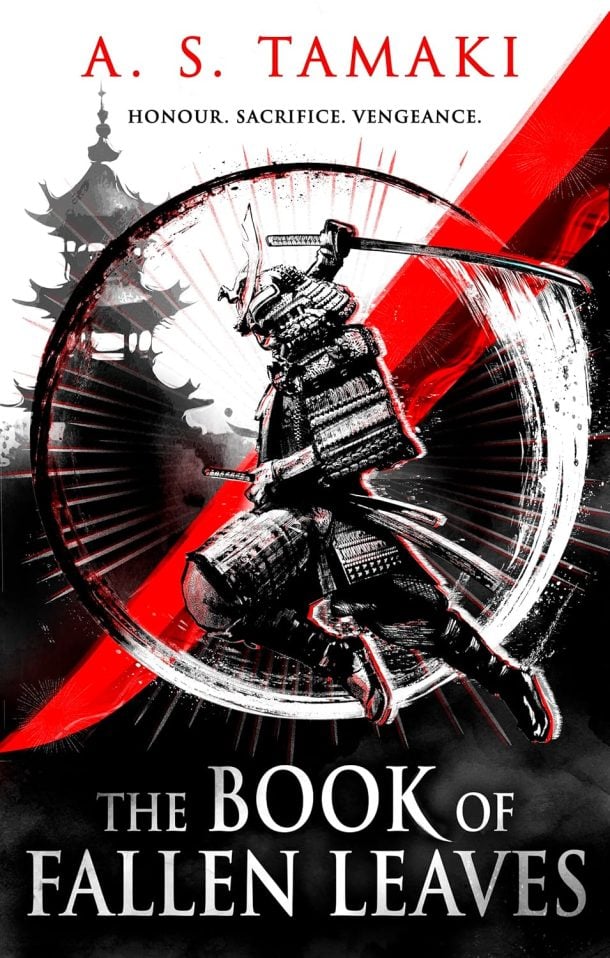 The Book of Fallen Leaves by A.S. Tamaki
Loyalty and peace buckle under the strain of ambition in Tamaki’s densely poetic debut and Autumn Empire series launch, set in a Japan-inspired secondary world. Kai and Sen, orphaned when their parents took up arms against the Imperial chancellor, seek to redeem the family name, with Kai maneuvering openly at court and Sen secretly raised by another noble family. Their uncle, Yora the Poet, tries to maintain his position with the chancellor but finds it increasingly difficult as the chancellor schemes to put his own family into the Imperial succession. Meanwhile, Rui, a peasant woman and Sen’s childhood friend, finds herself at the mercy of Hososhi, the “guardian-god of the barrier between our world and the next,” who seeks to vanquish a vengeance-summoned demon. Past crimes come to light, debts come due, and civil war brews as monks fight for temple authority, an Emperor is pushed aside for his infant son, and warriors clash in epic sword battles. Tamaki drops readers straight into this well-stocked stew of rivalries, drawing deeply from Japanese history and Samurai sagas. It can be a challenge to keep track of the fast-moving coups and battles, but lovely snippets of poetry, appealing protagonists, and fascinating interpersonal dynamics will keep readers hooked. Tamaki is an exciting new voice in epic fantasy. Publisher’s Weekly, August 2025.
Return to top
New additions to eBooks at SMSA
EBOOKS
| General Novels | Clutton, Sarah | The bookshop of buried pasts |
| General Novels | Cornish, Mali | The Missing Mother |
| General Novels | Evans, Virginia | The correspondent |
| General Novels | King, Lily | Heart the Lover |
| General Novels | Lim, Rebecca | The graduate |
| General Novels | Shuang-zi, Yang | Taiwan Travelogue |
| Mystery | Burrowes, Grace | A gentleman of questionable judgement |
| Mystery | McTiernan, Dervla | Three reasons for revenge |
| Mystery | Pérez-Reverte, Arturo | The final problem |
| Romance | Gilmore, Laurie | The gingerbread bakery |
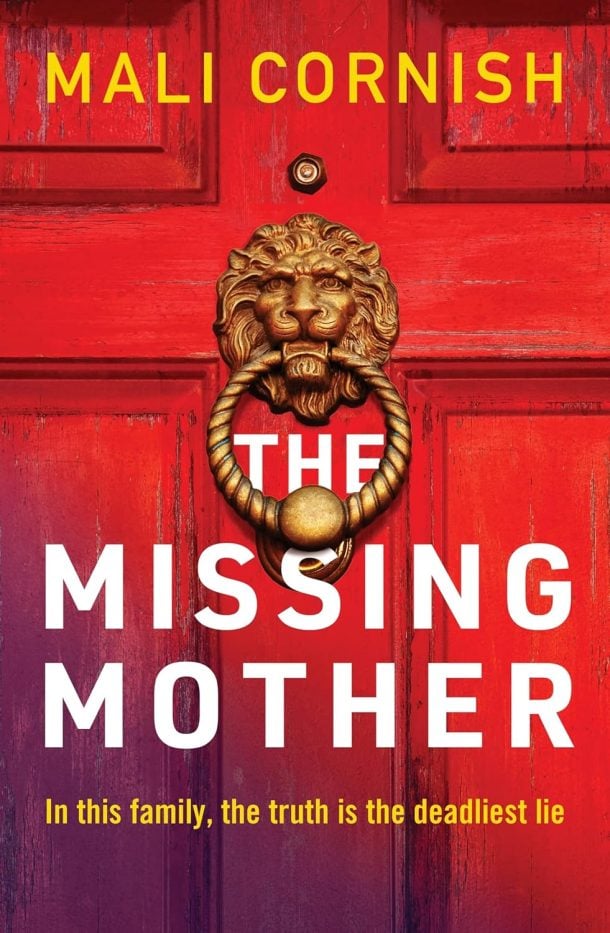 Missing Mother by Mali Cornish
In The Missing Mother, Mali Cornish (Judgement Day) crafts a gripping domestic thriller centred on Elspeth, who returns to Geelong from New York when her mother Simone vanishes. The story unfolds through Elspeth’s first-person narration, interwoven with Simone’s letters across a dual timeline from 1986 to 2025, steadily building suspense as past and present converge. The plot uses multiple credible suspects and long-buried family secrets to keep the reader guessing what happened to Simone, with Elspeth herself a suspect. What results is a mystery that is far more unsettling than a straightforward whodunit. Elspeth is a compelling and deeply unreliable narrator, and her unnerving detachment from her family makes her both fascinating and untrustworthy. Cornish’s exploration of how every person hides a side of themselves from others gives the story a compelling emotional undercurrent that lingers long after the final page. The present-day Geelong setting draws convincingly on Cornish’s lived experience of the town, though some local details feel more atmospheric than essential to the plot. The Missing Mother will appeal to fans of Lisa Jewell and Liane Moriarty, drawing readers in with its fast-paced dual timeline and layers of secrets. Cornish’s novel achieves what it sets out to do as a domestic thriller, delivering genuine surprises without sacrificing believable characters and emotions. It cements Cornish’s place among Australia’s rising crime writers and should easily attract readers beyond her existing fanbase. Books+Publishing, March 2026.
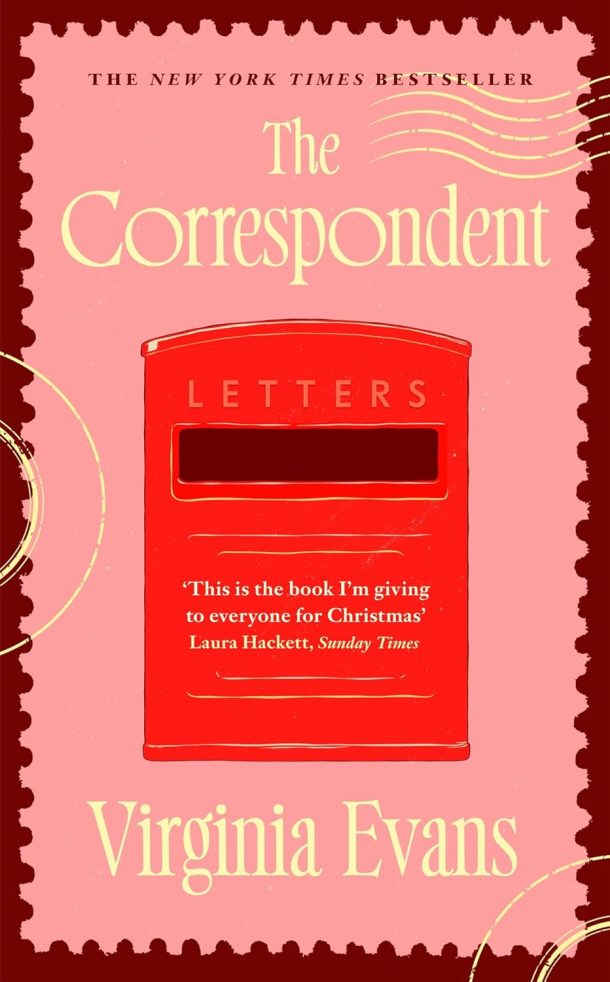 The Correspondent by Virginia Evans
The charming debut from Evans takes the form of letters and emails exchanged by a divorced and retired woman with her friends, family, foes, and literary idols. It begins in 2012 as Sybil Van Antwerp, 73, politely declines an invitation to visit her brother, Felix, in France, then fancifully invites the author Ann Patchett to use her Maryland home as a writer’s retreat. Sybil spent her career clerking for a judge, and after reading of his death in the newspaper, she begins receiving strange and threatening letters from an aggrieved former defendant, who calls her a “cold metal bitch.” Evans juxtaposes these screeds with Sybil’s intimate fan mail to Joan Didion, who writes her back in 2013, expressing empathy as a fellow member of “the club of parents who have buried children” (Sybil lost a son at eight). Sybil, who was adopted, grows curious about her ancestry after her older son gives her a DNA test for Christmas, and she brushes off concerns about her declining eyesight from her daughter, Fiona, who lives in Australia. As the years go on, Sybil’s relationships brim with tension waiting to be released, and the detailed connections between each character are brilliantly mapped through the correspondence. It adds up to an appealing family drama. Publisher’s Weekly, March 2025.
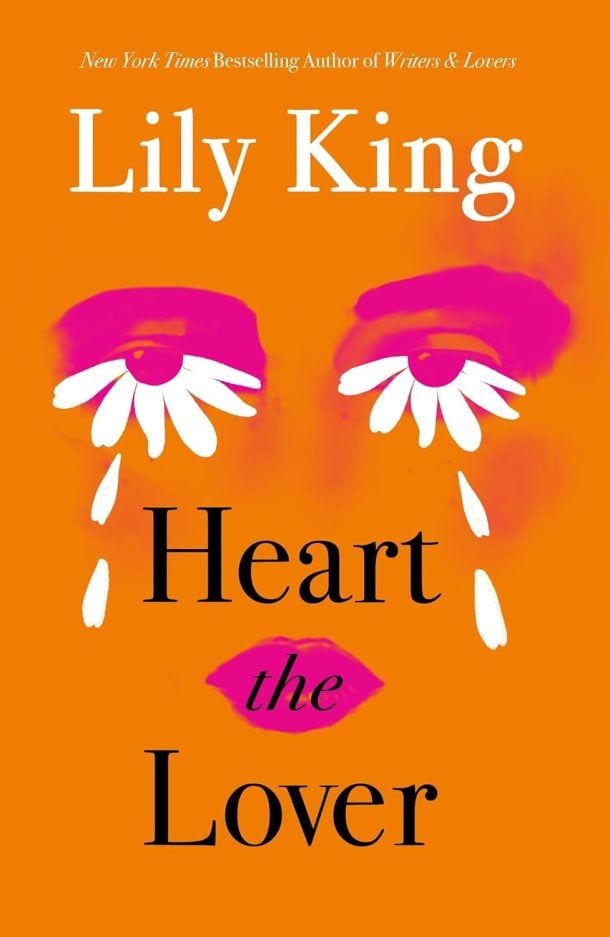 Heart the Lover by Lily King
Lily King’s sixth novel, Heart the Lover, begins with a prologue of only a few sentences: “You knew I’d write a book about you someday. . . . For me it begins here. Like this.” The novel then moves back in time to the late ’80s in an English lit seminar at an unnamed college, where the narrator first encounters talented classmates Sam and Yash. Roommates and best friends, Sam and Yash are house-sitting for a professor. Soon the narrator is hanging out with Sam, Yash and housemate Ivan in the professor’s enchanting old house, and the boys give her a nickname: first Daisy, then Jordan, as in Jordan Baker from The Great Gatsby, because of the golf scholarship that got her into college. Sam pursues Jordan, and the two begin going out. But Sam, a Baptist, is moodily ambivalent about sex, and Jordan can’t stop thinking about the funny, even-keeled Yash. King’s depiction of 1980s college life is spot-on, and Jordan narrates the hurtling love story between herself and Yash—and their guilt about Sam—with all the intensity of college-age love. After a miscommunication, or maybe a ghosting, the novel leaps many years into the future: Jordan is now a novelist, a mom of two little boys, and married to the solid Silas. Out of the blue, Yash, on his way to visit a friend, has come to see Jordan in Maine, where she lives and writes. The novel moves back and forth in time, as Jordan recalls brief encounters with Yash over the years, and then moves ahead again to the present, to the moment when she gets a text from Sam. As with King’s previous novels Euphoria and Writers and Lovers, Heart the Lover features a love triangle, but because this novel is ultimately about the passage of time and how our older selves view the choices we made (or failed to make) when we were young and intense and foolishly stubborn, this love triangle takes a redemptive turn that feels grounded, believable and quite beautiful. Jordan is a wonderful protagonist—funny, despairing, self-deprecating, lonely and determined to write novels. This is a satisfying, emotionally rich tearjerker, a book that just may make you sob out loud. BookPage.
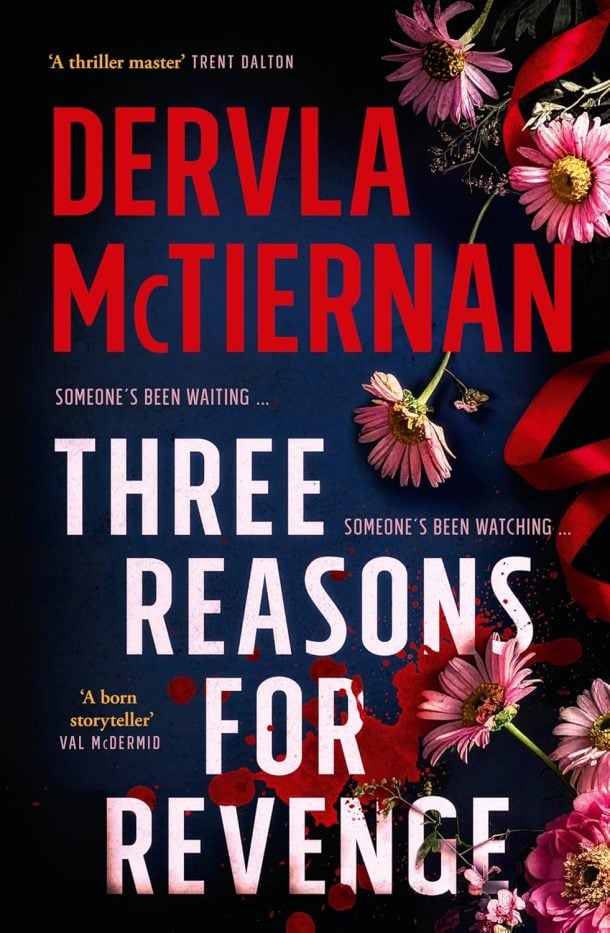 Three Reasons for Revenge by Dervla McTiernan
McTiernan (What Happened to Nina?) keeps readers deliciously off-balance in this moody, character-driven thriller set in Melbourne. University student Alexis Turner walks into a police station and reports to Det. Sgt. Judith Lee that psychologist Robert Walker has just sexually assaulted her, massaging her shoulders and then her breasts during a routine appointment to address anxiety and headaches. Lee is inclined to believe Alexis’s account because, 10 years earlier, another woman made similar allegations against Walker. At the time, Lee dismissed the accuser and sent her away without assistance, a choice she’s regretted ever since. The detective seizes on Alexis’s case to atone for that misstep, but her investigation gets complicated when she learns that Alexis was lying about being a student and provided fraudulent contact information. Meanwhile, Walker’s wife, Vanessa, receives an anonymous video showing her husband receiving oral sex in his office. When someone connected to the case is murdered, the stakes ramp up, and McTiernan has a blast pulling rug after rug en route to revealing the big picture. The author’s plausible, sometimes jaw-dropping plot twists never strain credulity or come at the expense of her carefully calibrated character relationships. This will keep readers up all night. Publisher’s Weekly, April 2026.
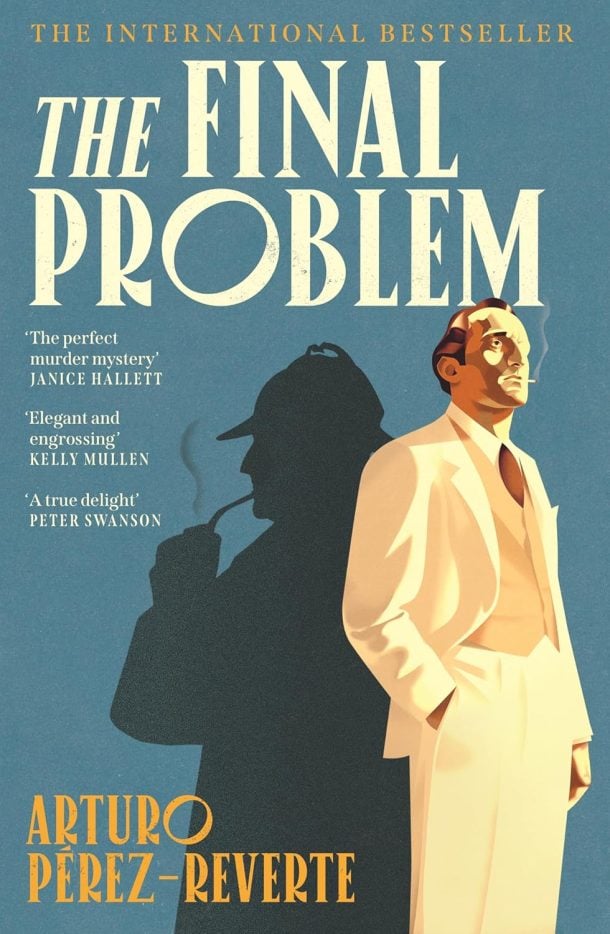 The Final Problem by Arturo Pérez-Reverte
Two murders, a storm-isolated hotel, and Hollywood gossip propel this irresistible homage to golden-age detective fiction from Pérez-Riverte (the Captain Alatriste novels). Debonair Shakespearian actor Osmond Basil has made a career of playing Sherlock Holmes in a series of successful films. The downside is that the 60-something thespian has been typecast out of the complex villain roles he longs to play. While vacationing at a luxury resort on the Greek island of Ukatos in 1960, Basil becomes stranded with a handful of other guests in the middle of a raging storm. When British vacationer Edith Mander is found hanged from a beach cabana, Basil quickly deduces that she died not by suicide but by murder, and reluctantly takes up the job of finding her killer. He’s assisted by Paco Foxa, a dashing Spanish mystery novelist who serves as Basil’s Dr. Watson, helping him navigate a series of red herrings as they interview their fellow guests, including an opera diva. Pérez-Riverte delights in the plot’s meta conceit without letting it overwhelm the ingenious core mystery. This is a gift to whodunit fans. Publisher’s Weekly, November 2025.
 Taiwan Travelogue by Yáng Shuāng-Zǐ
Taiwanese author Yáng frames her dizzying English-language debut as a translation of a 1954 Japanese text. Its author, Aoyama Chizuko, is a young Japanese woman and successful writer invited by the Japanese-controlled government of Taiwan to give lectures across the island in 1938. She accepts with enthusiasm, eager to learn about Taiwan’s culture. Her interpreter, Ō Chizuru, is a young woman whose guarded charm and extensive knowledge of local cuisine enthrall Aoyama. As she ravenously samples local dishes, she attempts to get closer to Chizuru, who insists friendship is impossible due to their status difference as Mainlander and Islander. Yáng’s introduction and back matter blur the line between reality and fiction, inviting readers to imagine what’s missing from Aoyama’s novel due to its colonial context and the sensibilities of the time. The meta-literary gamesmanship is alluring, though readers may find their patience wearing thin by the fourth afterword. Still, Yáng offers rich reflections on colonialism and translation along with delightful depictions of Taiwanese delicacies. Admirers of metatextual novels like Haruki Murakami’s Kafka on the Shore ought to take note. Publisher’s Weekly, September 2024.
Return to top
AUDIOBOOKS
| General Novels | Hutchinson, Marcia | The mercy step |
| General Novels | McFadden, Freida | Do You Remember? |
| General Novels | Novak, Brenda | Meet Me in Italy |
| General Novels | Richards, Natalie D. | Two perfect lies |
| Mystery | Alexander, Ellie | A death in the dark |
| Mystery | Graham, Heather | A Cruise to Die For |
| Mystery | O’Connor, Carlene | Come through your door |
| Mystery | Walter, Susan | Murder at 30,000 Feet |
| Sci-fi/Fantasy | Kelly, Seana | Wicche hunt |
| Sci-fi/Fantasy | Wells, Martha | Platform decay |
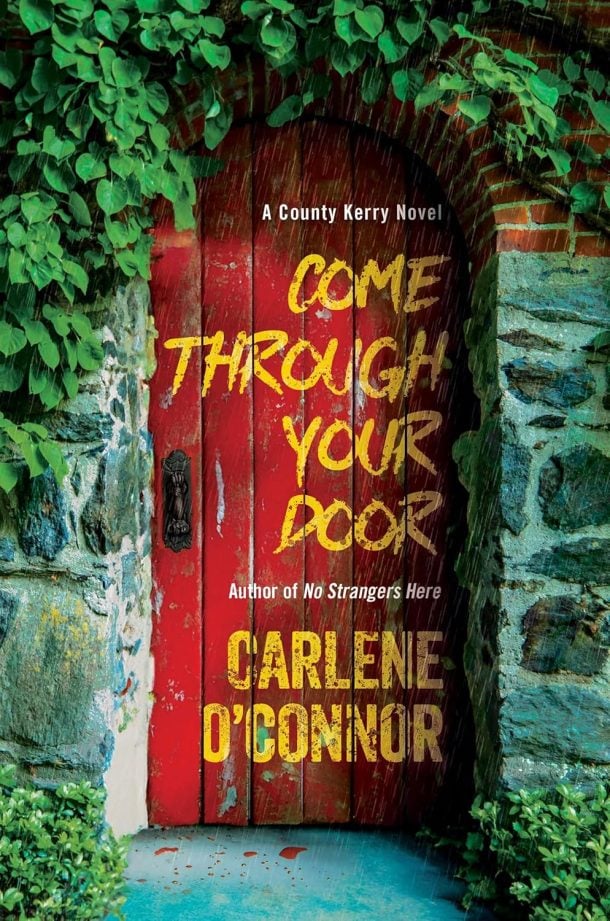 Come Through Your Door by Carlene O’Connor
A baffling murder investigation unearths the spotty history of an Irish psychiatric institution in the entertaining if overbusy latest entry in O’Connor’s County Kerry series (after You Have Gone Too Far). As Irish veterinarian Dimpna Wilde walks in her father’s funeral procession, she notices that her employee, Niamh Dowd, who was supposed to be there with her boyfriend, Mark Gallagher, is missing. Hours later, Dimpna discovers a blood-soaked, amnesia-stricken Niamh on the side of the road and takes her home. When they arrive, they find a woman’s corpse in Niamh’s bed, but Niamh swears she has no idea how it got there. Meanwhile, Mark is nowhere to be found, and Dimpna can’t find any record of his existence. Detective inspector Cormac O’Brien eventually takes up the case, identifying the dead woman and noticing unmistakable similarities to the recent unsolved murder of a psych ward employee who was investigating a serial killer before she died. O’Connor relies on a few too many false identities to fuel the book’s preponderance of third-act plot twists. Still, she’s a pro at using cliffhangers to pull the plot forward, and as O’Brien’s investigation deepens, fascinating details emerge about the history of Ireland’s treatment of the mentally ill. Despite some bumps, this should satisfy the author’s fans. Publisher’s Weekly, August 2025.
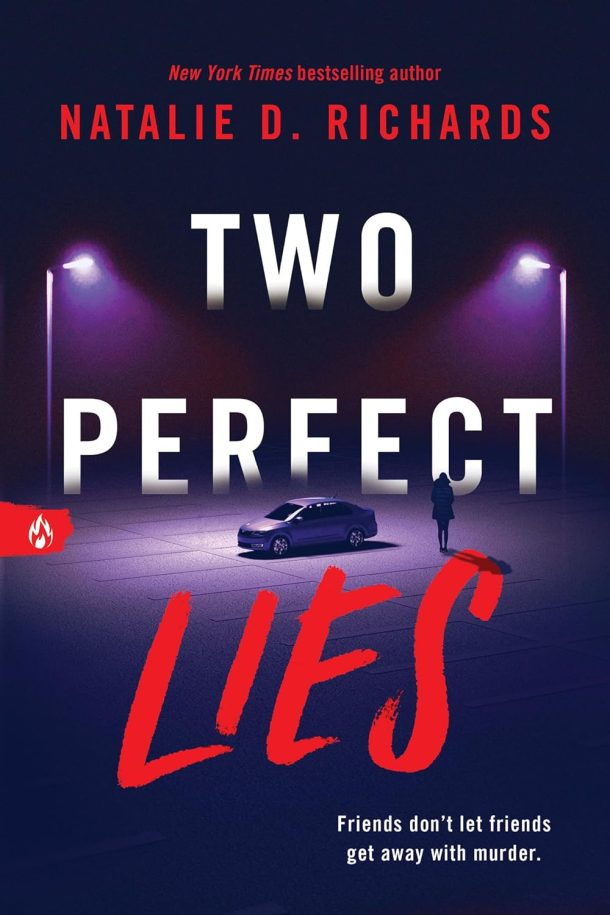 Two Perfect Lies by Natalie D. Richards
Lightning-quick pacing results in rapidly building, unrelenting suspense in this deftly crafted thriller of friendship, betrayal, murder, and romance by Richards (49 Miles Alone). Seventeen months before this book’s start, Ohio high school junior Clara Cutler is arrested for breaking and entering. If it wasn’t for her 17-year-old best friend Lily Dalton, Clara would be doomed to life as a social pariah. As “that rare triple-crown student with the right grades, right attitude, and right social group,” though, Lily commands respect and authority wherever she goes. But when Clara finds a list of names among Lily’s belongings—including corresponding license plate numbers and recipes for explosives—Clara worries that Lily is up to something sinister. Sudden radio silence from Lily prompts Clara to seek help from school administrators, but before she can relay what she found, Clara is arrested—and she learns that Lily is framing her for attempted murder. As Clara struggles to prove her innocence, she’s repeatedly thwarted by Lily. While some character motivations are never made clear, the novel’s increasingly tense ambiance ensnares readers’ attention, keeping the audience on the edges of their seats and surprising at every turn. Publisher’s Weekly, December 2025.
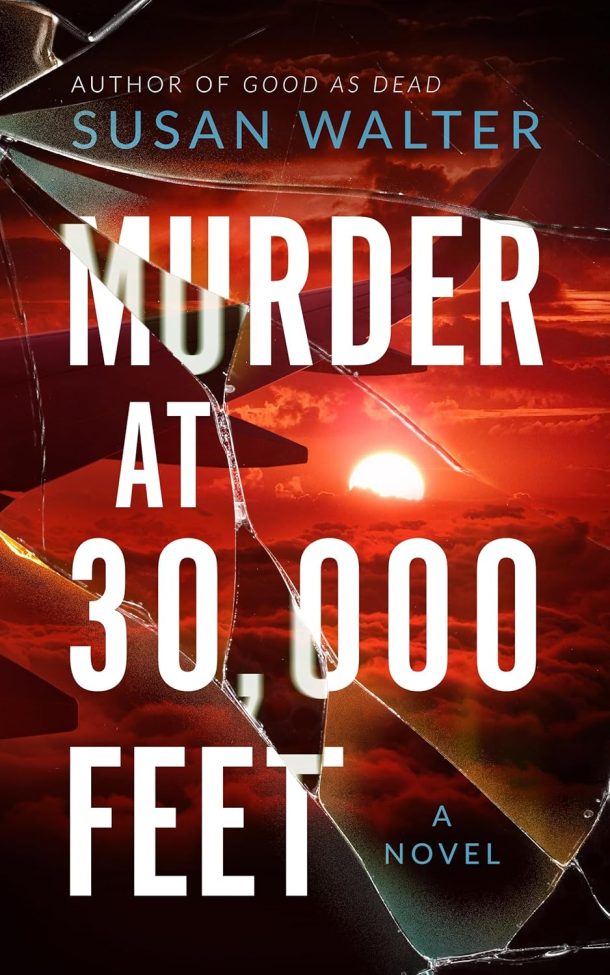 Murder at 30,000 Feet by Susan Walter
Walter’s latest (after Letters from Strangers) is a slick locked-room mystery set aboard a flight to Puerto Rico. Already rattled by extreme turbulence shortly after leaving San Diego, the passengers—including a bridal party, a high school baseball team, and a heartbroken mother—are further terrified when lightning strikes, plunging the plane into darkness. The pilots regain control of the aircraft, but the shaken crew and passengers face more terror when the lights come up to reveal the battered corpse of former star basketball player Billy Wilcox, the groom headed to his destination wedding. As U.S. Air Marshal Carlos Renaldo and his on-the-ground FBI contact Sam Cooper investigate each passenger one by one, a series of lies and cover-ups come to light that link the murder to the death of another passenger’s son. Facing an emergency water landing on the ill-fated flight, Renaldo and Cooper race the clock to identify the killer before time runs out for everyone aboard. Breakneck pacing makes up for some far-fetched coincidences, resulting in a screen-ready, red herring–filled bit of popcorn entertainment. It’s a flight worth taking. Publisher’s Weekly, November 2025.
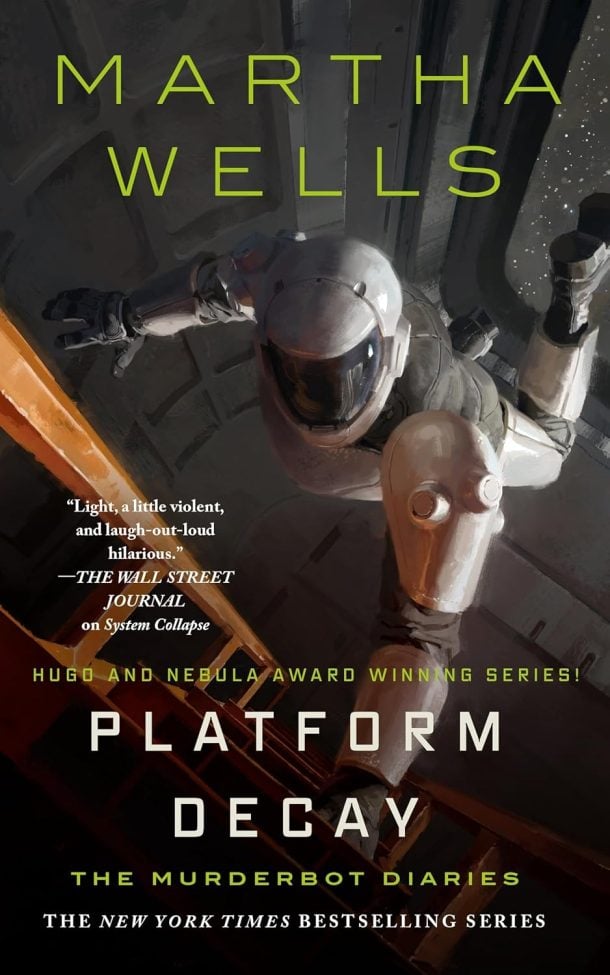 Platform Decay by Martha Wells
The lethal but good-hearted security robot that narrates Wells’s Hugo and Nebula award–winning Murderbot Diaries series returns, alongside friends old and new, for its wildly entertaining eighth adventure (after System Collapse). On a high-stakes extraction mission, Murderbot guides fellow SecUnit, Three, to sneak onto a Corporation Rim station and trigger a distraction. Meanwhile, Murderbot, hidden inside a cargo module, slips through the station’s heightened security. To Murderbot’s dismay, successfully played for laughs, the station is built to look like an elaborate planetary landscape, with shops and offices built into man-made cliffs and caves. Despite this rocky terrain, Murderbot reaches the safe house holding Farai, one of Murderbot’s dear friend Dr. Mensah’s two marital partners; their daughter, Sofi; and Farai’s mother, Naja. There, Murderbot encounters another unexpected obstacle: Supervisor Leonide, a higher-up in the Corporation Rim, who convinces the reluctant robot to help her family, sending it on a long and dangerous quest to rescue five more humans. This spectacular journey, punctuated with satisfying combat scenes, takes on an epic flavor grounded by Murderbot’s sardonic voice and Well’s exploration of mental health and physical well-being. Equal parts action packed, humorous, and heartfelt, this proves the series shows no signs of slowing down. Publisher’s Weekly, March 2026.