


BIOGRAPHY
| Atwood, Margaret | Book of lives |
| Kieza, Grantlee | Mary Penfold |
| Leon, Donna | Backstage |
| Lownie, Andrew | Entitled |
| Roy, Arundhati | Mother Mary comes to me |
| Trinca, Helen | Looking for Elizabeth |
| Van Dyke, Dick | 100 rules for living to 100 |
 A Book of Lives by Margaret Atwood
A literary life infused by humor, grace, and devotion to craft. “How often have I heard, at book signings,” Atwood writes, “‘But your writing is so dark! I wasn’t expecting you to be funny!’ A good question to ponder. Which one of these personae is real? And why can’t it be both?” In this penetrating memoir exploring multiple dimensions of her complex personae, it’s Atwood’s irrepressible wit—not darkness—that enlivens both mundane domestic moments and life’s pivotal events, creating a fully engaging chronicle. Indeed, Atwood’s humor permeates the recounting of her early years, from exploring northern Quebec’s backwoods with science-minded parents—her father an entomologist, her mother a dietician—through family moves between Ottawa, Sault Ste. Marie, and Toronto, and her journey through college, graduate school, and her evolving writing career, including formative travels to Cambridge and Britain. Beyond a mere chronology of events leading to writing success, Atwood’s narrative is particularly notable in its focus on the genesis of her observations, revealing how writing itself perpetually unfolds alongside life; writing becomes life’s reflection: “I move through time, and, when I write, time moves through me. It’s the same for everyone. You can’t stop time, nor can you seize it; it slips away.” She explores craft in vivid, instructive terms: “This has been an experience I’ve often had: poetry breaks a subject open, fiction grows from the break.” Such insightful analysis extends to more personal observations, as Atwood examines her relationships within the writing and publishing communities, including fellow Canadians Margaret Laurence and Alice Munro, her early marriage to writer Jim Polk, and most significantly, her enduring partnership with novelist Graeme Gibson and their daughter, Jess. Woven throughout the later chapters are considerations of the acclaimed novels that would define her legacy—The Handmaid’s Tale and Alias Grace among them—alongside prestigious honors, awards, and celebrated adaptations that cemented her position as one of literature’s most influential voices. Engaging, wise, and marvelously witty—illuminating both the craft of writing and the art of living. Kirkus Reviews, August 2025.
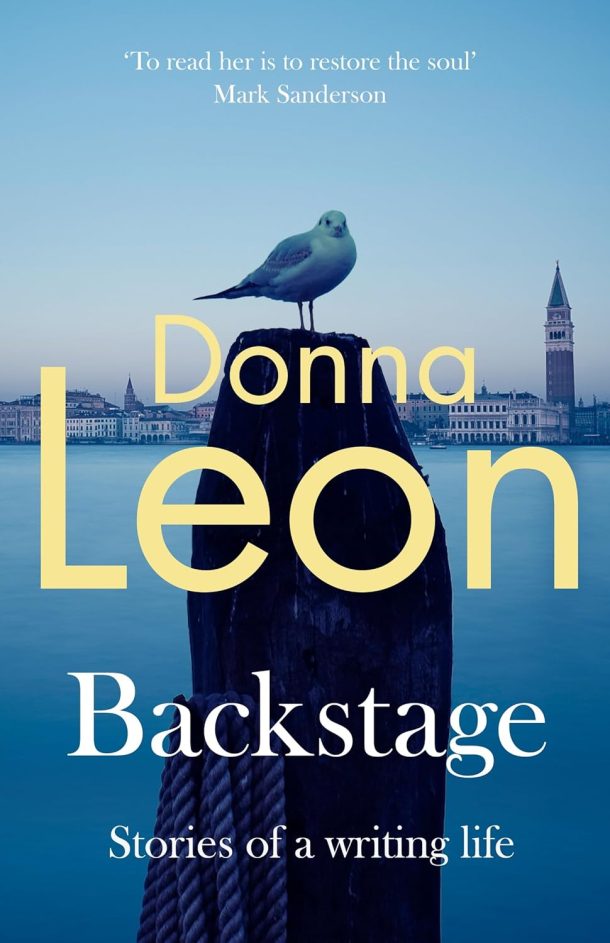 Backstage by Donna Leon
Adventures on and off the page. Crime writer Leon gathers 32 short essays on reading and writing, people (students, fellow writers, her mother), and places (Venice, in particular) that coalesce into a candid memoir. Several essays reflect on her experience teaching: in New Jersey, where she taught third grade in an inner city school; in Iran, before the Iranian Revolution, where she was employed by Bell Helicopter to teach English to young helicopter pilots; in Switzerland, where her teenage students convinced her to take them to a Frank Zappa concert; and at an arts festival in Ernen, Switzerland, where she has led weeklong courses in how to write a crime novel. Many essays expand on the challenges of writing: the search for reliable sources, the importance of movement in structuring a plot, the elements involved in creating characters. For a book about blood diamonds, she sought out the help of a diamond expert in Venice; to fill out the character of a prostitute, she interviewed a sex worker, who related a terrifying encounter with a serial killer. Leon exults over opera, especially Baroque opera. “It’s not enough to read the story, know the plot, know what happens in the end,” she writes. “We need the rush of blood to the head; we need the heart to go boom boom boom as those bewigged and crinolined women are either thrilled or disgusted by the declaration of love from the tenor or the baritone.” Writers, of course, do create thrills, and Leon expresses huge admiration for many, among them Dickens, Tolstoy, and Ruth Rendell, whose talent she envies; Ross Macdonald, masterful creator of detective Lew Archer; Patricia Highsmith, especially for her villains; Raymond Chandler, whose Philip Marlowe navigates a dark world; and Patrick O’Brian (whom, she confesses, she adores). A delightful miscellany of musings on work and pleasure. Kirkus Reviews, May 2025.
 Mother Mary comes to me by Arundhati Roy
A daughter’s memories. Booker Prize–winning Indian novelist Roy recounts a life of poverty and upheaval, defiance and triumph in an emotionally raw memoir, centered on her complicated relationship with her mother. Mary Roy, who raised her two children alone after divorcing her ne’er-do-well husband, was a volatile, willful woman, angry and abusive. In a patriarchal society that oppressed women socially, economically, and legally, she fought to make a life for herself and her family, working tirelessly to become “the owner, headmistress, and wild spirit” of an astoundingly successful school. The schoolchildren respectfully called her Mrs. Roy, and so did Arundhati and her brother. To escape her mother’s demands and tantrums, Arundhati, at age 18, decided to move permanently to Delhi, where she was studying architecture. After a brief marriage to a fellow student, she embarked on a long relationship with a filmmaker, which ignited her career as a writer: screenplays, essays, and at last the novel she titled The God of Small Things. The book became a sensation, earning her money and fame, as well as notoriety: She faced charges of “obscenity and corrupting public morality.” Arundhati sets her life in the context of India’s roiling politics, of which she became an outspoken critic. For many years, she writes, “I wandered through forests and river valleys, villages and border towns, to try to better understand my country. As I traveled, I wrote. That was the beginning of my restless, unruly life as a seditious, traitor-warrior.” Throughout, Mrs. Roy loomed large in her daughter’s life, and her death, in 2022, left the author overcome with grief. “I had grown into the peculiar shape that I am to accommodate her.” Without her, “I didn’t make sense to myself anymore.” Her candid memoir revives both an extraordinary woman and the tangled complexities of filial love. An intimate, stirring chronicle. Kirkus Reviews, May 2025.
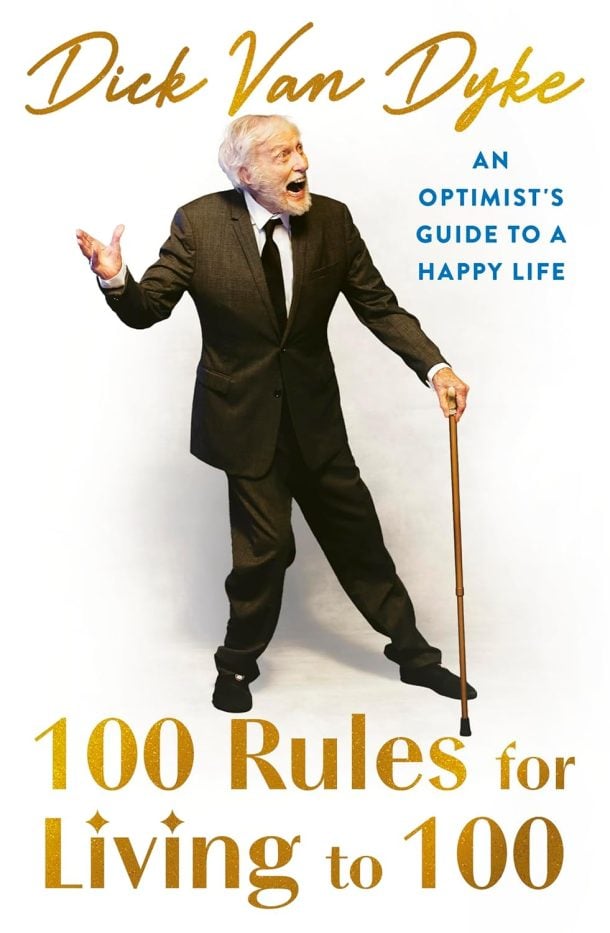 100 Rules for Living to 100: An Optimist’s Guide to a Happy Life by Dick Van Dyke
Actor and comedian Van Dyke (Keep Moving) offers poignant reflections on aging and health in this affable memoir. In 100 short, discursive chapters with titles like “Figure Out Who You Aren’t” and “Speak Up for Your Family,” Van Dyke marries wistful recollections with folksy wisdom. “No matter our current circumstances, we all have the capacity for a joyful and purposeful life,” the 99-year-old actor writes, referring to the challenges of his short-term memory loss and vision-impairing dry macular degeneration. Between gleeful anecdotes about Van Dyke’s 2023 stint on The Masked Singer (he competed as a giant gnome) and rapturous odes to his wife (whom he credits as the primary reason he has not “withered away into a hermetic grouch”), the account makes space for more melancholy memories. For example, Van Dyke writes bluntly about his alcoholism (“Cocktails were all but essential for pushing through social anxiety and having some fun”); the deaths of his teenage granddaughter in 1987 and adult daughter in 2017; and anger at his emotionally distant father. Mostly, though, this is a winning celebration of life and laughter. Publisher’s Weekly, September 2025.
Return to top
GENERAL FICTION
| Armitage, Rebecca | The heir apparent |
| Broadway, Kate | Private Morey’s jacket |
| Burge, Michael | Tank water |
| Croydon, Nick | The Turing protocol |
| Daley, Paul | The leap |
| Dave, Laura | The first time I saw him |
| Fox, Susi | The other child |
| Freeman, Brian | Robert Ludlum’s The Bourne revenge |
| Gerlis, Alex | The second traitor |
| Hannigan, Rebecca | Darkrooms |
| Heath, Rebecca | The last encore |
| Kashino, Marisa | Best offer wins |
| Khan, Vaseem | The girl in cell A |
| MacLean, Sarah | These summer storms |
| Mara, Andrea | All her fault |
| Morris, Heather | The wish |
| Morrissey, Di | The endless sky |
| Mushtaq, Banu | Heart lamp |
| Oliver, M. K. | A sociopath’s guide to a successful marriage |
| Packer, Ann | Some bright nowhere |
| Smith, Martin Cruz | Hotel Ukraine |
| Trevelyan, Jennifer | A beautiful family |
| Walton, Tasma | I am Nannertgarrook |
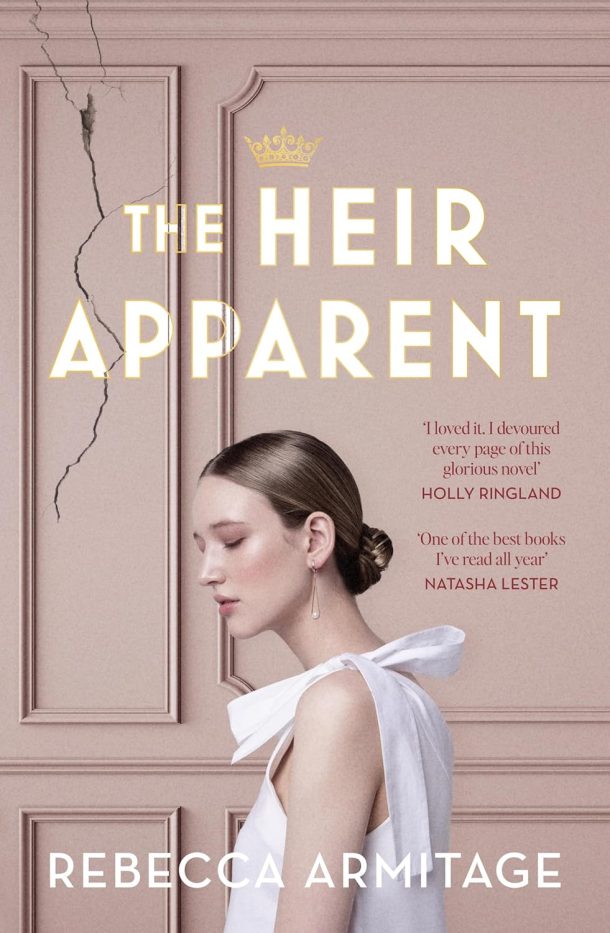 The Heir Apparent by Rebecca Armitage
In Armitage’s perceptive debut, the British monarchy navigates a crisis following the death of two heirs. Lexi Villiers, whose grandmother is the Queen of England, has removed herself from royal life and is finishing up her medical residency in Tasmania. After her father and twin brother die in a skiing accident, she becomes first in line to the throne and is whisked back to England. Under the intense scrutiny of a hostile press, Lexi is given one year to decide if she will accept her royal duty. Her decision is complicated by the recent kiss she shared with her best friend Jack, a Tasmanian winemaker from an activist family, and painful memories of how the palace culture destroyed her late mother. With the support of her brother’s Indian British widow and a savvy social media manager, Lexi comes around to the idea of ascending to the throne. But as she solidifies her plan for a monarchy that acknowledges its historic harms, someone leaks damaging secrets about her. Armitage convincingly renders Lexi’s inner turmoil as she weighs her sense of responsibility with a desire for freedom. It’s a standout portrayal of the royals and the tabloid culture surrounding them. Publisher’s Weekly, October 2025.
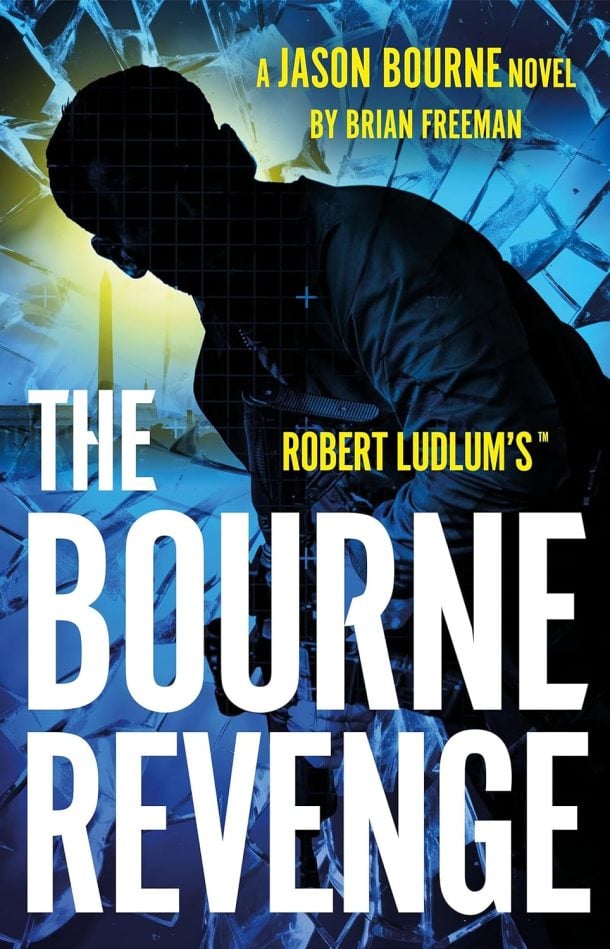 Robert Ludlum’s The Bourne Revenge by Brian Freeman
Freeman’s rip-roaring eighth Jason Bourne adventure (after The Bourne Escape) opens eight years before the present day, when Bourne, on a Treadstone mission, witnesses Chinese assassins committing a murder and then loses four days of short-term memory. Now, Shadow—Bourne’s former partner and the current head of Treadstone—wants him to undergo regression therapy. Shadow explains that the Chinese have a powerful agent in the U.S., and the only thing Treadstone knows about him is his code name, Bai Ze. Using AI software, Shadow has learned that, during the four-day gap in Bourne’s memory, he crossed paths with Bai Ze in the small town of Fish Creek, Wis. Soon, Bourne is back in the Midwest trailing his quarry and trying to stay alive as he puzzles out the mystery of his amnesia. Aiding him in his search is Wisconsin journalist Laney Reese, who’s guarding a game-changing secret of her own. Sleek, action-packed, and just steamy enough, this is espionage fiction at its most fun. Publisher’s Weekly, October 2025.
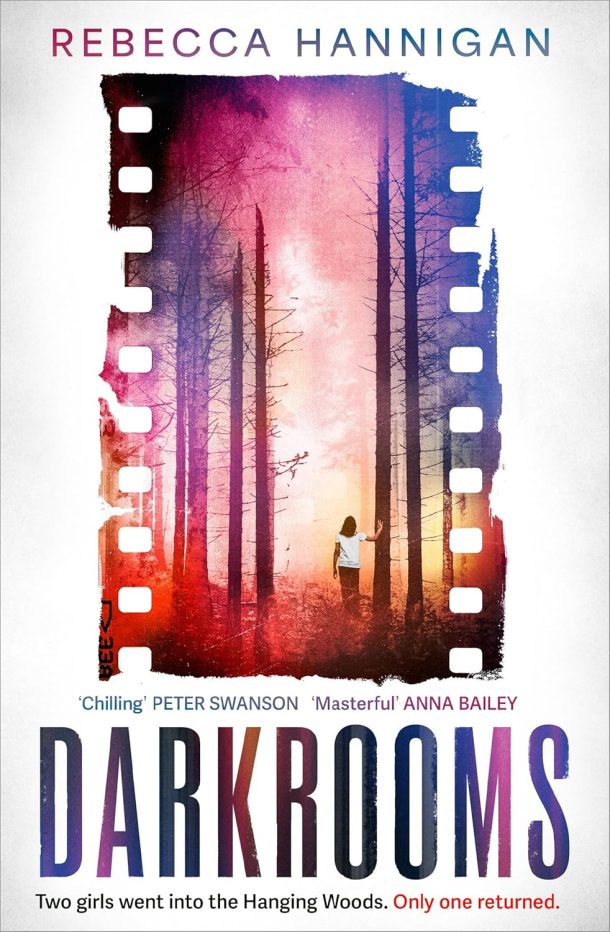 Darkrooms by Rebecca Hannigan
In Hannigan’s somber debut, pickpocket Caitlin Doherty leaves London for her hometown of Bannakilduff, Ireland, after learning that her alcoholic mother, Kathleen, has died. Though Caitlin is happy to reconnect with Colm and Maureen Branagh, the amiable couple who rented their gatehouse to Kathleen, she’s less enthused to cross paths with the gruff Deedee O’Halloran, a rookie cop whose sister, Roisin, vanished 20 years earlier. The last place nine-year-old Roisin was seen was in the notoriously creepy Hanging Woods, where she was playing with Caitlin—a fact that has long convinced Deedee that Caitlin is hiding something major about the case. Returning to Bannakilduff forces Caitlin to relive traumatic childhood memories and reignites her irrational fears of a monster that haunts the Hanging Woods. Hannigan renders the downward spirals of Caitlin, Deedee, and Kathleen with gut-wrenching specificity, though the proceedings become almost overwhelmingly bleak. Still, the plot’s slow burn heats up at just the right pace, and the twists excite without straining plausibility. Readers will look forward to Hannigan’s next outing. Publisher’s Weekly, October 2025.
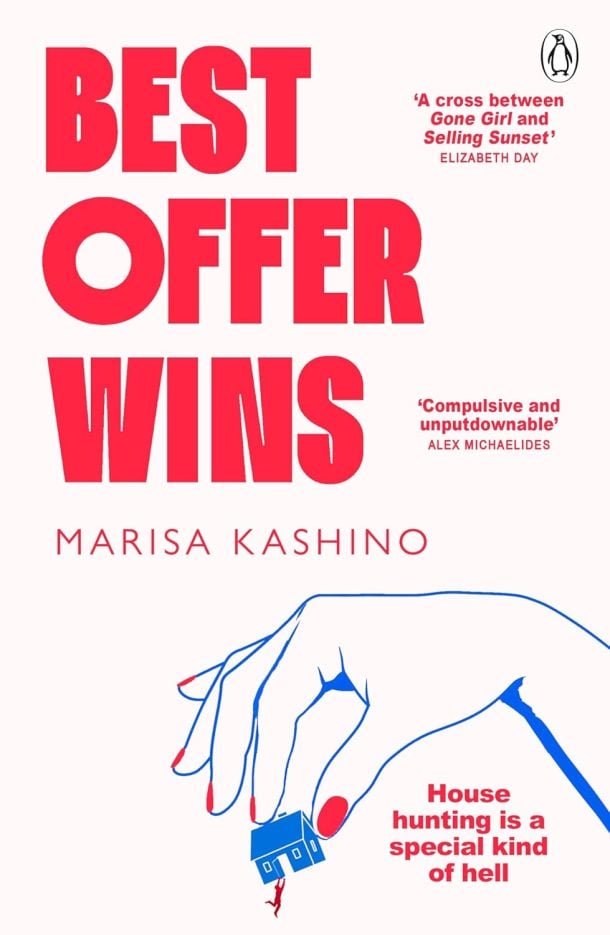 Best Offer Wins by Marisa Kashino
A desperate woman devises a killer strategy for snagging the home of her dreams. After losing 11 bidding wars, Margo Miyake goes full-on Fatal Attraction in a knockout debut novel that sets the pace for domestic suspense set in the world of competitive home-buying. Margo, 37, isn’t even close to achieving her life goals, namely having a baby—she’s struggling with infertility—and buying a seven-figure home in a tony suburb of Washington, D.C. When she discovers that the perfect house will soon go up for sale, she decides she’ll get her hands on the place before it hits the market—no matter what. If that means infiltrating the lives of the current owners, then lying and blackmailing her way to closing the deal, she’s braced for battle. Fueled by nuclear-hot rage and frustration, Margo becomes the walking, talking nightmare the owners never saw coming, and neither do the people she uses and throws away in order to buy that house. Author Kashino, a longtime journalist who covered the real estate market for the Washington Post and Washingtonian magazine, has created in Margo a character as vicious and conniving as the jilted lover played by Glenn Close in Fatal Attraction. The novel is wonderfully inventive, and readers will marvel at the workings of Margo’s devious mind as she claws her way into a brick colonial-style home whose wide-plank oak floors and Carrara marble countertops she’s ready to kill for. Behind the closed doors of the perfect dream home, Kashino paints a gimlet-eyed portrait of the allure of status and the greed for material wealth that turns at least one woman into a predatory monster. Deliciously dark and twistedly funny. Kirkus Reviews, August 2025.
 Heart Lamp by Banu Mushtaq
Sterling collection of short stories by South Indian writer Mushtaq. The first book of short stories to win the International Booker Prize, Mushtaq’s collection is also the first prizewinner to have been translated from Kannada, an Indian language whose flavor comes through in Bhasthi’s fluent translation, as when, in the first story, a newlywed woman ponders how to introduce her husband: “If I use the term yajamana and call him owner, then I will have to be a servant, as if I am an animal or a dog.” An attorney, activist, and sometime journalist, Mushtaq often writes of Muslim women in unhappy relationships. In one story, a woman returns home, facing shame for leaving an unfaithful husband forced on her in an arranged marriage, and chides her relatives for their role in her unhappiness: “I begged you not to make me stop studying. None of you listened to me. Many of my classmates aren’t even married, and yet I have become an old woman.” With five children to support, she desperately seeks a way out, with surprising consequences. In another story, a woman, maddened by a houseful of boisterous children on summer vacation, decides that the only way to get some peace and quiet is to enforce bedrest on the older boys—and that means enrolling them in a mass circumcision that is euphemistically billed as a celebration for the Muslim prophet Ibrahim, “a collective exercise in which children look forward to an event but end up screaming loudly together.” Mushtaq’s characters are frequently at odds, and several have strange foibles, as with a religious teacher who becomes addicted to gobi manchuri, a cauliflower dish, which leads to some decidedly unsaintly behavior. The book is not without its flashes of sharp-edged, ironic humor, as when a woman seemingly caught in the throes of dementia is offered a Pepsi as “the drink of heaven,” but more often Mushtaq writes in near-documentary style of lives lived in constant struggle. A memorable introduction to a gifted writer from whom we should hope to hear more. Kirkus Reviews, June 2025.
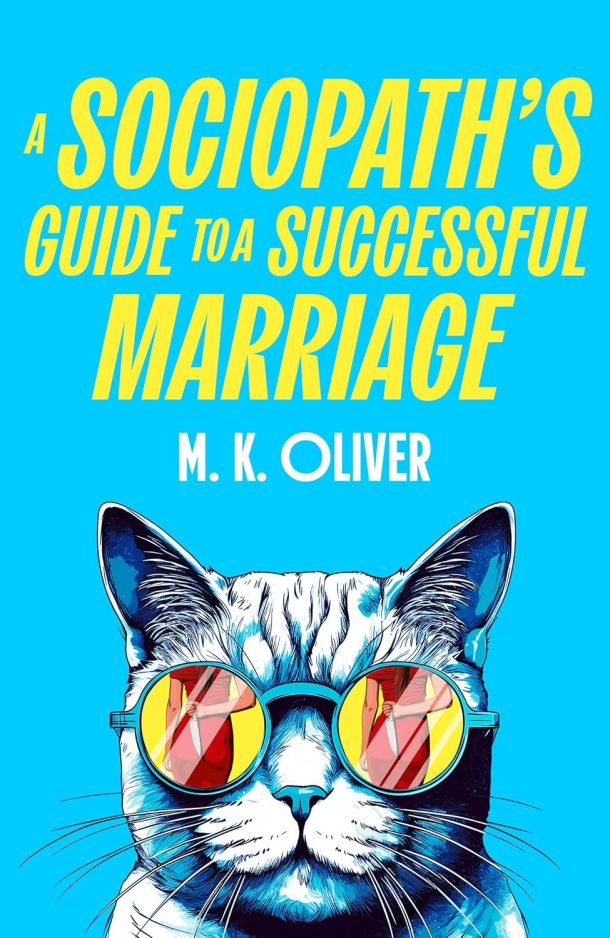 A Sociopath’s Guide to a Successful Marriage by M.K. Oliver
Covering up a murder is the least of her worries. Lalla Rook has a lot on her plate. She’s trying to get her daughter into a prestigious prep school. She’s trying to coach her husband to secure the promotion he’ll need if they’re going to buy her dream house in London’s fashionable Hampstead neighborhood. And, when this story opens, she’s trying to figure out how to deal with the dead body of the unknown man she’s just stabbed to death in her kitchen before guests start arriving for her 4-year-old son’s birthday party. This is, as previously mentioned, a lot, but our heroine is up to the task. As she puts it herself, “I can assure you that I couldn’t chair the junior school winter fair committee unless I was absolutely on my mettle at all times.” Unfortunately, the people around her—with the possible exception of her loathsome and meddling mother-in-law—don’t possess Lalla’s sangfroid. Thus, from this bloody beginning, complications ensue. Oliver’s debut is sharp and funny, and the mystery that drives the story is pleasingly twisty. The author’s most impressive accomplishment, though, is crafting a protagonist who slowly becomes relatable even if she never quite becomes sympathetic. He offers readers glimpses into Lalla’s past that give texture to her behavior without excusing it. More importantly, readers may well discover that Lalla’s struggles are outsized versions of their own—or recognizable as challenges most women face. (While they are very different books, a comparison to American Psycho isn’t outrageous and might be illuminating.) The ways in which this author plays with genre conventions is a lot of fun, too. This is a cozy mystery in which the amateur detective is investigating the murder she committed. And, if we strip the romance novel down to its fundamental elements, this novel might qualify. A terrific entertainment for readers who love an unlikable heroine. Kirkus Reviews, December 2025.
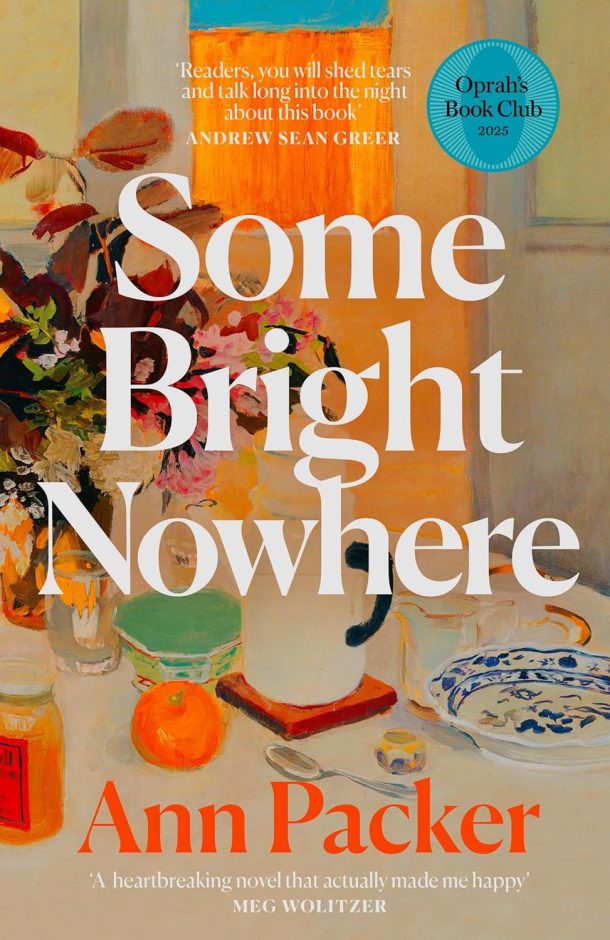 Some Bright Nowhere by Ann Packer
A woman with terminal cancer stops treatment—and it gets complicated from there. Don’t expect a have-a-good-cry-and-catharsis tale from Packer, who excels in diamond-hard dissections of tangled personal relations. She embeds the narrative in the perceptions of Eliot, who is blindsided when his wife, Claire, tells him that she wants her two best friends to take care of her in these final months, “instead of you.” It seems an unbelievably cruel demand; Eliot has been her caretaker through nearly nine grim years. He agrees, confident that “Holly and Michelle would need him for the bad moments…Claire would need him. She couldn’t see it now.” This thought should be a clue that there’s more going on here than a dying woman’s caprice, and the hints pile up from there in stray comments by friends, the couple’s adult children, and Eliot’s own recollections of past moments of tension in what was unquestionably a loving marriage. A retired management consultant, he wants to manage situations and avoid conflict: “You’re like…amenable,” says son Josh. “Except when you’re not.” Packer mercilessly prods Eliot toward enlightenment about his character and Claire’s feelings. Readers are likely to share his frustration with his wife’s attitude, which can be summarized as, “If you don’t get it, I can’t explain it,” until they realize she’s just too sick to deal with other people’s issues. Nothing is simple in a Packer novel: Emotional and power dynamics among Eliot, Holly, and Michelle shift on a near-daily basis, while Claire at the center keeps insisting that her decision has nothing to do with her love for her husband, and Josh and sister Abby referee from the sidelines. The final pages are as deliberately unresolved as the rest of the novel. Packer’s unsparing gaze would be hard to take if her characters weren’t so believably, messily, hurtfully human. Harrowing, but brilliant. Kirkus Reviews, September 2025.
Return to top
HISTORICAL FICTION
| Chinn, Adrienne | The queen’s necklace |
Return to top
MYSTERY
| Ayliffe, Tim | Dark desert road |
| Bauer, Belinda | The impossible thing |
| Booth, Alison L. | Death at Booroomba |
| Dicker, Joel | Wild animal |
| Dook, Alex | Gunpowder Creek |
| Dunbar, James | Twisted river |
| Evanovich, Janet | The king’s ransom |
| Gilchrist, January | The final chapter |
| Horan, Kate | On the edge |
| Hyland, Adrian | The redline |
| Khan, Vaseem | Quantum of menace |
| Lackberg, Camilla | Mirage |
| Lippman, Laura | Murder takes a vacation |
| Lorac, E. C. R. | Murder in Vienna |
| McDonald, Fleur | The prospect |
| Meyrick, Denzil | Last orders |
| Parkes, Geoff | The first law of the bush |
| Patterson, James | The invisible woman |
| Quinn, Cate | The bridesmaid |
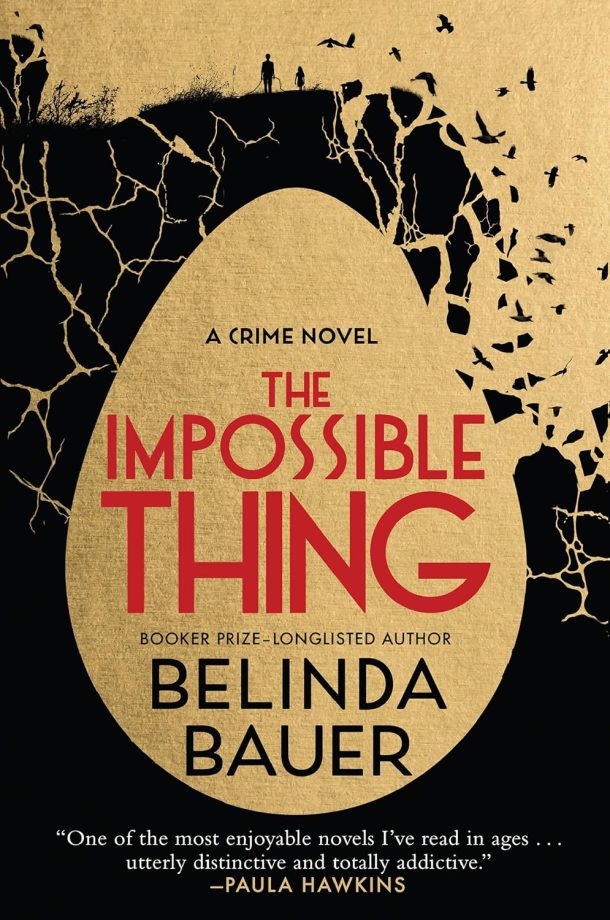 An Impossible Thing by Belinda Bauer
A generations-spanning saga of collectible eggs and the people in their orbit. In the 1920s, on the cliffs of North Yorkshire, various gangs control the business of collecting seabird eggs, which can be quite lucrative. But at Metland Farm, it’s common knowledge that the edge of the cliff is too dangerous to scale. When Celie Sheppard, fatherless misfit, and Robert, the farmhand, find a way for her to descend through a crack in the rock, she finds a guillemot nest with one perfectly red egg, and for the next 30 years, she fetches one red egg a year for a special collector, George Ambler, who pays handsomely for the rarity. In the present time, in Wales, two men break into the house of a young man, Weird Nick, and his mother, tie them up, and steal an “old egg in a fancy wooden box” that Nick bought from eBay. Nick and his friend Patrick decide to do some sleuthing and see if they can get the egg back, because it’s clearly valuable. Their adventures bring them into direct contact with an egg expert, Dr. Christopher Connor; a militant member of the Royal Society for the Protection of Birds; and an accused egg-stealer who has sacrificed all material comforts for his collection. Bauer interweaves Celie and Ambler’s story with Nick and Patrick’s adventures, and it’s a slow burn in the sense that it takes a while to understand both the scope of the novel and the significance of the “Metland Egg” because there’s a lot of switching back and forth between time periods and characters. But once it all begins to hit, the uniqueness of the world and the charm of the characters is undeniable. There’s a wistfulness, too, to the fact that in order to preserve something beautiful like this egg, the chick inside must die. As one character says, “Jeez…who knew the world of eggs was so cut-throat!” Succeeds not only in its intricately balanced plot, but also in its emotional weight. Kirkus Reviews, March 2025.
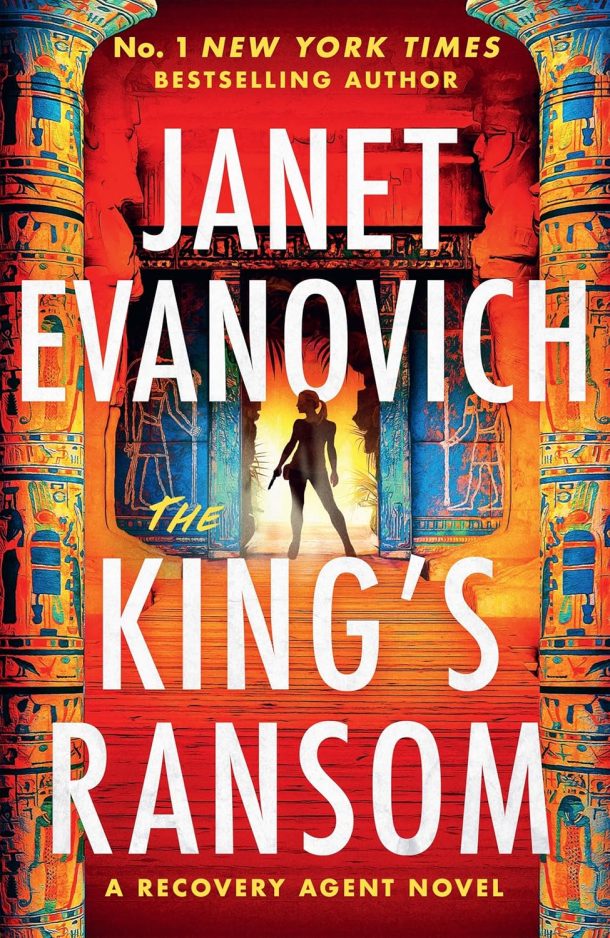 The King’s Ransom by Janet Evanovich
Bestseller Evanovich’s fun, frothy sequel to The Recovery Agent follows contractor Gabriela Rose on a globe-trotting quest for stolen treasures. Gabriela’s latest client is Harley Patch, cousin of her ex-husband, Rafer Jones. Recently promoted to interim president of a privately owned bank in New York, Harley spearheads a new program to insure rare artworks and artifacts, including the Rosetta Stone, a couple of Van Goghs, and a sarcophagus, collectively valued at $12 billion. Then those masterworks go missing, and the bank has insufficient funds to make the necessary payouts. Unless the items are retrieved soon, “someone is going to jail, and Harley is set up perfectly to take the hit,” as Gabriela puts it. She, Rafer, and the hapless Harley set out to retrieve the items from whoever swiped them. Their pursuit takes them to London, Cairo, Paris, Athens, and Milan, each of which Evanovich renders with dazzling precision. Gabriela, meanwhile, is an ideal action protagonist: resourceful, daring, shrewd, and sexy. The result is a swift and enjoyable adventure that proves this series has legs. Publisher’s Weekly, September 2025.
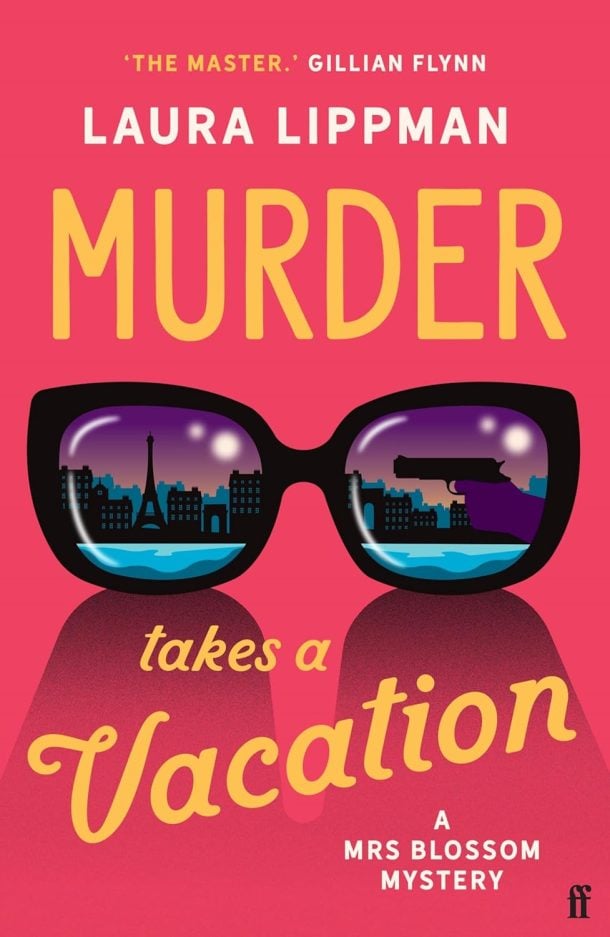 Murder Takes a Vacation by Laura Lippman
Lippman (Prom Mom) triumphs with this charming mystery featuring Muriel Blossom, a Baltimore widow—and former assistant to PI Tess Monaghan, star of another Lippman series—who finds an $8 million lottery ticket abandoned in a parking lot. In the decade since Muriel’s husband died, she’s carved out a pleasant but bland existence with her daughter’s family. After she hits the jackpot, she makes arrangements for a cruise in France with her best friend, Elinor. On the flight over, Muriel meets the charming Allan, who takes her to dinner after they land in Paris. When Allan suspiciously dies the next day, the police question Muriel, since she was in one of the most recent photos on Allan’s phone. Enter American stranger Danny Johnson, who ingratiates himself with Muriel and warns her she might be in danger. After her and Elinor’s ship leaves port, Muriel’s stateroom is ransacked, a man attempts to mug her, and she learns Danny is lying about his identity. Lippman fans will be delighted by the appearance of Tess, who enlivens the plot after Muriel calls her for advice. By the time the clever conclusion rolls around, readers will be sad to see this trip come to an end. Publisher’s Weekly, March 2025.
Return to top
NON FICTION
| Abbott, Tony | Australia | 994 ABBO |
| Chapshaw Publications | Chair yoga for seniors over 60 | 613.7 CHA |
| Dapin, Mark | The first murderer I ever met | 364.152 DAPI |
| Fisk, Robert | Night of power | 956.04 FISK |
| Freedland, Jonathan | Traitors circle | 943.086 FREE |
| Smith, Zadie | Dead and alive | 824.914 SMIT |
| Tulleken, Chris van | Ultra-processed people | 613.28 TULL |
| Watson, Don | The shortest history of the USA | 973 WATS |
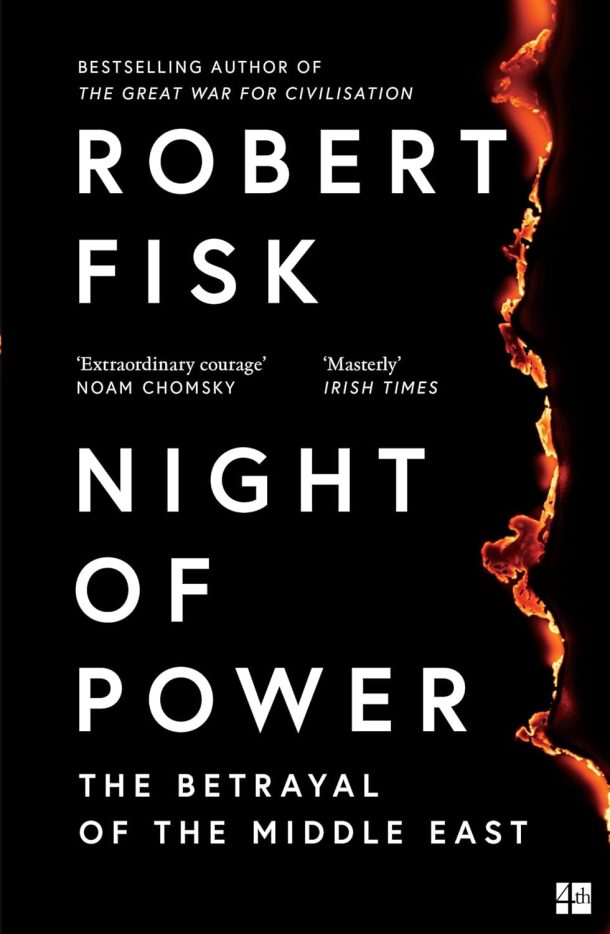 Night of Power by Robert Fisk
Journalism morphs into history in this collection of the late Irish writer’s essays on the Middle East. “I met Osama bin Laden three times,” writes Fisk, “once in Sudan and twice in Afghanistan, and he became a kind of albatross for me.” Called on frequently after September 11 to comment on the founder of al-Qaeda, he laments not having given more credence to bin Laden’s pledge to reduce the U.S. to “a shadow of itself.” Still, Fisk, who reported on the Middle East for The Independent and other UK publications for nearly half a century, allows that bin Laden had a point: the democracy-touting West came storming in after 9/11, overturning the regional balance of power. As it did so, according to his account, its actions lost any claim to the moral high ground. Fisk was one of the first to document atrocities on the part of U.S. and U.K. forces, writing sadly, “This was us. These young soldiers were our representatives in Iraq. And they had innocent blood on their hands.” The overall effect of Fisk’s present-tense historical writing—he holds a doctorate in history and is able to make deep connections between present and past—is to underscore the dangers of making too many assumptions about a much-assumed-about region. Suicide bombers, for instance, don’t bomb for the fun of it, but neither do they do so because high on drugs, brainwashed, or insane; it’s because they are committed enough to their cause to die for it. Fisk’s overall conclusions, reached as the Syrian civil war blossomed, are glum: The Arab Spring is dead, the West lost, Russia and Iran won. But, he adds hopefully, “wars come to an end. And that’s where history restarts.” An incisive view of the Middle East that won’t please the Pentagon or veterans of the Bush and Blair administrations. Kirkus Reviews, July 2024.
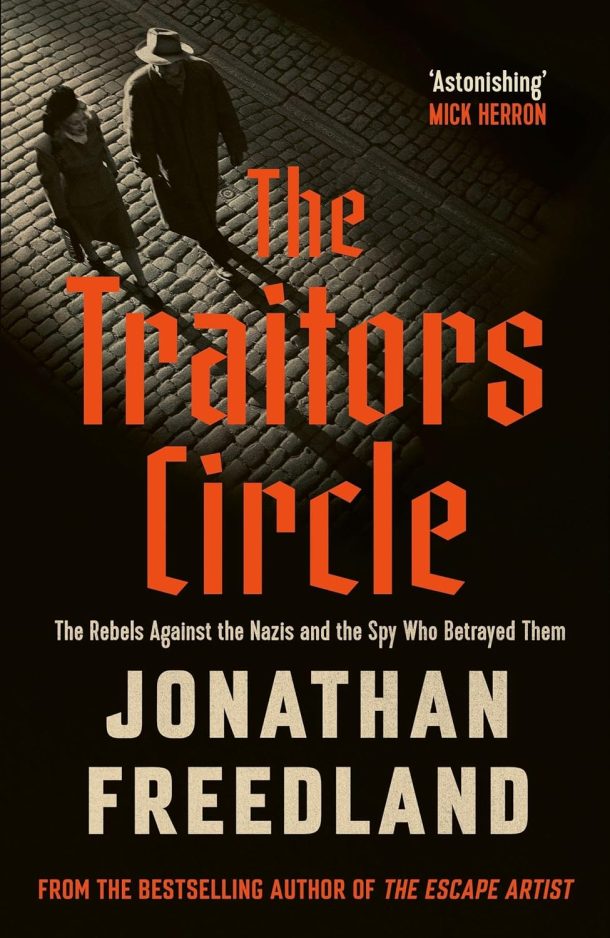 The Traitors Circle by Jonathan Freedland
Elite Germans oppose the Nazis and suffer the consequences. Journalist and commentator Freedland, author of The Escape Artist: The Man Who Broke Out of Auschwitz To Warn the World, writes that Adolf Hitler enjoyed overwhelming support from everyday Germans soon after he took office—and nearly to the end. He drew their backing with his declaration that supposedly depraved foreigners working with perfidious fellow citizens were sucking the nation’s blood. But Nazi violence and suppression of liberty offended plenty of educated, upper-class, often religious Germans, many of whom lost jobs as teachers or civil servants. They expressed their unhappiness and took risks by hiding Jews or helping them flee the country. After the war began, they discussed ways to end it, perhaps by removing Hitler, and provided what aid they could to the few resisters still in the government. Their existence was no secret to Nazi security services that opened mail, tapped telephones, and employed an army of informers, including Jews. Even as Allied armies poured into the country, the Nazis were harrying fellow Germans for insufficient loyalty. Taking advantage of archives in a nation that has kept many records, the author paints vivid portraits of a group of admirable anti-Nazis who met in Berlin in 1943. Freedland writes, “They came together for what, to the outsider’s eye, would have looked like a wholly innocent gathering: an afternoon tea party to celebrate the birthday of a friend. But that single event would eventually expose them to the hangman’s rope and the guillotine’s blade.” Defeatism was a capital crime, and the author details how the Gestapo carefully assembled evidence, then arrested, interrogated, and tortured the dissenters, extracting a few confessions. A trial followed, presided over by a legendary brutal Nazi judge, ending in gruesome consequences. Several escaped, but executions continued even during the final days of the war. Excellent niche history of a group of heroes who defied Hitler. Kirkus Reviews, August 2025.
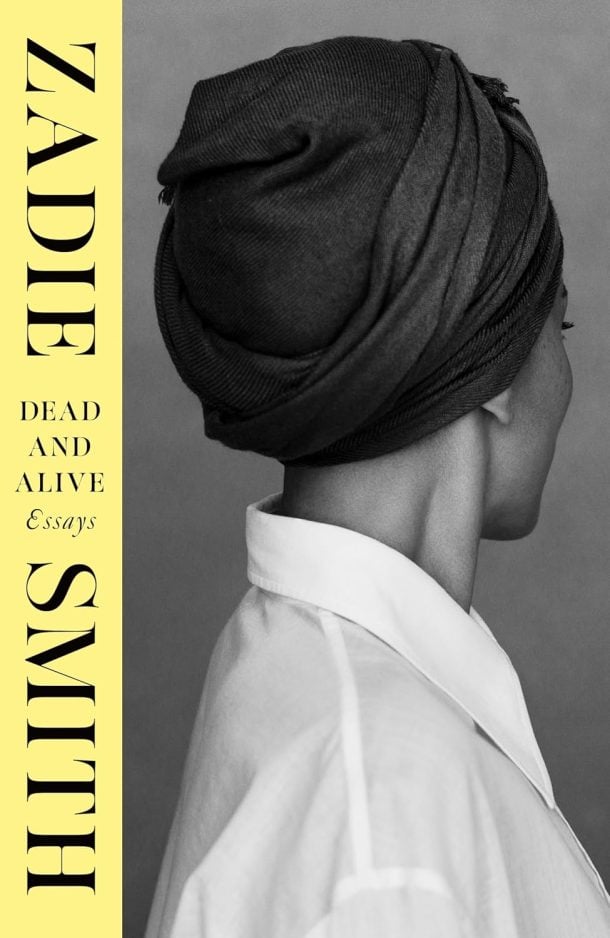 Dead and Alive by Zadie Smith
A take on the world. In a gathering of 30 essays and talks from 2016 to early 2025, Smith reflects on arts and politics, aging and craft. Several pieces were informed by dismaying political events: Receiving a literary award from Kenyon College three days after the 2024 American election, Smith talked about the need to protect vulnerable people; in Austria, in 2018, when that country was turning to the political right, she spoke about multiculturalism, exemplified by the makeup of the British World Cup team. At a rally in London, she spoke about climate change denialism; and in an essay written before the July 4, 2024, British election, she reminded her readers about what the Labour Party should stand for, in light of increasing inequality. Politics and history infuse an essay on Kara Walker’s “mode of relating to the ruins of the past” and her forewords to reissues of Gretchen Gerzina’s Black England and James Weldon Johnson’s Black Manhattan. Smith offers moving obituaries for writers she admires and has learned from: Joan Didion, Martin Amis, Philip Roth, Toni Morrison, and Hilary Mantel. The movie Tar inspires Smith to think about artistic monsters; artist Celia Paul’s memoir of her relationship with Lucien Freud elicits an essay about being, or resisting being, a muse. Smith reflects on her own writing in her foreword to her novel The Fraud, in an interview with a Spanish journalist, and in a talk on craft for a fiction workshop. She extols her beloved Kilburn, in London, and pays homage to New York, where she observes an unexpected sense of community when diverse New Yorkers jump in—silently and efficiently—to help a young mother whose baby carriage suddenly breaks. In that essay and others, Smith seems cautiously optimistic that “moral intelligence” will prevail in hard times. A thoughtful, deft collection. Kirkus Reviews, July 2025.
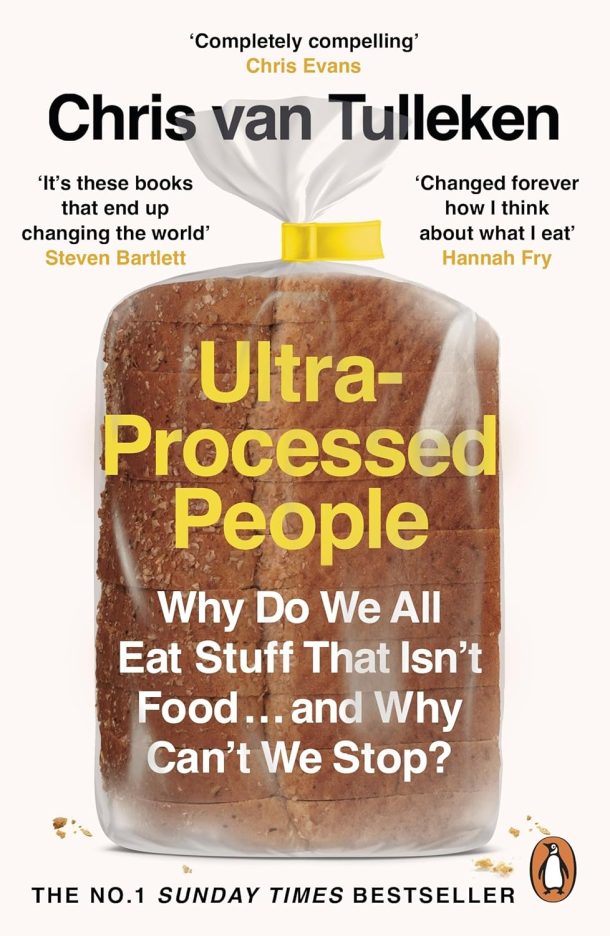 Ultra-Processed People: The Science Behind the Food That Isn’t Food by Chris van Tulleken
In this scathing takedown, van Tulleken (Secrets of the Human Body), a doctor of infectious diseases, studies how ultra-processed foods harm the body and how the corporations that make them put profits above consumer health. He suggests that “UPFs”—which can be identified by their use of such heavily modified ingredients as “stabilisers, emulsifiers, gums, lecithin, [and] glucose”—contribute to heart attacks, high blood pressure, and weight gain because they short circuit the body’s system for regulating consumption. Because UPFs tend to be soft and “essentially pre-chewed,” they’re digested so quickly they don’t “reach the parts of the gut that send the ‘stop eating’ signal to the brain.” Van Tulleken catalogues the misdeeds of the corporations that make UPFs, telling how Nestlé’s aggressive door-to-door marketing of their products in rural Brazil played a part in the skyrocketing rates of obesity and type 2 diabetes there, and detailing Coca-Cola’s covert financing of dubious scientific studies that refute the link between soda and obesity. The science puts into easily understandable language the toll that junk food takes on the body, and van Tulleken’s interviews with industry insiders illuminate (“It’s all about price and costs. Those [synthetic] ingredients save money,” says a biochemist who worked for the British food company Unilever). This impassioned polemic will make readers think twice about what they eat. Publisher’s Weekly, March 2023.
Return to top
SCIENCE FICTION & FANTASY
| Roberts, Nora | The seven rings |
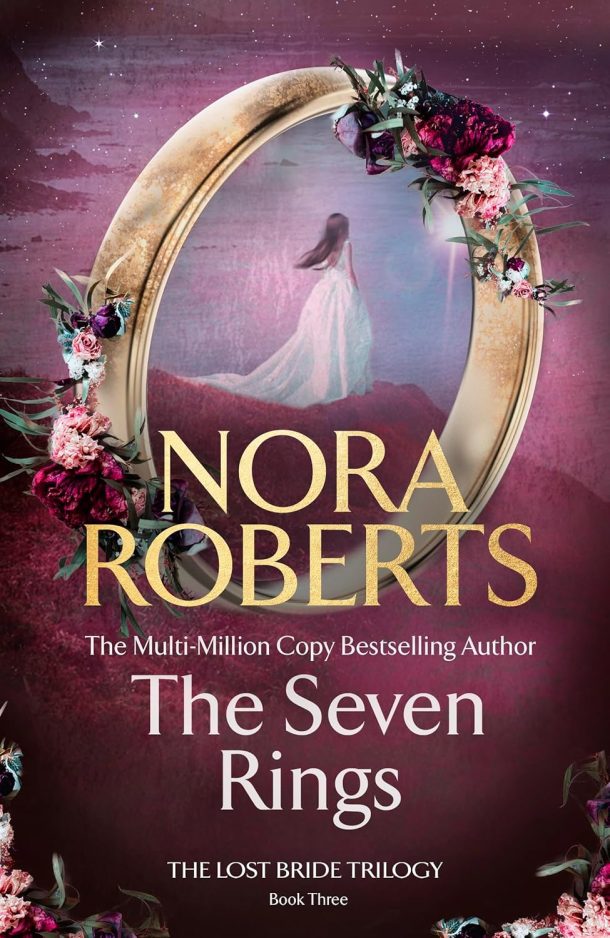 The Seven Rings by Nora Roberts
This satisfying conclusion to bestseller Roberts’s Lost Bride trilogy lovingly spotlights various kinds of family while slowly building to a thrilling finale. The story picks up where The Mirror left off, in the aftermath of a tragic vision showing the brutal deaths of the seven ghost brides of Lost Bride Manor, all of whom were murdered over the past two centuries by the evil witch Hester Dobbs. To free the spirits from Dobbs’s continued torment, the house’s living owner, Sonya MacTavish—supported by her lover, Trey; best friend, Cleo; cousin (and Cleo’s lover) Owen; and their menagerie of pets—must find the seven brides’ rings, break Dobbs’s curse, and bring peace and renewal to the manor once and for all. Despite these seemingly high stakes, much of the novel focuses on the pleasant mundanities of summer in a picturesque coastal Maine town, with regular interruptions from Dobbs to keep the plot moving. With plenty of wish fulfillment and strong character work and relationship building on full display, Roberts once again showcases what she does best. Publisher’s Weekly, August 2025.
Return to top
New additions to eBooks at SMSA
EBOOKS
| Biography | Gillies, Midge | Atlantic furies |
| General | Feeney, Alice | My husband’s wife |
| General | Niven, Jennifer | Meet the Newmans |
| General | Potter, Alexandra | So, I met this guy… |
| Mystery | Hepburn, Holly | The cursed writer |
| Mystery | Leitch, Fiona | The Cornish campsite murder |
| Mystery | Jorn Lier Horst | Death deserved |
| Mystery | Osman, Richard | The impossible fortune |
| Mystery | Thorogood, Robert | The mysterious affair of Judith Potts |
| Romance | Spencer, Minerva | The cutthroat countess |
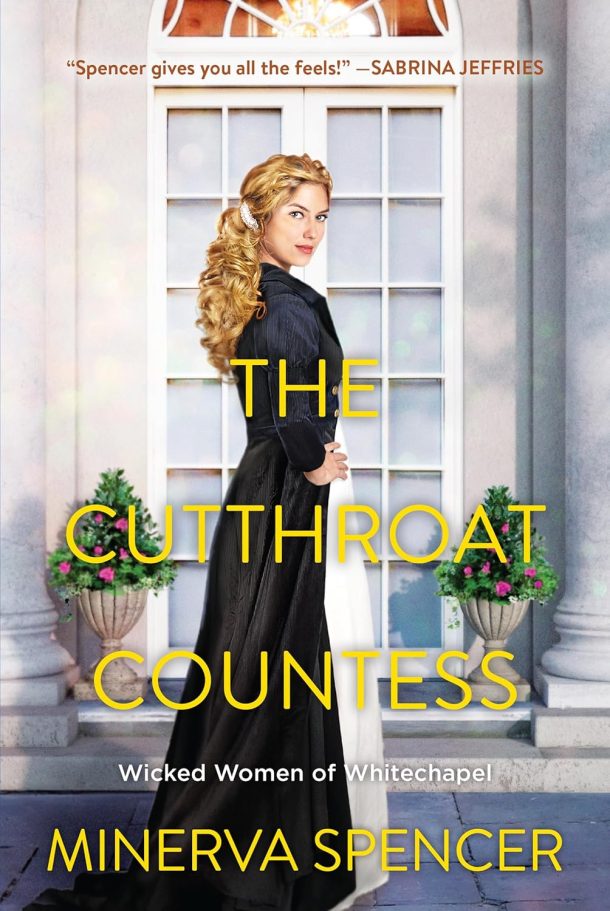 The Cutthroat Countess by Minerva Spencer
A fearless circus performer finds unexpected romance with a secret agent of the crown in Spencer’s page-turning third Wicked Women of Whitechapel Regency (after The Dueling Duchess). Jo “Blade” Brown, a talented knife-thrower with Farnham’s Fantastical Female Fayre, reveals her incredible survival skills when saving the life of fellow circus employee (and undercover agent) Elliot Wingate in France after he is attacked by a local militia. This encounter sparks surprising and intense sexual chemistry, leading to a tumultuous, on-and-off affair. Despite her growing feelings, Jo is sure they have no real future, especially as she’s concealing the fact that her late father was a suspected enemy of the crown, though she believes him innocent. The stakes rise when she becomes the target of an investigation by Elliot’s boss at the Home Office, who knows all about the allegations of treason against her father. As family secrets come out and Elliot fights to keep Jo safe, their sensual connection turns to undeniable love. Spencer imbues Jo with strength, intellect, and resilience, while also revealing her insecurities, making her as authentic as she is admirable. With witty dialogue, sizzling sex scenes, and a touch of suspense, this will have readers riveted. Publisher’s Weekly, September 2023.
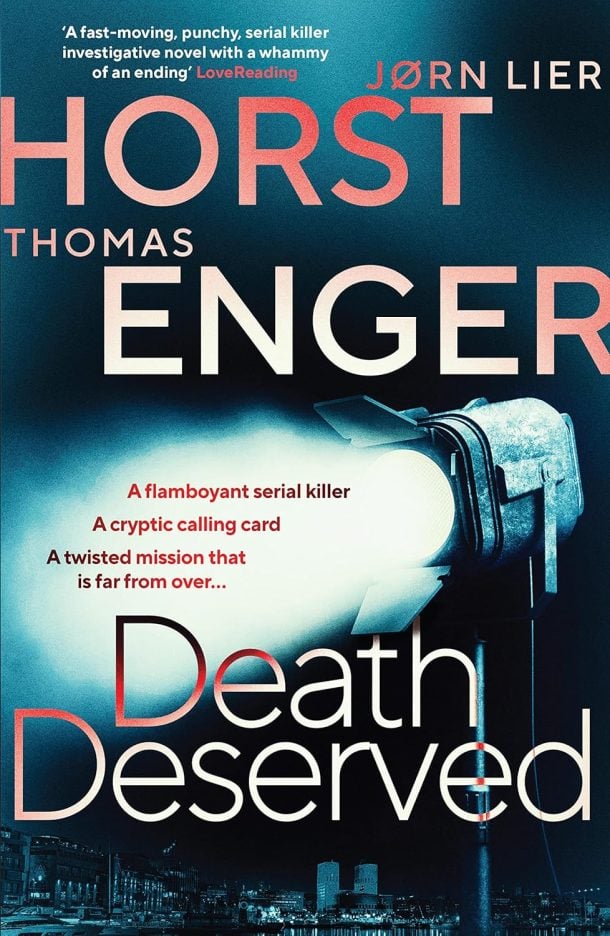 Death Deserved by Jorn Lier Horst
This outstanding series launch from Horst (the Inspector William Wisting series) and Enger (The Henning Juul series) introduces 40ish Alexander Blix, a psychologically wounded Oslo homicide detective. When former star athlete Sonja Nordstrøm fails to keep a video appearance for her new tell-all autobiography, journalist Emma Ramm, an ambitious celebrity blogger in her 20s, visits Nordstrøm’s apartment, where she finds the author gone and signs of a struggle. One of the police officers called to the apartment is Blix, who’s unnerved to see Emma, with whom he’s connected by a traumatic incident 19 years earlier. Emma doesn’t recognize Blix, who, despite anti-leaking warnings from his by-the-book boss, ends up consulting Emma, herself a troubled soul, about what’s initially a missing person case. After the case mushrooms into a succession of eerily planned and executed homicides of amoral celebrities, Blix and Emma concoct a brilliant but dangerous scheme to catch the culprit. A devilishly complex plot, convincing red herrings, and well-rounded characters help make this a winner. Scandinavian noir fans will eagerly await the sequel. Publisher’s Weekly, September 2020.
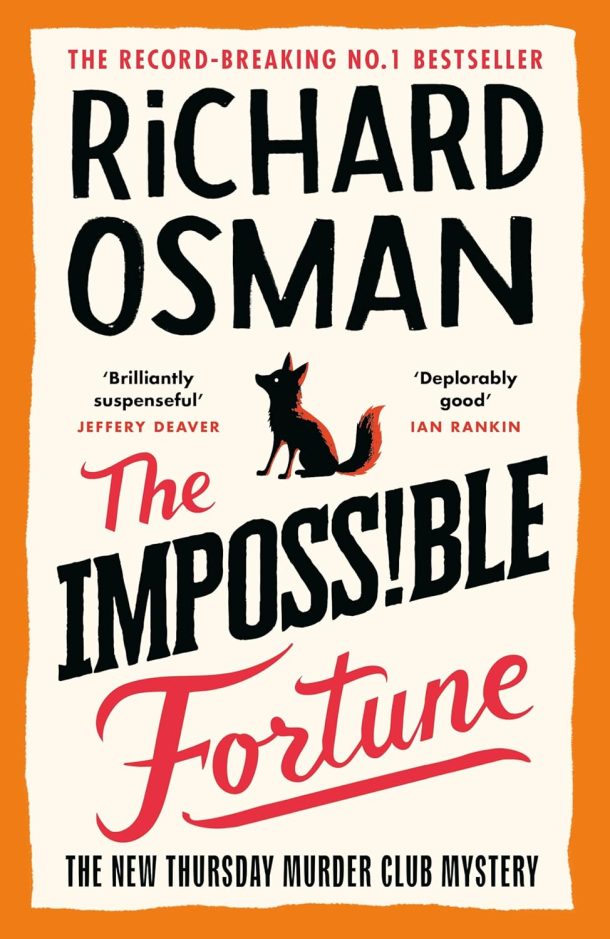 The Impossible Fortune by Richard Osman
The Thursday Murder Club members are ageing. It’s inevitable, of course, but how can a person in their 80s still show strength? Perhaps it’s no longer possible to be physically strong, but guile and intelligence might still prove advantageous. As the story begins, Joyce’s daughter, Joanna, is to be married. At the end of that ceremony, the groom’s best man, Nick Silver, tells Elisabeth that someone is trying to kill him. He promptly disappears and his business partner, Holly, is killed by a car bomb. Nick and Holly ran a ‘cold storage’ business. A local villain, Davey Noakes, paid them in Bitcoin 20 years prior. That Bitcoin is now worth £350million. Apart from the owners, the only two people who know about the Bitcoin are Davey and Lord Townes, a city banker the pair asked for advice. In a second narrative thread, Ron’s daughter, Suzi, pulls a gun on her abusive (and long-term crim) husband, Danny, who then promises to return and kill her and their son, Kendrick. Ron’s attention drifts from the Bitcoin case as he must find a way to protect his family. A third thread follows Ibrahim and his mentee and ex-con, Connie Johnson, who is, in turn, mentoring a young ex-prisoner, Tia… although Connie’s mentoring is around how to get away with a crime, rather than not commit one. Osman’s command of plot in The Impossible Fortune continues to be pitch-perfect. Each thread has its own pace, combining and converging into each other in the clever twisty denouement. This is much more than a plot-driven thriller, however. Osman’s insights into intergenerational relationships are filled with humour and pathos. Long live these seniors. Good Reading Magazine.
Return to top
AUDIOBOOKS
| General | McFadden, Freida | The housemaid is watching |
| General | Moorman, Jennifer | The charmed library |
| Mystery | Flower, Amanda | To slip the bonds of Earth |
| Mystery | Baker, Blythe | The delicate pursuit of blood |
| Mystery | Bishop, Claudia | A pinch of poison |
| Mystery | Connally, Celeste | Act like a lady, think like a lord |
| Mystery | Kelly, Vanessa | Murder at Donwell Abbey |
| Romance | Laurens, Stephanie | Where the heart leads |
| Romance | London, G. T. | Eight weeks later |
| Romance | Watts, Beverley | Grace |
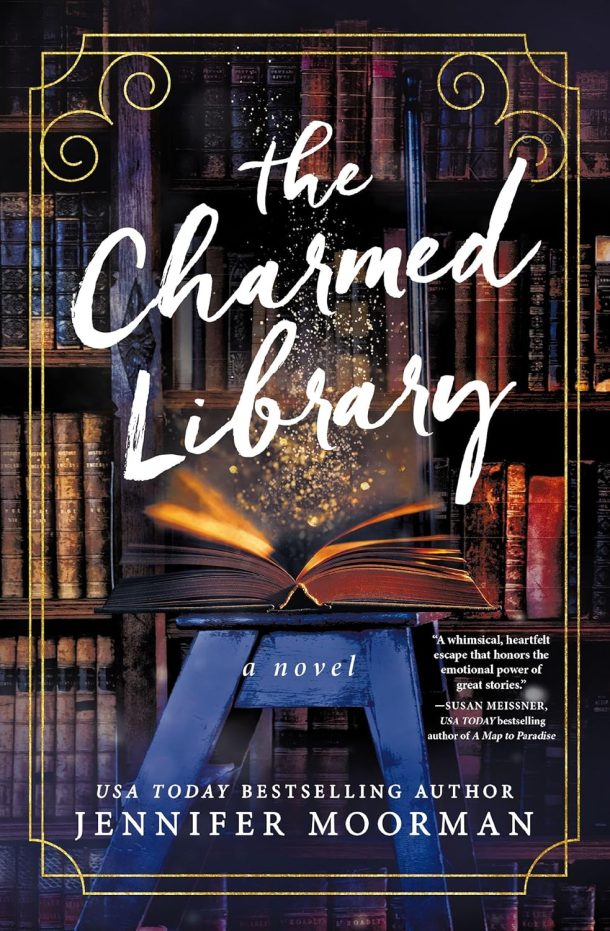 The Charmed Library by
Words literally come to life for a lonely assistant librarian in this exquisite tale from Moorman (The Vanishing of Josephine Reynolds). One night, heartbroken over a breakup, Stella Parker throws her journal into the library’s furnace. Soon after, her words retaliate, hitting her so hard she feels like she’s being stabbed through the heart. Searching the library for answers, she encounters some strange characters, including a man who says he’s Jack Mathis, the handsome American WWII soldier at the heart of her favorite novel, Beyond the Southern Horizon. After Stella accidentally unleashes the villainous Captain Hook from the pages of Peter Pan, she learns the rules of the magical library and works together with Jack to catch Hook, who’s far more dastardly in Moorman’s hands than in J.M. Barrie’s story. As they fall for each other along the way, Jack and Stella grapple with the fact that his time in the real world expires in just a few days, which Stella’s mentor, Arnie Cohen, explains to her. Moorman drops in plenty of delightful details, such as the appearance of Mr. Darcy from Pride and Prejudice, who dazzles the library’s women patrons, and she makes it easy to suspend disbelief, considering that, as Arnie says, “The world is full of the impossible.” It’s a marvel. Publisher’s Weekly, November 2025.
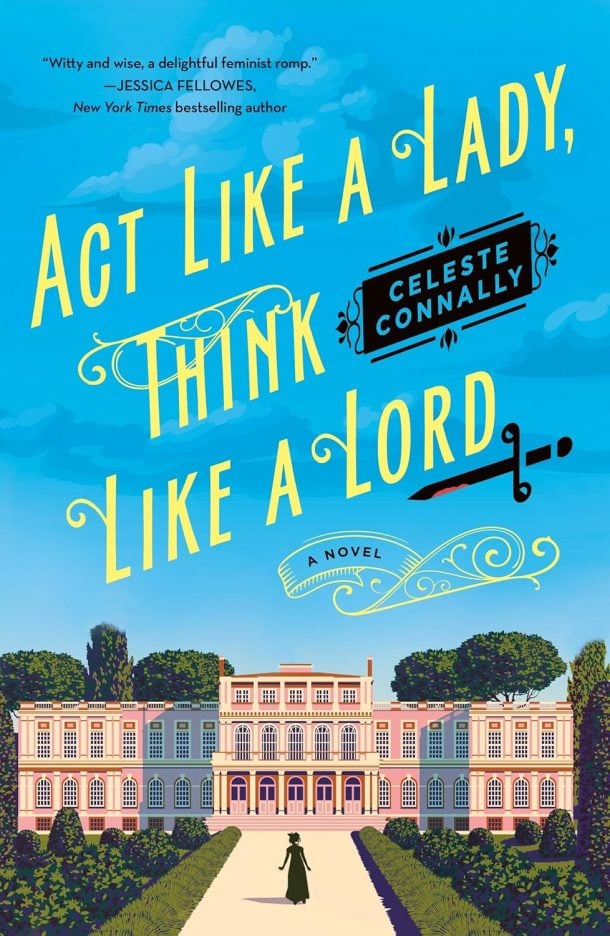 Act Like a Lady, Think Like a Lord by Celeste Connally
This delightful Regency mystery series launch from Connally, a pseudonym for S.C. Perkins (the Ancestry Detective Mystery series), draws readers into the life of Lady Petra Forsyth, whose unconventional behavior and affinity for sleuthing is frowned upon by most of her acquaintances and, especially, her nosy uncle Tobias. After her fiancé dies and her dearest friend, Duncan, decamps to mainland Europe to work for his grandfather, Petra announces at age 24 that she’ll remain single, shocking the public and moving her contemporaries to label her a premature spinster. Despite the undue scrutiny, Petra takes an interest in some of the women in her social circle, particularly after she learns that Gwen, wife of Lord Milford, has died suddenly in a physician’s care. When Gwen’s footman swears he’s seen the woman days after her supposed death, Petra starts digging, and soon uncovers a growing network of wives who’ve disappeared from society’s upper crust under mysterious circumstances. Soon Duncan reappears in England, arousing Petra’s suspicions further, and her determination to get to the bottom of things may put her own life in danger. Petra is marvelously drawn—an easy-to-love, instantly memorable heroine—and Connally equips her with a brisk, page-turning adventure. This is catnip for historical suspense fans. Publisher’s Weekly, August 2023.
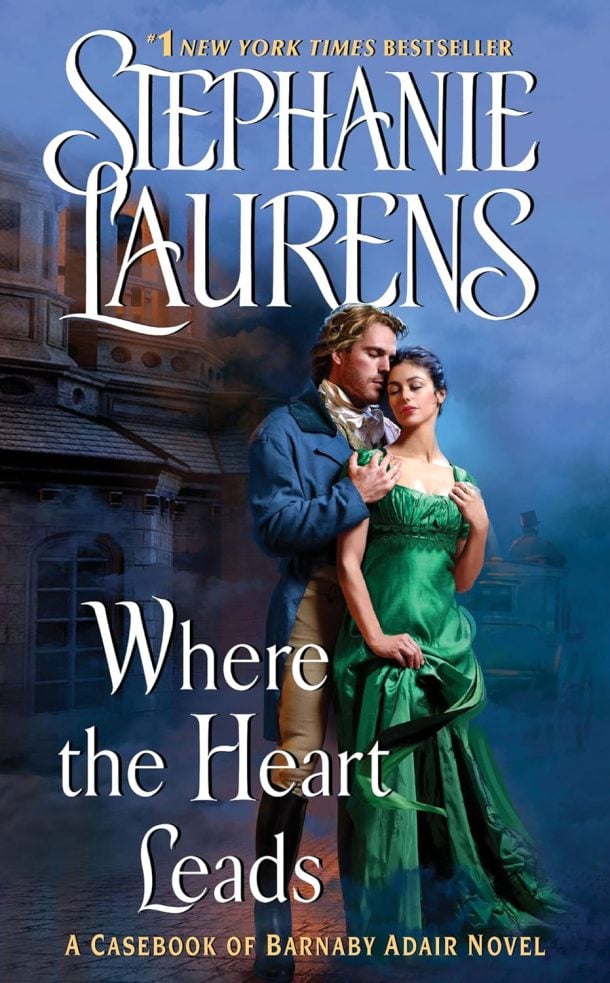 Where the Heart Leads by Stephanie Laurens
The latest installment to Laurens’s Cynster series (The Truth about Love, The Taste of Innocence) takes readers back to the 19th-century London of private investigator Barnaby Adair for a satisfying blend of mystery and romance. When attractive society belle Penelope Ashford enlists Barnaby’s help in finding four kidnapped orphan boys, Barnaby is as intrigued by Penelope as he is by the case; her reputation as “something of a firebrand” and her dedication to her work at Foundling House far outstrip her desire to conform to society’s wishes—a worldview not unlike Barnaby’s. Penelope insists on accompanying Barnaby through every step of his investigation, and with some input from an old friend at Scotland Yard, the pair begins navigating the slums of London’s East End in search of a “burglary school.” As the orphans’ fate begins to slide into focus, so, too, does Barnaby and Penelope’s attraction for one another. That attraction, palpable from their first meeting, slowly builds to a gratifying crescendo without overpowering the story, which, though light on plot twists, clips along at a fast pace with enough charm to delight both fans and new readers. Publisher’s Weekly, October 2007.
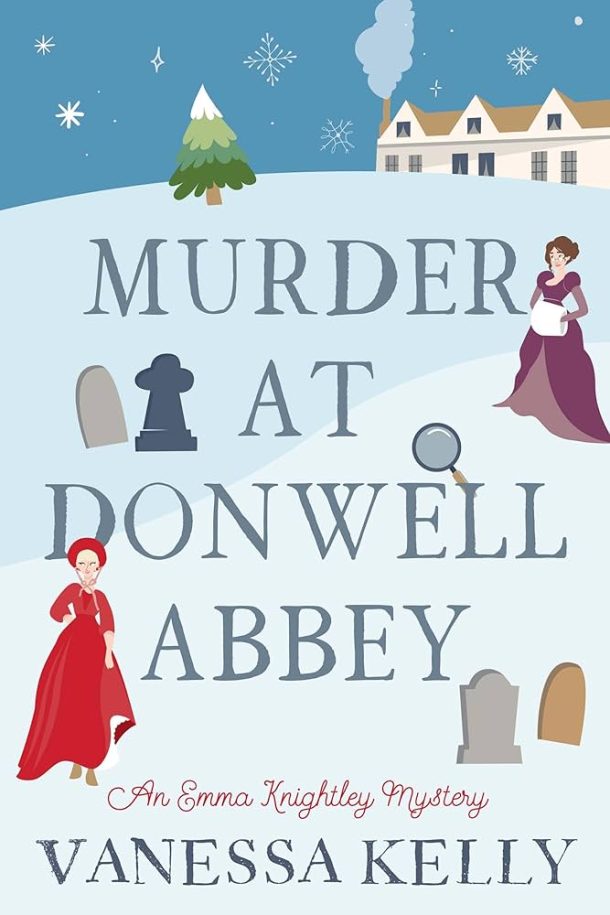 Murder at Donwell Abbey by Vanessa Kelly
Murder and mayhem in Jane Austen’s world. Emma Woodhouse Knightley has given up matchmaking for marriage and a peaceful life catering to the whims of her father, who imagines that sickness and death lurk around every corner. When Mr. Woodhouse announces that he’s marrying Miss Bates, it’s a major shock to Emma; her sister, Isabella; and their husbands, brothers George and John Knightley. Although they’re not pleased, they go along with the couple’s plans, including a ball at Donwell Abbey, George’s home, which is in the process of being upgraded so that he and Emma can live there. Donwell’s staff is currently limited to Mr. Larkins, the estate manager; Mrs. Hodges, the housekeeper; chambermaid Prudence Parr; Harry Trotman, a rather dim footman; and a few stablehands. With some outside help, however, they manage to pull together a dinner and ball for a disparate group of guests. Except for one drunken visitor, all goes well until Prudence apparently falls to her death from the window in her room. The coroner and Constable Sharp smell spirits on her body even though Prudence did not imbibe. They think her death an accident or suicide, but Emma’s not convinced. When smugglers are discovered to be using a path through Donwell’s lands, Constable Sharp gets an anonymous note accusing Larkins of being involved. He arrests him after a search turns up evidence of smuggling and possibly the murder of Prudence. George, a magistrate, and John, a lawyer, set out to prove Larkins innocent. But it’s Emma, with the unlikely help of Miss Bates, who uncovers the truth, at risk to their lives. Plenty of interesting Austen-inspired characters make for a charming read. Kirkus, October 2025.
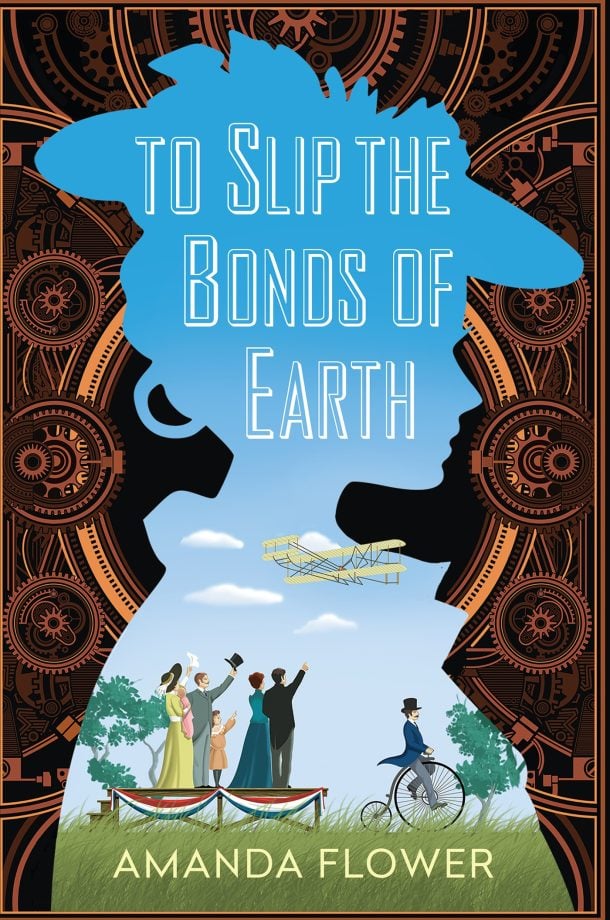 To Slip the Bonds of Earth by Amanda Flower
Flower (the Emily Dickinson mysteries) transforms Katharine Wright, sister of flight pioneers Orville and Wilbur, into an intrepid gumshoe in this splendid series launch. It’s 1903, and while Katharine’s brothers prepare for their inaugural flight in North Carolina, she keeps the home fires burning in Dayton, Ohio, by caring for their father, running the family bike shop, and working part-time as a teacher. After Orville and Wilbur return home, having flown their Wright Flyer for a historic 57 seconds, the three siblings attend a party hosted by the family of one of Katherine’s students. There, someone swipes Orville and Wilbur’s flying plans; when Katharine tracks down her chief suspect, she finds him stabbed to death with one of Orville’s screwdrivers. Orville immediately falls under suspicion for the grisly murder, and Katharine sets out to clear his name, betting on people to underestimate her intellect as she ferrets out the truth. As always, Flower’s thorough historical research enables her to bring contemporary readers into a bygone era, and she has the mechanics of a satisfying mystery down pat. After this stirring maiden voyage, readers will be eager to see where the series goes next. Publisher’s Weekly, February 2024.