


BIOGRAPHY
| FitzSimons, Peter | The courageous life of Weary Dunlop |
Return to top
GENERAL FICTION
| Archer, Jeffrey | End game |
| Baldacci, David | Nash falls |
| Boyne, John | Fire |
| Child, Lee | Exit strategy |
| Coben, Harlan | Gone before goodbye |
| Cogley, Sam | Hostile asset |
| Demille, Nelson | The tin men |
| Desai, Anita | Rosarita |
| Grisham, John | The widow |
| Kurisu, Hiyoko | The Amberglow Candy Store |
| Lee, Harper, | The land of sweet forever |
| Miller, Andrew | The land in winter |
| Mochizuki, Mai | Best wishes from the Full Moon Coffee Shop |
| Nell, Joanna | The funeral crashers |
| Nunn, Judy | Pilbara |
| Richards, Zoe | Garden of her heart |
| Richardson, Luke | The Ark files |
| Richardson, Luke | The Giza protocal |
| Sampson, Freya | The last library |
| Sparks, Nicholas | Remain |
| Swift, Graham | Twelve post-war tales |
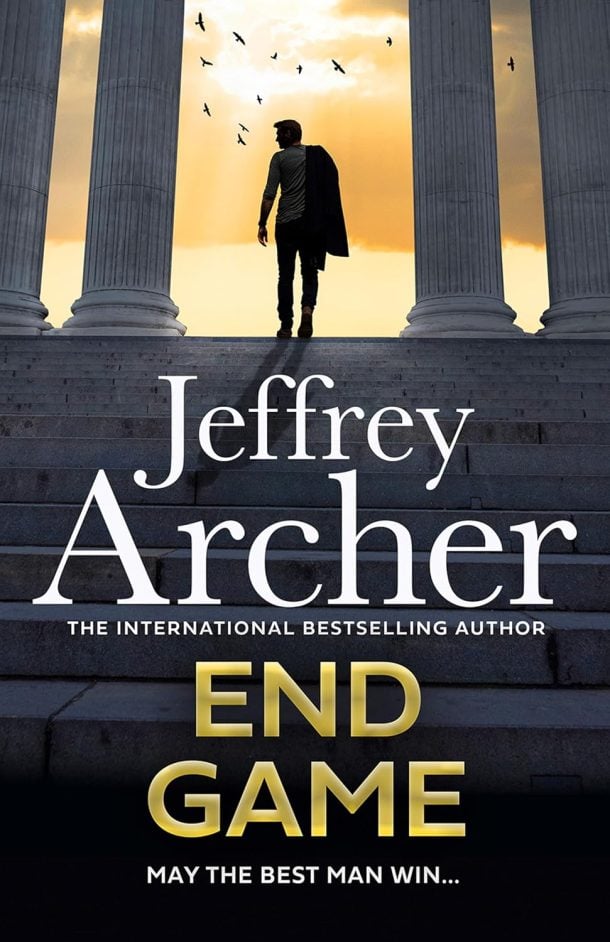 The End Game by Jeffrey Archer
The eighth novel in the ‘William Warwick’ series gives the 30th Olympiad (London 2012) a starring role in William’s impressive progress to the top job in London’s Metropolitan Police. Warwick is appointed senior officer in charge of security at the Olympics. Russia and China are determined to ensure the games are a disaster and Warwick’s long term adversary, Miles Faulkner, is determined to add to his fortune by fair means or foul. Sun Anqi from China and Sergei Petrov from Russia are efficient and fearless: torturing, maiming and elimination are their ‘tools of trade’. We overhear them being told to work together to ensure the 2012 Olympics ends in failure, using any means they deem appropriate. The first hint of trouble is when efforts are made to interrupt the torch relay on its way to the stadium. Then the stunt where the Queen jumps out of a helicopter with James Bond is close to being delayed, if not cancelled. But these are minor compared to what the two psychopaths have planned. Tension builds as more problems for Warwick and his team arise and one, in particular, is so gruesome, I was on the edge of my seat holding my breath. Jeffrey Archer is an ace storyteller. It’s not only a far-fetched romp about goodies and baddies but we are reintroduced to family, friends and colleagues from previous books in the series. I was willingly seduced by Archer’s relaxed style and suitably impressed as I tensed when we got close to the gruesome part. End Game is not a literary masterpiece but it achieves what it sets out to do … to engage, delight and entertain. Good Reading Magazine, November 2025.
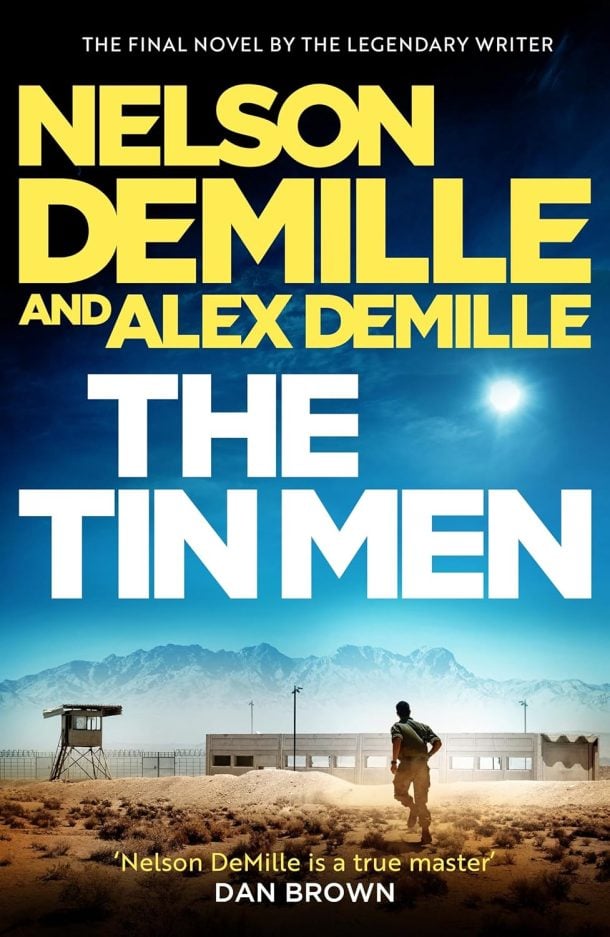 The Tin Men by Nelson DeMille and Alex DeMille
Robots may be the future of warfare in this final father-son DeMille collaboration. In Camp Hayden, Army Maj. Roger Ames is found dead, his skull crushed. Chief Warrant Officers Scott Brodie and Maggie Taylor, special agents of the United States Army Criminal Investigation Division, are sent to the Mojave Desert, “a.k.a. in the middle of nowhere,” to investigate. In this fictional military installation, Army Rangers conduct field training exercises with lethal autonomous weapons. These “dangerous new toys,” nicknamed “tin men,” may become the future of warfare if they can be programmed to distinguish between friend and foe. Anyway, the Rangers’ job is to train the tin men, not the other way around. They are AI-driven robotic prototypes called D-17s, but even prototypes can kill. Did a bot kill the major? And was there criminal liability or intent, or was it a tragic accident? Brodie and Taylor discover that not everyone loves these beasts, and they must find out if humans are programming them for mischief or even trying to set up the program for failure. Meanwhile, the bots have nicknames. Bot number 20 is Bucky, seen on a video as a “seven-foot-tall titanium machine with hands covered in blood and brain matter” that has “a face but no eyes, with hands but no skin, with a body but no soul.” As scary as these beasties are, Brodie and Taylor must also look at the humans at Camp Hayden, because they learn that the “machines don’t have motives….They have inputs and outputs,” which naturally come from human programmers. They have neither brains nor courage nor honor; they do have brute force, speed, and agility. Obviously, plenty goes haywire in this enjoyable yarn. It feels a bit too believable for comfort, and that’s to the DeMilles’ credit as storytellers. Nelson DeMille had begun this project with his son Alex, who had to finish it alone after his father’s death. Fast-moving and disturbingly plausible. Kirkus Reviews, July 2025.
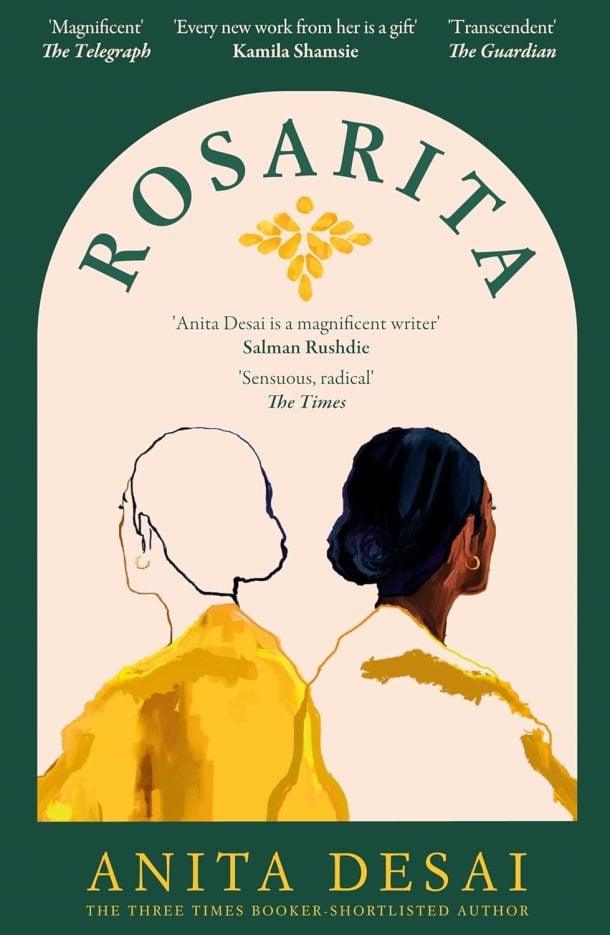 Rosarita by Anita Desai
Sometimes, other people can see the secrets hidden right before your eyes. Bonita, a young Indian woman studying at a language school in Mexico, has a series of unsettling—but ultimately intriguing—encounters with a stranger she meets in a park. Vicky, a flamboyant older woman prone to festive and traditional Mexican attire, insists that Bonita must be the daughter of her lost friend, “Rosarita,” another young Indian woman who had traveled to San Miguel many years before to study art. After initially rebuffing Vicky’s claims as outlandish, Bonita embarks on a series of reconnaissance missions, around San Miguel and onwards to Colima and the bay at La Manzanilla, in an effort to discern if there was any truth to Vicky’s accounts. Forced to make sense of several shadowy aspects of her now-deceased mother’s life story, Bonita comes to refer to Vicky herself as “the Trickster” as her confusion about her mother’s past grows. As Bonita reassesses the circumstances of her own earlier life, she comes to view some details through a more critical lens: Who was the artist behind the sketch hanging unremarked upon on the wall of her childhood bedroom, for example? Desai’s subtle exploration of memory, identity, and thwarted aspirations has a ghostly, haunted quality to it (and veers into gothic territory during a visit to Vicky’s ancestral home). This atmospheric and eerie novella is delivered in the second-person voice, adding to the sense of distance between Bonita and the truth and to an ambivalence about the identity of the coolly detached narrator. Desai honors the parallels between art inspired by the Mexican Revolution and the Indian Partition in this tantalizing story of Bonita’s attempt to reconcile layer upon layer of a family’s history. A haunting meditation on identity and understanding. Kirkus Reviews, January 2025.
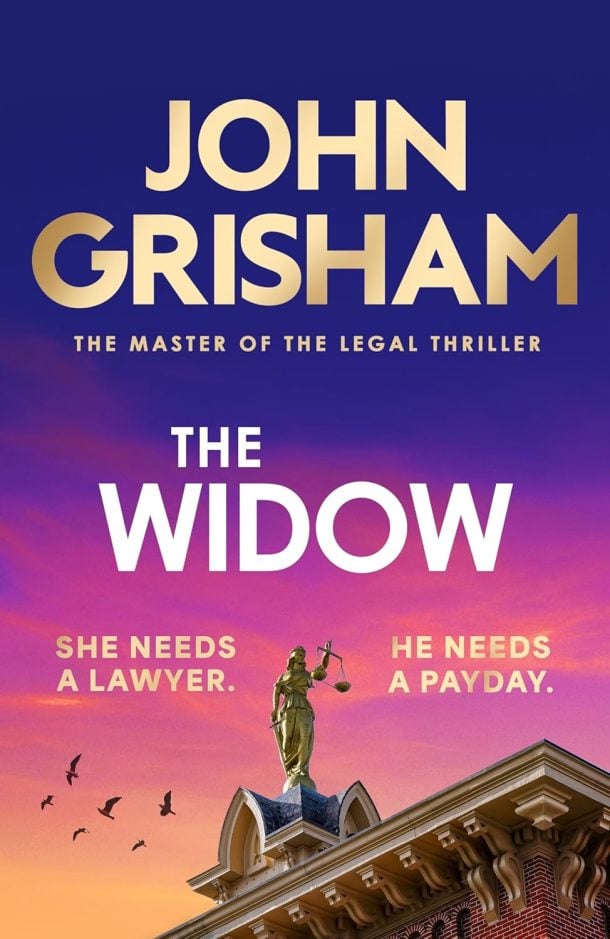 The Widow by John Grisham
After more than three decades of producing bestselling legal thrillers, Grisham tries his hand at a whodunit. Eleanor Barnett wants Simon Latch to write her a will. That’s pretty much his job description, since practicing law in Braxton, Virginia, for 18 years hasn’t given him much opportunity to spread his wings. But the case of Netty, as she insists he call her, is different. She’s an 85-year-old widow whose second husband, Harry Korsak, left her with something like $20 million in cash and securities. She has a pair of stepsons, Clyde and Jerry Korsak, she’s determined to disinherit. And she already has a will, a document Wally Thackerman drafted a few weeks ago that basically allowed him, as Simon soon discovers, to pillage her estate. So instead of following his usual procedure and asking his longtime secretary, Matilda Clark, to type out the will, Simon types it himself and has it witnessed without saying anything to her. Of course he’d never do what Wally Thackerman did, but given his poverty, his gambling addiction, and his estrangement from his wife, Paula, whose income is a lot more stable than his own, he wouldn’t mind drawing just a bit on Netty’s wealth. As it happens, his new client turns out to be more trouble than she’s worth, maybe even more trouble than she would’ve been worth to Wally. And when she ends up dying, her death is swiftly identified as murder, with every indication that Simon killed her himself. The whodunit is unremarkable, but Grisham handles the legal complexities of the case with professional finesse and adds a wonderfully poignant portrait of a nothingburger lawyer trying his best to keep things more or less legal. Everything you’d expect from Grisham, and this time something more. Kirkus Reviews, July 2025.
 The Land in Winter by Andrew Miller
Neighboring couples in the rural West Country weather the famously frigid British winter of 1962. Miller’s 10th novel opens in an asylum near Bristol, England, where one patient awakens in the night to find that another—a boy of 19—has died by suicide. Though we will later learn how these characters connect to the main plot, the focus then shifts to a pair of marriages. One couple, Bill and Rita Simmons, lives on a dairy farm. Bill is new to farming and Rita not long ago worked as a dancer in a club; now she’s pregnant, reading paperbacks and half-heartedly attempting to cook. It is she who will one day, out of boredom, cross the field that separates the Simmonses from their wealthier neighbors, the Parrys: the local physician, Dr. Eric Parry (he prescribed the pills the dead boy took) and his wife, Irene. Though her background is much fancier than Rita’s, Irene is also newly pregnant and the two easily form a friendship. One of the high points of the book, showing off Miller’s dazzling prose and very dry wit, is the drinks party Irene throws on Boxing Day. This party is complicated for Eric by the attendance of his mistress, along with her husband and son, but they will avoid trouble, at least for now. Very much in the air of the novel are World War II and the Holocaust, which the characters lived through in different ways not so long ago. Eric’s medical partner, Gabby Miklos, barely escaped the camps, and tries to share his story with Bill Simmons at the drinks party. “When Gabby began again—Häftling, Sonderkommando, Judenlager—Bill, staring at an abandoned cheese stick on the tablecloth, began to withdraw his heart.” In the same room, to the delight of the other guests, Rita is demonstrating a dance called the mashed potato. Miller is an expert juggler of dark and light, of big and small, of seen and unseen. A masterful, acute, and very British novel, revealing the tensions of a time beset by winds of change. Kirkus Reviews, August 2025.
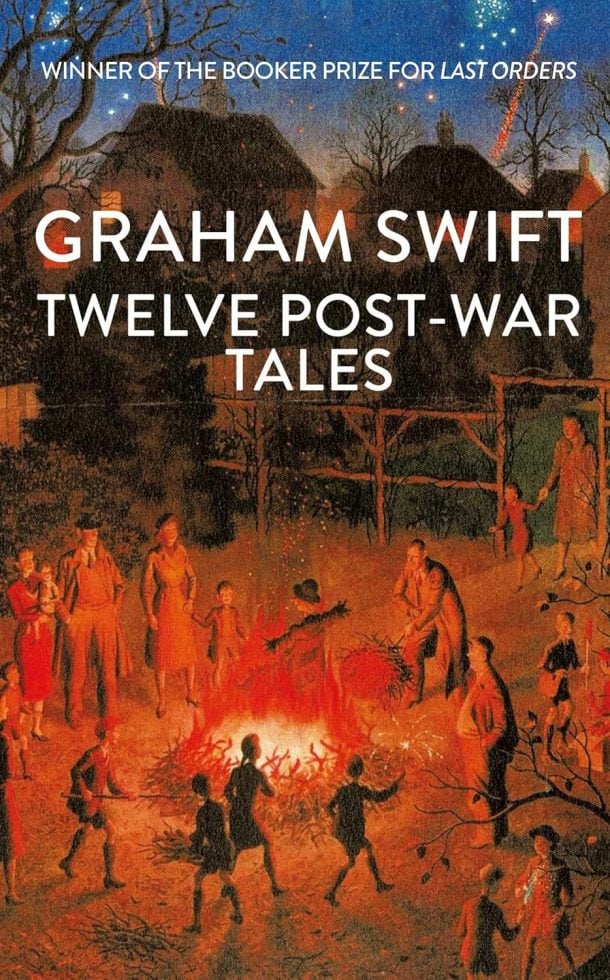 Twelve Post-War Tales by Graham Swift
In his latest collection, Swift probes the complicated lives of Britons young and old living in the long shadow of World War II. In “Fireworks,” the Cuban Missile Crisis threatens to cancel the wedding of 19-year-old Sophie. People might not show up “if there’s still a situation,” says the father of the groom. To which Sophie’s father answers, “No one’s calling off my daughter’s wedding just because the world’s going to end.” In “Black,” set in England’s East Midlands in 1944, 18-year-old Nora boldly sits next to a handsome Black American airman on a bus and is quickly drawn to him. The friendly encounter, shocking to all aboard, is life-altering in multiple ways for the daughter of a chronic wife-abuser: “This was what she hadn’t foreseen.…That a man can just hit you. Not in that way. Just hit you.” In “The Next Best Thing,” young British private Joseph Caan travels to Germany in 1959 to track the fate of his relatives. He has a creepy encounter with an overly polite functionary who, told that Caan’s Jewish, German-born father was killed in Tobruk as a British soldier, insinuatingly says he was there too—“on the other side, of course.” In “Passport,” an 82-year-old woman living alone in a state of confusion is transported back to when she was 3 and her mother was killed during the London Blitz—a day that left a deep imprint on her but of which she has no memory. “How can we remember that we didn’t have a memory?” she muses. In Swift’s touching, deeply humane stories, life leaves its mark in mysterious and sometimes-humorous ways. His gift for capturing in revealing detail the interior lives of people coping—or failing to cope—with disappointment gives each of these stories a rare depth. A brilliant, illuminating collection of short fiction, perhaps the author’s best. Kirkus Reviews, April 2025.
Return to top
HISTORICAL FICTION
| Cooper, Tea | The tangled web |
| Cornwell, Bernard | Sharpe’s storm |
| Simons, Paullina | The bell and the blade |
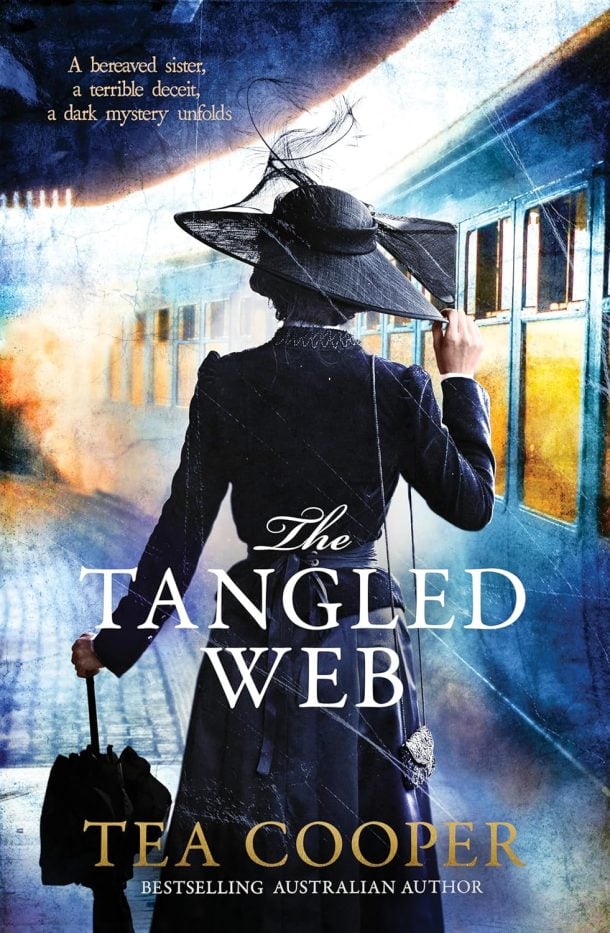 The Tangled Web by Tea Cooper
When you are given a Tea Cooper book, you know you are in safe hands. I have visions of Tea wandering around an Australian museum establishing the next story that needs to be shared with her devoted readers. This time we are dropped into Maitland, 1892. We meet siblings Viola and Sebastian Oswald. Sebastian is dying of a hereditary blood disease. Their prestigious surgeon stepfather, Elias Sinclair, has used his stepson’s condition to enhance his reputation and has treated him like a test subject to make advancements. However, Viola does not have definitive proof of this and with her mother being emotionally disengaged due to grief, pregnancy and her new husband, it further pushes her to find out what is going on. When her brother dies, he leaves her a letter in the pages of Lamb’s Tales from Shakespeare, setting her on a path to find out what her stepfather is doing. Along the way, Viola meets many people from varying walks of life – from the local seamstress, to the lawyer clerks to urchins. They all help unravel the truth including the fate of a missing boy and the cruelties being faced to advance medical care. Viola only fears what may happen to not only these people but her own mother and the unborn sibling. Tea’s writing has a way of establishing complex characters, especially the voices of those who have been silenced in history. Tea gives them an opportunity to be heard. There is reference to characters that hardcore readers would remember from The Golden Thread but don’t worry you can read The Tangled Web as a standalone novel. Readers will feel the suspense as you are led through the murky world of medical science in 1892. Tea is an Australian historical fiction writer who tempts us to look deeper into those lives in the past, and opens readers’ eyes to see how all may not be as it seems. All those historical fiction fans will just devour this book. Good Reading, November 2025.
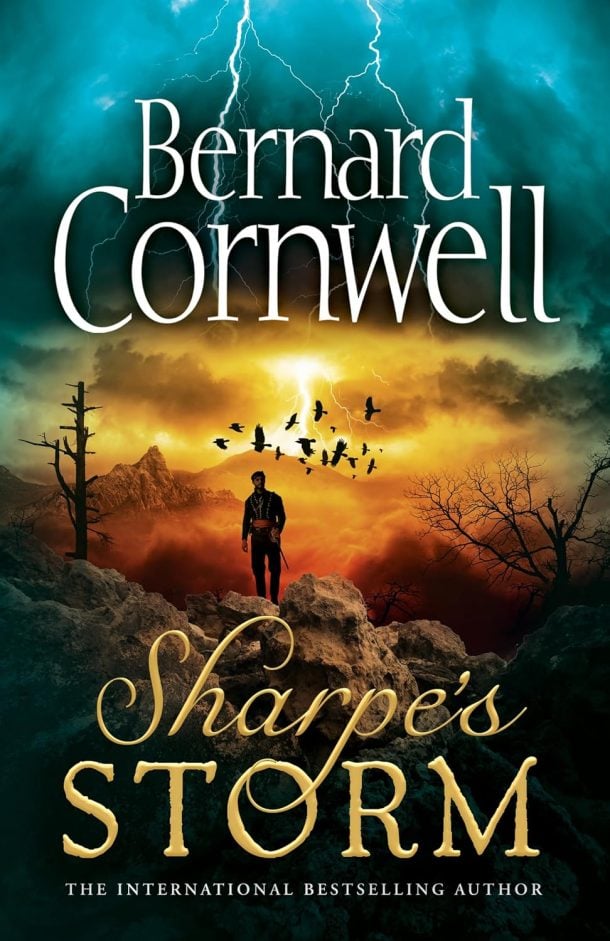 Sharpe’s Storm by Bernard Cornwell
Series hero Richard Sharpe fights in Britain’s 1813 invasion of southern France. Major Sharpe is a fictional rifleman who has risen from the ranks and gained the respect of his commanding generals, even when he disobeys them. A brutal and intelligent fighter, he is an expert at “slaughtering Crapauds.” Indeed, his clothes and boots come from dead French soldiers. To cross into France from Portugal, British engineers must construct a pontoon bridge across the River Nive without alerting the enemy, and Sharpe is ordered to eliminate the picquets, or sentries, on the other side—and “get to the guns and butcher the bastards.” Lord Wellington also brings in the British Navy, building up to the climactic clash that becomes known as the Battle of Saint-Pierre, said to be one of the most brutal of the war. And Sharpe is in the thick of the maelstrom, hacking away with gusto at the blue-coated columns even while one of the two British commanders orders his troops to retreat. That is Sir Nathaniel Peacock, a real historical lieutenant colonel described as a mountebank, a popinjay, and a poltroon. He is the antithesis of men who rise by merit, and his cowardice could lead to defeat by the forces of French Marshal Soult. But there is a lot to be afraid of, with thousands of men meeting their maker in mists of blood and screaming for their mothers. And Major Richard Sharpe? He is in his element, doing “the one thing he knew he was good at.” In fact, he dreads the prospect of eventual peace and a return to civilian life with his wife, Jane, having no skills that won’t land him in prison or the gallows. But he needn’t worry about peace any time soon, because Waterloo awaits. This 24th Sharpe yarn captures a down-and-dirty view of the Napoleonic Wars. Gripping historical adventure, not for the faint of heart. Kirkus Reviews, October 2025.
Return to top
MYSTERY
| Brown, Bryan | The hidden |
| Burge, Michael | Dirt trap |
| Connelly, Michael | The proving ground |
| Dixon, Jo | A disappearing act |
| Greenwood, Kerry | Murder in the cathedral |
| Heath, Jack | Kill your boss |
| Herron, Mick | Standing by the wall |
| James, Peter, | The hawk is dead |
| Kellerman, Jonathan | Coyote Hills |
| McDermid, Val | Silent bones |
| Mildenhall, Kate | The hiding place |
| Penny, Louise | The black wolf |
| Ramunno, Oriana | Smoke in Berlin |
| Reilly, Matthew | The detective |
| Ware, Ruth | The woman in Suite 11 |
| White, Christian | The long night |
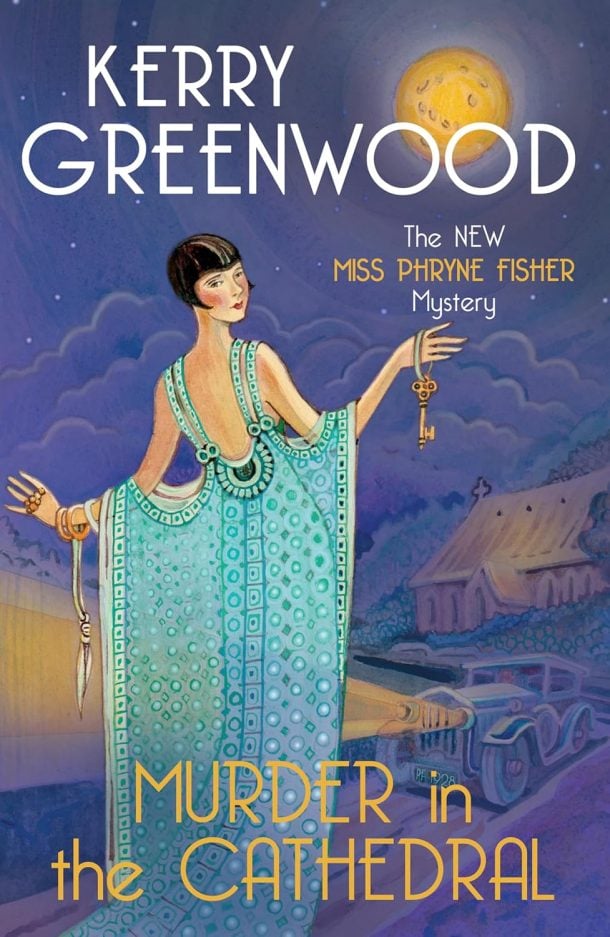 Murder in the Cathedral by Kerry Greenwood
Author Kerry Greenwood sadly passed away in March this year so this may well be the last ‘Phryne Fisher’ mystery. Set in Bendigo, Phryne and her companion Dot have been invited to the investiture of her friend Lionel Watkins as the new Bishop of the Diocese. Unfortunately, during the service in the cathedral one of the deacons is stabbed to death. With lots of church politics, rumours and undercurrents swirling plus dodgy business dealings in the background, it is up to Phryne and her close band of professional and amateur detectives to get to the bottom of it. Several characters from previous novels in the series make an appearance but Phryne is on her best behaviour when dealing with a bishop, a dean and several deacons and canons so is less risqué than usual. The astute reader may also work out who is the real villain and the likely motive along the way. Kerry Greenwood’s attention to historical detail of 1930s Bendigo is admirable and the city is well-drawn. Real historical figures such as businessman Sidney Myer make appearances. While the plot is intriguing, the pace is perhaps not as fast as some of the other novels in the series but this is still an enjoyable read, especially for Phryne fans. It is also pleasing to see that the Davitt Awards have renamed the Readers’ Choice Award to be the Kerry Greenwood Readers’ Choice Award. Good Reading, November 2025.
 Coyote Hills by Jonathan & Jesse Kellerman
A floater in San Francisco Bay keys up a tough case in this fifth Clay Edison thriller. Adam Valois, 33, floated ashore a year ago at Coyote Hills, a park on the edge of the Bay. Not a homicide, say the coroner and police, but Adam’s parents are suspicious and hire PI partners Clay Edison and Regina Klein to investigate further. You’re wasting your time, the cops tell Clay, himself an ex-coroner. Officially, Adam wasn’t a homicide victim at all, but a drug user deemed responsible for his own death. But other bodies wash up, and the PIs look for common drug profiles. They even enlist a scientist to write a computer program to analyze the Bay’s complex tidal currents and try to find a common dumping ground for the bodies, if one exists. And it turns out they are homicides after all. There’d been bad blood between the troubled Adam and his successful attorney sister, Kirsten, and she becomes one of several suspects. On a par with the solid plot are some of the character relationships. Regina has a sharp tongue and loves to tease Clay, calling him Poirot. She both admires and challenges him. There’s no obvious sexual chemistry between them; she has another man in her life, and Clay is happily married with two kids who love “Auntie Regina.” Even his brother, Luke, who’d once done time for vehicular homicide, seems to be getting his act together. So Clay lives his life on two levels—other people’s troubles and his own happy family. He and Regina uncover computer messages that cause Regina to exclaim “Sweet baby Moses on a motorbike,” but then Luke visits Clay and teaches his kids how to become pancake ninjas. Like their PI partners, Jonathan Kellerman and his son Jesse make a great team. Dead bodies and pancakes—who could ask for anything more? Kirkus Reviews, September 2025.
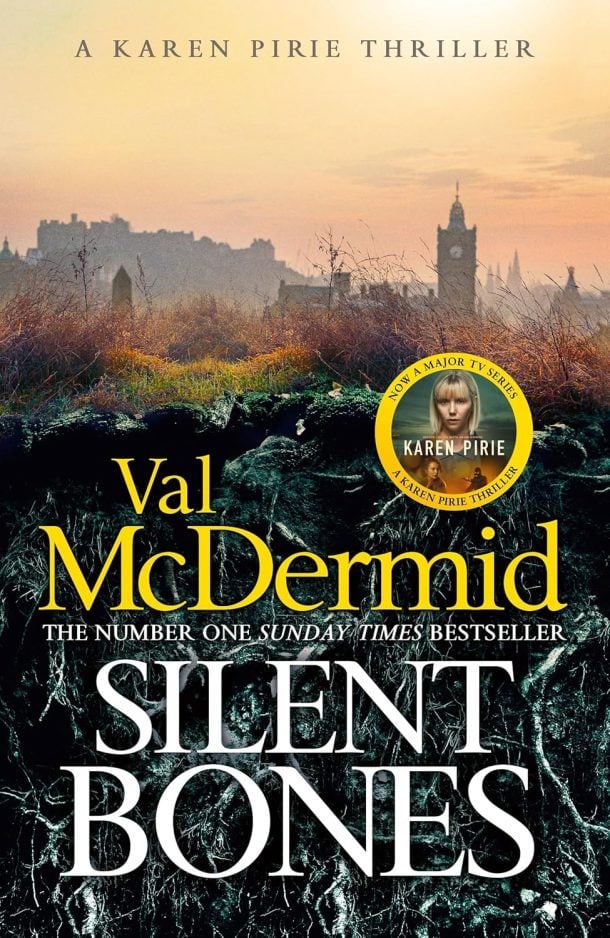 Silent Bones by Val McDermid
The bones in question actually speak volumes, especially to DCI Karen Pirie, who does her very best to amplify their plea for justice. Convinced that the original investigation five years ago got it all wrong, New Zealander Drew Jamieson wants Police Scotland’s Historic Cases Unit to look more closely into the death of his brother, hotel manager Tom Jamieson, whose fatal tumble down Edinburgh’s Scotsman Steps was ruled an accident. Using a computer image search, Drew claims to have identified Tom’s killer as dodgy surgical instruments manufacturer Marcus Nicol. At the same time, a mudslide beneath the M73 motorway reveals the skeleton of freelance investigative journalist Sam Nimmo, who vanished more than 10 years ago after the death of Rachel Morrison, his pregnant fiancée. Assumed then to be her killer, Nimmo’s now revealed as another victim. The two cases couldn’t possibly have any connection—until an examination of Nimmo’s research just before his death reveals that he was working on an accusation of bribery at soccer games by professional gamblers and the rape of an anonymous guest shortly after a high-class party thrown by Lord Haig Striven-Douglass in support of Scottish independence. It turns out that Justified Sinners, the secretive monthly men’s book club Nimmo had joined months before his death, had lost two of its members, including Tom Jamieson, to untimely deaths. Calling on experts of every stripe to help identify and pursue new leads, Karen and her team labor to connect the dots as she waits anxiously to hear whether Rafiq, the Syrian refugee physician she’s come to love, can get a Canadian passport to travel to Scotland. None of these plot lines turns out well for the characters. But readers will be rewarded by a richly textured experience. Kirkus Reviews, July 2025.
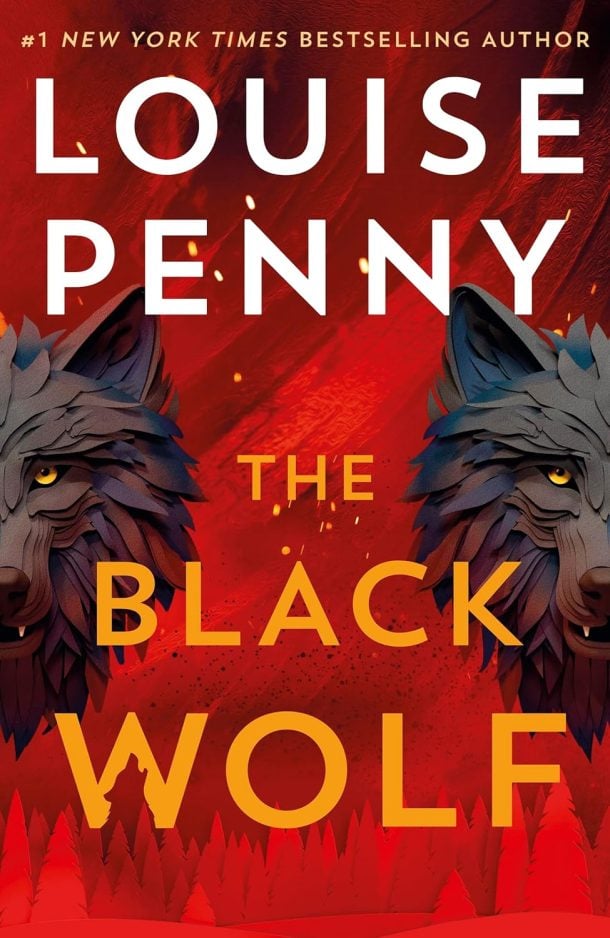 Black Wolf by Louise Penny
A sequel to The Grey Wolf (2024) that begins with the earlier novel’s last line: “We have a problem.” And what a problem it is. Now that Chief Inspector Armand Gamache and his allies in and out of the Sûreté du Québec have saved Canada’s water supply from poisoning on a grand scale, you might think they were entitled to some rest and relaxation in Three Pines. No such luck. Don Joseph Moretti, the Sixth Family head who ordered the hit-and-run on biologist Charles Langlois that nearly killed Gamache as well, is plotting still more criminal enterprises, and Gamache can’t be sure that Chief Inspector Evelyn Tardiff, who’s been cozying up to Moretti in order to get the goods on him, hasn’t gone over to the dark side herself. In fact, Gamache’s uncertainty about Evelyn sets the pattern for much of what follows, for another review of one of Langlois’ notebooks reveals a plot so monstrous that it’s impossible to be sure who’s not in on it. Is it really true, as paranoid online rumors have it, that “Canada is about to attack the U.S.”? Or is it really the other way around, as the discovery of War Plan Red would have it? As the threats loom larger and larger, they raise questions as to whether the Black Wolf, the evil power behind them, is Moretti, disgraced former Deputy Prime Minister Marcus Lauzon, whom Gamache has arranged to have released from prison, or someone even more highly placed. A brief introductory note dating Penny’s delivery of the uncannily prophetic manuscript to September 2024 will do little to assuage the anxieties of concerned readers. Don’t feel that your current news feed is disturbing enough? Penny has just what you need. Kirkus Reviews, October 2025.
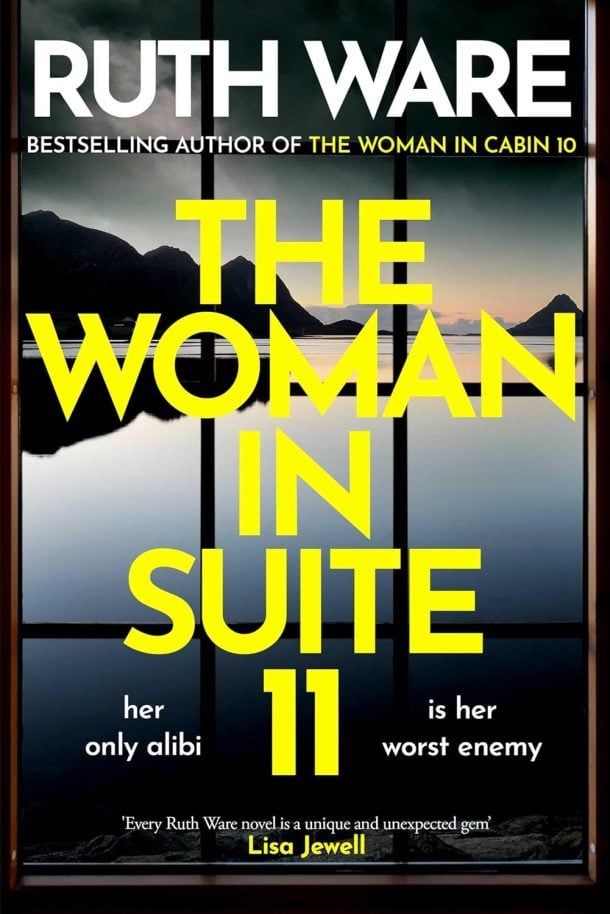 The Woman in Suite 11 by Ruth Ware
Journalist Lo Blacklock falls back under the sway of an old acquaintance in bestseller Ware’s solid sequel to The Woman in Cabin 10. A decade after Lo nearly drowned on a Norwegian cruise, she’s a happily married mother of two. Looking for a big story to jump-start her stagnant career, she eagerly accepts an invitation to the opening of reclusive billionaire Marcus Liedman’s new luxury hotel on Switzerland’s Lake Geneva. Once she arrives, however, she’s startled to find several fellow passengers from her ill-fated Norwegian cruise, along with a smarmy food critic, a wolfish photographer, and an ex-boyfriend she can’t stand. Most troublingly, she encounters Carrie, the untrustworthy woman who saved her life in Norway. Carrie entreats Lo to help her escape from Marcus, who she claims is holding her against her will. Torn between her emotional debt to Carrie and her longing to be free of it, Lo helps Carrie flee the hotel and accompanies her on a wild trip across Europe, the initially frivolous pleasures of which gradually take on a more sinister cast. Ware doesn’t tie everything up perfectly, but she keeps the pace fast and the twists coming. This will satisfy the author’s fans. Publisher’s Weekly, April 2025.
Return to top
NON FICTION
| Auster, Paul, | Groundwork | 813.54 AUST |
| Garner, Helen, | The mushroom tapes | 364.15 GARN |
| McNab, Duncan | Recipe for murder | 364.15 MCNA |
| Norwich, John Julius | Cities that shaped the ancient world | 930 NORW |
| Dalgety, Susan | The women who wouldn’t wheesht | 305.420922 DALG |
Return to top
ROMANCE
| Gartshore, Donna | The rancher’s prayer |
Return to top
SCIENCE FICTION & FANTASY
| SenLinYu | Alchemised |
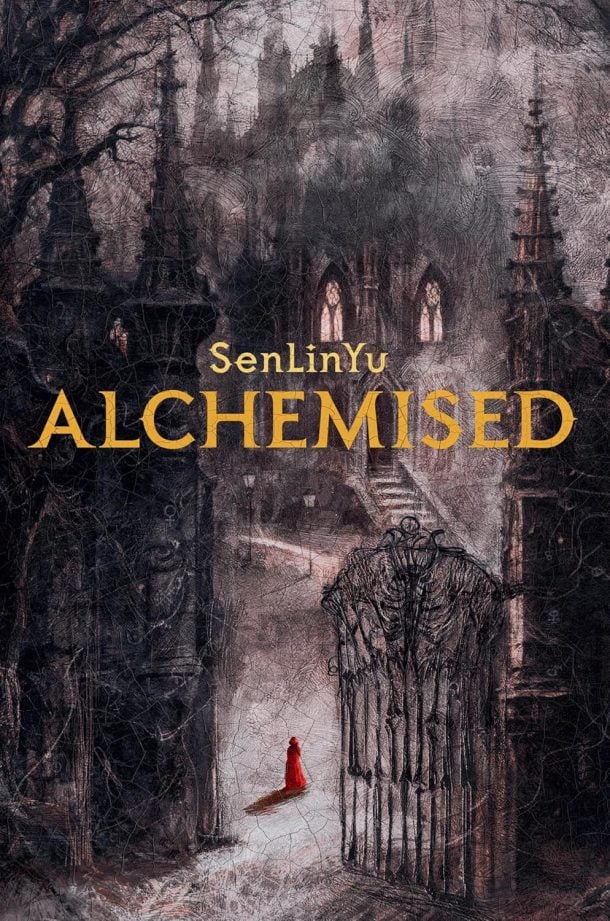 Alchemised by SenLinYu
Using mystery and romance elements in a nonlinear narrative, SenLinYu’s debut is a doorstopper of a fantasy that follows a woman with missing memories as she navigates through a war-torn realm in search of herself. Helena Marino is a talented young healer living in Paladia—the “Shining City”—who has been thrust into a brutal war against an all-powerful necromancer and his army of Undying, loyal henchmen with immortal bodies, and necrothralls, reanimated automatons. When Helena is awakened from stasis, a prisoner of the necromancer’s forces, she has no idea how long she has been incarcerated—or the status of the war. She soon finds herself a personal prisoner of Kaine Ferron, the High Necromancer’s “monster” psychopath who has sadistically killed hundreds for his master. Ordered to recover Helena’s buried memories by any means necessary, the two polar opposites—Helena and Kaine, healer and killer—end up discovering much more as they begin to understand each other through shared trauma. While necromancy is an oft-trod subject in fantasy novels, the author gives it a fresh feel—in large part because of their superb worldbuilding coupled with unforgettable imagery throughout: “[The necromancer] lay reclined upon a throne of bodies. Necrothralls, contorted and twisted together, their limbs transmuted and fused into a chair, moving in synchrony, rising and falling as they breathed in tandem, squeezing and releasing around him…[He] extended his decrepit right hand, overlarge with fingers jointed like spider legs.” Another noteworthy element is the complex dynamic between Helena and Kaine. To say that these two characters shared the gamut of intense emotions would be a vast understatement. Readers will come for the fantasy and stay for the romance. Although the melodrama sometimes is a bit much, the superb worldbuilding and intricate plotline make this a must-read. Kirkus Reviews, September 2025.
Return to top
New additions to eBooks at SMSA
eBooks & Audiobooks help
EBOOKS
| General | Asakura, Takuya | The vanishing cherry blossom bookshop |
| General | Church, Meagan | The mad wife |
| General | Levithan, David | Songs for other people’s weddings |
| General | Mara, Andrea | All her fault |
| General | Webb, Maryann | The girl in the cellar |
| Horror | Van Veen, Johanna | Blood on her tongue |
| Mystery | Beattie, Rachel | The Santa slaughter |
| Mystery | Johnston, Antony | The dog sitter detective takes the lead |
| Mystery | Leitch, Fiona | A Cornish seaside murder |
| Romance | Gilmore, Laurie | The strawberry patch pancake house |
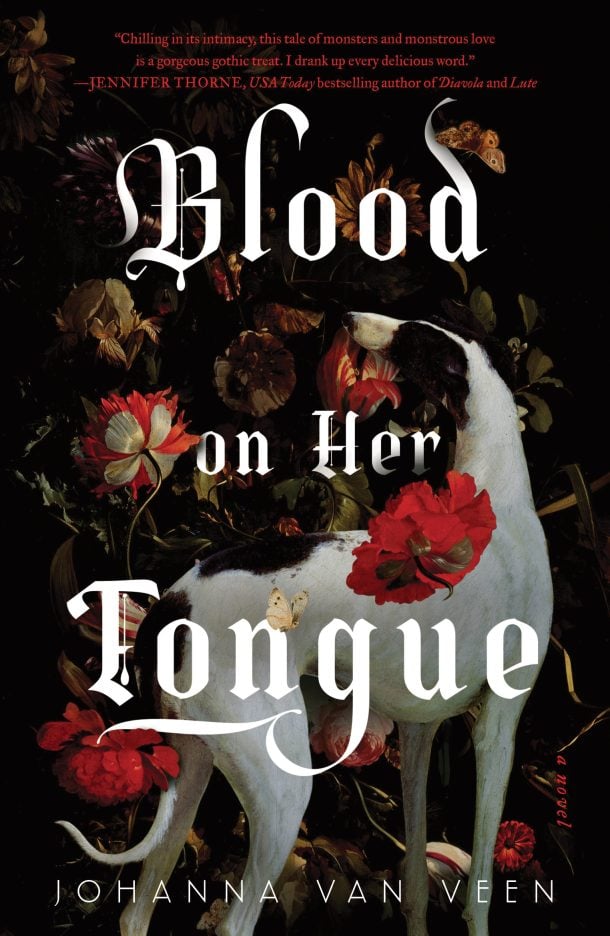 Blood on Her Tongue by Johanna van Veen
Van Veen’s stunning sophomore outing (after My Darling Dreadful Thing) is gothic horror for the ages. In 1887, Sarah finds a body in the bog surrounding her husband’s isolated mansion in the Netherlands and develops an obsession with the corpse that transforms into a mysterious illness. Worried that Sarah’s husband will have her institutionalized, her twin sister Lucy comes to visit, hopping both to care for Sarah and investigate the root of her malady. The depiction of the bond between the twins is poignant and devastating as Sarah’s condition deteriorates and Lucy confronts the possibility of being left alone in the world. A vampiric threat is gradually unveiled, but the true horror of this story lies in the helplessness and desperation Lucy and Sarah face as women whose lives are at the mercy of men. Having witnessed their aunt being sent to the asylum when they were young, they fight to avoid the same fate, though this proves a struggle because Sarah’s husband and doctor are oblivious to the supernatural forces at work. Combining shiver-inducing horror with sharp-fanged social commentary, this more that merits comparison to Dracula and other genre titans. Publisher’s Weekly, December 2024.
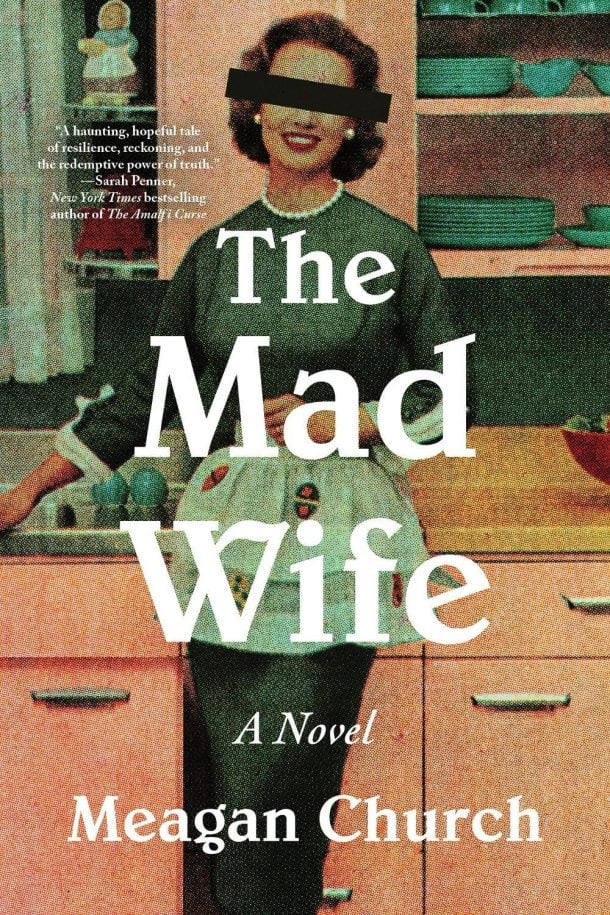 The Mad Wife by Meagan Church
Lulu Mayfield is just trying to hold it together as a 1950s suburban housewife amid expectations as rigid as her famed gelatin desserts and as monotonous as her green stamps–a life very different from her rural upbringing. After giving birth to her second child, she becomes obsessed with and later horrified by the new neighbors across the street. As she starts to spiral, she worries what lengths her husband will go to in order to bring her to heel, and only finds solace in sharing her insomnia with a (possibly) stray cat. She can’t trust her friends, her husband, or the doctor foisted upon her–and maybe not even herself–until the threat of a lobotomy becomes all too real. The tension in Church’s latest (after The Girls We Sent Away, 2024) is palpable, with perfectly timed twists in this nod to Sylvia Plath. Book clubs will find much to discuss about the unattainable expectations placed on women throughout history, the lengths that grief and isolation will take us to, and the fact that mental health cannot be separated from general health. Booklist, October 2025.
 Songs for Other People’s Weddings by David Levithan
J is a singer/songwriter who primarily earns his living performing at weddings. What makes him unique is that he writes an original song for each wedding after learning the couple’s quirks, feelings, and relationship background. J’s own love life, however, is far from a happily-ever-after. While he and his girlfriend, V, have been dating for some time, they still live in separate homes. When V must travel to New York City for an extended work commitment, the strain of long distance highlights the troubles in their relationship. J becomes unfocused, insecure, and depressed, while V is overworked, exhausted and distant. J believes that a surprise visit to NYC is just what they need to reconnect, but V wants space to think. Through other trials and tribulations, J and V eventually discover that what they had is over, despite their continued affection. The story examines their relationship journey, lingering on both the bitter and the sweet. Levithan’s (Wide Awake Now) novel, which includes original lyrics from singer/songwriter Jens Lekman, is a charming, unique, and unconventional exploration of relationships. Library Journal, July 2025.
 The Vanishing Cherry Blossom Bookshop by Takuya Asakura
Asakura’s first novel to be translated into English hits all the notes of the healing fiction trend: a bit of magical realism, coffee, books, and a cat, mixed in with people who are looking for emotional guidance in life. The Sakura Bookshop is special, appearing only during cherry blossom season, and only to those who happen to be reading the same book at the same time as the shop owner Sakura and her cat Kobako. Then they can find the path and encounter the magical shop that allows them to revisit memories, to help with closure and understanding. The healing journey looks a little different in each of the four stories included here, but each character finds a sense of peace they were looking for in their varied circumstances. The stories are slightly uneven, with some stronger than others, but the overall effect is pure bookish escapism. This charming book follows the tropes of this genre closely but adds a metafictional twist at the end. It’s particularly bookish, focusing on both Western and Japanese titles, and should hold extra appeal for readers of Satoshi Yagisawa’s Days at the Morisaki Bookshop or Kim Jee Hye’s Soyangri Book Kitchen. Library Journal, November 2025.
Return to top
AUDIOBOOKS
| General | Thompson, Aggie Blum | You deserve to know |
| Historical | Brower, Beth | The Unselected Journals of Emma M. Lion, Volume 1 |
| Mystery | Archer, C. J. | The kidnapper’s accomplice |
| Mystery | Booth, A. L. | Death at Booroomba |
| Mystery | O’Connor, Carlene | You Have Gone Too Far |
| Mystery | Finney, Keith | Dead man’s trench |
| Mystery | Gatland, Jack | Letter from the dead |
| Romance | Johnson, Debbie | Christmas wishes and Irish kisses |
| Sci-Fi/Fantasy | Schwab, V. E. | The Invisible Life of Addie LaRue |
| Sci-Fi/Fantasy | Wolff, Tracy | Star bringer |
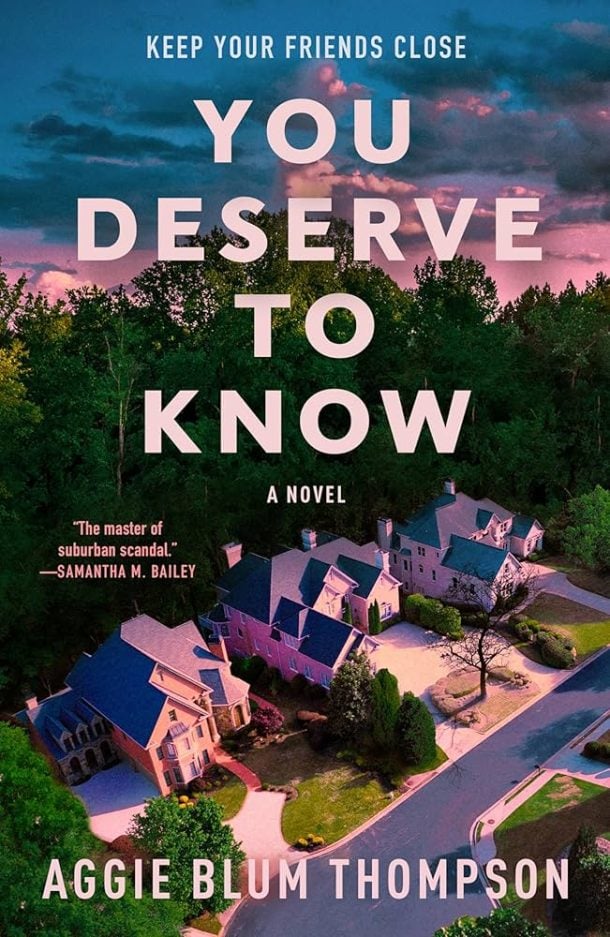 You Deserve to Know by Aggie Blum Thompson
In this captivating standalone from Thompson (Such a Lovely Family), tragedy and scandal rock a neighborhood in the suburbs of Washington, D.C. Gwen Khoury, Aimee Stern, and Lisa Greco-King enjoy weekly get-togethers with their husbands and children, but at one such gathering, tensions rise after Lisa questions Aimee’s parenting and Gwen’s husband, Anton, has too much to drink. At the end of the evening, Anton gets uncomfortably close to Aimee and whispers “You deserve to know” in her ear before leaving. The next day, the police inform Gwen that Anton’s corpse was found near a local bar. Suspecting homicide, investigators question Gwen and Anton’s neighbors, discovering that Aimee’s husband, Scott, was one of the last people to see Anton alive. Soon, the women start to turn on one another, and flashbacks reveal cracks in their friendship that predate the skirmish in the book’s opening scene. Thompson drops her fully fleshed-out characters into a mile-a-minute plot peppered with blindsiding twists, making the novel easy to devour in a single sitting. This is domestic suspense at its finest. Publisher’s Weekly, January 2025.
 Death at Booroomba by A L Booth
On the eve of his deployment to the Western Front in 1915, Jack O’Rourke has a chance encounter with an elderly Russian man, Samuel Lomond, that will profoundly impact his future. When Jack returns home in 1919, he is a changed man – traumatised by the death of his best friend and carrying both psychological and physical wounds from the Battle of the Somme. He learns that Samuel has been murdered and, in his will, bequeathed Booroomba, his property in the hinterland in Eden, NSW, to him. But Eden isn’t as idyllic as its name suggests: new arrivals from non-English or Irish backgrounds are suspected by locals of being Bolsheviks or Jews rather than refugees fleeing revolutionary Russia, while unmarried women, such as newspaper editor Tess Allingham, attract unfavourable attention. As Jack attempts to solve Sam’s murder, he must also confront his own trauma, as well as the conspiracies, bias and jealousy surrounding his inheritance. In Death at Booroomba, AL Booth (Stillwater Creek) employs meticulous research and deft characterisation to depict the prejudice and parochialism of post-war rural Australia, where change is met with unease and wariness. Booth uses the murder of an ‘outsider’ to bring these hidden currents to the surface as suspicion and fear fracture a peaceful community. Death in Booroomba excels with detailed accuracy, genuine characters, and a fast-paced murder plot. It should appeal to fans of Judy Nunn’s historical fiction. Publisher’s Weekly, June 2025.
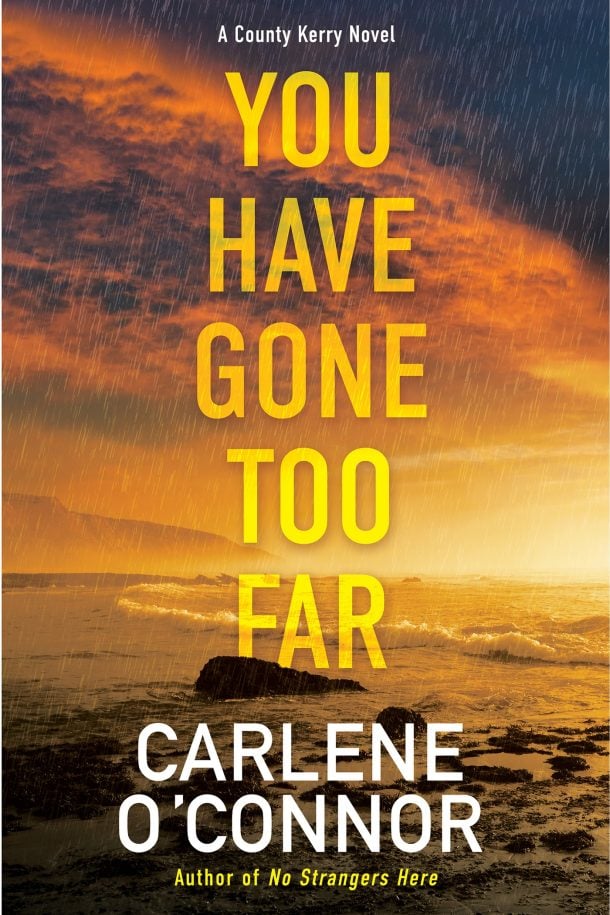 You Have Gone Too Far by Carlene O’Connor
A rural Irish community faces the return of a violent cult leader in O’Connor’s chilling third outing for veterinarian Dimpna Wilde (after Some of Us Are Looking). Decades ago, the town of Dingle was terrorized by Cahal Mackey, who called himself the Shepherd and recruited young, pregnant women to his cult. Though one of Mackey’s followers was discovered with her throat slit and her baby cut out of her womb, authorities couldn’t link Mackey to her death, and instead arrested him on drug and weapons charges. Twenty-nine years later, Mackey is released from prison and tragedy strikes Dingle once again: one pregnant woman is found dead in a bog, and another is abducted while meeting with her unborn baby’s adoptive parents. Dimpna gets involved when she learns that Mackey paid a recent visit to her veterinary clinic and may have targeted her decades ago. She offers to help Det. Insp. Cormac O’Brien and Det. Sgt. Barbara Neely track Mackey down and prove his guilt. O’Connor’s gift for atmosphere elevates the well-oiled plot, resulting in the series’ best entry yet. Publisher’s Weekly, September 2024.
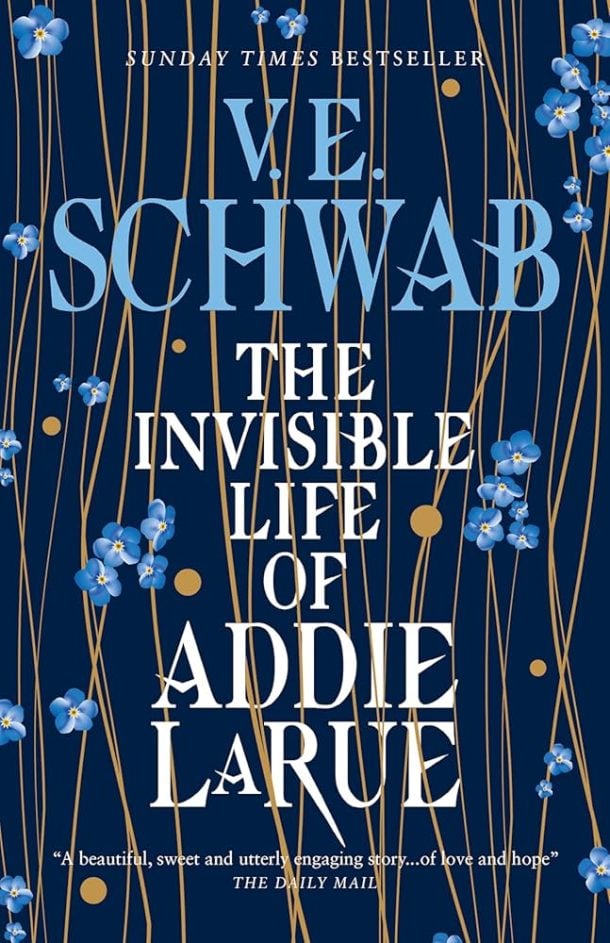 The Invisible Life of Addie LaRue by V. E. Schwab
In V. E. Schwab’s genre-bending 17th novel, The Invisible Life of Addie LaRue, the reader first meets Addie as she is fleeing a life she doesn’t want, one that has been chosen for her by her parents. In the year 1714 in Villon, France, 23-year-old Addie is being forced to marry a widower from her village whose children are in want of a stepmother. Instead of submitting, Addie runs. “She doesn’t slow, doesn’t look back; she doesn’t want to see the life that stands there, waiting. Static as a drawing. Solid as a tomb. Instead, she runs.” She also prays to the old gods, as her friend Estele, the village witch, has taught her. Estele warned her never to pray to the gods that answer after dark, but as dusk bleeds into night, Addie accidentally conjures just such a god, whom she will come to know as Luc. He promises Addie of “time without limit, freedom without rule” in exchange for her soul. Only after the deal is struck does Addie understand the secret cost of this arrangement. She can live for a thousand years if she likes, but nobody will ever remember her. Until one day, in New York City in the year 2014, she walks into a bookstore and, for the first time in 300 years, someone does. It’s a twist that changes everything she thought she knew about her future and the decisions that await her. At the heart of this novel is a meditation on legacy, time and the values each person uses to guide their path. Freed from a life’s traditional arc of aging and transitions, the indefatigable Addie must proactively decide how she wants to spend her days and which sacrifices are worth her soul’s survival. This is a hopeful book from an author who is known for dark, violent stories, which makes it both a delightful surprise and a balm in difficult times. Publisher’s Weekly, 2020.
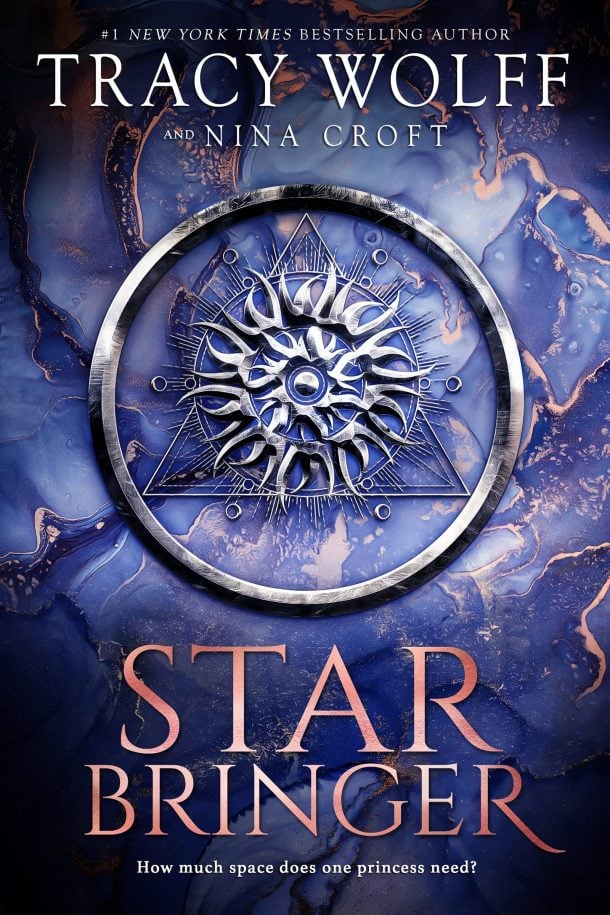 Star Bringer by Tracy Wolff
A diplomatic tour of a research station dedicated to preventing the explosion of the Senestris System’s sun ends with the whole structure imploding and a mismatched crew escaping together on a self-flying ship. Now “a princess, a priestess, a bodyguard, a prisoner, a con artist, a goofball,” and the “self-appointed asshole in charge of them all” are trapped together. With a captivating ensemble of narrators, this audiobook delivers an electrifying experience. Liv Anderson embodies the witty and determined Princess Kali, infusing her performance with delightful touches. Mysterious and heroic, Samara Naeymi lends depth and charisma to the mercenary Ian, ensuring every moment is enthralling. Mia Barron skillfully navigates the growth and vulnerability of the endearing high priestess, Rain, adding emotional resonance to the narrative. Ruffin Prentiss, portraying the charming and enigmatic Beckett, injects the story with the right blend of intensity and intrigue. The collaboration of these talented narrators breathes life into the sci-fi adventure, crafting an immersive and thrilling auditory journey. Each narrator contributes uniquely, ensuring this is not merely a story but a dynamic and multifaceted experience that engages the senses. AudioFile, 2023.